Spatial Orientation Geometry Worksheets for Ages 5-7
3 filtered results
-
From - To
Discover the ideal resource for young learners with our Spatial Orientation Geometry Worksheets for ages 5-7. Specifically designed to enhance spatial awareness and geometry skills, these engaging activities help children understand shapes, positions, and movements in a fun, interactive manner. Perfect for at-home learning or classroom use, the worksheets cover essential concepts like direction, distance, and spatial relations, fostering critical thinking and problem-solving abilities. Boost your child's confidence and ability in mathematics with colorful, kid-friendly tasks that make learning geometry accessible and enjoyable for early learners. Visit our website to get started today!
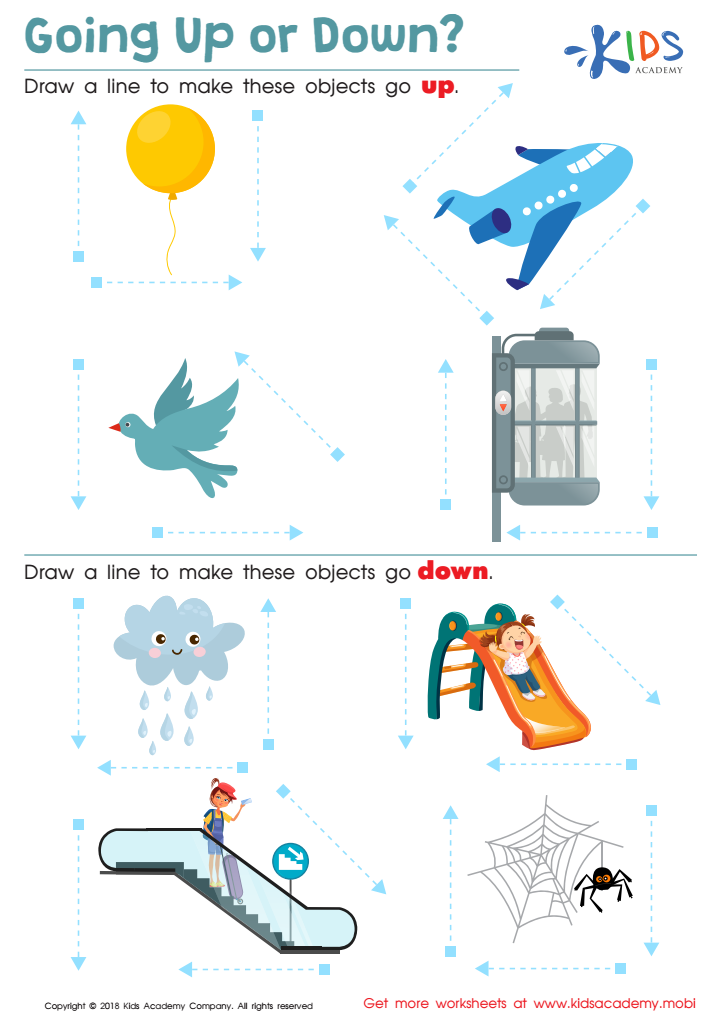
Going up or Down? Worksheet
 Assign to My Students











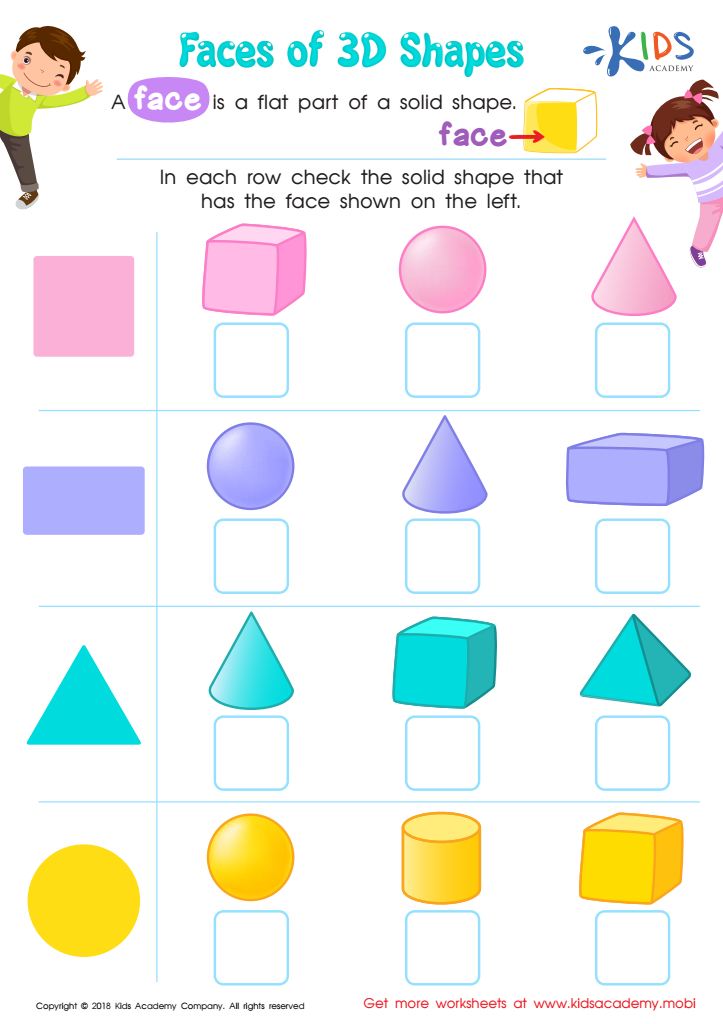
Faces of 3D Shapes Worksheet
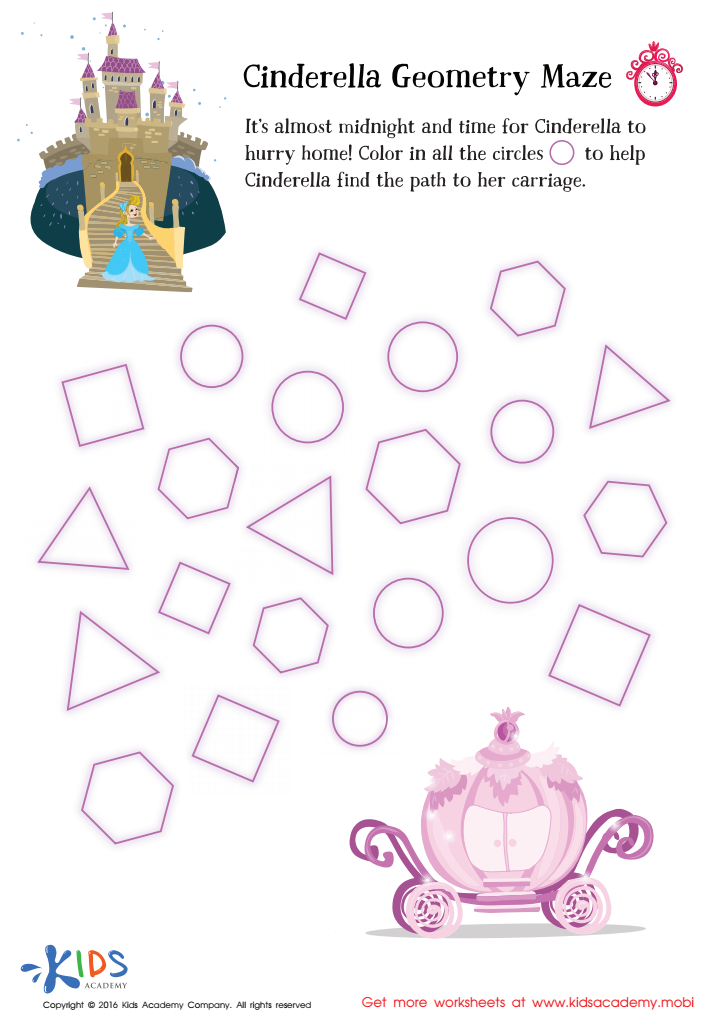
Cinderella Geometry Maze Worksheet








Spatial orientation geometry is crucial for children aged 5-7 as it forms the foundation for their overall cognitive development and everyday functioning. Essentially, spatial orientation is the ability to recognize and position objects in space relative to oneself and other objects. When children engage in activities that develop spatial skills, such as puzzles, building blocks, and navigation games, they enhance their understanding of shapes, positions, directions, and dimensions.
Spatial awareness is integral for succeeding in subjects like mathematics and science, where concepts often require understanding how objects relate to each other in space. For instance, solving geometric problems, understanding maps, or even grasping complex mathematical concepts later on, all stem from strong spatial skills developed early in life. Research indicates that improved spatial skills can enhance reasoning abilities and academic performance.
Moreover, spatial orientation is essential for everyday tasks such as reading and writing, where recognizing the position and relation of letters and words plays a critical role. Social aspects are also positively impacted as children navigate playgrounds, understand personal space, and manage physical interactions. Hence, parents and teachers who focus on fostering spatial orientation in young children are paving the way for academic success, everyday competence, and enhanced overall cognitive development.








