Comparing quantities Numbers Worksheets for Ages 5-7
4 filtered results
-
From - To
Discover a fun way to enhance your child’s number skills with our "Comparing Quantities Numbers Worksheets for Ages 5-7" from Kids Academy. These engaging printable worksheets are designed to help young learners grasp the concept of comparing numbers through vibrant, interactive activities. Perfect for reinforcing early math skills, our worksheets encourage comparing and analyzing quantities, fostering analytical thinking. Specially tailored for 5-7-year-olds, each worksheet offers a unique, hands-on approach to understanding greater than, less than, or equal to concepts. Visit Kids Academy to ignite a passion for math in your child, making learning number concepts enjoyable and effective!
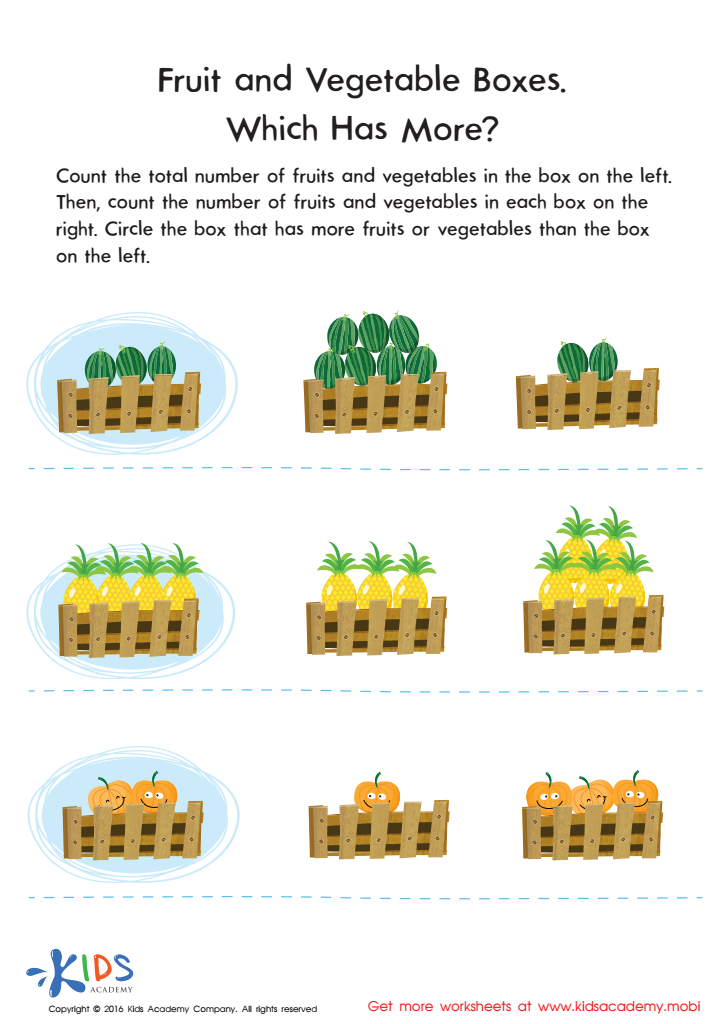
Which Has More? Size Worksheet
 Assign to My Students
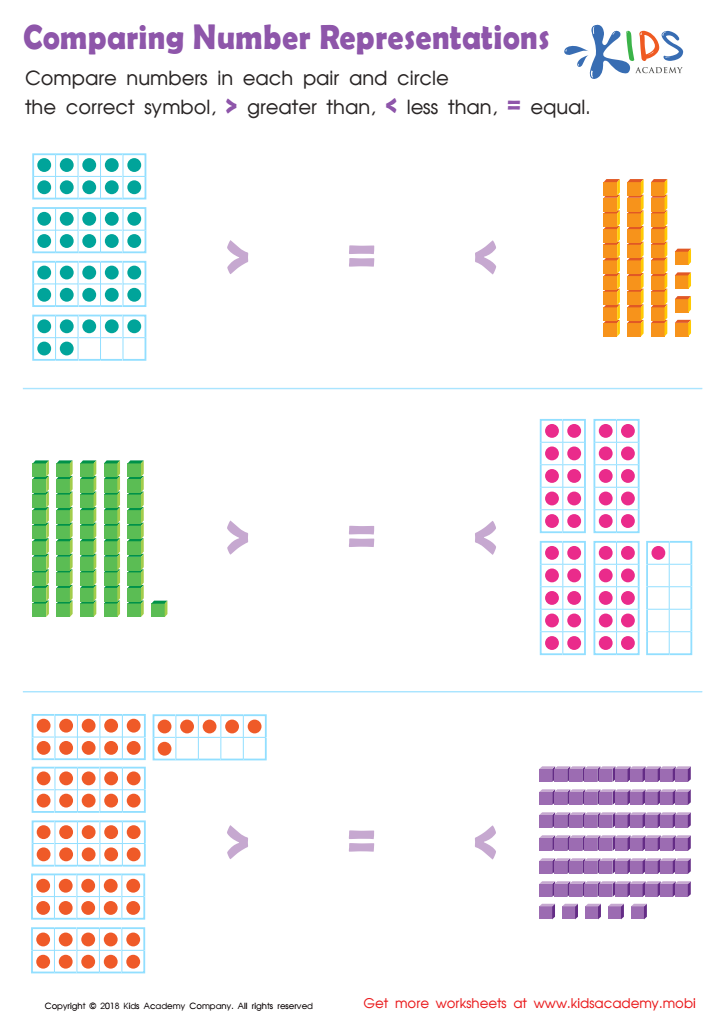
Comparing Number Representations Worksheet
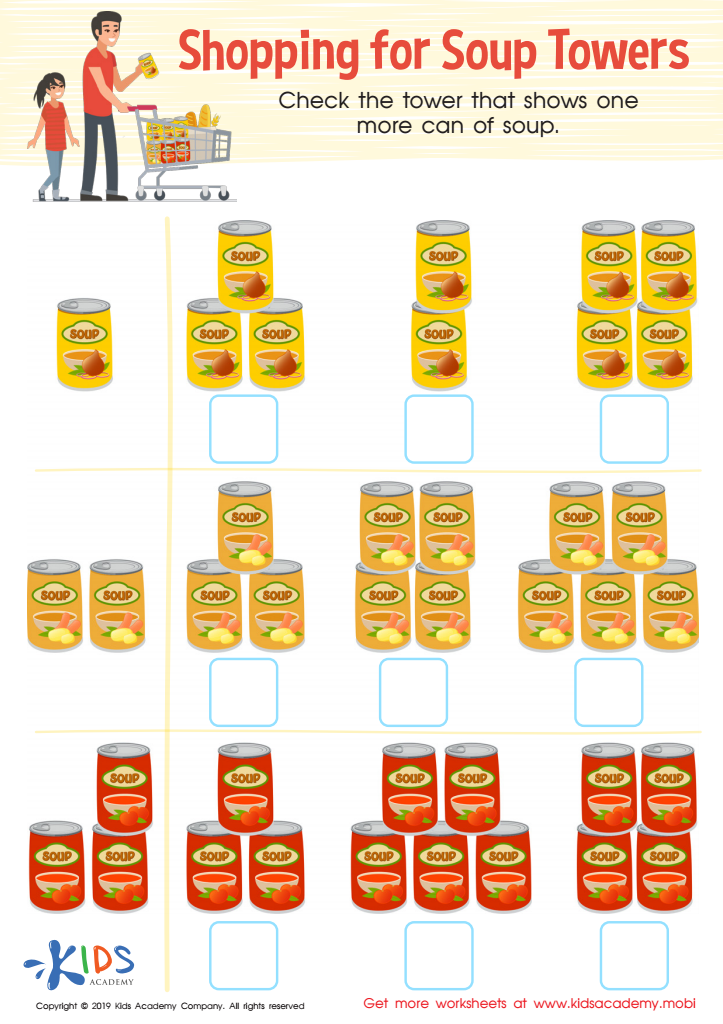
Soup Towers Worksheet
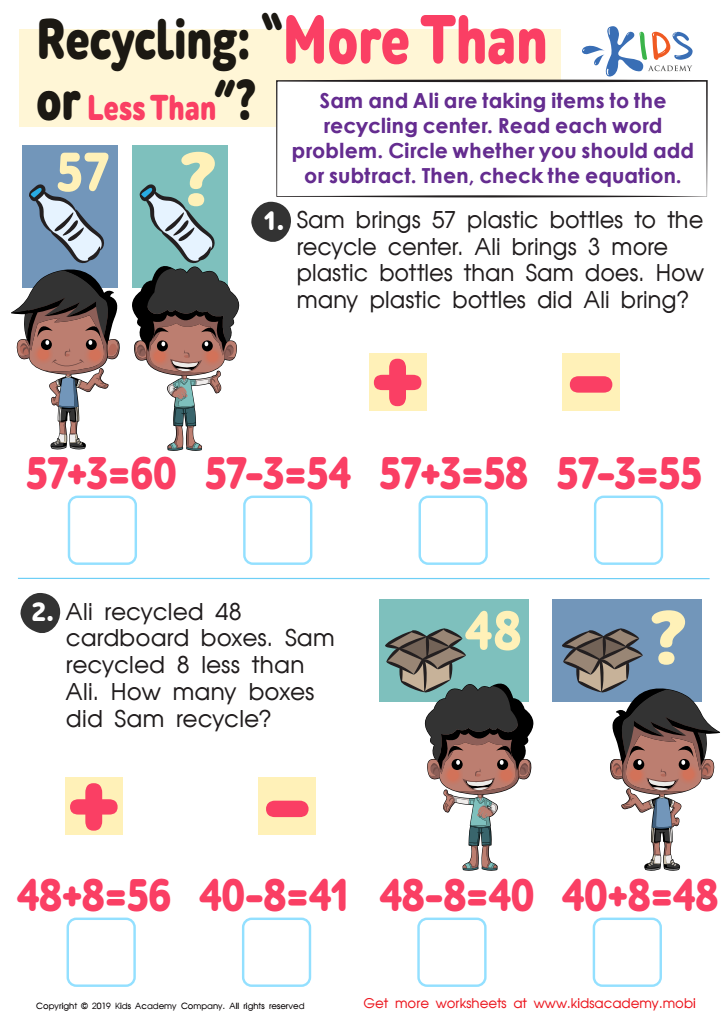
Recycling - More or Less Worksheet








Understanding the concept of comparing quantities is pivotal for children aged 5-7 as it lays the foundation for essential mathematical skills. When young learners compare numbers, they develop number sense, a fundamental aspect of early math education that allows them to grasp the relative size of numbers and understand counting, addition, and subtraction. This skill also enhances their ability to make judgments about quantities in real-life situations, such as determining which of two groups has more or less, which is crucial for practical problem-solving.
Moreover, comparing quantities nurtures critical thinking and reasoning. As children evaluate and differentiate between numbers, they learn to think logically and make informed decisions. This cognitive development extends beyond math, fostering skills they will use across all subjects and in daily life.
Additionally, competence in comparing numbers builds confidence. Children who can confidently manipulate and understand numbers are more likely to enjoy math, participate actively in class, and perform better academically. Teachers and parents should prioritize activities that encourage comparing quantities, like games, story problems, and practical examples, ensuring these foundational skills are engaging and accessible. Ultimately, nurturing this ability equips children with the necessary tools to excel in more advanced mathematical concepts and promotes a positive attitude towards learning.








