
Fine motor skills (writing numbers) Numbers Worksheets for Ages 5-7
3 filtered results
Difficulty Level
Grade
Age
-
From - To
Subject
Activity
Standards
Enhance your child's fine motor skills with our engaging writing numbers worksheets, designed specifically for ages 5 to 7. These worksheets provide a fun and interactive way for young learners to practice number formation, promoting hand-eye coordination and dexterity. Each worksheet is filled with creative activities that encourage children to trace, write, and manipulate numbers in various formats. Our resources not only support early math skills but also foster a sense of accomplishment in young learners. With a focus on motor skills development, these worksheets are an essential tool for building confidence as they master writing numbers. Get started today!
Favorites
With answer key
Interactive
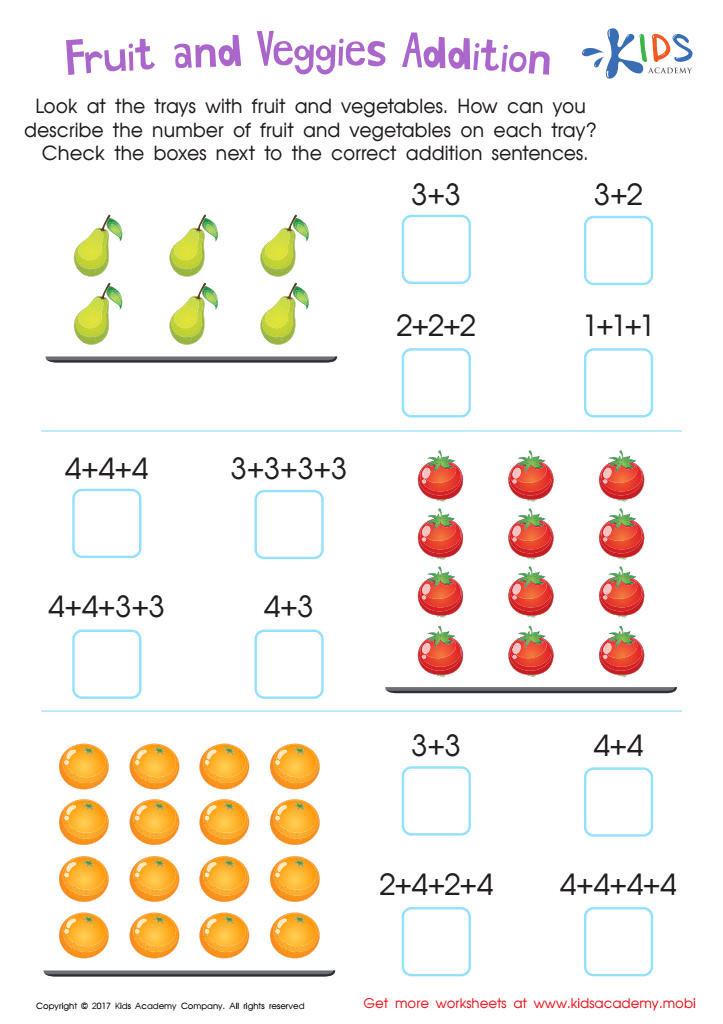
Fruit and Veggies Worksheet
It promotes problem-solving and analytical skills as kids match pictures to correct addition sentences. Help your child go beyond simple addition with this PDF worksheet!
 Assign to My Students
Fruit and Veggies Worksheet
Worksheet

A Hundred Pineapples Worksheet
Can your child count in tens? Show them how to count 100 boxes in stacks of tens. A worksheet can help them understand the concept. Ask them to count boxes of pineapples in stacks of tens and circle the truck with 100 pineapples.
A Hundred Pineapples Worksheet
Worksheet

Finding 4 in the Forest Worksheet
Before starting, have your kids count as high as they can. Ask them to identify the setting and point out the 4s. Trace 4 and draw your own. Help your kids circle all the 4s they can find in the forest. How far can they count? How well did they find the hidden 4s?
Finding 4 in the Forest Worksheet
Worksheet
Join Kids Academy for Free
Who is primarily going to use this learning content?








Fine motor skills are essential for children aged 5-7, especially in developing the ability to write numbers. These skills involve the coordinated use of small muscles in the hands and fingers, and they play a foundational role in a child's education and daily life.
Writing numbers effectively helps children understand mathematical concepts, as they move from recognizing numbers to writing and manipulating them. Mastery of number writing improves their confidence and skill in mathematics, which is crucial at this developmental stage.
Moreover, fine motor skills facilitate a range of everyday tasks, from buttoning shirts to using utensils, fostering independence. They also support cognitive development, as children engage in activities requiring concentration and coordination, strengthening their brain connections.
For parents and teachers, nurturing fine motor skills through fun, engaging activities—like playdough, threading beads, or arts and crafts—can create a supportive learning environment. Additionally, early intervention in developing these skills can prevent future challenges in academic performance. Ultimately, emphasizing fine motor skills lays the groundwork for a child's overall development, enhancing their ability to learn and thrive in a structured educational setting.








