Building vocabulary Math Worksheets for Ages 5-7
3 filtered results
-
From - To
Enhance your child's math vocabulary with our engaging Math Worksheets designed specifically for ages 5-7! These worksheets focus on building essential mathematical language skills through fun and interactive activities. Tailored for early learners, each worksheet encourages students to explore mathematical concepts while introducing key vocabulary through creative exercises. Perfect for parents and teachers alike, our printable resources help spark interest in math, making learning enjoyable. Watch your child's confidence grow as they express their understanding of mathematical terms in context. Start fostering a strong foundation for future math success today with our innovative building vocabulary worksheets!
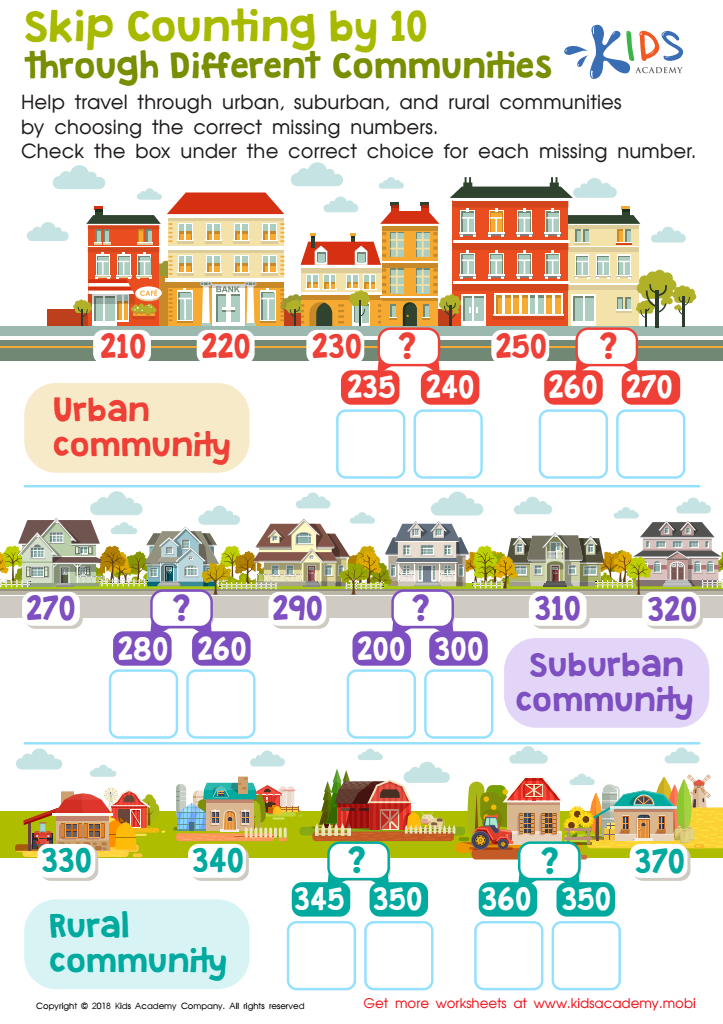
Skip Counting by 10 through Different Communities Worksheet
 Assign to My Students







Building vocabulary in math for children aged 5-7 is crucial for their overall academic success and cognitive development. At this age, children are developing foundational skills that will shape their future learning experiences. A rich math vocabulary allows young learners to articulate their thoughts and understanding effectively, leading to deeper comprehension of mathematical concepts.
When parents and teachers emphasize vocabulary in math, they enable children to recognize and use terms such as "add," "subtract," "greater than," "less than," "shape," and "measure.” This understanding goes beyond memorization; it fosters critical thinking as children learn how to connect vocabulary with problem-solving strategies.
Moreover, a strong mathematical vocabulary aids in enhancing communication skills, encouraging children to discuss their reasoning and approaches to solving problems with peers and adults. This interaction builds confidence and reinforces learning.
By prioritizing math vocabulary now, parents and teachers lay the groundwork for more advanced concepts in later grades. Encouraged verbal and written expression in math builds a positive attitude toward the subject, making children more enthusiastic and willing participants in their own learning journey. Ultimately, investing time and effort into building vocabulary contributes to greater achievement in math and other related subjects in the long run.








