Discover our "Enhance Comprehension Math Worksheets for Ages 5-7," designed to engross young learners in foundational math concepts while improving their comprehension skills. These printable activities offer an enjoyable mix of exercises that cover key areas such as basic addition, subtraction, counting, and problem-solving. Each worksheet is crafted to foster confidence and critical thinking, guiding children through lessons with colorful visuals and engaging tasks. Whether used in the classroom or at home, our worksheets align with educational standards, making learning both effective and amusing. Jumpstart your child's math journey and watch their skills thrive with our expertly designed tools.
Check out this FREE Trial Lesson on Math for age 5-7!

Exactly the Same, or Not

Favorites
With answer key
Interactive
  • 5-7
  • Enhance comprehension
  • Math
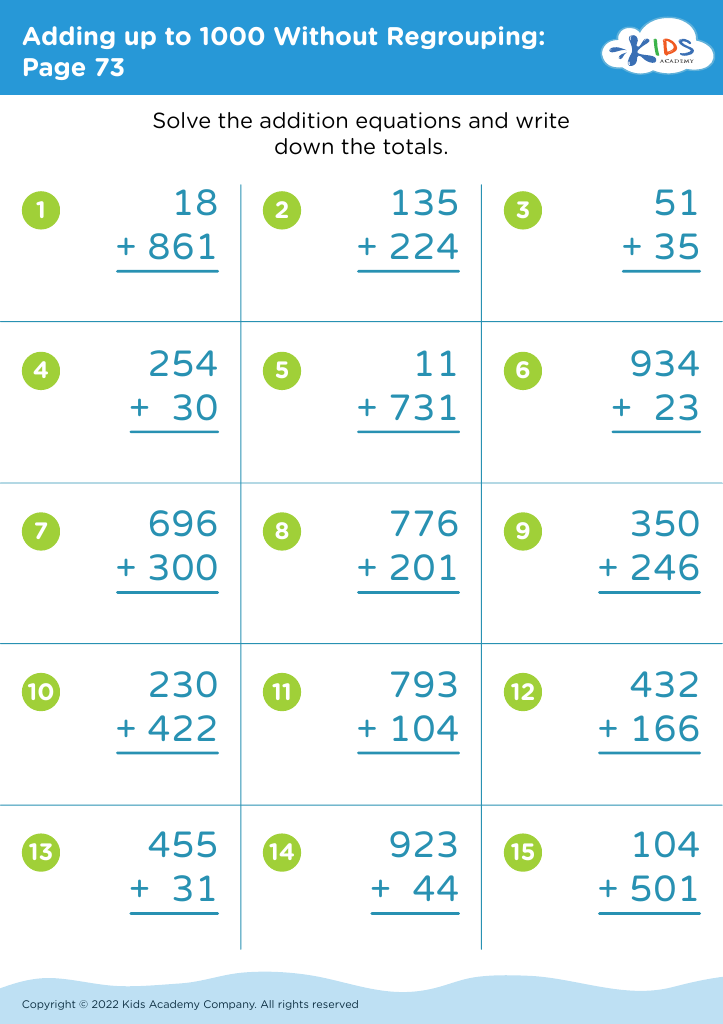
Adding up to 1000 Without Regrouping: Page 73
Worksheet
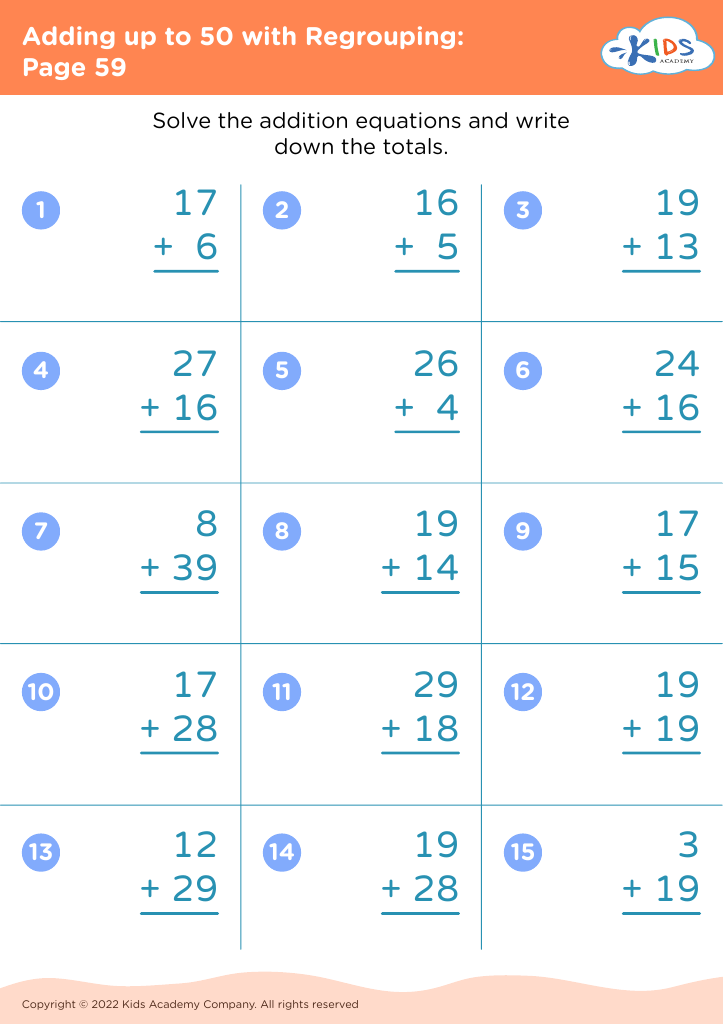
Adding up to 50 with Regrouping: Page 59
Worksheet
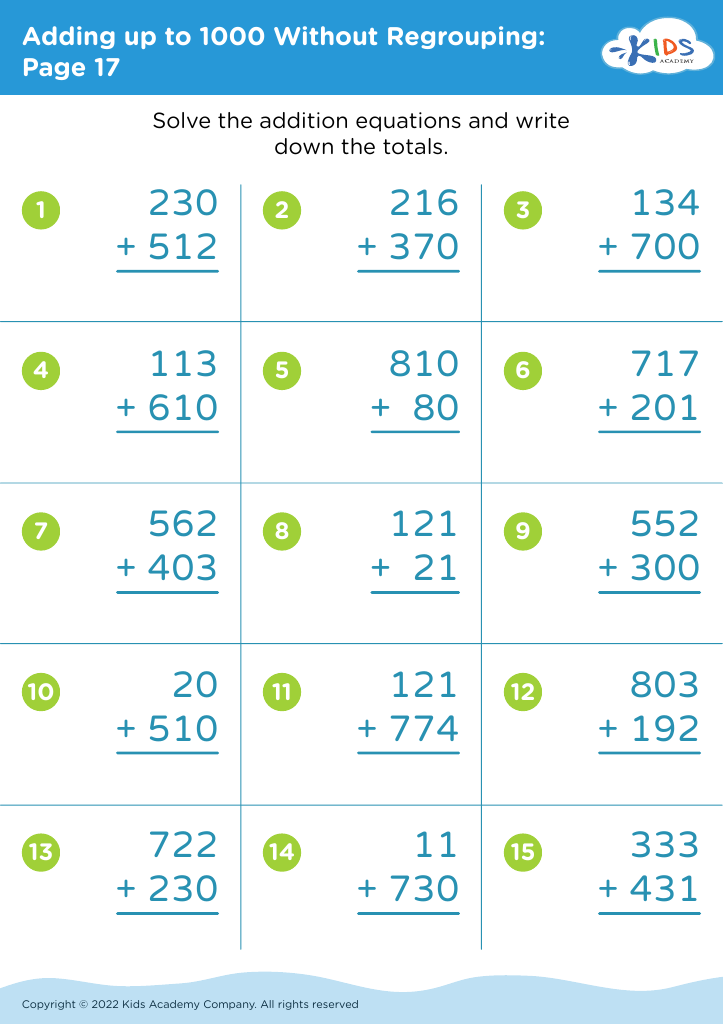
Adding up to 1000 Without Regrouping: Page 17
Worksheet
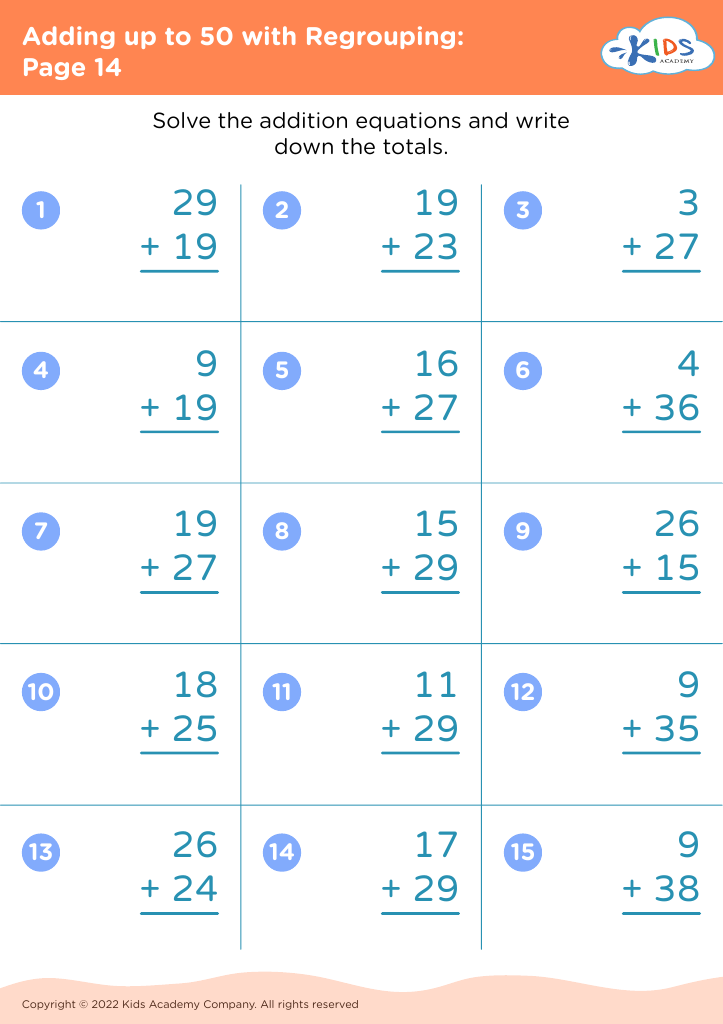
Adding up to 50 with Regrouping: Page 14
Worksheet
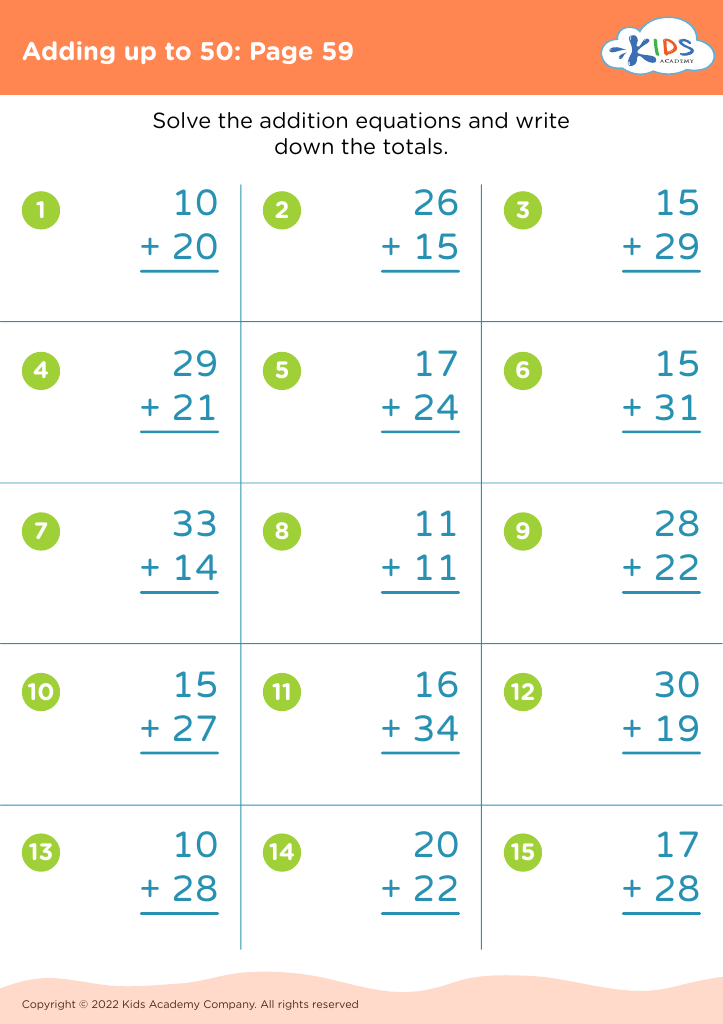
Adding up to 50: Page 59

Adding up to 50: Page 59

Adding up to 50: Page 59
Worksheet
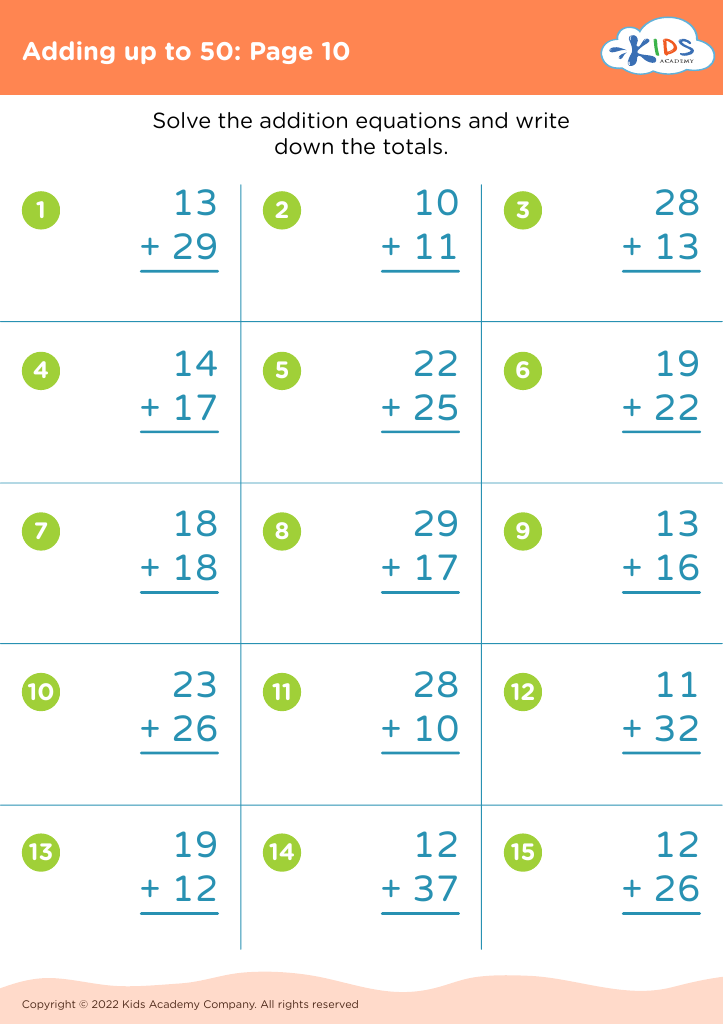
Adding up to 50: Page 10

Adding up to 50: Page 10

Adding up to 50: Page 10
Worksheet
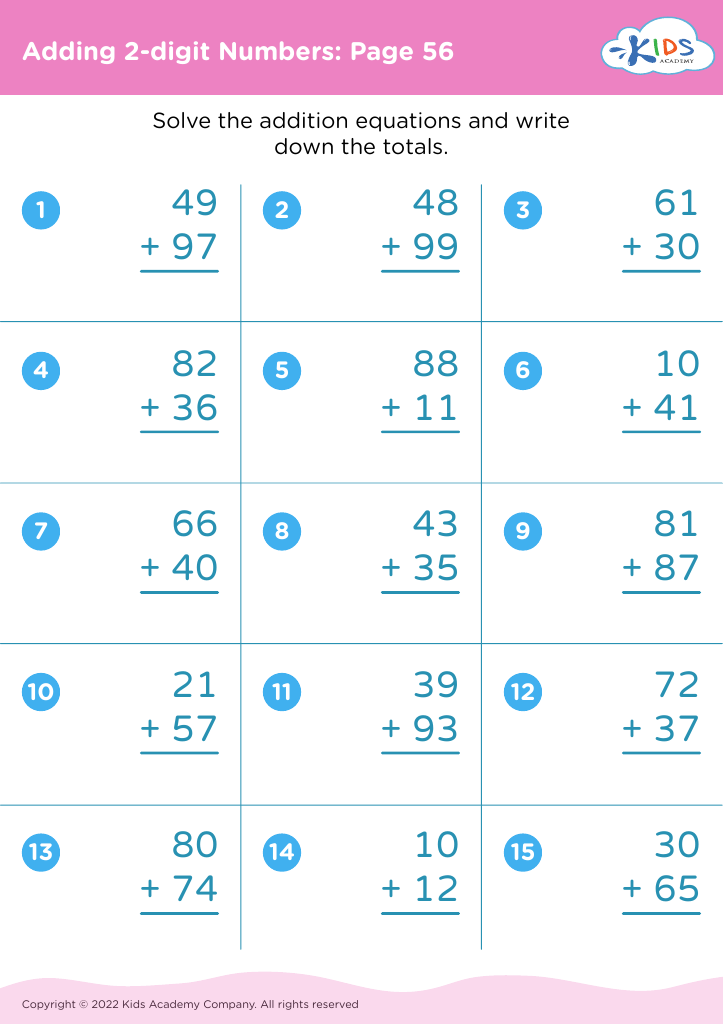
Adding 2-digit Numbers: Page 56

Adding 2-digit Numbers: Page 56

Adding 2-digit Numbers: Page 56
Worksheet
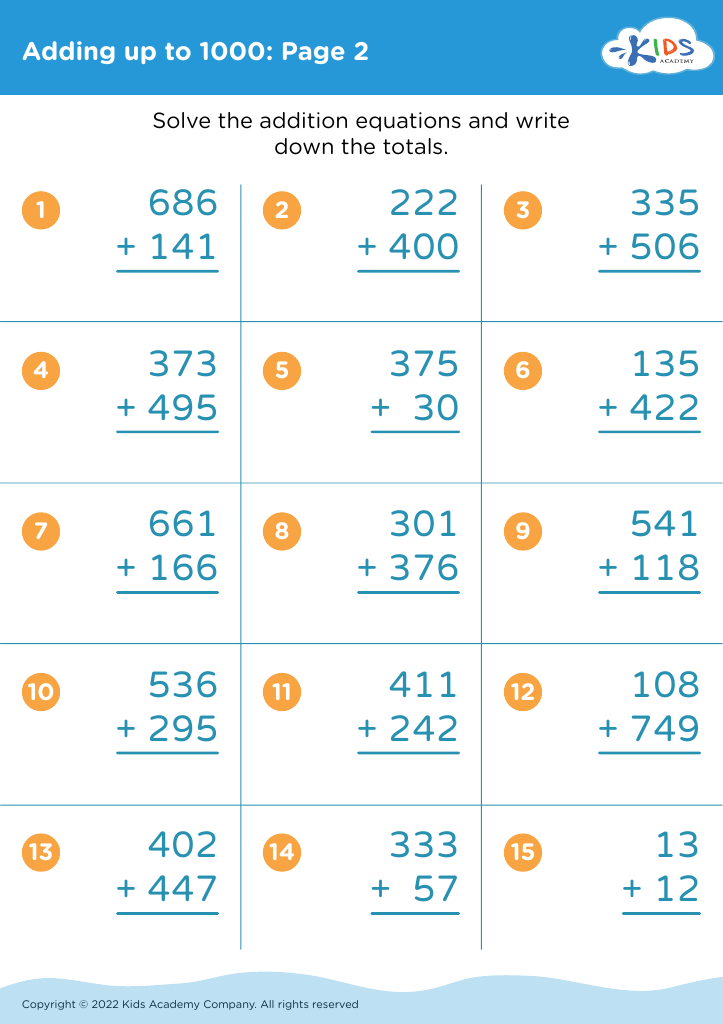
Adding up to 1000: Page 2

Adding up to 1000: Page 2

Adding up to 1000: Page 2
Worksheet
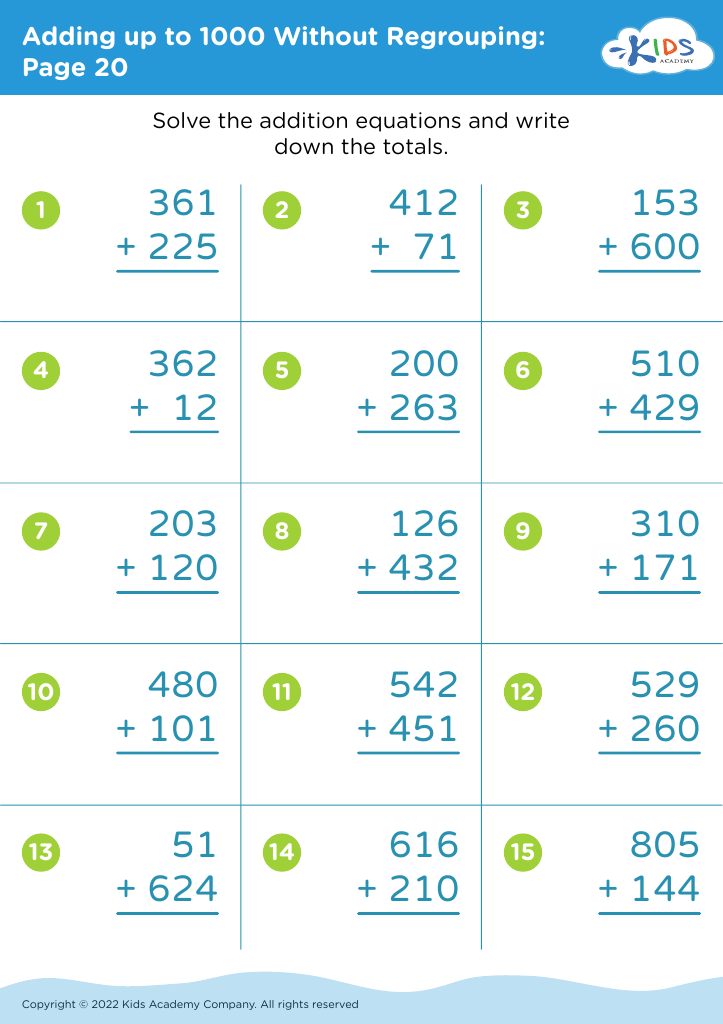
Adding up to 1000 Without Regrouping: Page 20
Worksheet
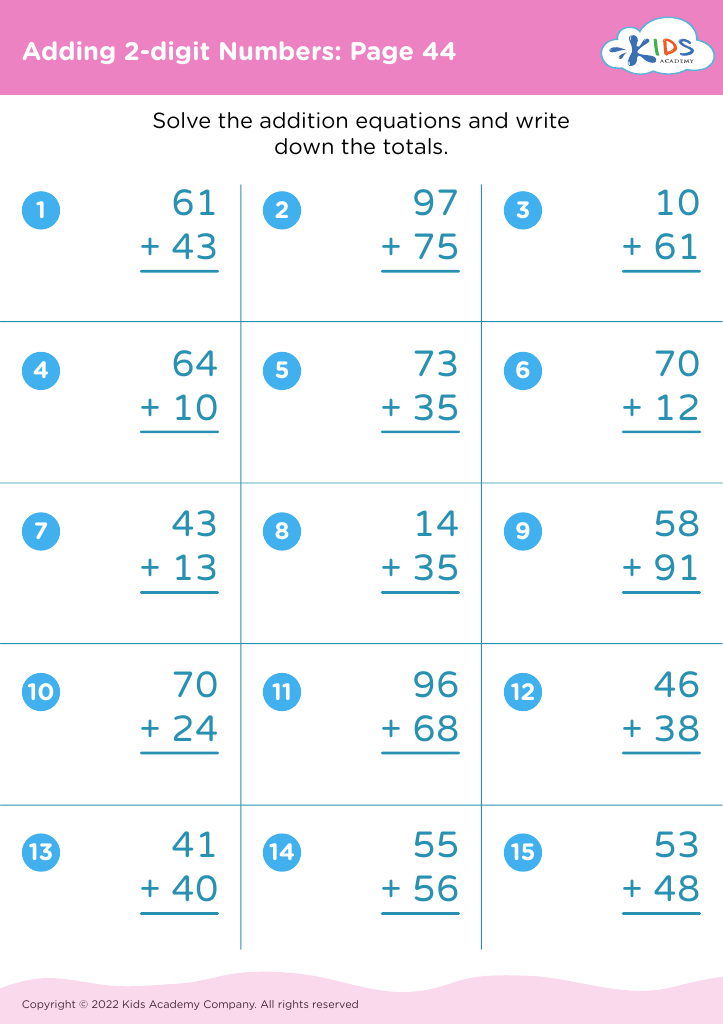
Adding 2-digit Numbers: Page 44

Adding 2-digit Numbers: Page 44

Adding 2-digit Numbers: Page 44
Worksheet
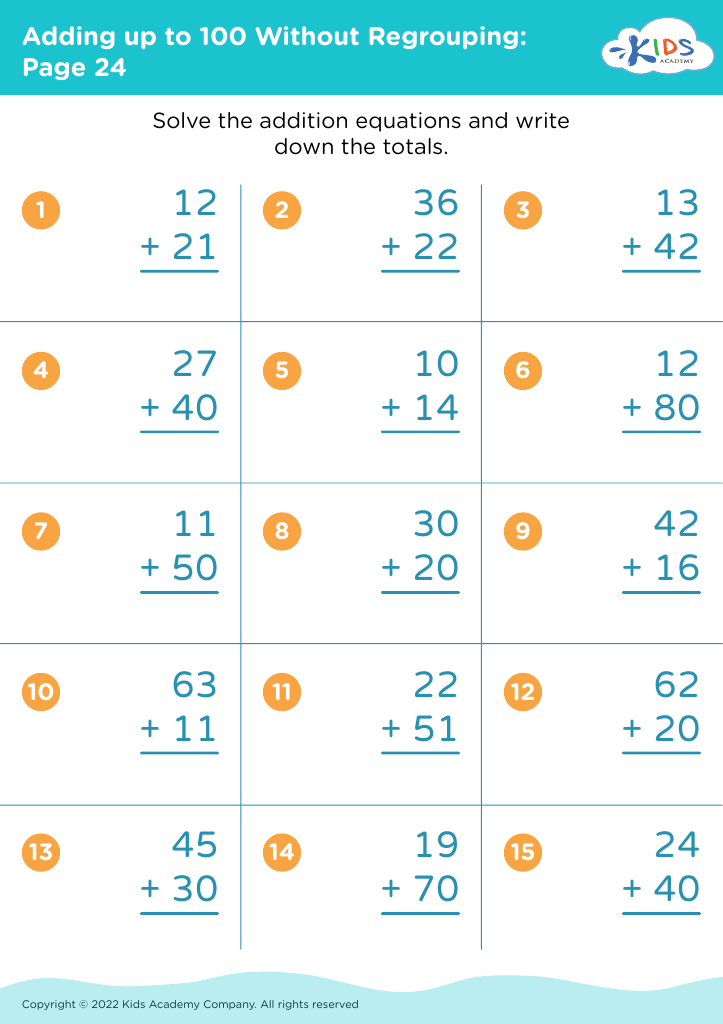
Adding up to 100 Without Regrouping: Page 24
Worksheet
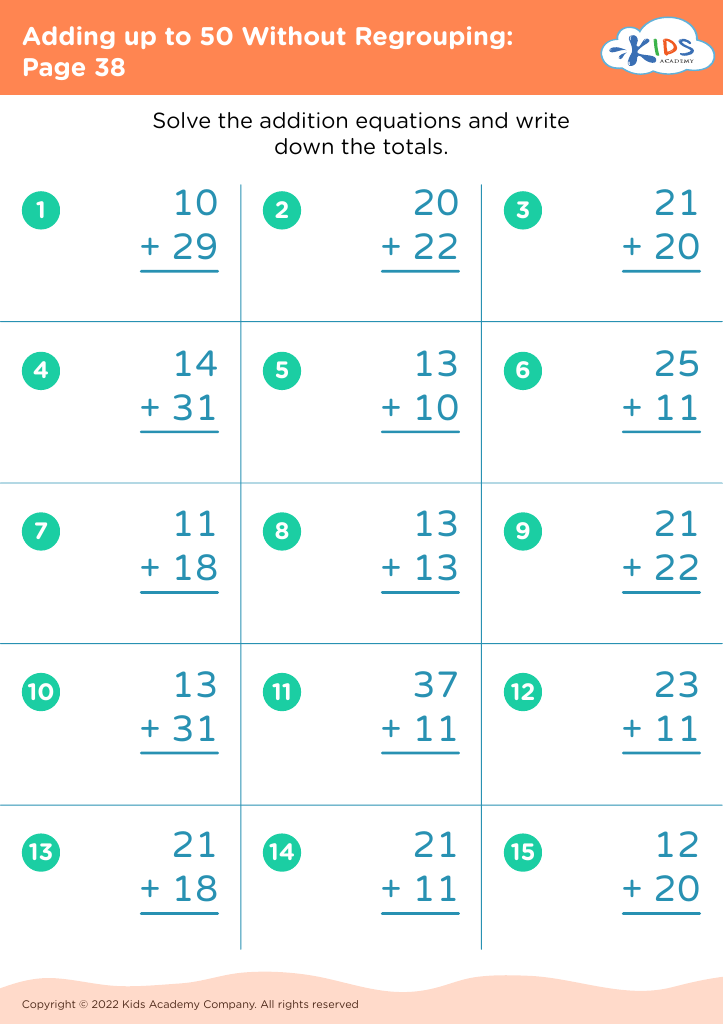
Adding up to 50 Without Regrouping: Page 38
Worksheet
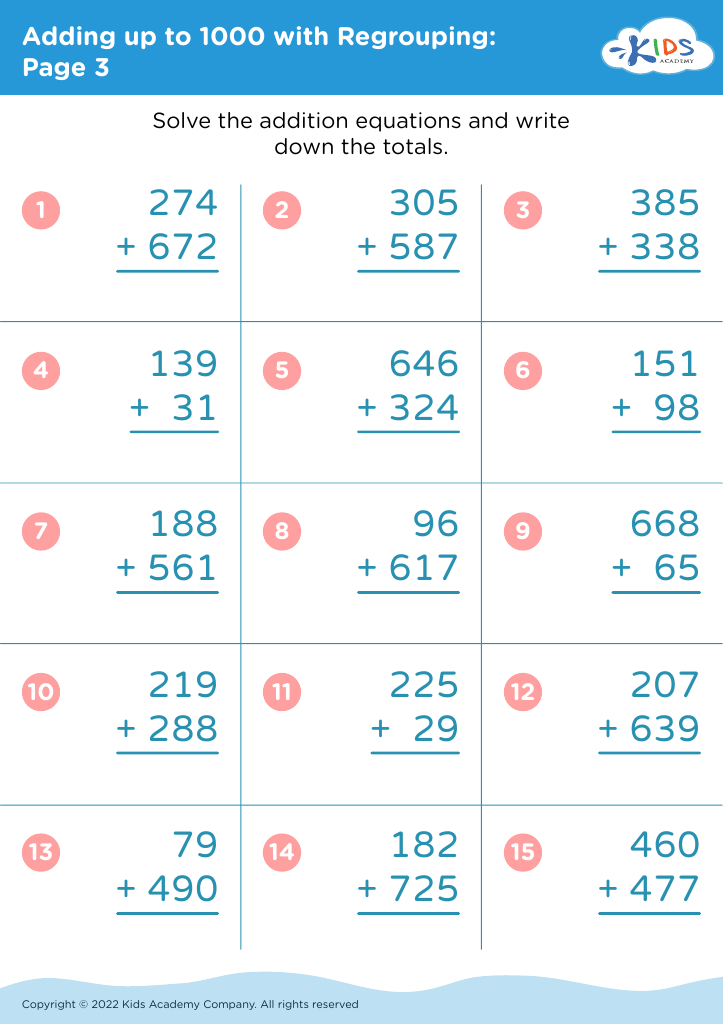
Adding up to 1000 with Regrouping: Page 3
Worksheet
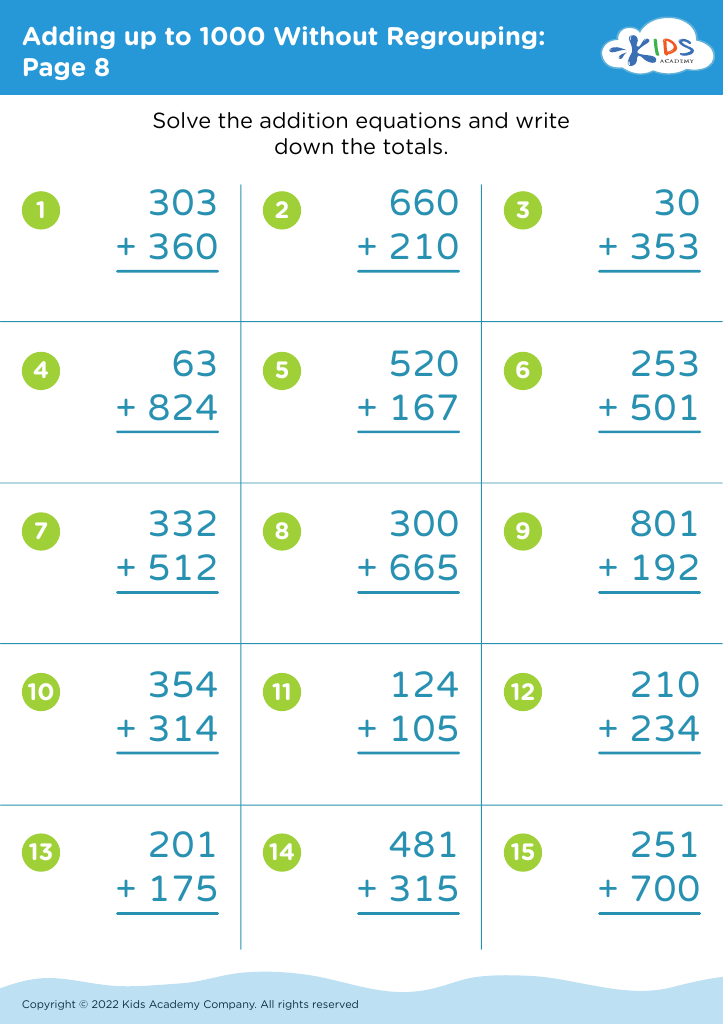
Adding up to 1000 Without Regrouping: Page 8
Worksheet
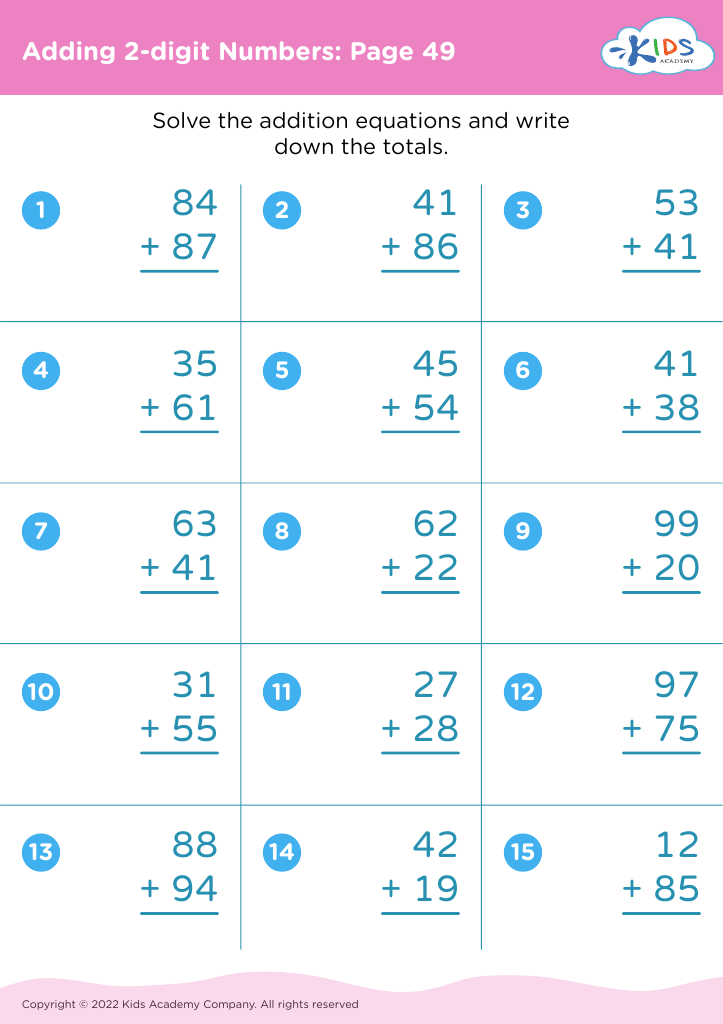
Adding 2-digit Numbers: Page 49

Adding 2-digit Numbers: Page 49

Adding 2-digit Numbers: Page 49
Worksheet
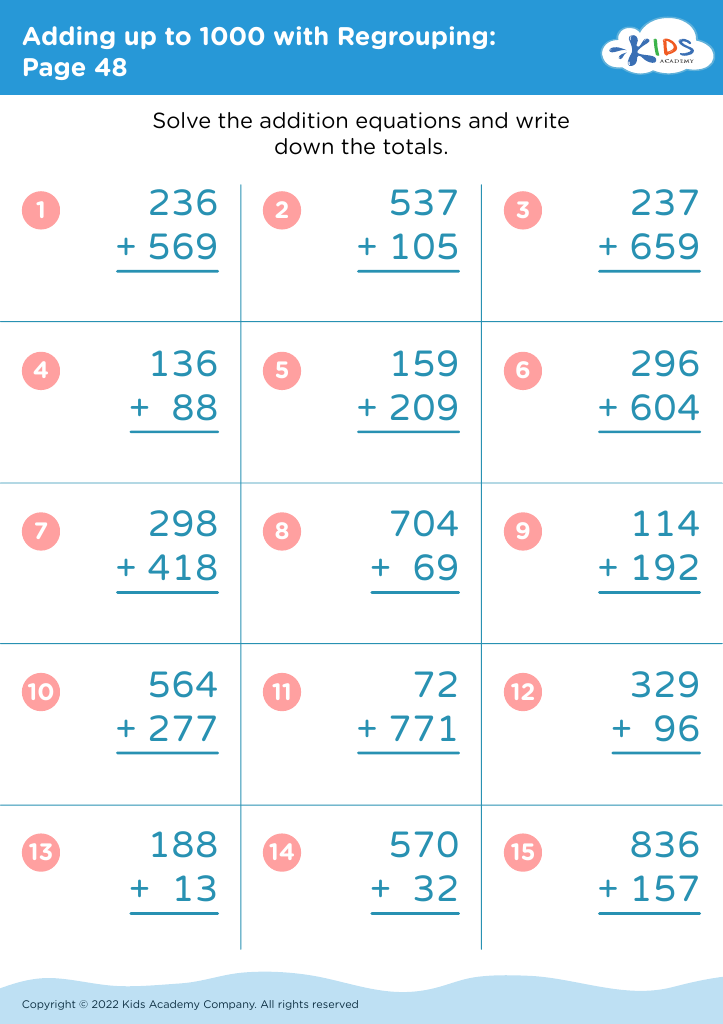
Adding up to 1000 with Regrouping: Page 48
Worksheet
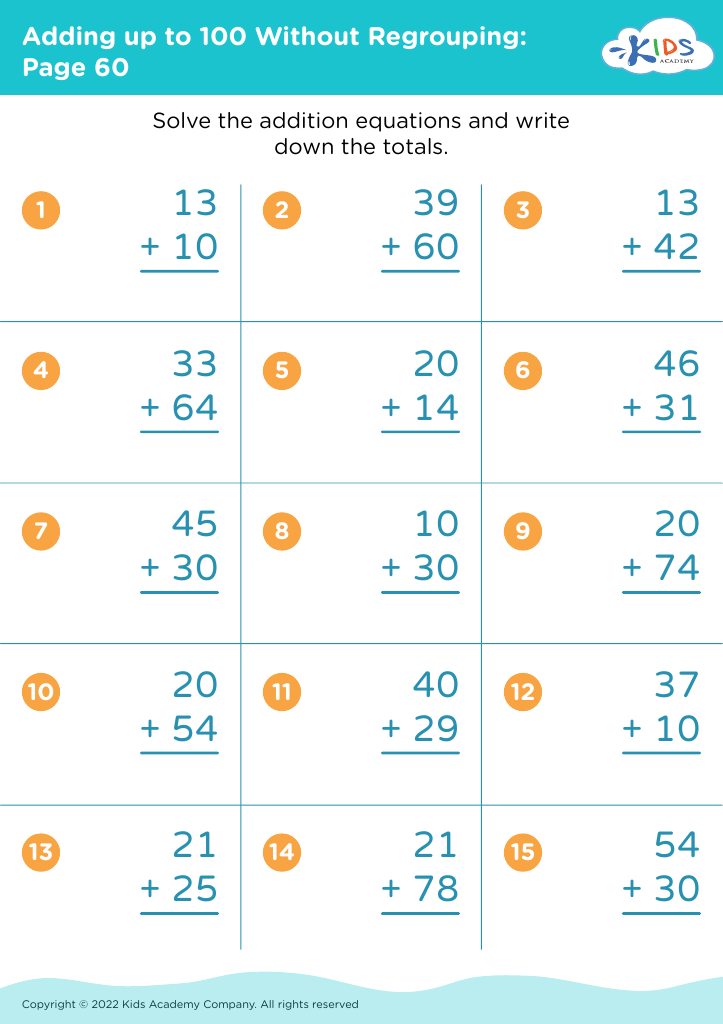
Adding up to 100 Without Regrouping: Page 60
Worksheet


Enhancing comprehension in math for children aged 5-7 is crucial for developing a strong foundation for their future learning. These early years are formative, and children are highly impressionable, absorbing concepts that will support their cognitive development. Understanding basic math concepts such as counting, addition, subtraction, and recognizing patterns fosters critical thinking and problem-solving skills that are essential in everyday life.

When parents and teachers focus on enhancing math comprehension at this stage, they are building a positive relationship between the child and mathematics, which often translates to increased confidence and curiosity towards more complex subjects. Children who grasp fundamental math concepts early are more likely to excel academically, as math is integral to various subjects like science and technology.

Moreover, early success in math can lead to better performance in later years, reducing the likelihood of math anxiety, which can impede academic progress. Interactive and engaging learning experiences, using play-based strategies and real-life scenarios, can make math enjoyable, driving motivation and interest. By investing time and tools to improve math comprehension in young children, parents and teachers are setting them up for a more successful educational journey and a better understanding of how math applies in the world around them.