
Fraction comparison Math Worksheets for Ages 5-7
32 filtered results
Difficulty Level
Grade
Age
-
From - To
Subject
Activity
Standards
Explore our engaging Fraction Comparison Math Worksheets designed for children aged 5-7! These worksheets provide a fun and interactive way for young learners to master the concept of comparing fractions. With colorful visuals and age-appropriate exercises, your child will learn to identify and compare simple fractions through relatable examples, enhancing their critical thinking skills. Our resources are perfect for at-home practice or classroom use, ensuring that foundational math skills are both enjoyable and effective. Whether your child is just starting to learn fractions or needs extra practice, these worksheets are a great tool to build confidence and proficiency in fraction comparison!
Favorites
With answer key
Interactive
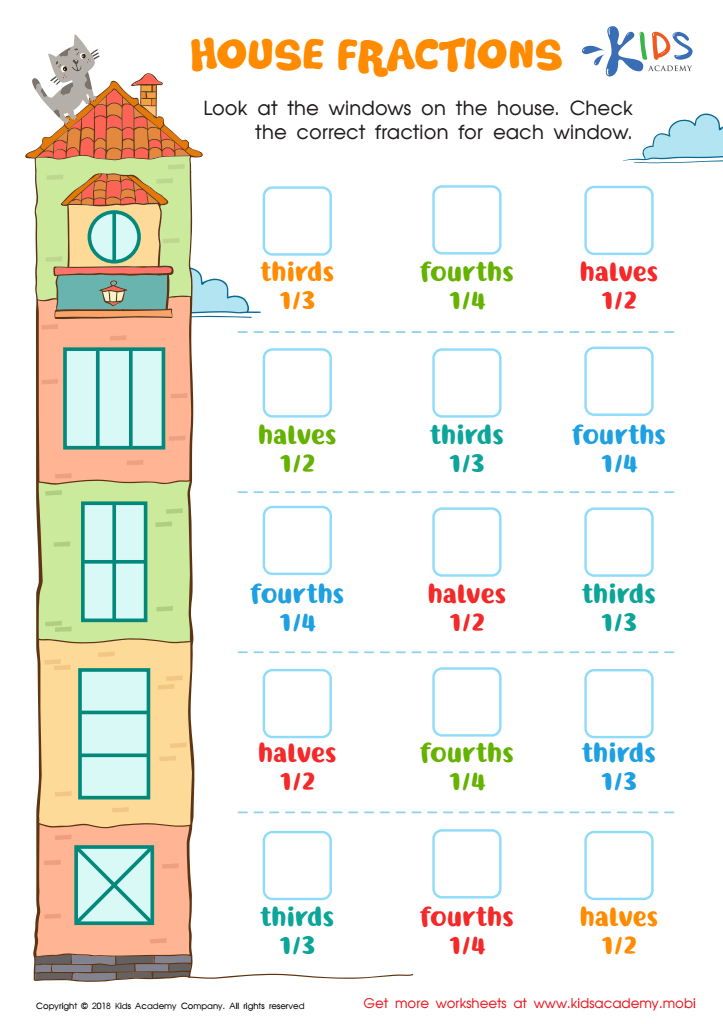
House Fractions Worksheet
Test your child's knowledge of fractions with this worksheet! Have them examine the windows of a house and select the correct fraction from the options given. This is a great way to see how much they understand about wholes, fractions, halves, one thirds, and one fourths.
 Assign to My Students
House Fractions Worksheet
Worksheet
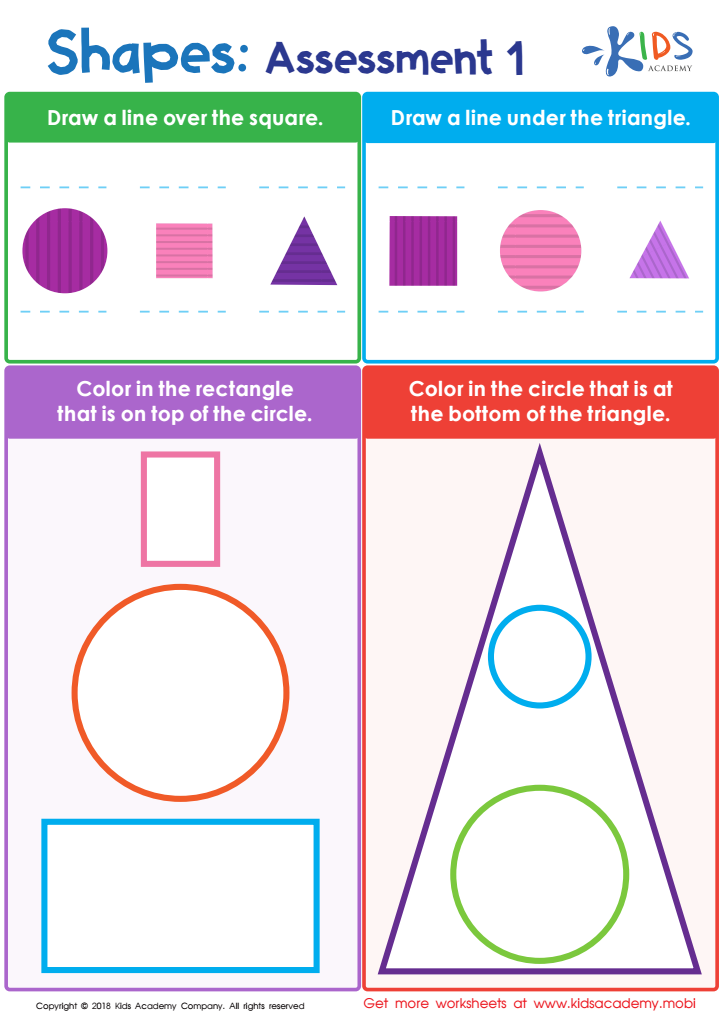
Shapes: Assessment 1 Worksheet
Test your students' understanding of the four basic shapes - circle, square, triangle and rectangle - with this assessment worksheet. Get them to draw a line over or under the shape indicated in the directions to show they can identify it correctly.
Shapes: Assessment 1 Worksheet
Worksheet
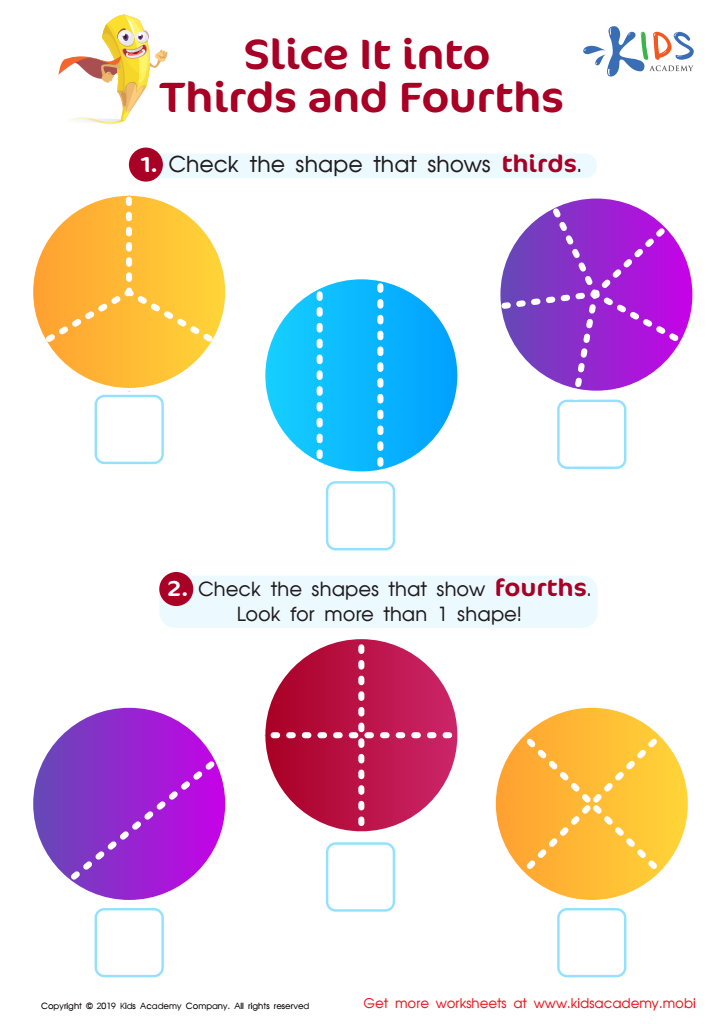
Slice in Thirds Fourths Worksheet
This worksheet helps kids learn fractions visually by dividing circles into thirds and fourths. They will learn that fractions must be equal parts, not just sets, by choosing the right colorful circles. It's an easy way to master fractions and have fun doing it!
Slice in Thirds Fourths Worksheet
Worksheet
Join Kids Academy for Free
Who is primarily going to use this learning content?







Understanding fraction comparison is crucial for children ages 5-7, as it lays the foundation for their mathematical skills. At this stage, children begin to grasp concepts of part-to-whole relationships, which are central to math and everyday life. Familiarity with fractions helps young learners understand sharing and dividing, as well as concepts like equality, which are fundamental for problem-solving.
Parents and teachers should care about this aspect of math, as it encourages critical thinking and enhances cognitive development. When kids learn to compare fractions, they sharpen their reasoning skills, enabling them to make logical decisions and supercharge their confidence in handling math problems. Engaging with fractions also prepares them for more complex mathematical concepts in later grades, ensuring they do not struggle as they progress in their education.
Moreover, fraction comparison fosters collaboration and communication, as students may discuss logical strategies with peers or family members. By nurturing a supportive learning environment that values fractional understanding, parents and teachers equip children with essential skills that will benefit them not just in school, but in everyday situations like cooking, shopping, and understanding proportions. Ultimately, teaching these foundational skills builds a solid mathematical framework that significantly impacts their future success in learning.








