Math problem-solving skills Math Worksheets for Ages 5-7
4 filtered results
-
From - To
Introduce your young learners to the world of math with our engaging Math Problem-Solving Skills Worksheets designed for ages 5-7! These carefully crafted worksheets are perfect for developing critical thinking and problem-solving abilities early. Each worksheet is filled with fun and challenging exercises that help kids grasp foundational math concepts like addition, subtraction, and logical reasoning. Our activities stimulate curiosity and ensure that math learning is enjoyable. Ideal for both classroom and at-home practice, these worksheets provide the essential practice young minds need to excel. Equip your child with the skills they need for a successful math journey!
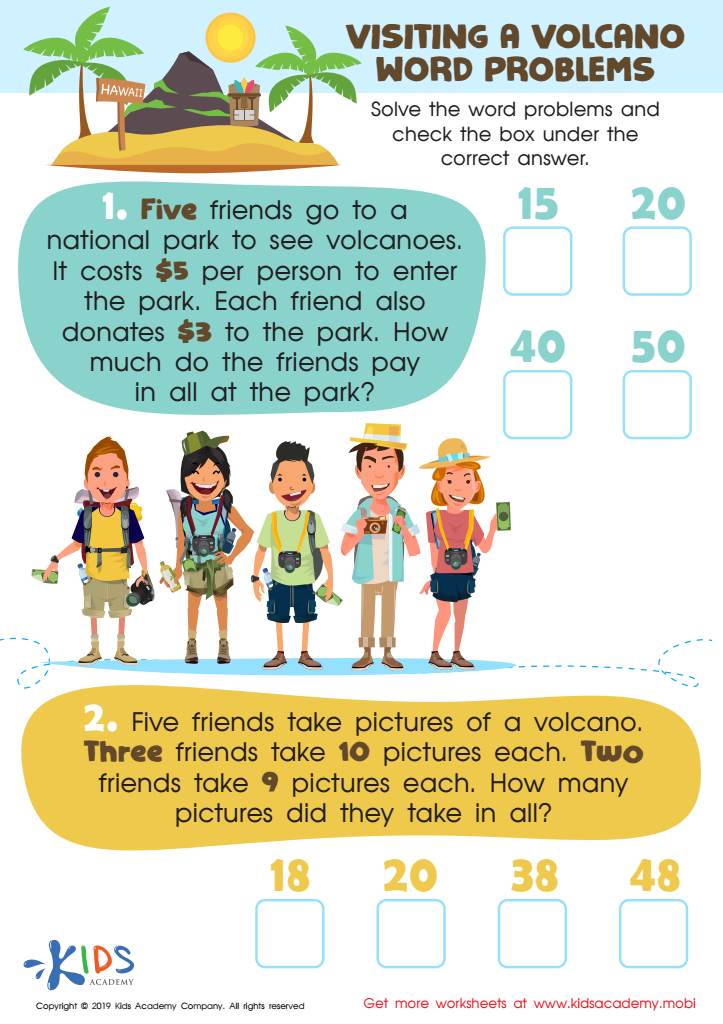
Visiting a Volcano Word Problems Worksheet
 Assign to My Students








Math problem-solving skills for children aged 5-7 are crucial for several reasons. At this developmental stage, young learners are building the fundamental cognitive abilities that will support their future academic and everyday activities. Prioritizing math problem-solving enhances critical thinking and fosters a mindset geared towards inquiry and investigation. When children tackle math problems, they learn to break down complexities, identify patterns, and devise strategies—all essential skills outside of math.
Additionally, early math proficiency is a strong predictor of later academic success, not only in higher-level math but across other subjects such as science and reading. Grasping basic mathematical concepts like addition, subtraction, and understanding shapes in problem-solving contexts lays a strong foundation for more advanced math topics and logical reasoning.
Moreover, nurturing these skills ensures that children gain confidence in their abilities to approach and solve problems, fostering a positive attitude towards learning challenges. For parents and teachers, emphasizing math problem-solving also helps identify and address any learning difficulties early on, allowing for timely interventions.
Incorporating engaging and interactive problem-solving activities can make learning math fun and enjoyable, creating a stimulating environment where young minds thrive. This early investment yields long-term benefits as students develop into competent, confident, and independent problem-solvers.








