Unlock your child's mathematical potential with our "Recognizing Patterns Math Worksheets" designed for ages 5-7! These engaging worksheets help young learners identify, create, and extend patterns using a variety of fun visuals and activities. By recognizing patterns, children enhance their problem-solving skills and develop logical thinking, laying a strong foundation for advanced math concepts. Each worksheet is colorful and interactive, making learning enjoyable while catering to diverse learning styles. Ideal for home or classroom use, our worksheets promote essential early math skills and encourage a love for learning. Explore our collection and watch your child's confidence and abilities grow!

Check out this FREE Trial Lesson on Math for age 5-7!

Objects in the Environment- Circle, Square, Triangle & Rectangle

Favorites
With answer key
Interactive
  • 5-7
  • Recognizing Patterns
  • Math
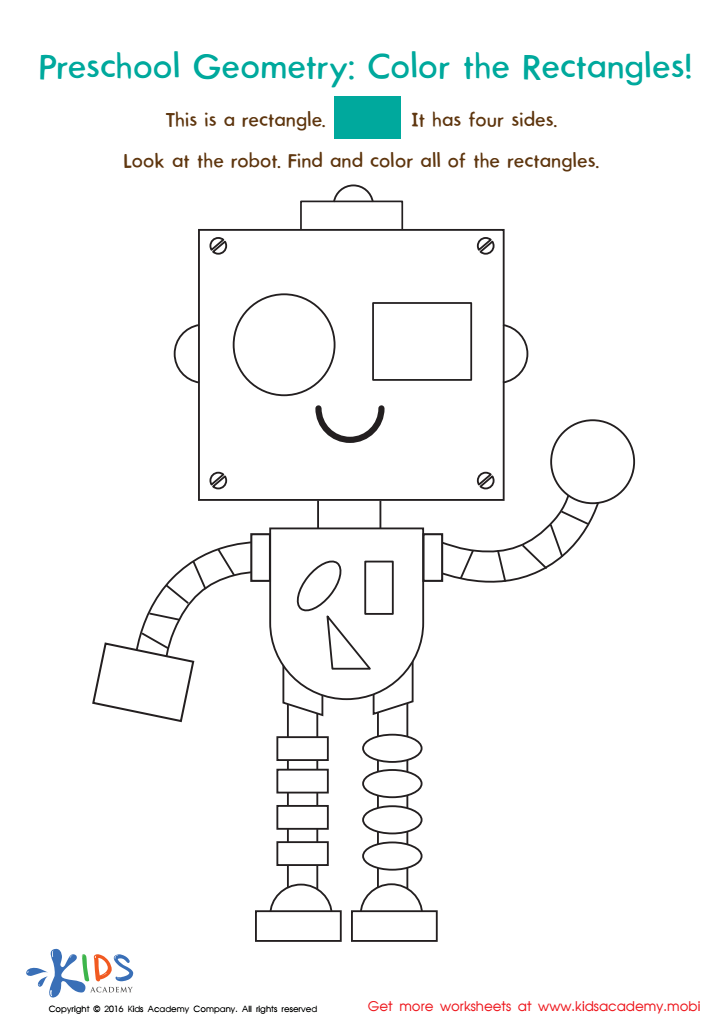
Preschool geometry worksheet

Geometry Worksheet

Geometry can be fun for kids! They explore shapes that create their favorite pics and objects. This preschool worksheet explains that rectangles have four sides, then kids color rectangles on a funny robot!
Geometry Worksheet
Worksheet
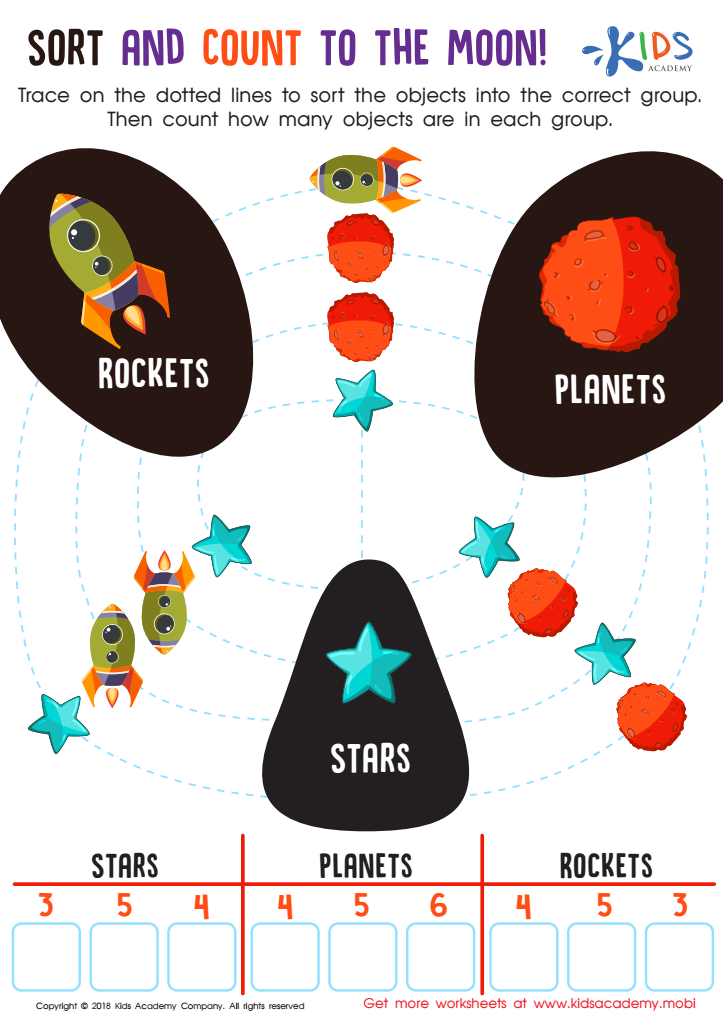
Sort and Count to the Moon Worksheet
Sort and Count to the Moon Worksheet
Little space explorers will love counting, sorting and strengthening number sense with this galactic worksheet! They'll use traceable lines to sort pictures of stars, planets and rockets into categories according to properties. After sorting, they'll count each item and fill in the boxes. Bold pictures make it fun and build critical thinking skills.
Sort and Count to the Moon Worksheet
Worksheet
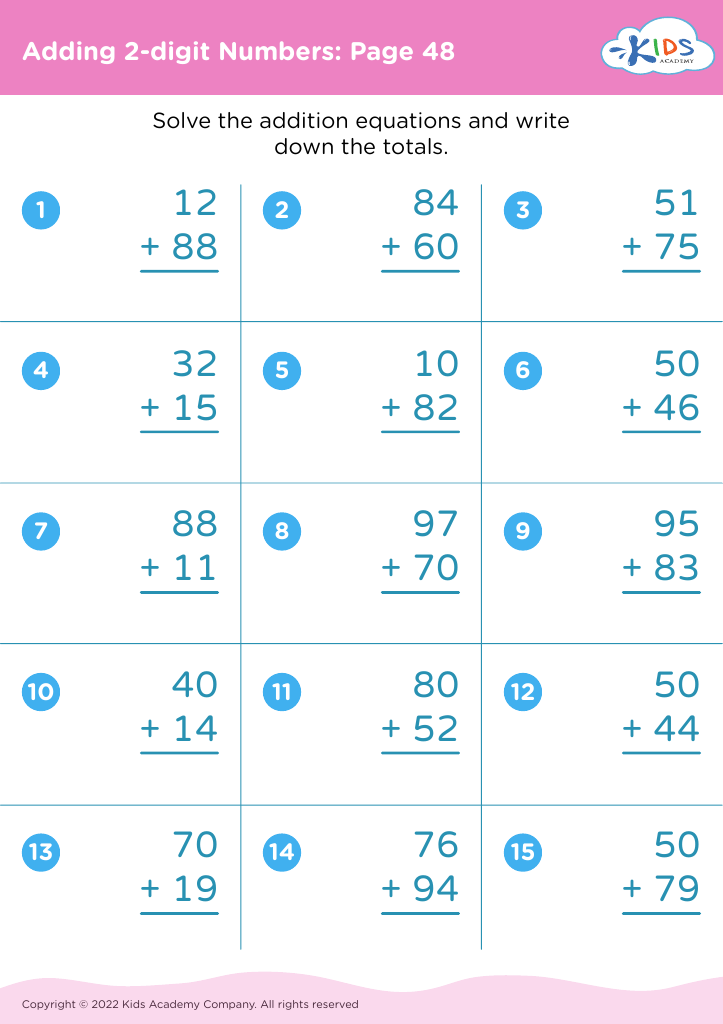
Adding 2-digit Numbers: Page 48

Adding 2-digit Numbers: Page 48

Adding 2-digit Numbers: Page 48
Worksheet
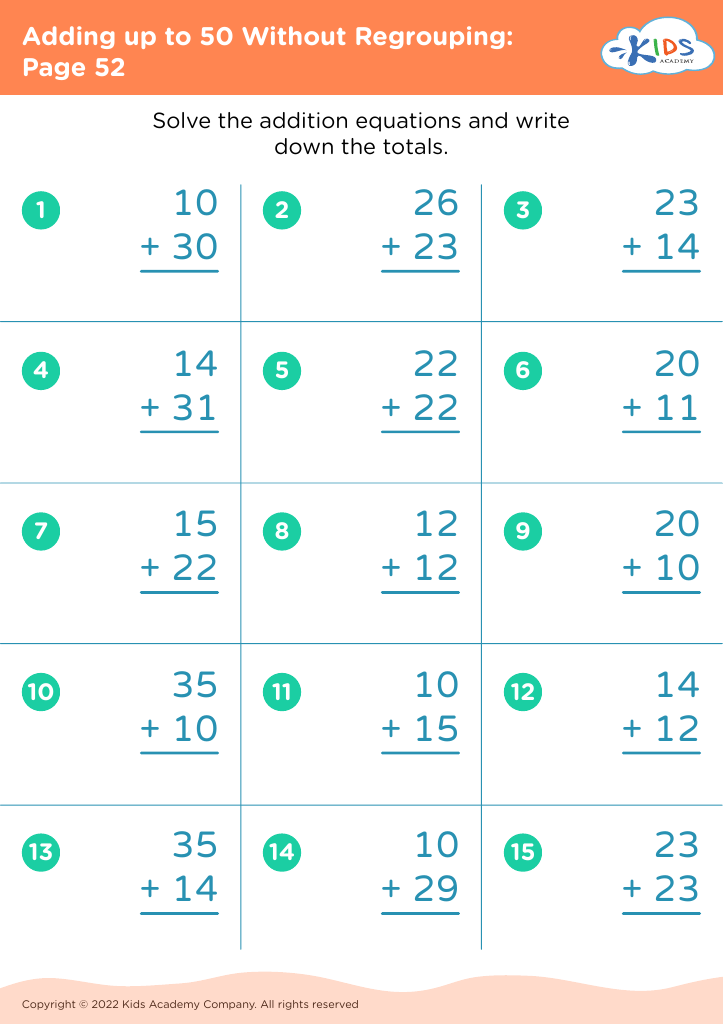
Adding up to 50 Without Regrouping: Page 52
Worksheet
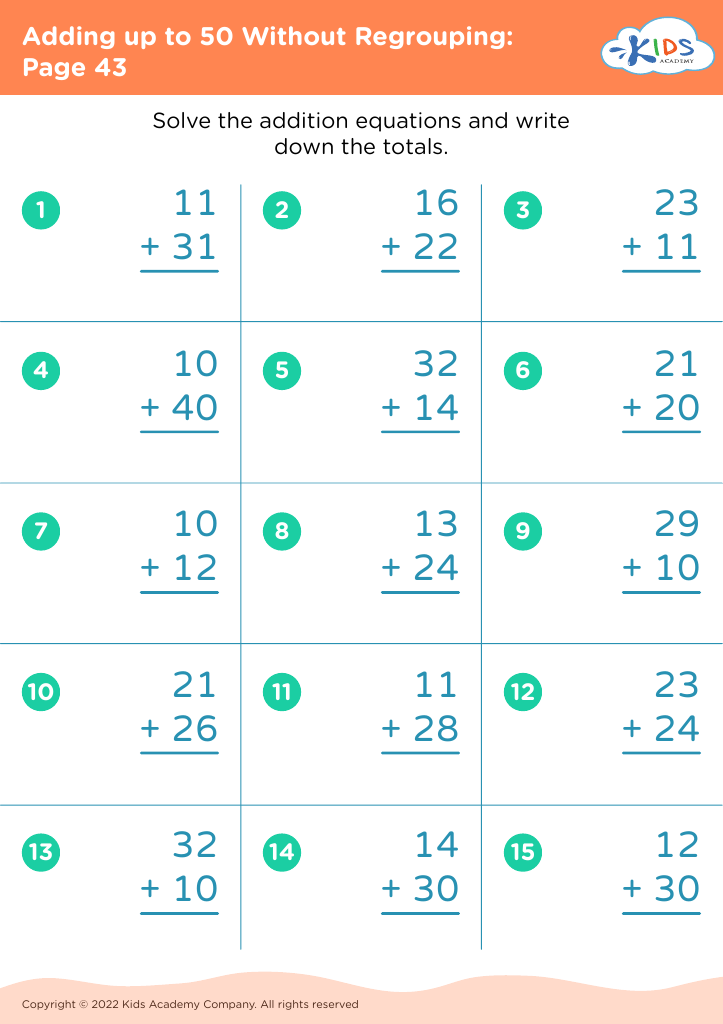
Adding up to 50 Without Regrouping: Page 43
Worksheet
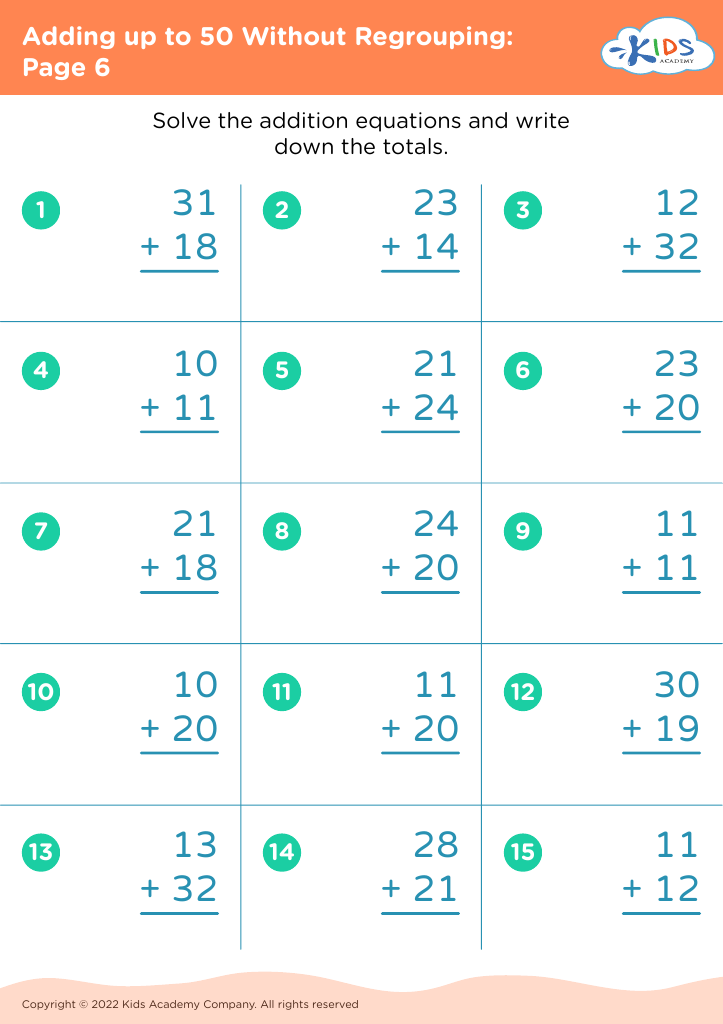
Adding up to 50 Without Regrouping: Page 6
Worksheet
Counting and Numbers: Assessment 2 Worksheet
Counting and Numbers: Assessment 2 Worksheet
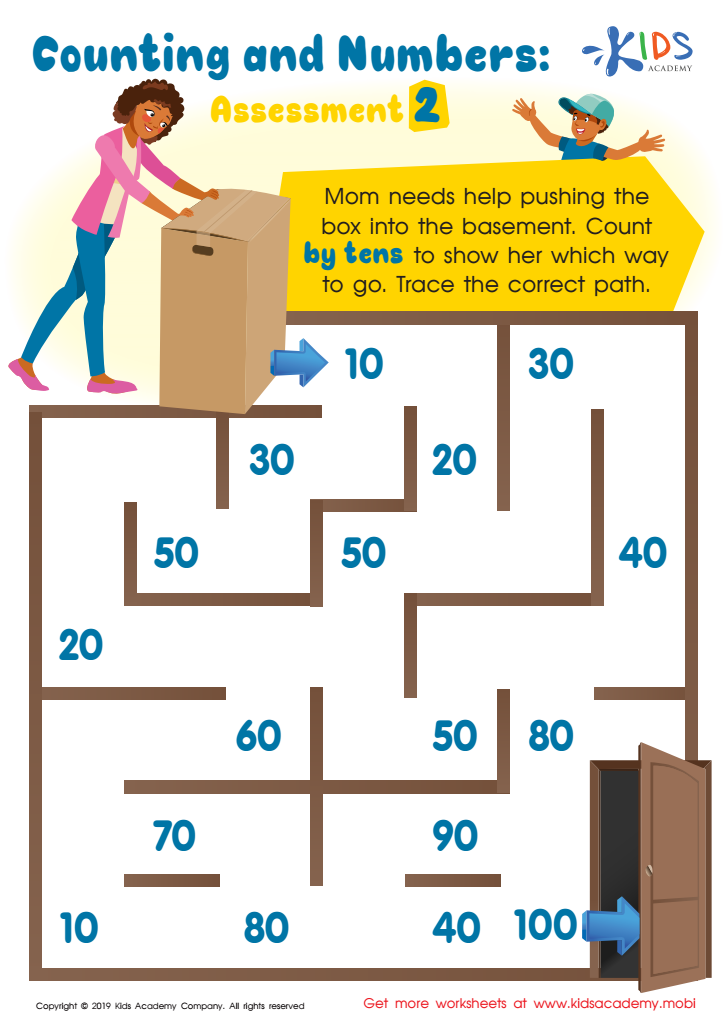
Kids love mazes and this free assessment worksheet helps them master counting by 10s. As they navigate the path, they'll improve their math skills and reach 100! It's a fun way to check your child's understanding of counting and chunking, and you'll quickly know their skill level.
Counting and Numbers: Assessment 2 Worksheet
Worksheet
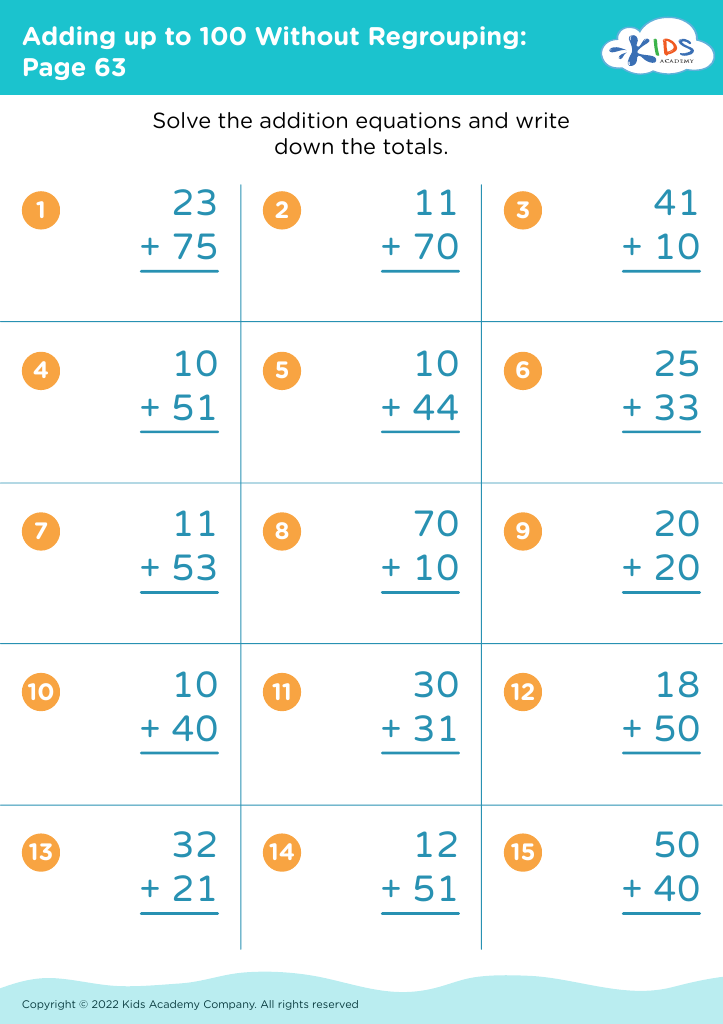
Adding up to 100 Without Regrouping: Page 63
Worksheet
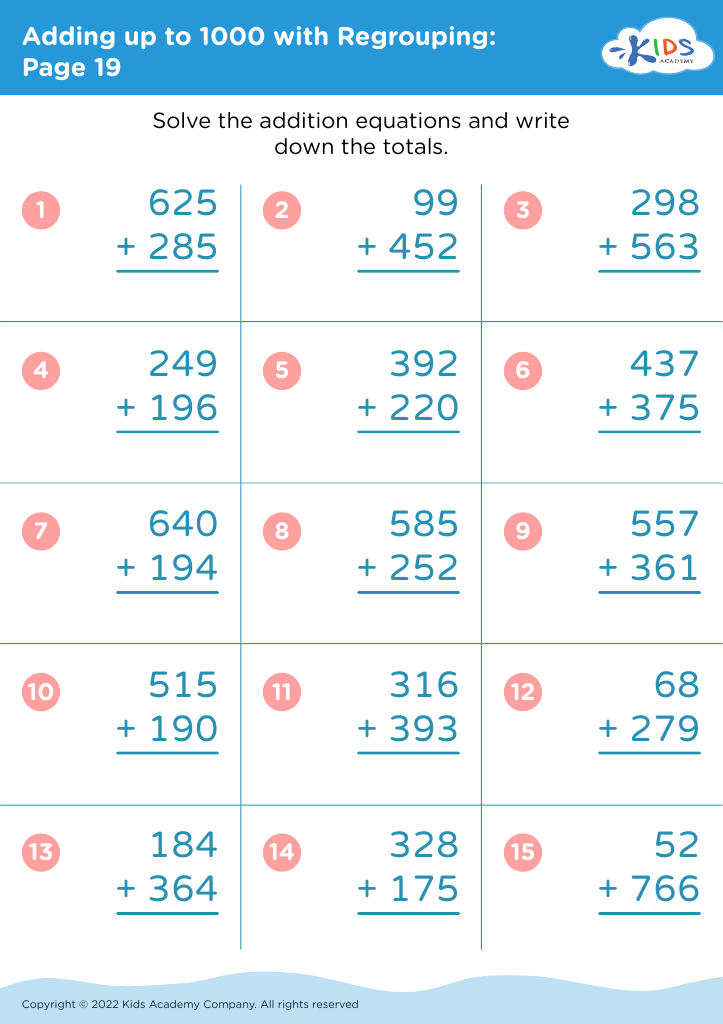
Adding up to 1000 with Regrouping: Page 19
Worksheet
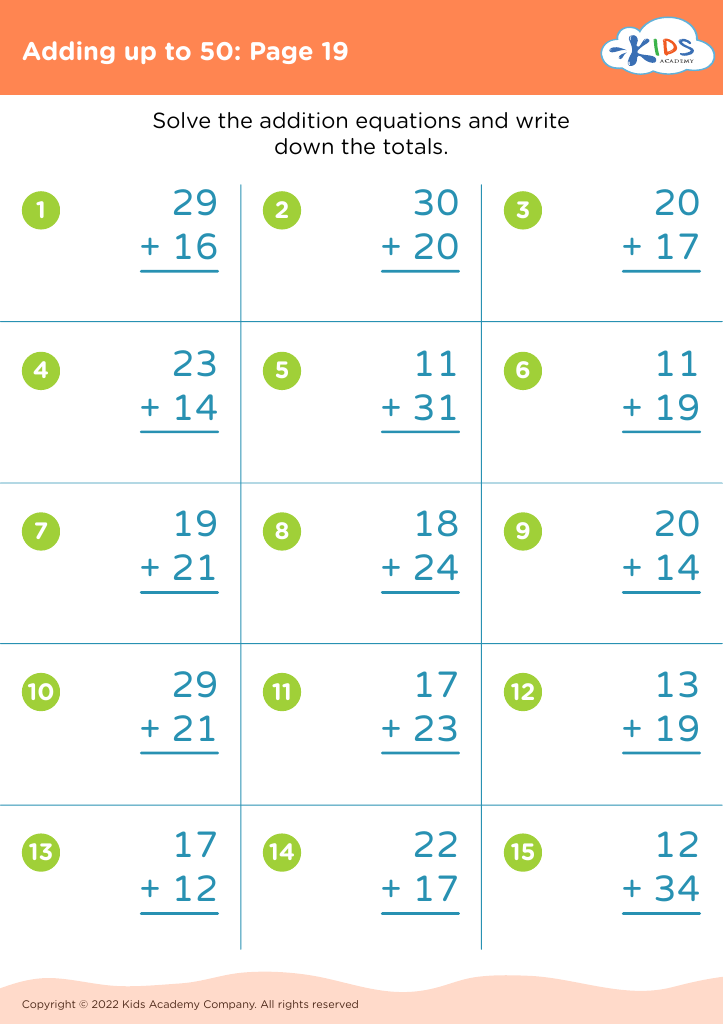
Adding up to 50: Page 19

Adding up to 50: Page 19

Adding up to 50: Page 19
Worksheet
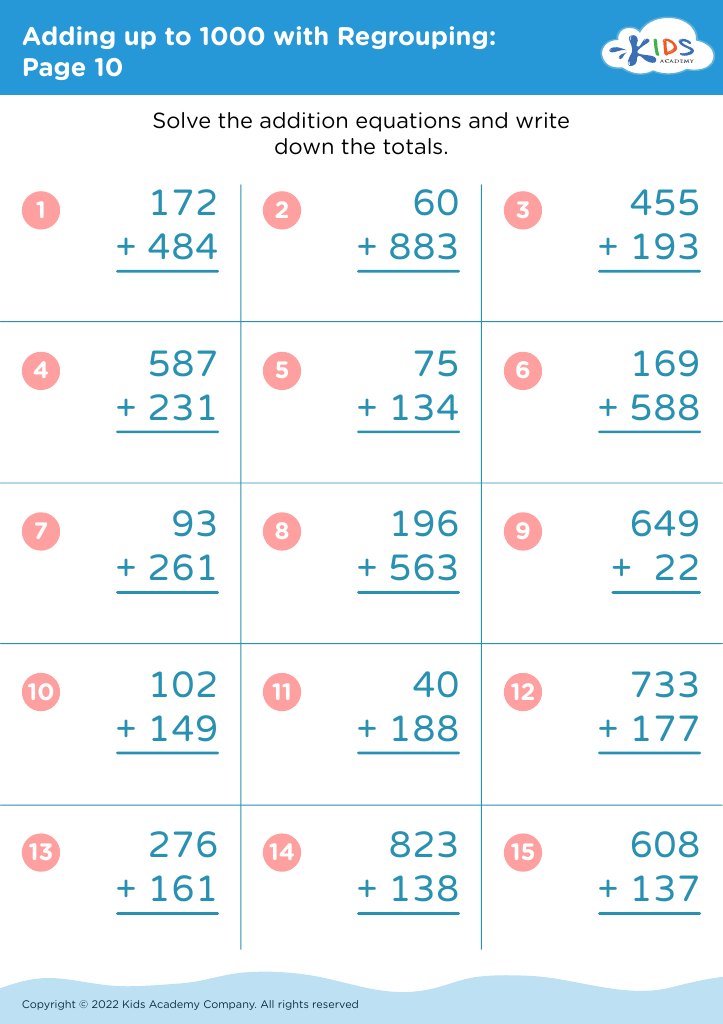
Adding up to 1000 with Regrouping: Page 10
Worksheet
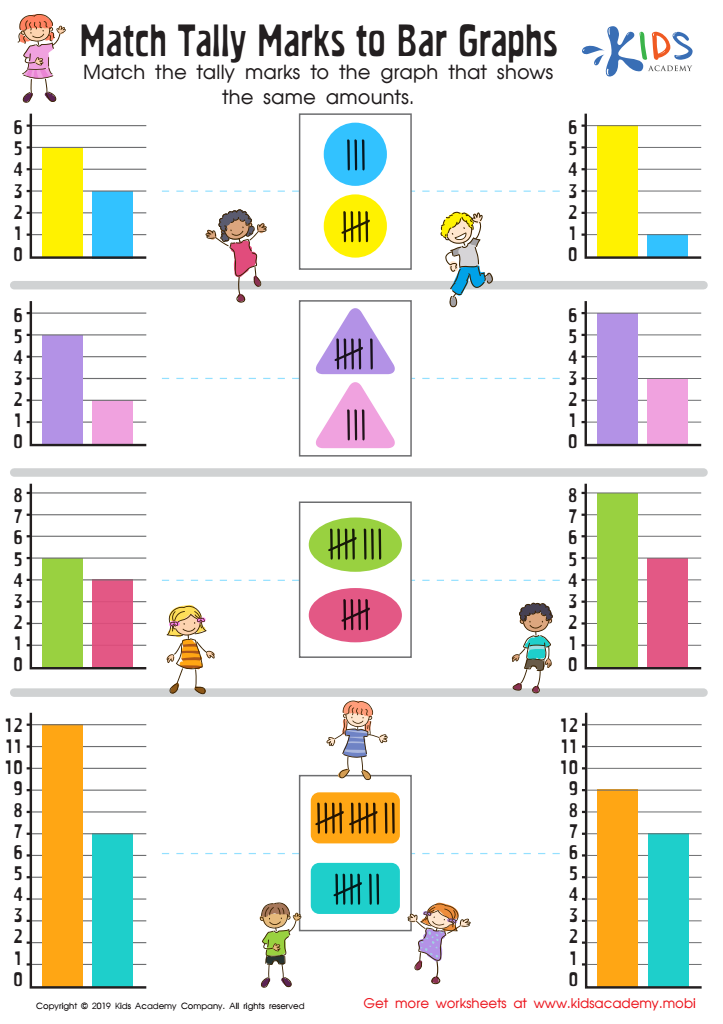
Match Tally Marks to Bar Graphs Worksheet
Match Tally Marks to Bar Graphs Worksheet
Learning math can be tough for kids. Rules and formulas can be confusing. Don't worry, this worksheet can help them understand graphs better. Show them how to match the tally marks with the graph that shows the same amount. It will help them grasp the basics and prepare them for more complex equations.
Match Tally Marks to Bar Graphs Worksheet
Worksheet
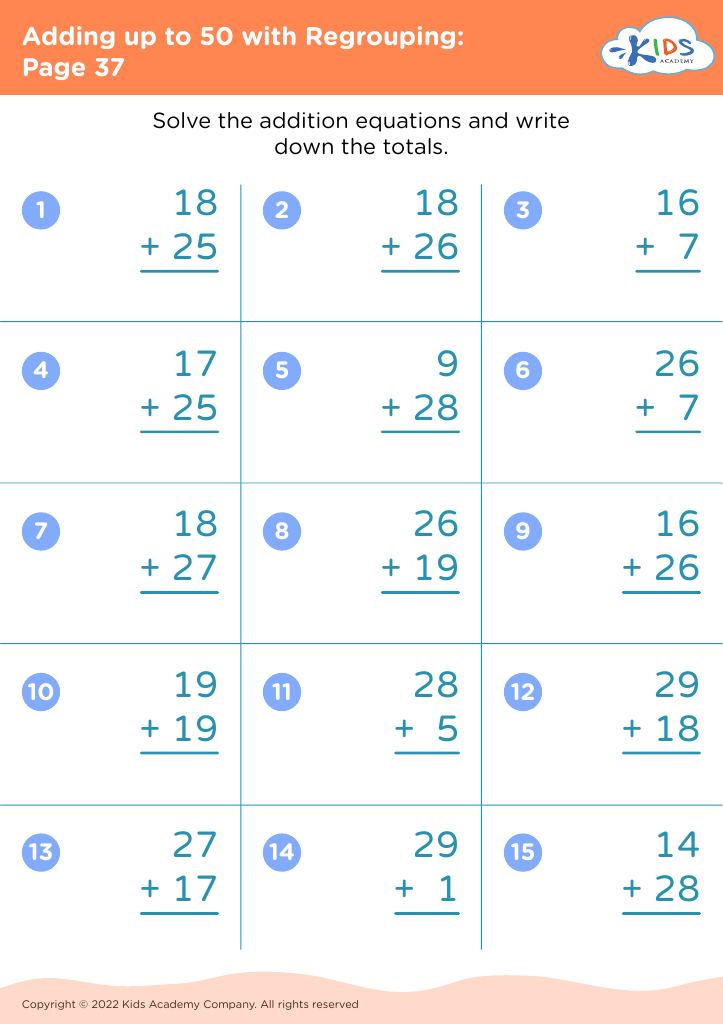
Adding up to 50 with Regrouping: Page 37
Worksheet
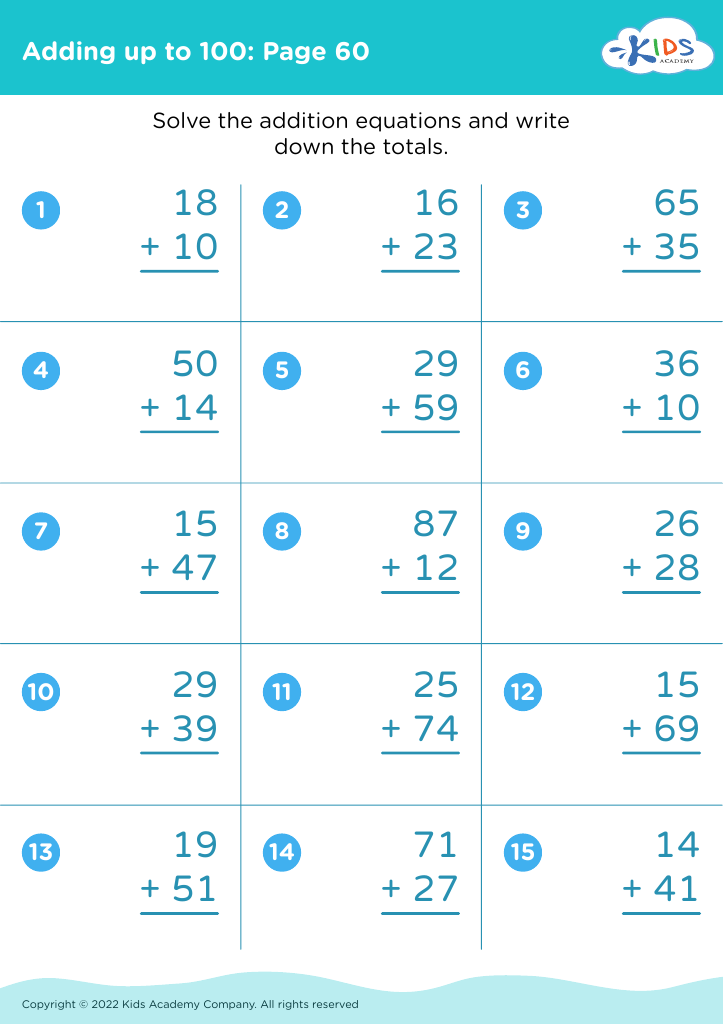
Adding up to 100: Page 60

Adding up to 100: Page 60

Adding up to 100: Page 60
Worksheet
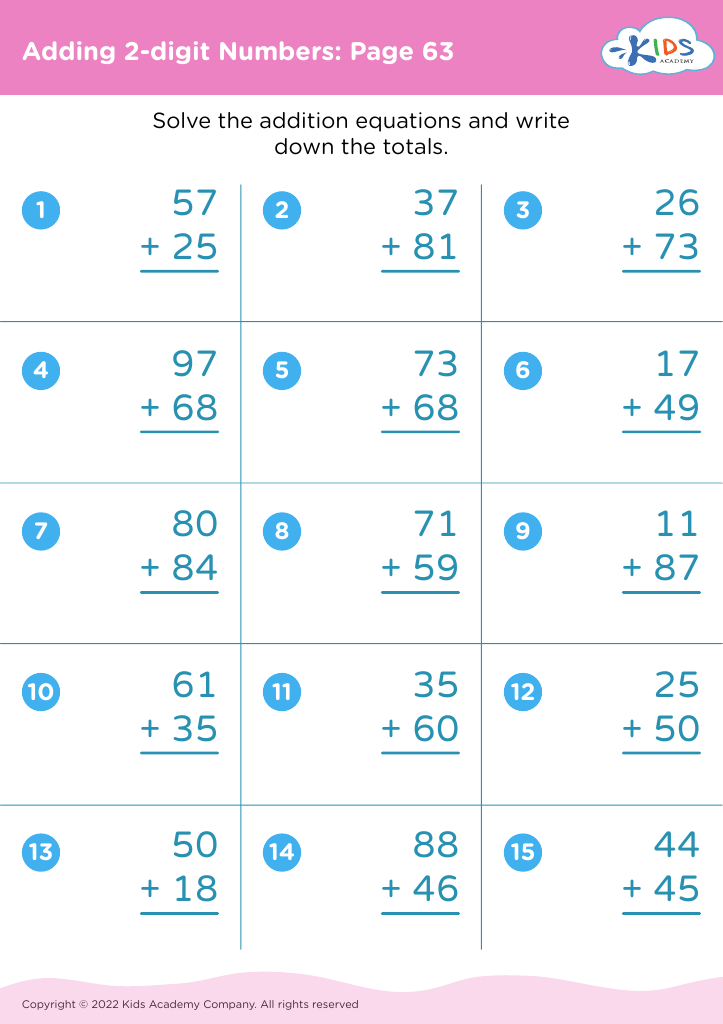
Adding 2-digit Numbers: Page 63

Adding 2-digit Numbers: Page 63

Adding 2-digit Numbers: Page 63
Worksheet
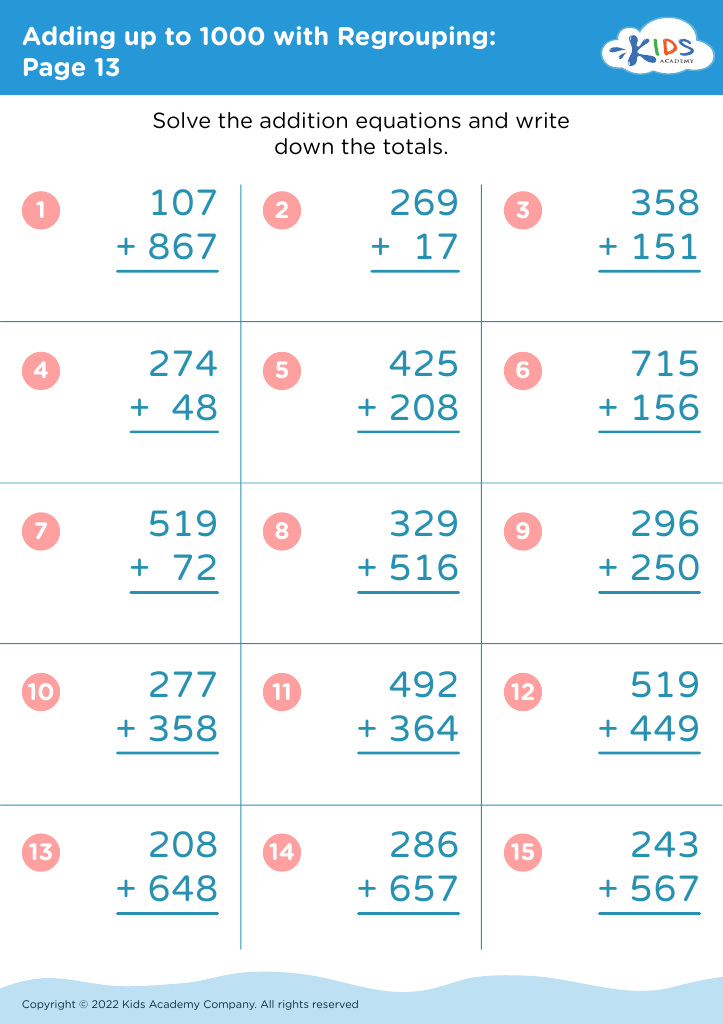
Adding up to 1000 with Regrouping: Page 13
Worksheet
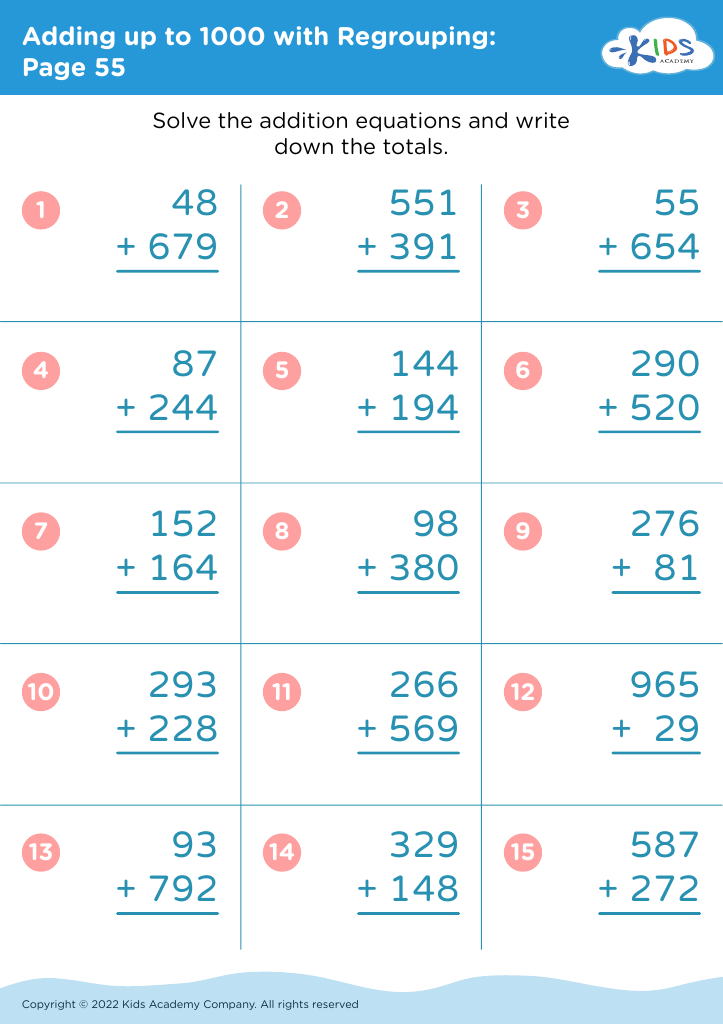
Adding up to 1000 with Regrouping: Page 55
Worksheet
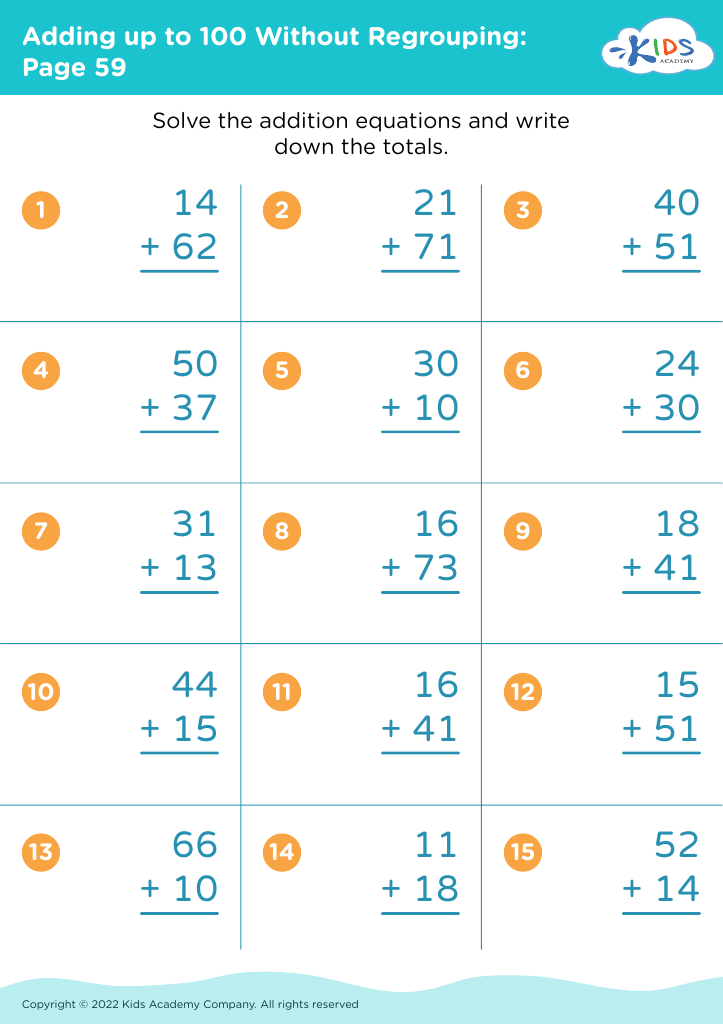
Adding up to 100 Without Regrouping: Page 59
Worksheet
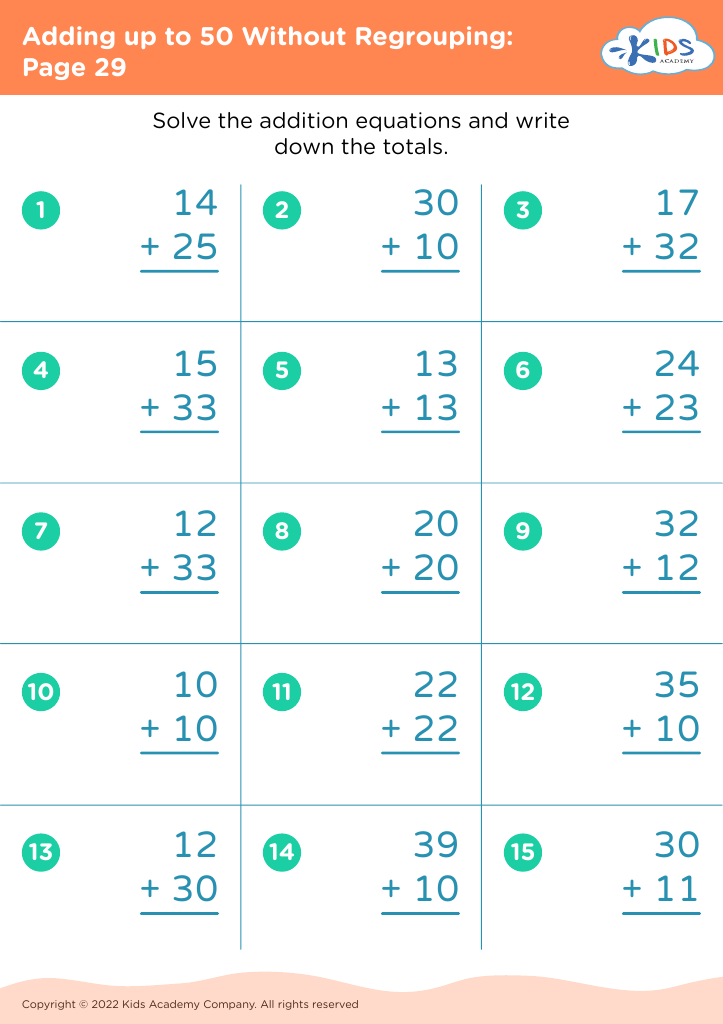
Adding up to 50 Without Regrouping: Page 29
Worksheet
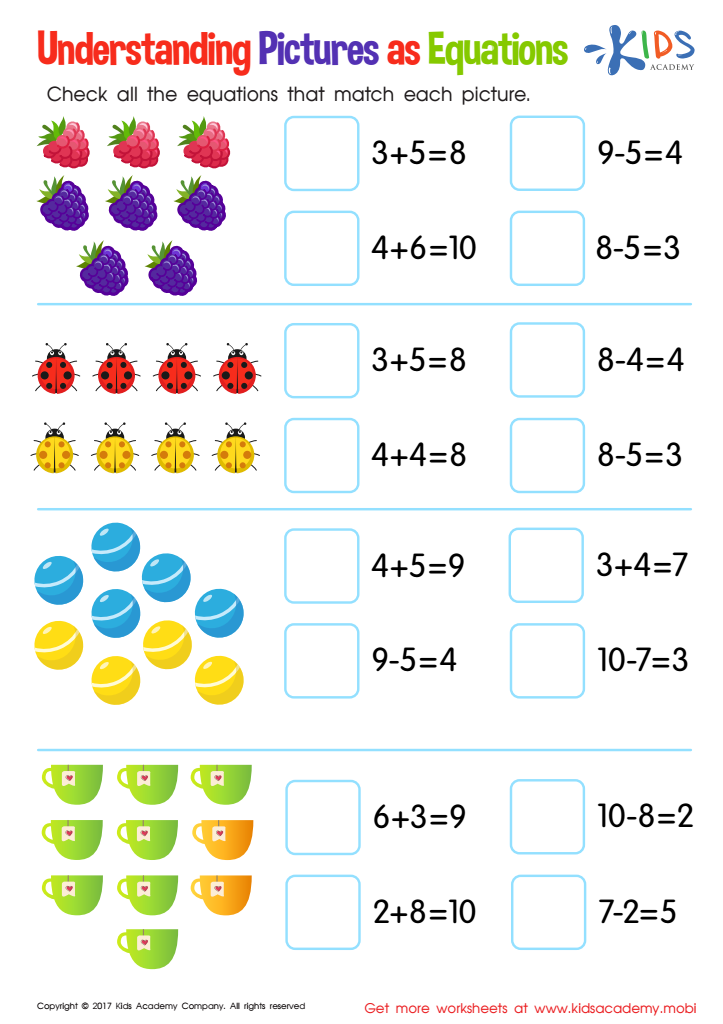
Understanding Pictures as Equations Worksheet
Understanding Pictures as Equations Worksheet
This worksheet helps your child interpret pictures into numbers and equations. Colourful grapes, ladybirds, balls and cups represent numbers which must be added to reach the total. Your child must also choose the equations that match the pictures correctly. A great way to practice math!
Understanding Pictures as Equations Worksheet
Worksheet
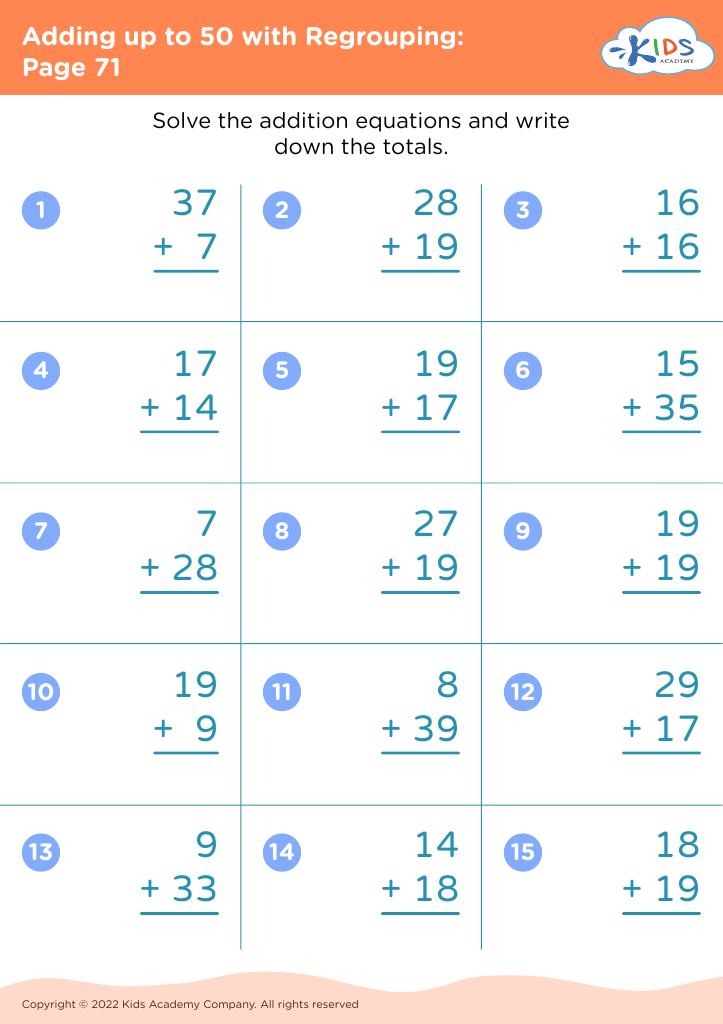
Adding up to 50 with Regrouping: Page 71
Worksheet
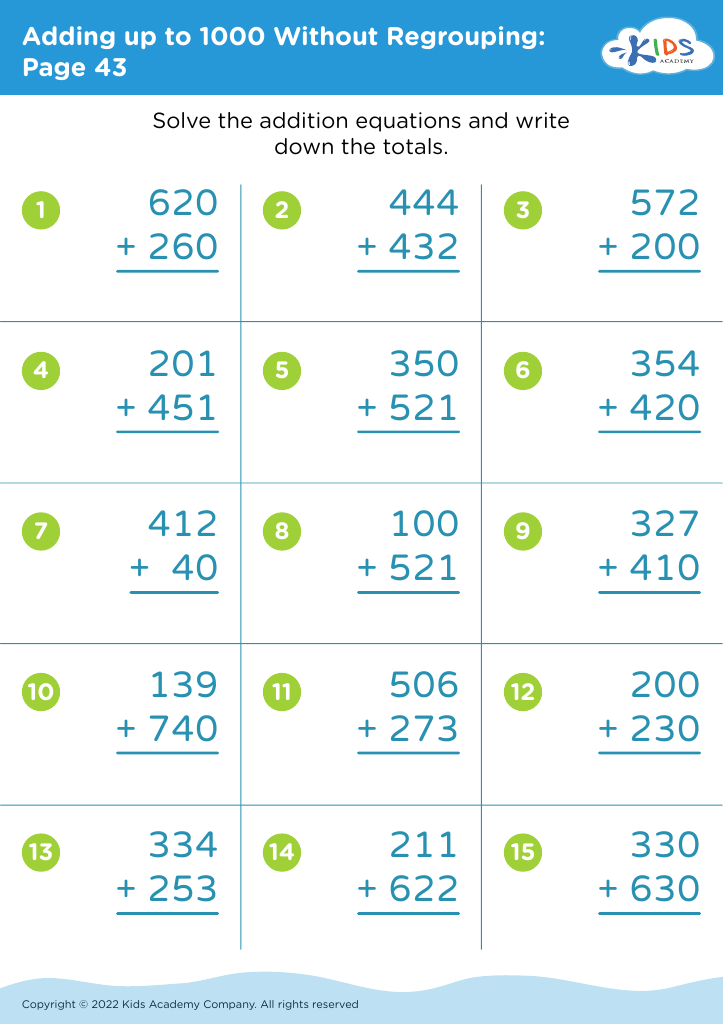
Adding up to 1000 Without Regrouping: Page 43
Worksheet
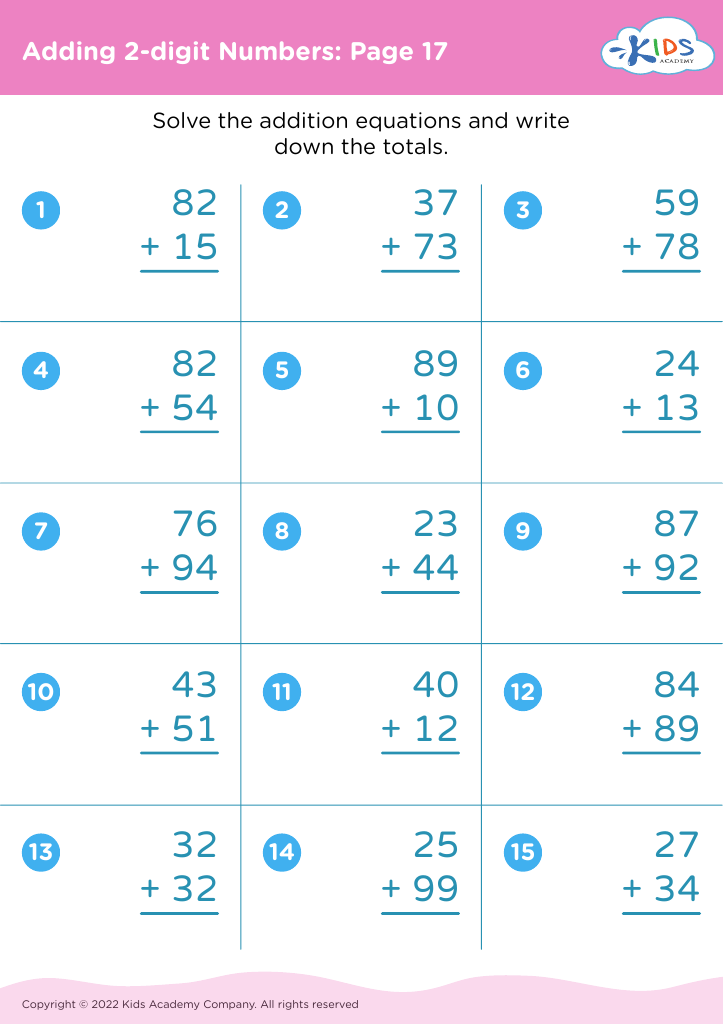
Adding 2-digit Numbers: Page 17

Adding 2-digit Numbers: Page 17

Adding 2-digit Numbers: Page 17
Worksheet
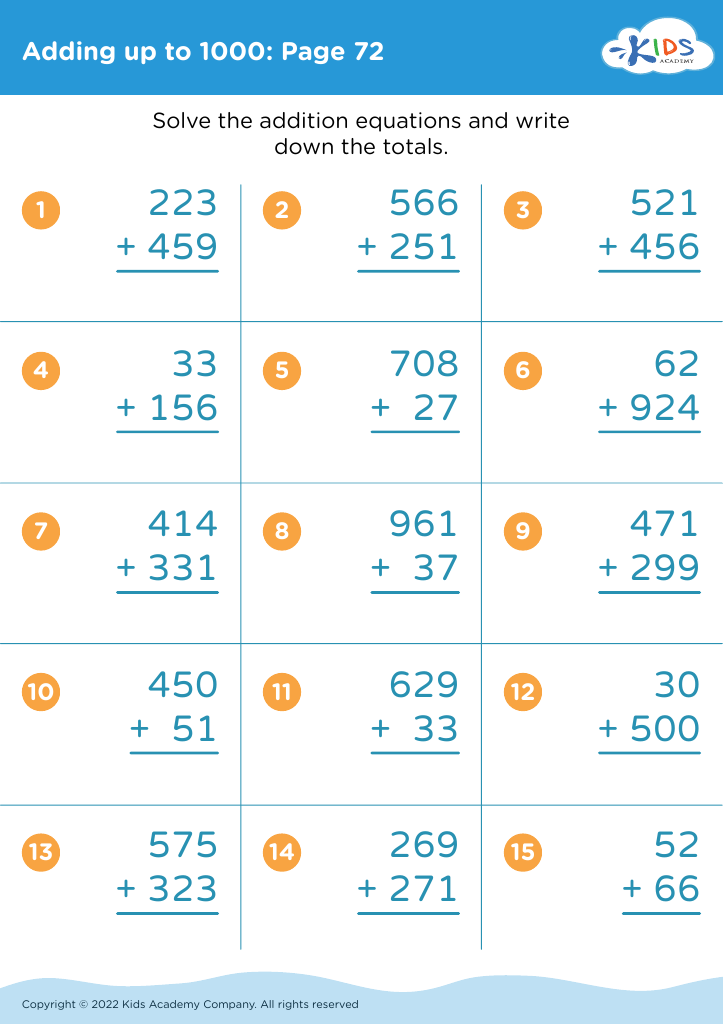
Adding up to 1000: Page 72

Adding up to 1000: Page 72

Adding up to 1000: Page 72
Worksheet


Recognizing patterns in math is essential for young learners aged 5-7 as it lays the foundational skills necessary for future mathematical understanding and problem-solving. At this developmental stage, children are naturally curious and adept at identifying similarities, differences, and sequences in their environment, making it a perfect time to introduce pattern recognition.

By engaging in pattern-related activities, children improve their analytical thinking skills and enhance their ability to make predictions. For instance, recognizing patterns in numbers or shapes helps them to understand concepts like addition and subtraction more intuitively, as they learn to see relationships within data. Furthermore, patterns are not just integral to math; they appear in science, music, and art, fostering cross-disciplinary connections that enrich overall learning.

Teachers and parents should care about this aspect of math because it helps build confidence in young learners. Mastering patterns enables children to approach more complex mathematical concepts with a solid foundation, paving the way for success in future schooling. Additionally, recognizing patterns also encourages critical thinking and creativity, equipping children with valuable skills that extend beyond the classroom. Thus, early investment in pattern recognition is crucial for cultivating effective problem solvers and lifelong learners.