
Time recognition Math Worksheets for Ages 5-7
6 filtered results
Difficulty Level
Grade
Age
-
From - To
Subject
Activity
Standards
Discover engaging Time Recognition Math Worksheets designed for children ages 5-7. Perfect for early learners, these worksheets focus on reading clocks, understanding hours and minutes, and mastering basic time concepts. Through fun activities and colorful visuals, kids will develop essential time-telling skills while boosting their confidence in math. Tailored to suit young minds, these resources ensure learning is enjoyable and effective. Help your child build a strong foundation in time recognition with our expertly crafted worksheets, available for easy download and print. Start your child's math journey today with Kids Academy's high-quality educational materials!
Favorites
With answer key
Interactive
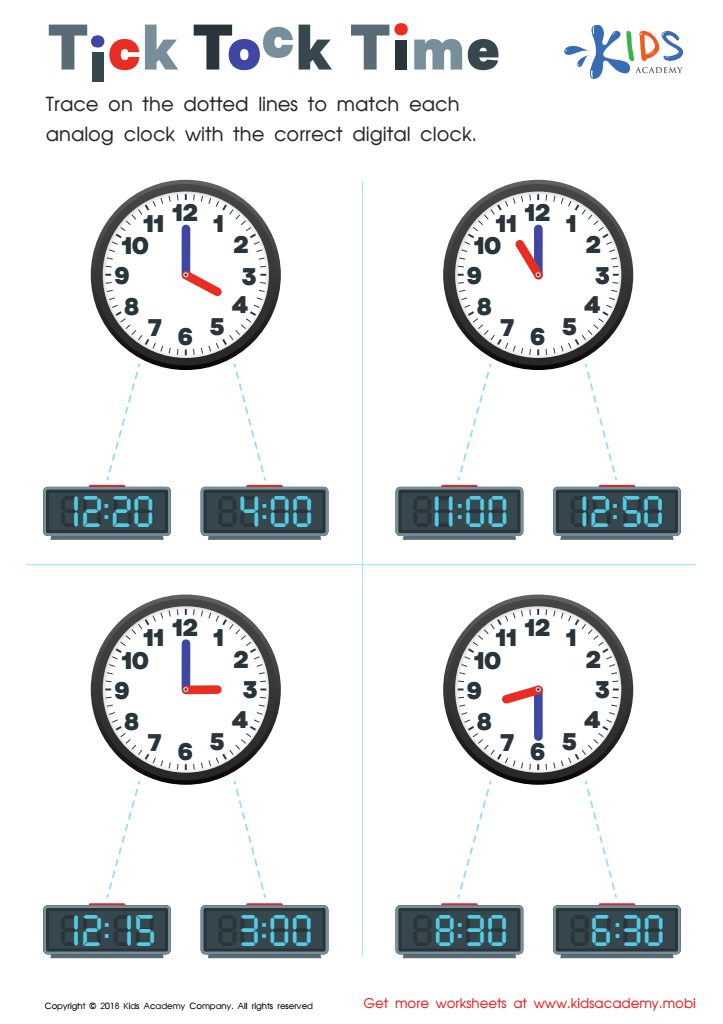
Tick Tock Time Worksheet
Trace the dotted lines on this worksheet to match analog and digital clocks! It's a great way to help your kids learn time-telling. They'll get better at converting analog to digital, and vice versa. Get your children to try it - it's a fun way to practice!
 Assign to My Students
Tick Tock Time Worksheet
Worksheet
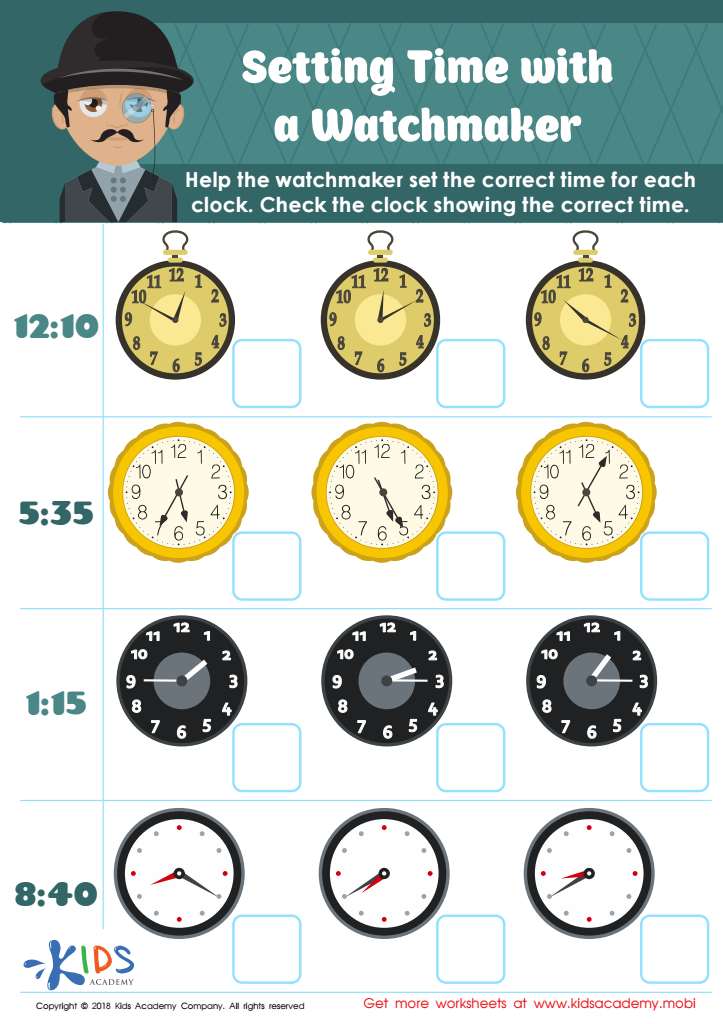
Setting Time with Watchmaker Worksheet
Can your kids tell the time? If so, this worksheet should be easy. Help them set the time for each clock: look at the time written on the left side and find the clock on the right side that matches.
Setting Time with Watchmaker Worksheet
Worksheet
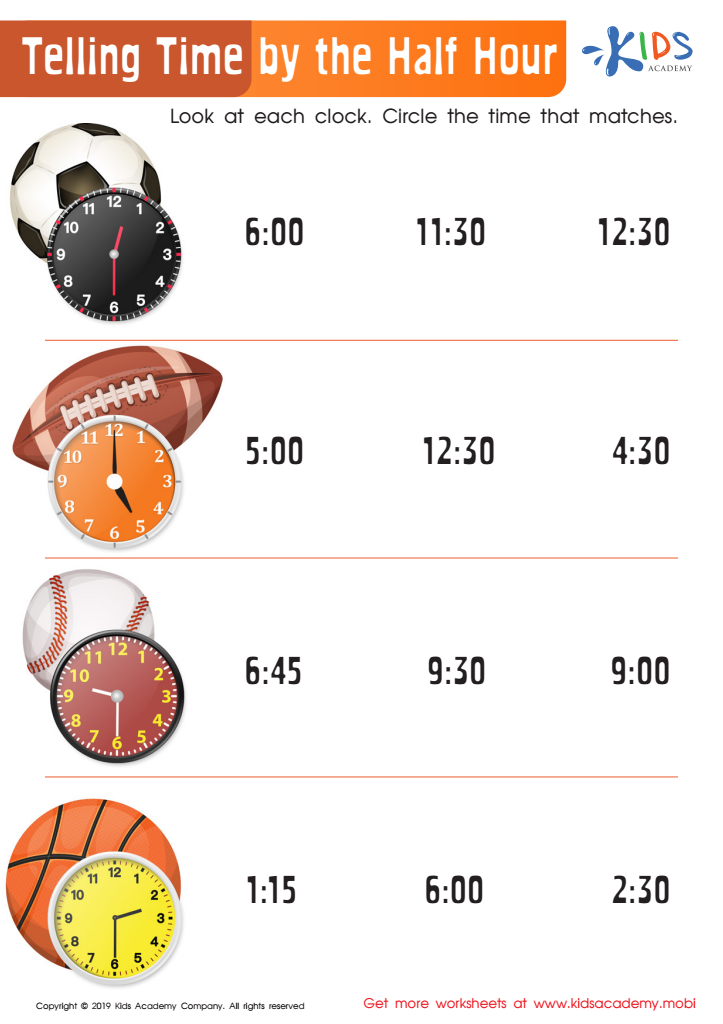
Telling Time by the Half Hour Worksheet
Teach kids to tell time with this worksheet! Four clocks are labeled with different times; help your child circle the right one. It's a great way to teach them to read analog and digital clocks, watches, and written times. Easy and fun learning!
Telling Time by the Half Hour Worksheet
Worksheet
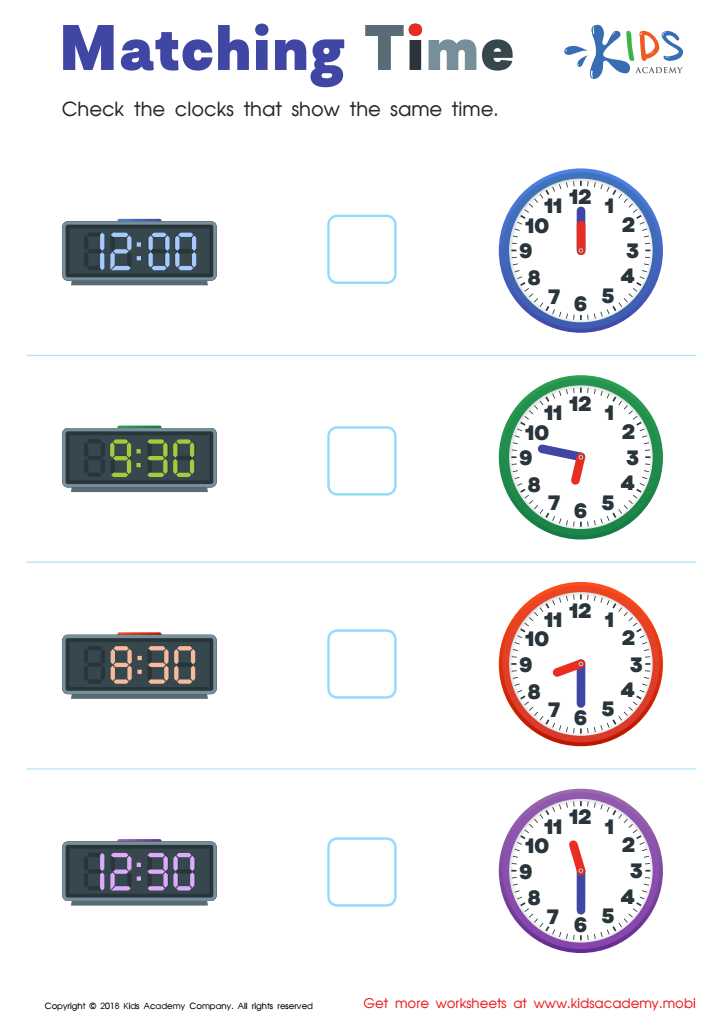
Matching Time Worksheet
Teach your child to read time in both digital and analog formats with this helpful printout. They'll identify clocks that match in both formats and check them off. Colorful and engaging, it's a great way to help your child understand the concept of time-telling.
Matching Time Worksheet
Worksheet
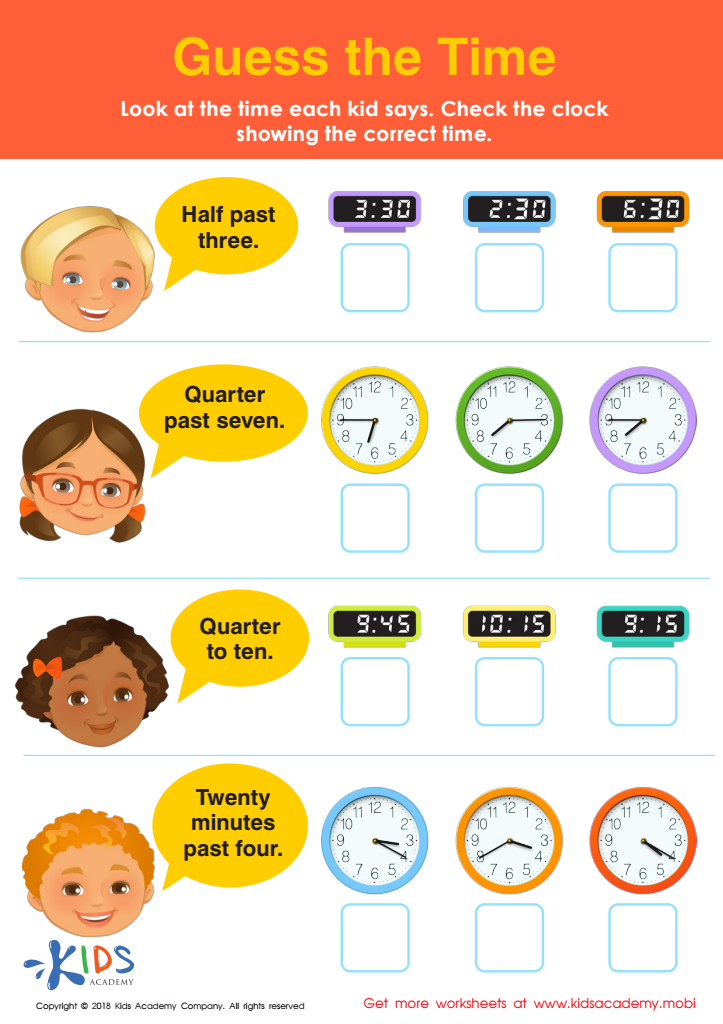
Guess the Time Worksheet
Help students tell the time accurately with this fun exercise. Read the time each person says and find the corresponding clock. Check the options on the left and have students guess the right time. This worksheet is sure to sharpen their time-telling skills.
Guess the Time Worksheet
Worksheet
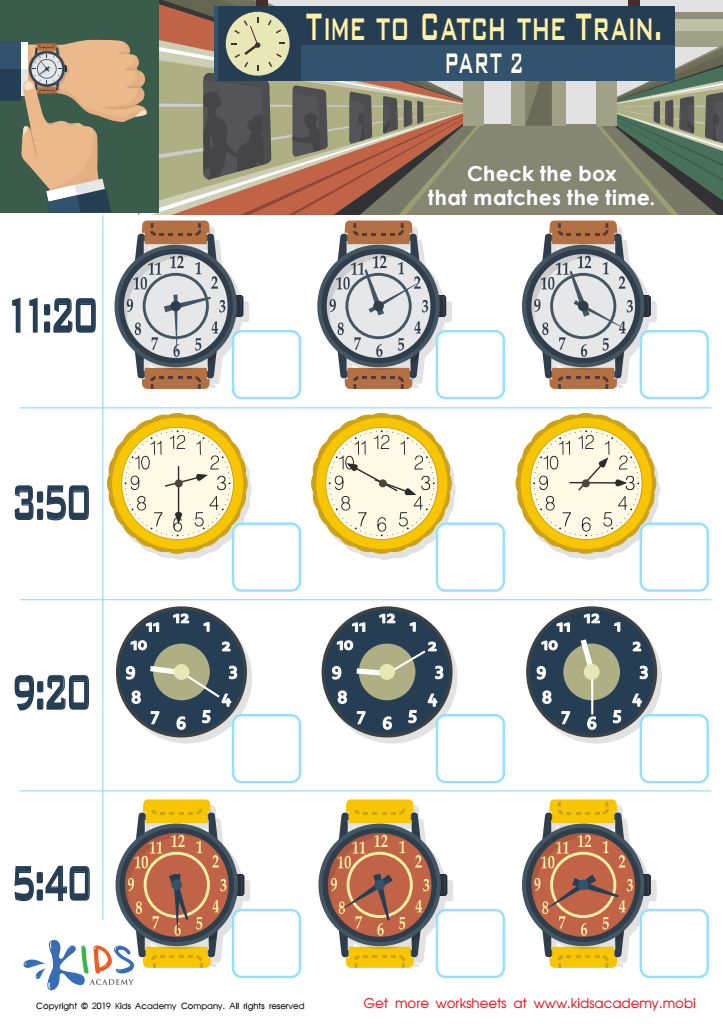
Time to Catch the Train Part 2 Worksheet
Teach your kids the importance of telling time and how to do it. Explain that there are multiple ways to show the time, such as written on the left side or watches in the picture. Guide them to check the box that matches the time. Knowing the time is essential to get things done and create order. Ensure your kids understand this and they will reap the benefits.
Time to Catch the Train Part 2 Worksheet
Worksheet
Join Kids Academy for Free
Who is primarily going to use this learning content?







Time recognition math is crucial for children aged 5-7 for several significant reasons. Firstly, understanding the concept of time helps foster independence and responsibility at an early age. When children can comprehend hours and minutes, they gain the ability to manage their daily routines, such as knowing when to wake up, go to school, or start homework. This early skill lays the foundation for better time management as they grow older.
Secondly, time recognition is a key element of mathematical literacy. Grasping concepts like hours, half-hours, and minutes can reinforce number sense and sequencing, which are fundamental to more advanced math topics. Teaching children to read analog and digital clocks enhances their numerical abilities and introduces them to division (half-hours) and multiplication (intervals of five minutes).
Moreover, the ability to tell time is an essential life skill. It’s critical for safety, punctuality, and social interaction. For instance, children need to catch the bus on time or meet friends at a given hour, and understanding time allows them to do so reliably.
Lastly, time recognition can improve children's cognitive abilities, including memory and attention to detail. These skills serve them well across all academic and personal activities. In sum, prioritizing time recognition for young children equips them with essential life skills and strengthens their mathematical foundation, crucial for their overall development.








