Comparing object weights Measurement Worksheets for Ages 5-7
3 filtered results
-
From - To
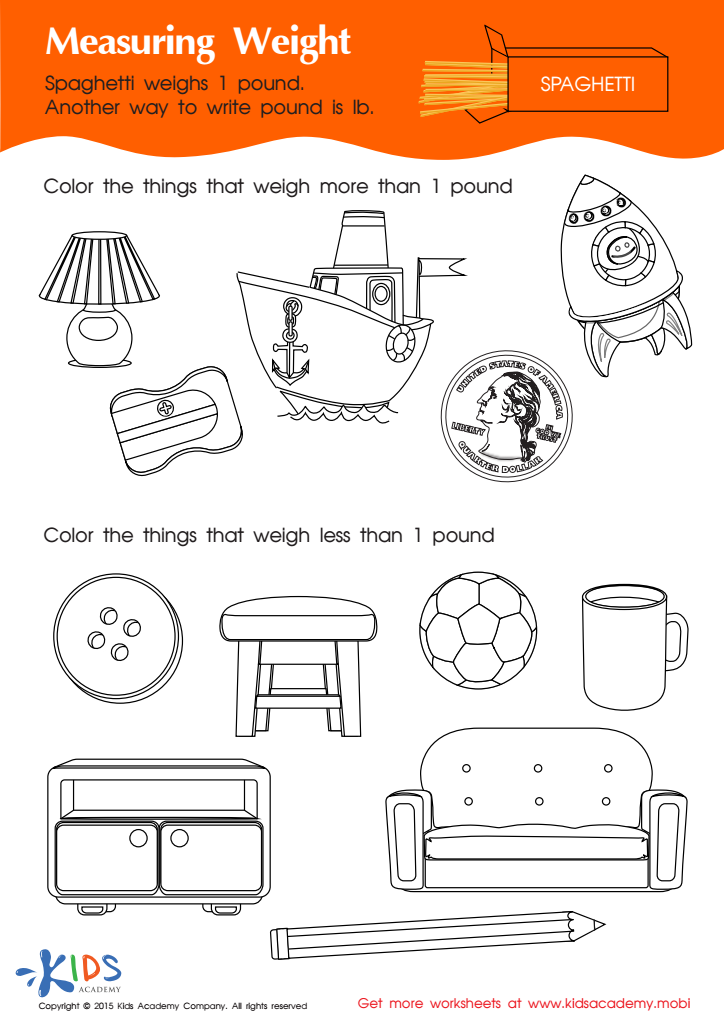
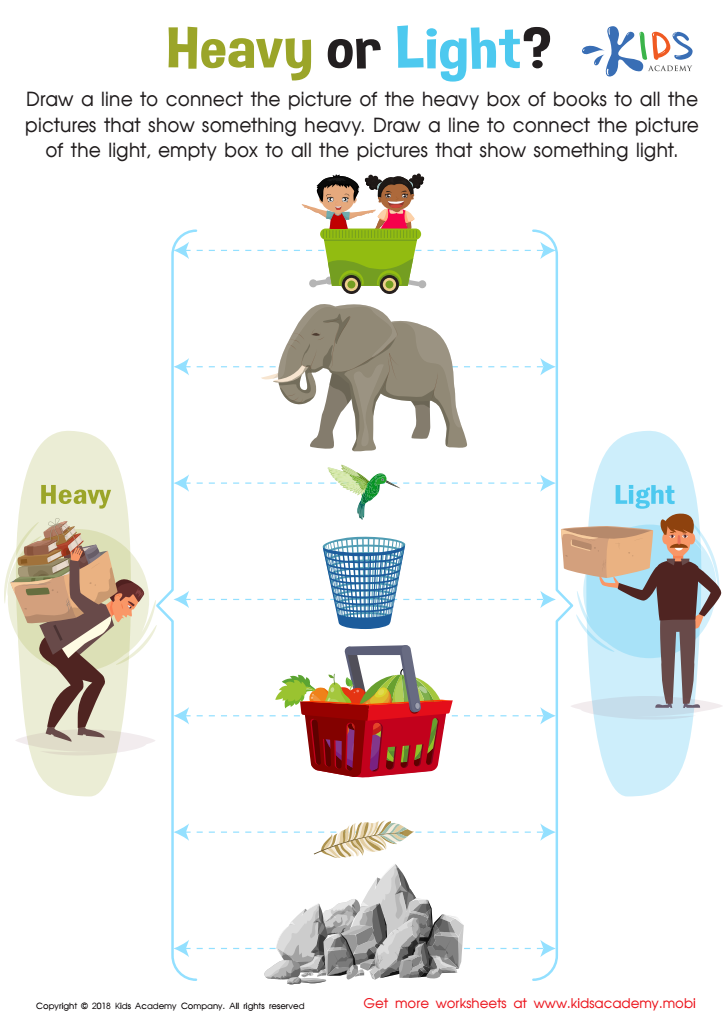
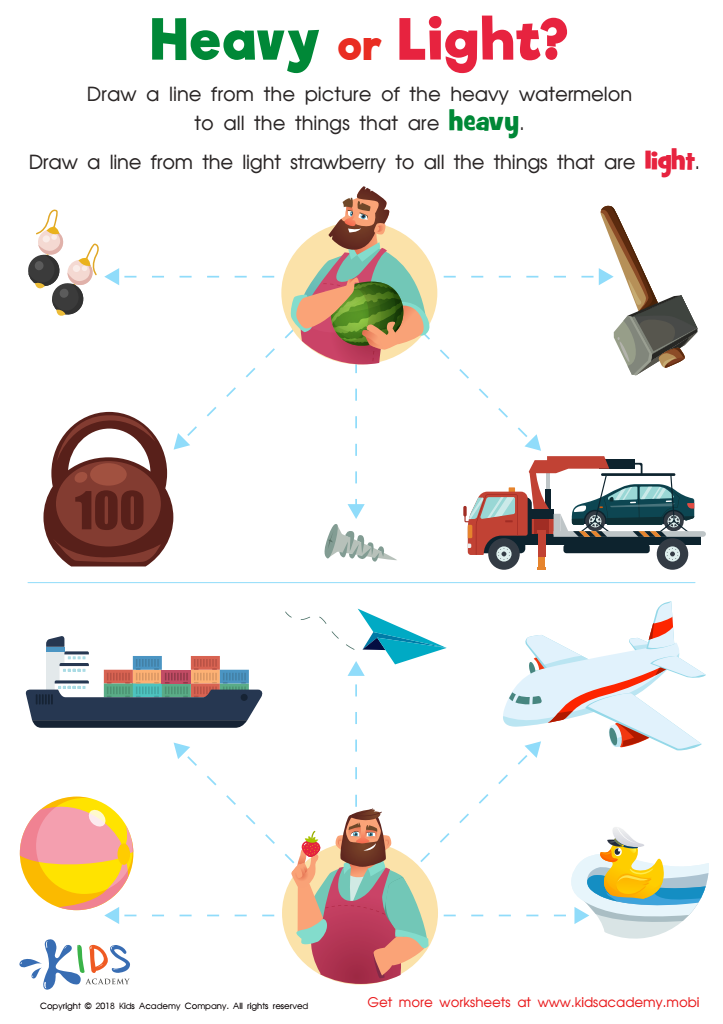
Discover engaging "Comparing Object Weights Measurement Worksheets" tailored for children aged 5-7! These interactive worksheets provide a fun and effective way for young learners to explore concepts of weight and measurement. Through hands-on activities, kids will practice comparing the weights of various objects, enhancing their critical thinking and analytical skills. Our worksheets are designed to reinforce foundational math concepts in a playful and supportive environment, ensuring that learning is both enjoyable and productive. Unlock your child's potential in understanding measurements with our thoughtfully crafted resources that encourage curiosity and foster a love for learning! Perfect for homeschooling or classroom use!
 Assign to My Students
Heavy or Light? Worksheet
Heavy or Light? Worksheet








Comparing object weights is a fundamental skill that plays a crucial role in the early development of children's mathematical understanding. For ages 5-7, engaging in weight comparison activities introduces key concepts such as measurement, number sense, and critical thinking. This practice enables children to grasp the idea of heavier versus lighter and to use comparative language, which enhances their vocabulary and communication skills.
Parents and teachers should prioritize this skill because it lays the groundwork for more complex mathematical concepts later on. As children begin to understand weights, they also develop vital problem-solving skills by predicting and verifying their hypotheses through hands-on exploration. This interactive learning fosters engagement, making math enjoyable and relevant to everyday scenarios.
In the context of social development, sharing and discussing weight comparisons promotes teamwork and peer learning. Furthermore, integrating concepts of weight with storytelling or play enhances cognitive connections, aiding memory retention.
Ultimately, teaching children to compare weights not only builds confidence in their mathematical abilities but also nurtures a sense of curiosity about the world around them. Investing time in these activities helps create enthusiastic and skilled learners who are prepared for future academic challenges.








