Comparing sizes Measurement Worksheets for Ages 5-7
9 filtered results
-
From - To
Welcome to our "Comparing Sizes Measurement Worksheets" for children aged 5-7! These engaging, printable worksheets are designed to help young learners understand size differences through fun activities. Children will explore concepts of big and small, tall and short, and more by comparing various objects. Our worksheets encourage hands-on learning, making it easier for kids to visualize and grasp measurement concepts. With vibrant illustrations and easy-to-understand instructions, these resources are perfect for at-home or classroom use. Support your child's mathematical development and enhance their observational skills with our captivating comparing sizes worksheets! Let's make learning dimensions a delightful adventure!
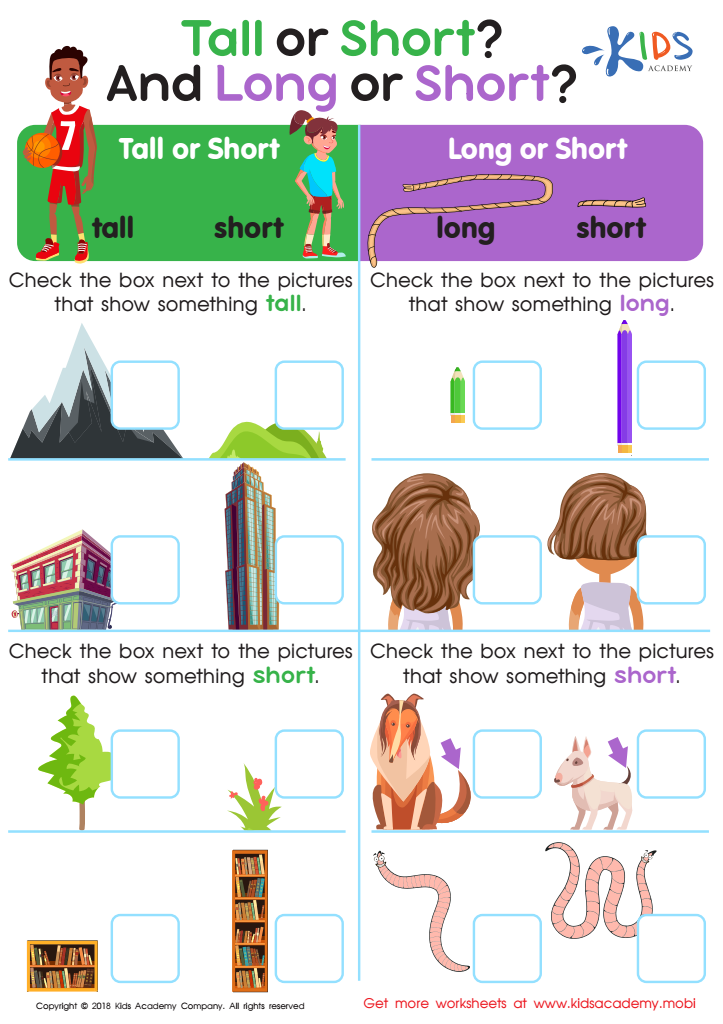
Tall or Short and Long or Short? Worksheet
 Assign to My Students
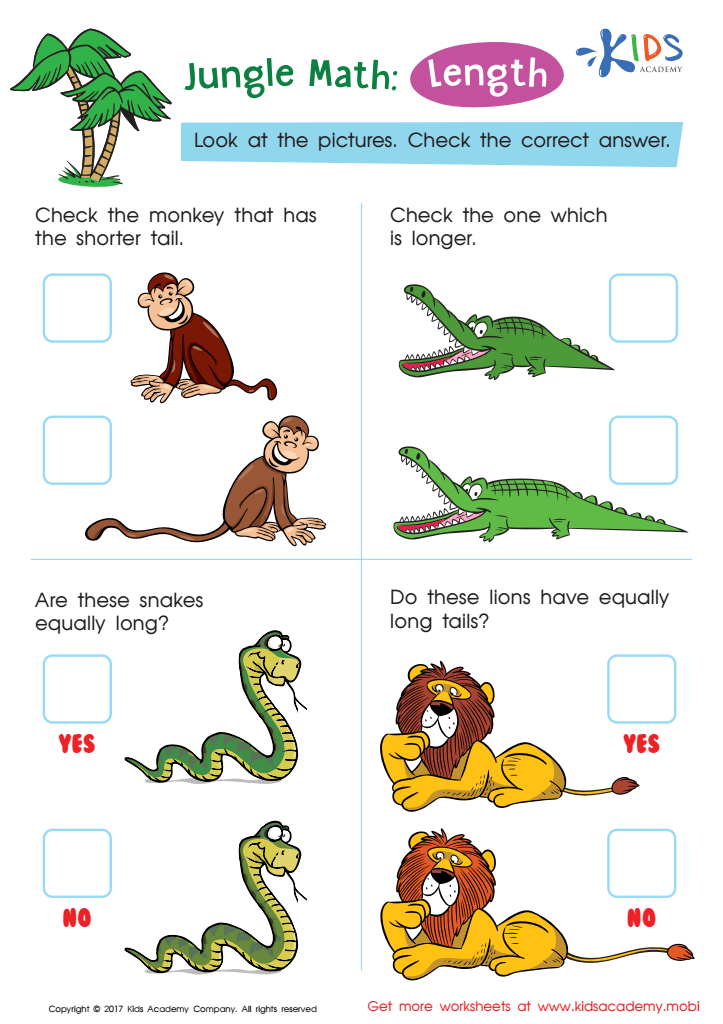
Which One Is Longer - Length Worksheet
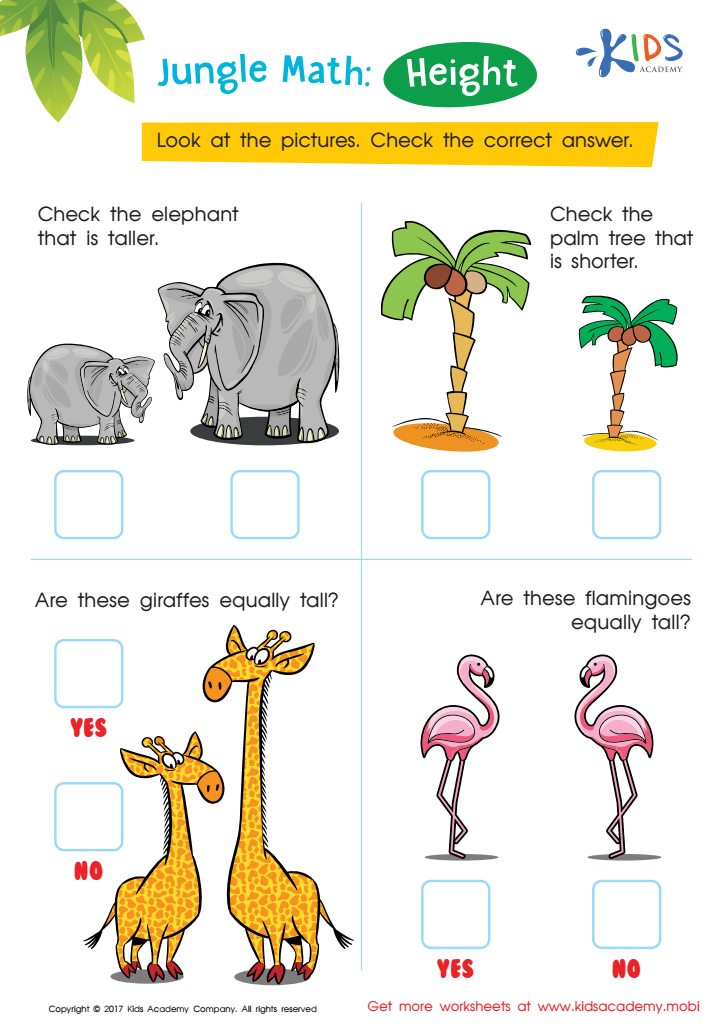
Which Is Taller Worksheet
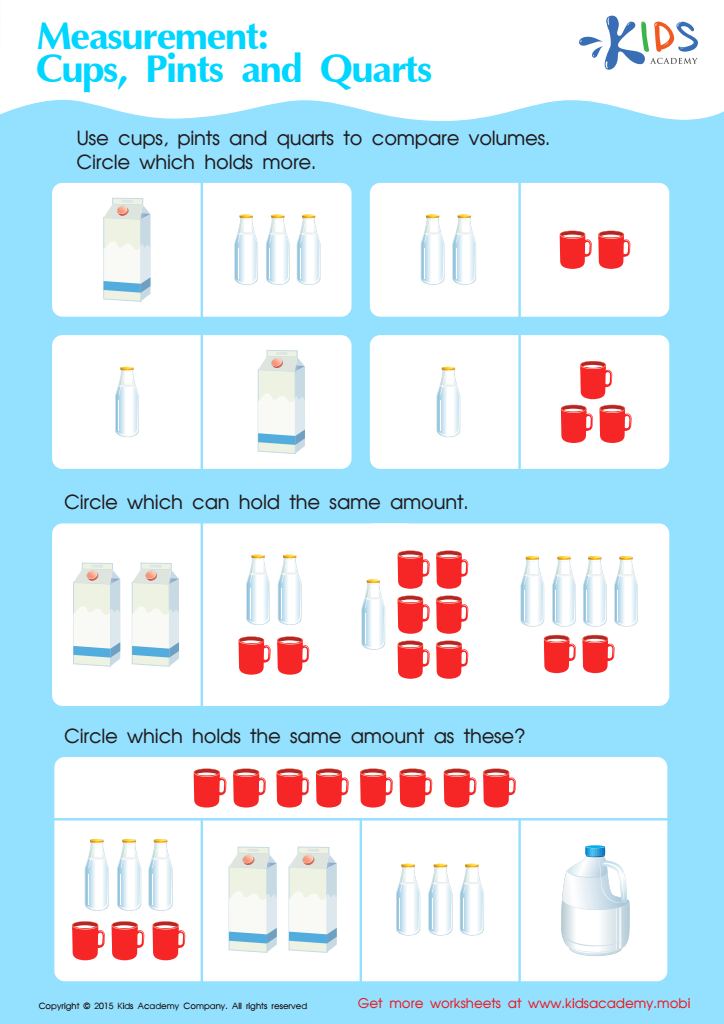
Measurement: Compare Volumes Worksheet
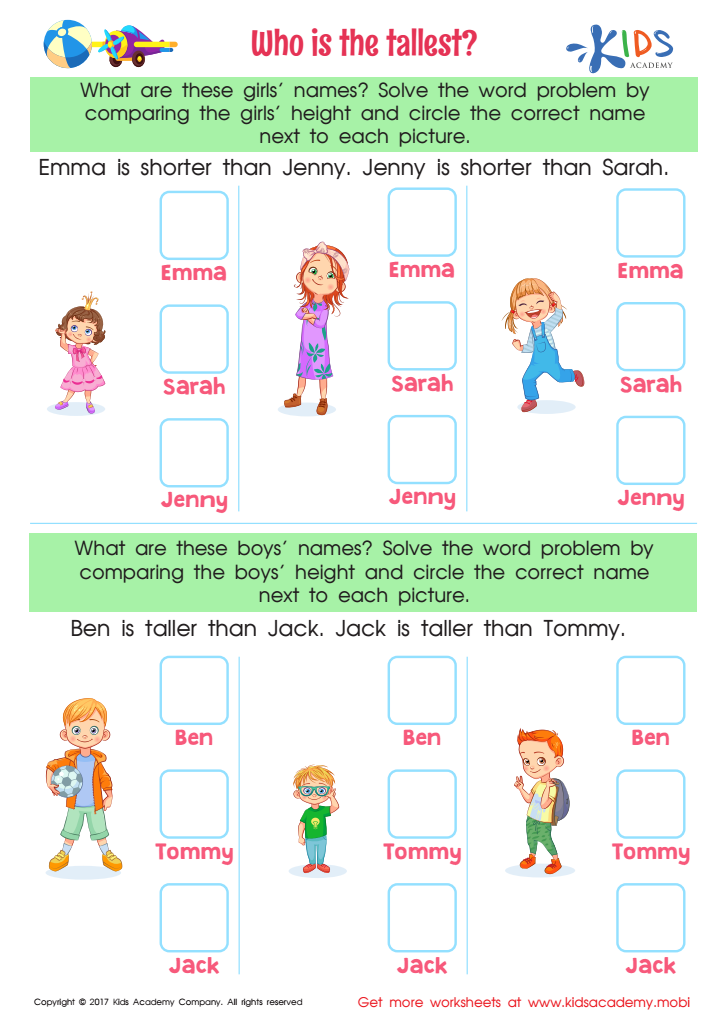
Who Tallest Printable
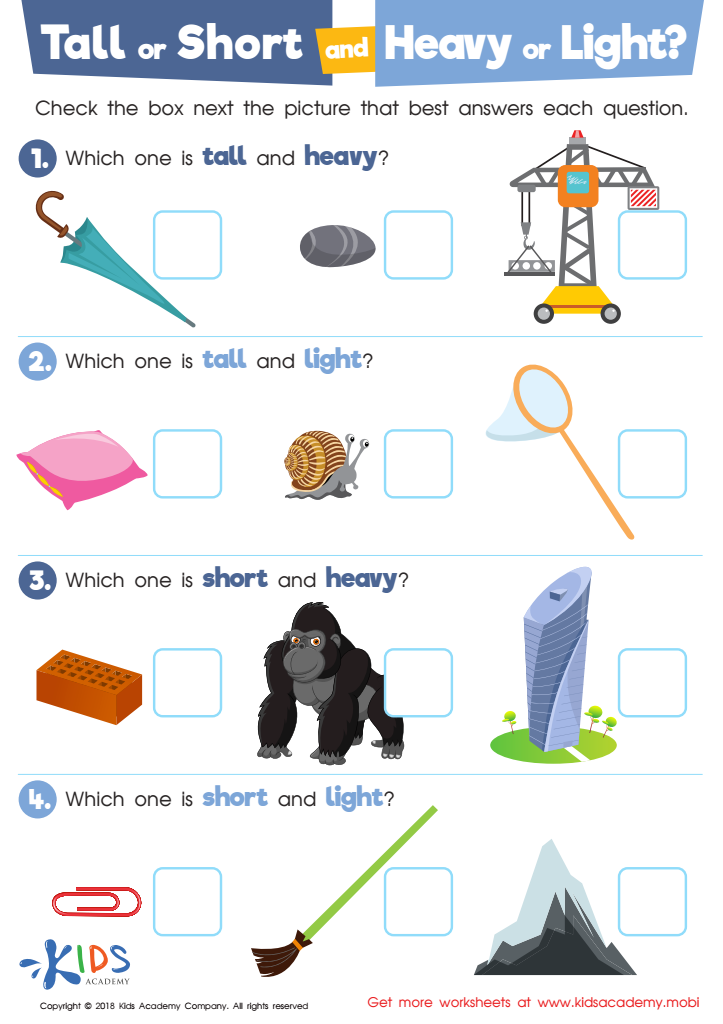
Tall or Short and Heavy or Light? Worksheet
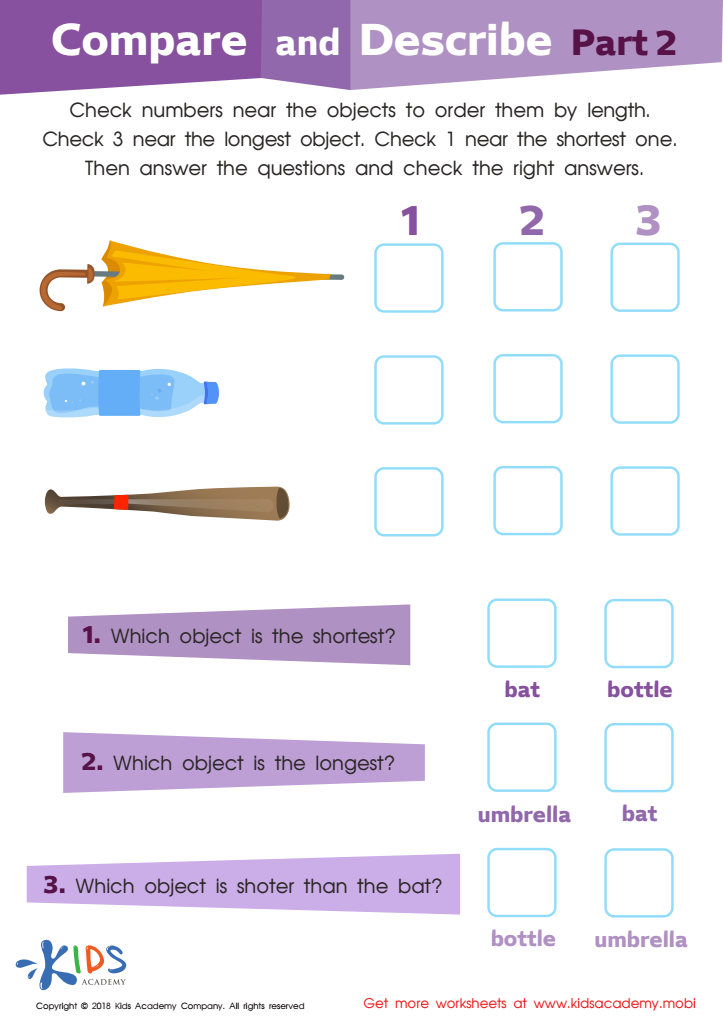
Compare and Describe: Part 2 Worksheet
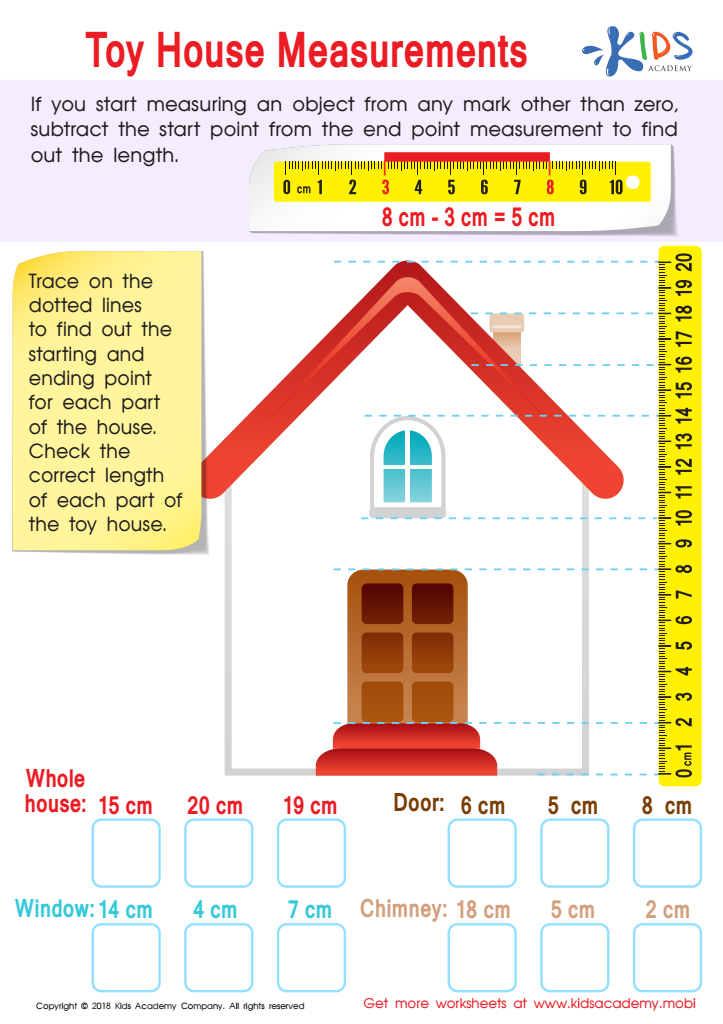
Toy House Measurements Worksheet
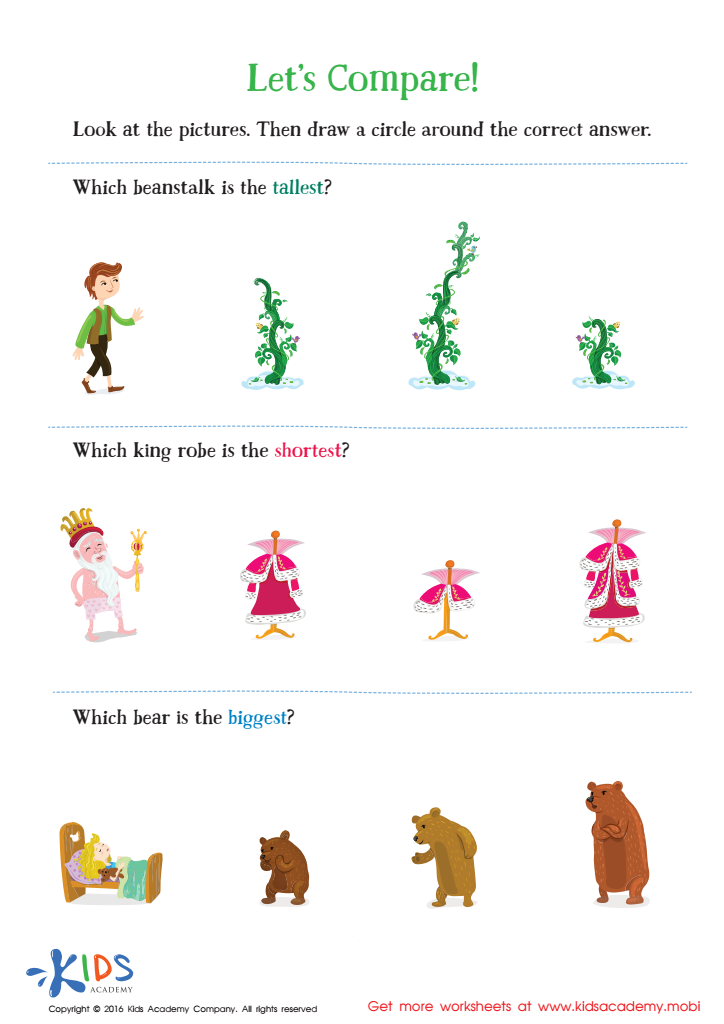
Fairy Tale Worksheet: Let's Compare



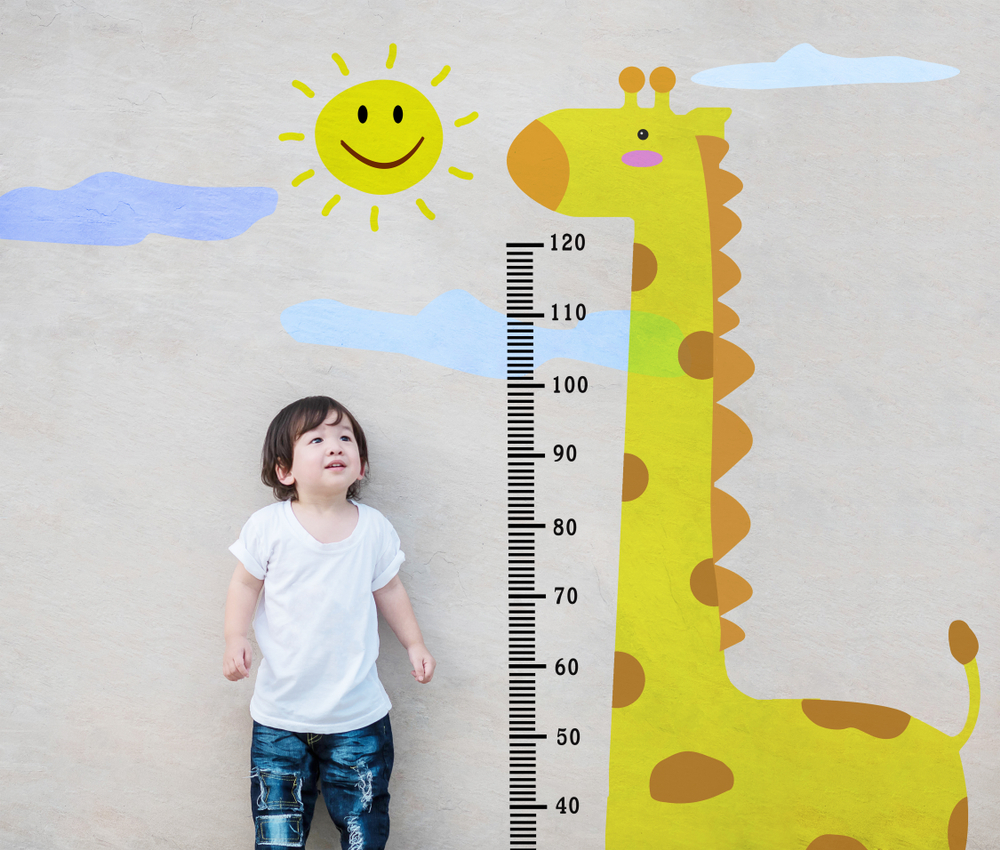




Comparing sizes and understanding measurement is crucial for children aged 5-7, as this foundational skill builds their mathematical reasoning and everyday problem-solving abilities. During this developmental stage, children are naturally curious about the world around them, and engaging them in comparing sizes helps stimulate their cognitive development. Learning to recognize and differentiate between different sizes—such as big, small, taller, shorter, and longer—allows children to make meaningful connections to their environment, fostering critical thinking.
For parents and teachers, encouraging measurement activities not only nurtures a child’s mathematical skills but also promotes language development as they learn to describe and articulate their observations. Additionally, measurement concepts lay the groundwork for more advanced mathematics, such as addition, subtraction, and understanding fractions.
Moreover, incorporating measurement into everyday situations—like cooking, shopping, or using tools—makes learning relevant and engaging. Doing so helps children grasp how numerical concepts translate into practical applications in their lives. By valuing and prioritizing measurement education, parents and teachers help children develop confidence in their skills, igniting a lifelong interest in learning and exploration in science and mathematics. Thus, fostering measurement literacy is investing in a child’s future academic and life success.








