Number Recognition Numbers up to 100 Worksheets for Ages 5-7 - Page 2
27 filtered results
-
From - To
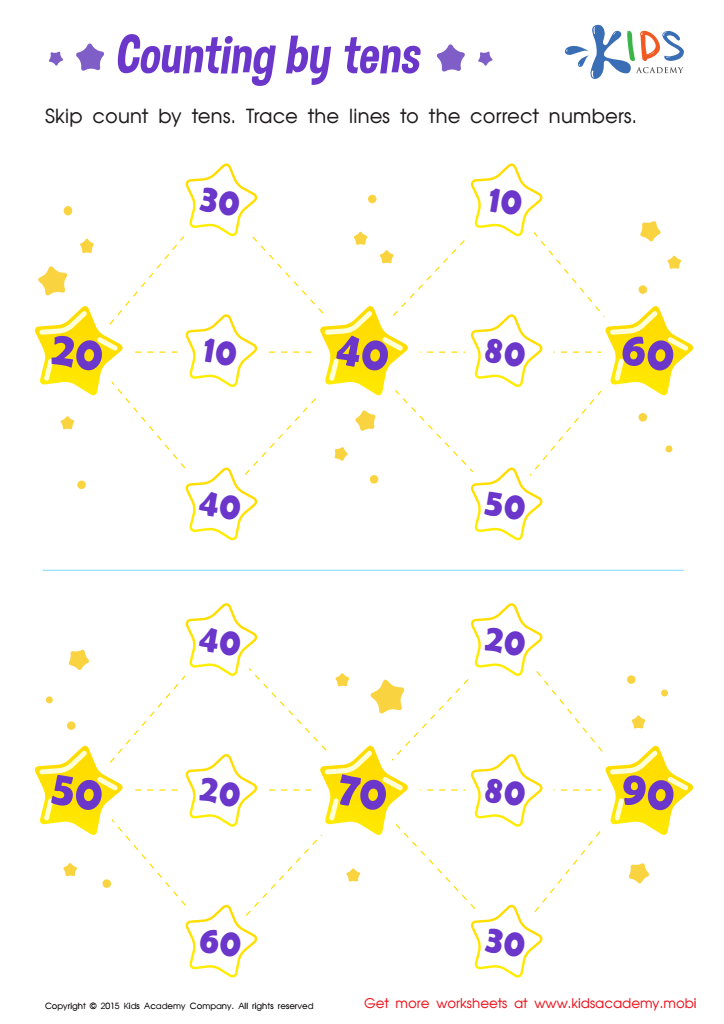
Learn Dozens: Counting by Tens Printable
 Assign to My Students
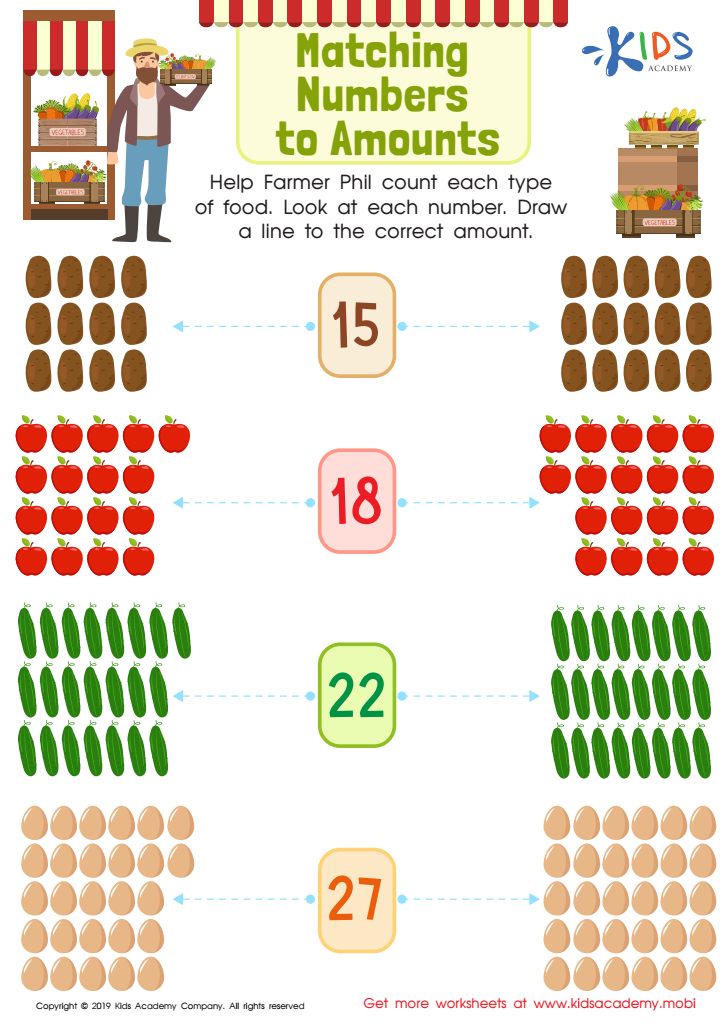
Matching Numbers to Amounts Worksheet

Counting on the City Skyline: Dot-to-Dot Worksheet



%20(1).jpg)


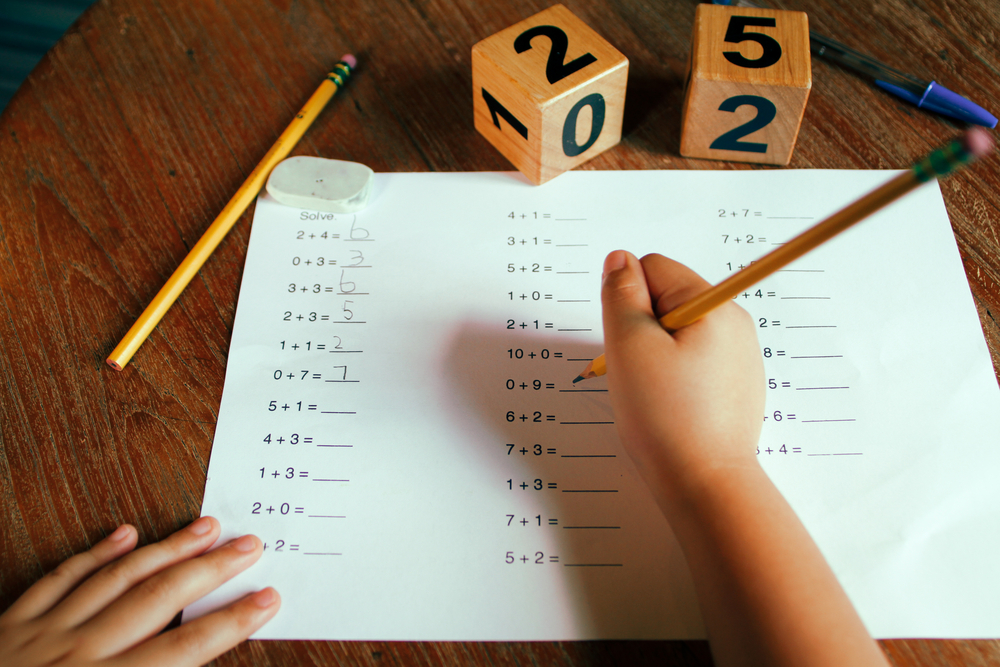

Number recognition for numbers up to 100 in children aged 5-7 is foundational for their mathematical development and overall cognitive growth. Firstly, mastering these early numerical skills builds confidence and enthusiasm, making math less intimidating as they progress to more complex concepts.
Number recognition fosters a solid groundwork for essential skills such as counting, addition, and subtraction. By recognizing and understanding numbers, children can perform basic calculations, which are pivotal in everyday tasks, such as telling time, handling money, and sorting objects.
This competency enhances logical reasoning and problem-solving abilities. When children discern patterns and numerical relationships, they develop critical thinking skills that transcend mathematics and influence various academic areas, including science and reading comprehension.
Furthermore, early number recognition can identify those who may need additional support, enabling targeted interventions to ensure no child is left behind. Recognizing these numbers also encourages development in fine motor skills through activities such as writing numbers and arranging them in sequence.
Lastly, integrating number activities about recognition into daily routines promotes a habit of continuous learning and curiosity, reinforcing a positive attitude toward mathematics in their formative years. Thus, investing time and resources in ensuring children have robust number recognition skills pays dividends in their academic and personal development.








