Sorting skills Sorting Worksheets for Ages 5-7
5 filtered results
-
From - To
Enhance your child's sorting skills with our engaging Sorting Worksheets designed for ages 5-7! These interactive resources help young learners understand the concept of categorization through fun activities that promote critical thinking and cognitive development. With a variety of themes and colorful illustrations, children will enjoy sorting objects, shapes, and colors, making learning both exciting and effective. Our worksheets align with early education standards, ensuring that your child builds a solid math foundation while honing their organizational abilities. Perfect for classroom use or at-home practice, these worksheets will keep your little ones motivated and eager to learn. Start sorting today!
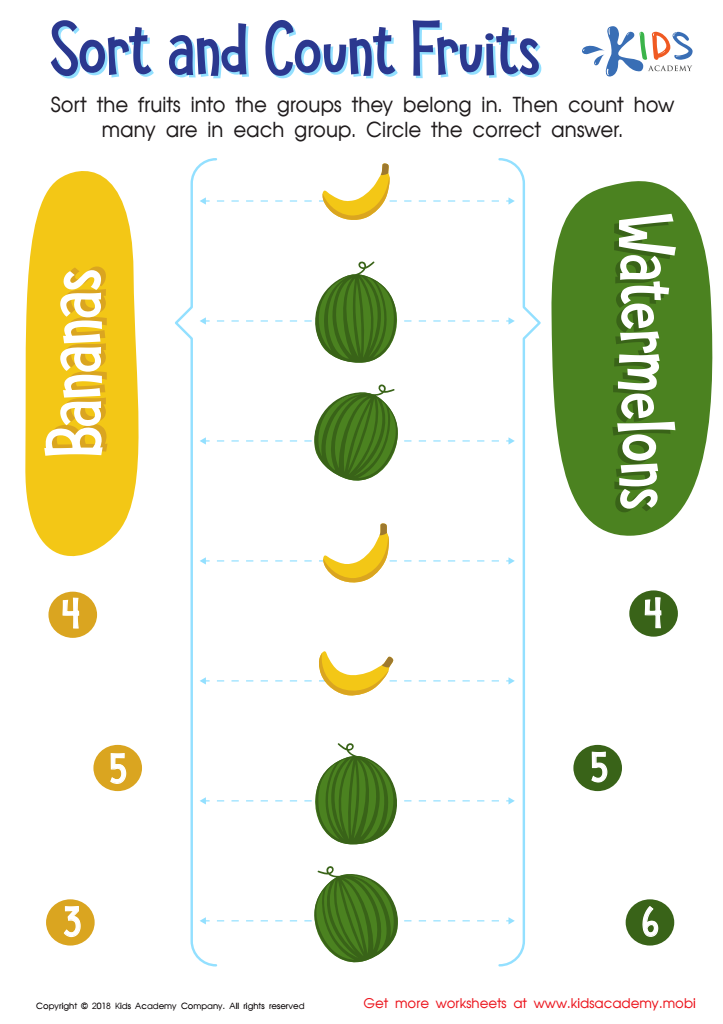
Sort and Count Fruits Worksheet
 Assign to My Students
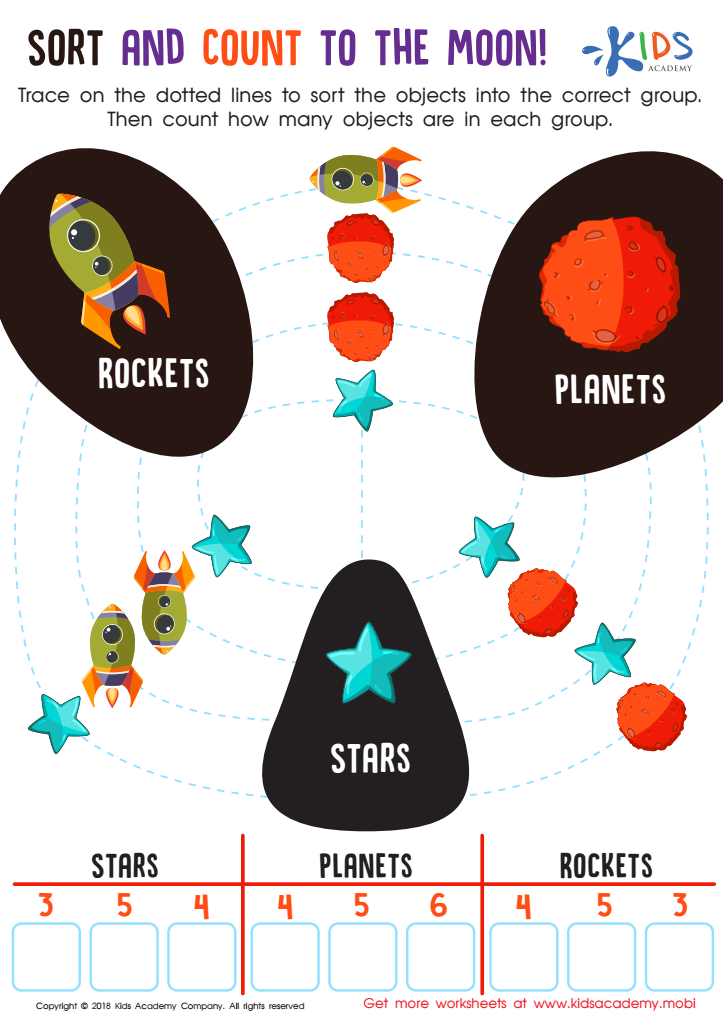
Sort and Count to the Moon Worksheet
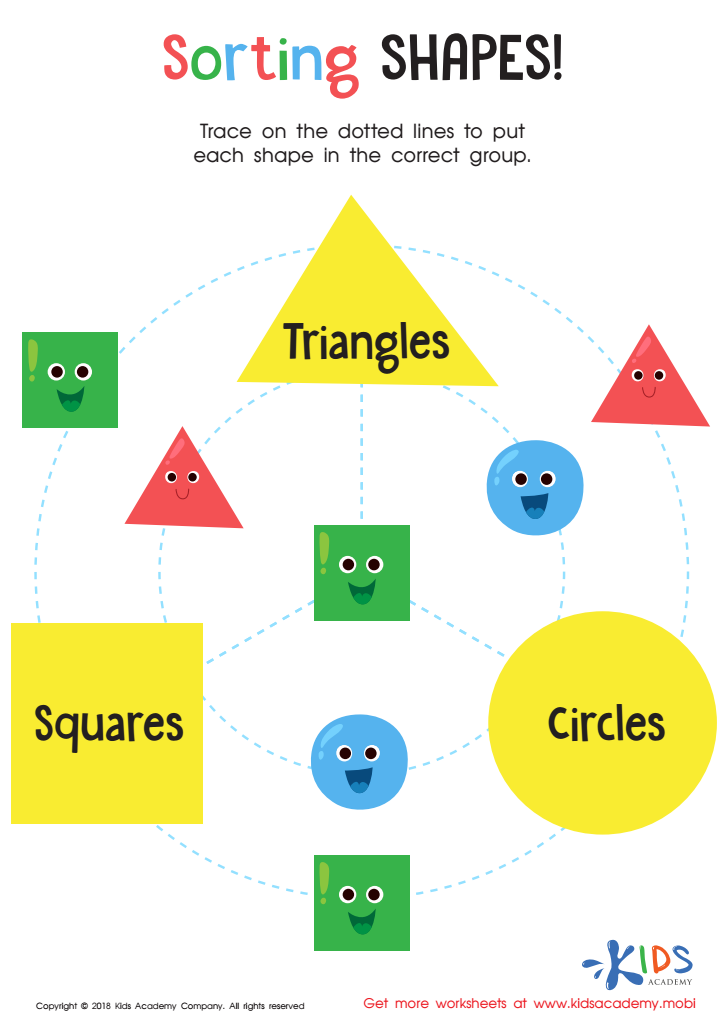
Sorting Shapes - Part 3 Worksheet
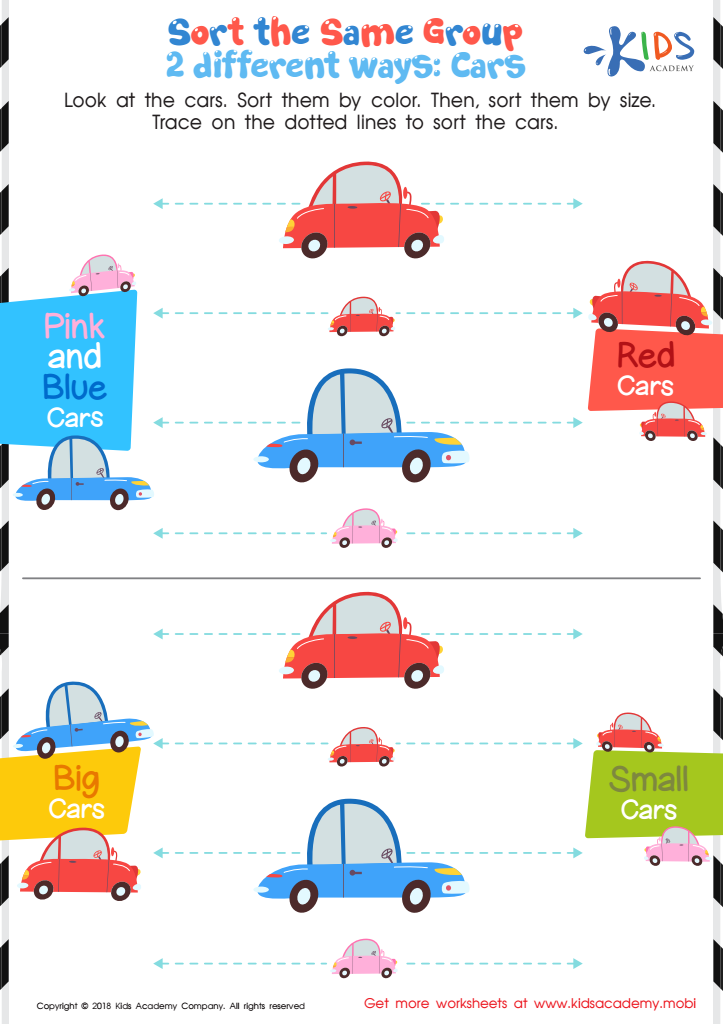
Sort the Same Group 2 Different Ways: Cars Worksheet
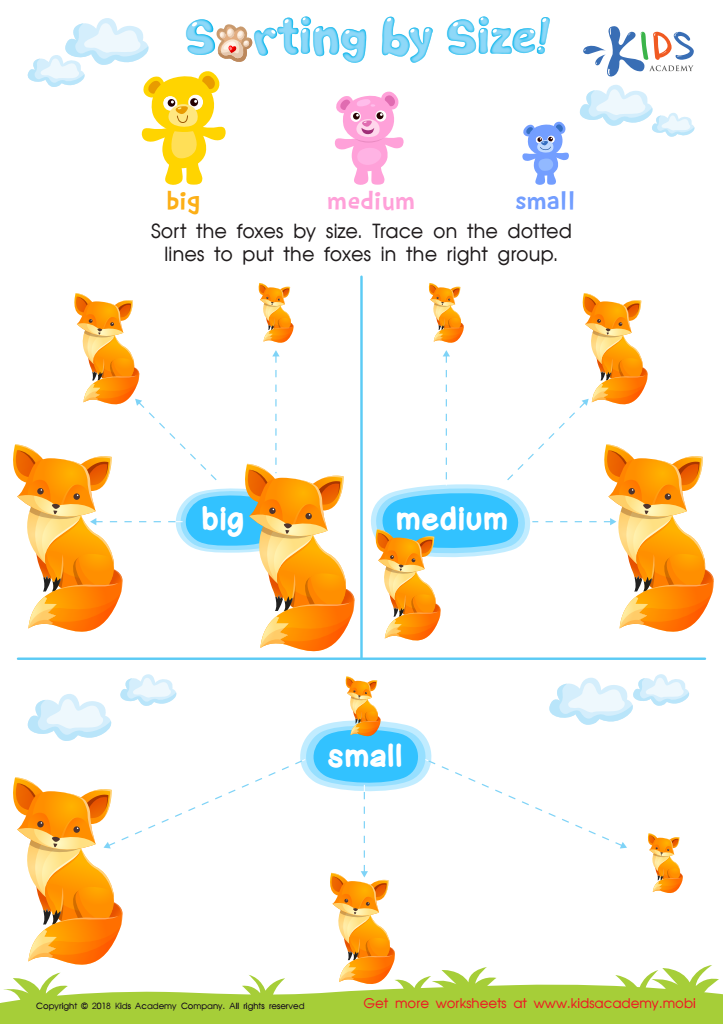
Sorting by Size Worksheet







Sorting skills are foundational for young children, particularly between ages 5 and 7, playing a critical role in both cognitive development and everyday learning. These skills involve categorizing objects based on attributes such as size, color, shape, or type. For parents and teachers, emphasizing sorting enhances critical thinking and problem-solving abilities, as children learn to analyze similarities and differences.
Moreover, sorting aids in the development of organizational skills. Children who can categorize information effectively will find it easier to structure thoughts, whether in play, writing, or later academic pursuits. Understanding how to sort also lays groundwork for more complex mathematical concepts, such as grouping and algebraic thinking.
Social-emotionally, sorting activities can foster collaboration when children work in groups, promoting communication and teamwork. They also create opportunities for children to express their thought processes, boosting language skills.
Finally, introducing sorting into fun, engaging activities makes learning enjoyable. Whether it’s through games, crafts, or real-life experiences, parents and teachers can facilitate skills that are not just educationally significant but essential for a child’s holistic growth. Nurturing sorting skills helps prepare children for future learning and play, making it a vital focus in early education.








