Understanding fractions Sorting Worksheets for Ages 5-7
3 filtered results
-
From - To
Enhance your child's math skills with our "Understanding Fractions Sorting Worksheets" designed for children ages 5-7. These engaging worksheets introduce the concept of fractions through fun sorting activities, helping young learners differentiate between whole parts and fractions visually. With colorful illustrations and simple instructions, these worksheets promote critical thinking and visual recognition, making math enjoyable. Perfect for parents and teachers seeking resources that reinforce basic fraction concepts, our worksheets are a valuable tool for early math education. Foster confidence in mathematical understanding while keeping your child entertained and focused. Download and start sorting fractions today for a brighter mathematical future!
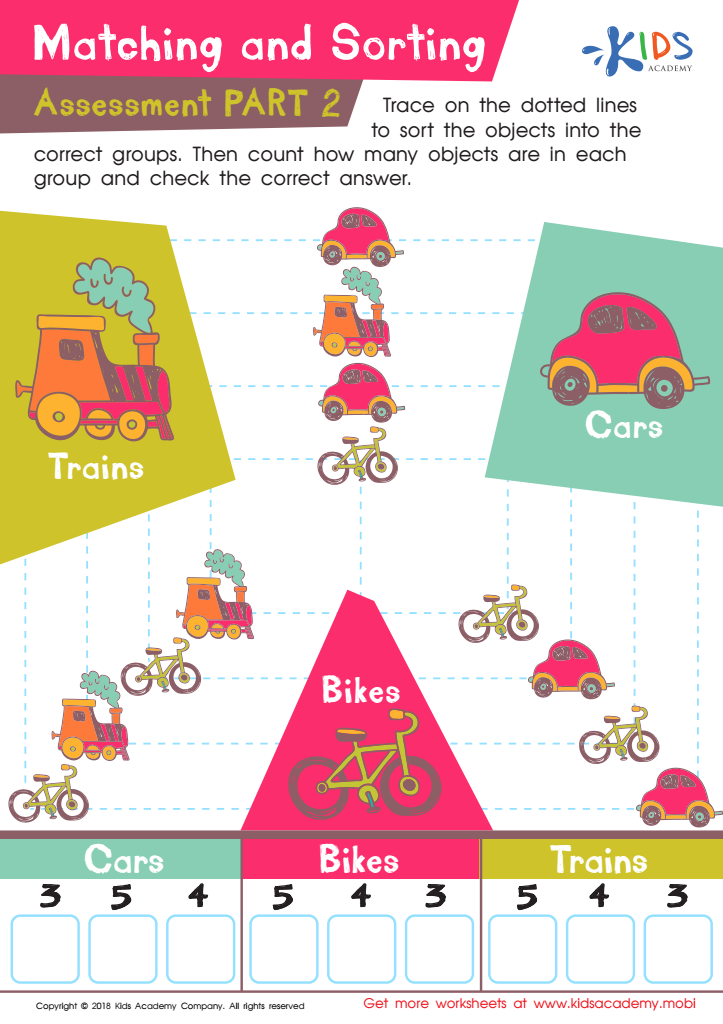
Matching and Sorting for Kindergarten: Assessment 2 Worksheet
 Assign to My Students
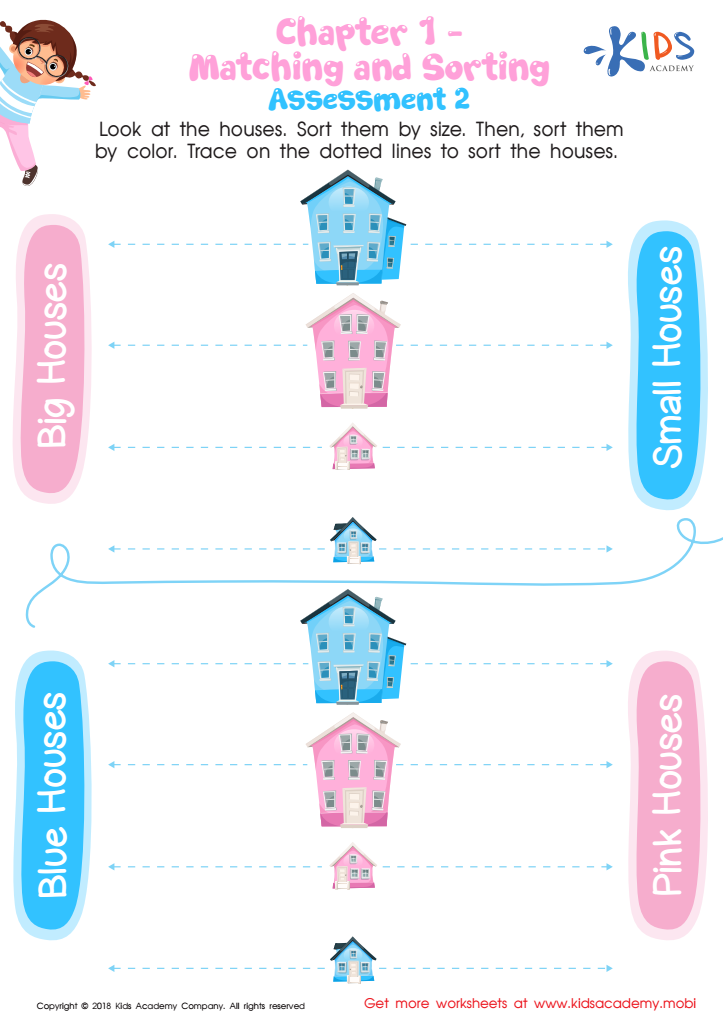
Matching and Sorting for Preschool: Assessment 2 Worksheet
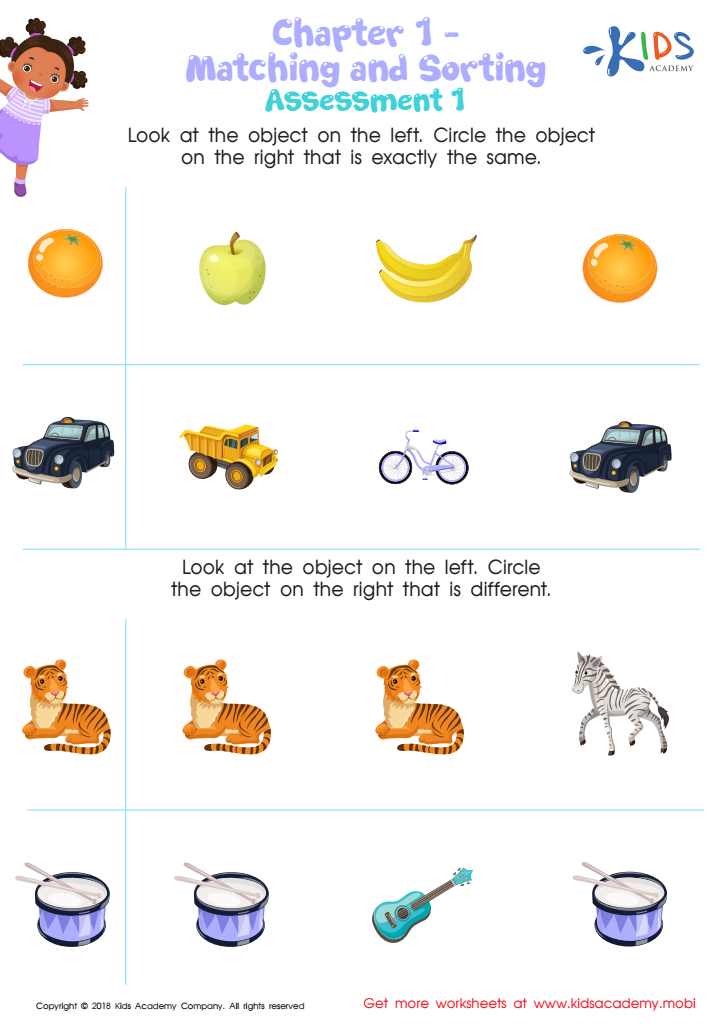
Matching and Sorting for Preschool: Assessment 1 Worksheet







Understanding fractions is crucial for young learners ages 5-7, and both parents and teachers should prioritize this concept for several reasons. At this age, children are developing foundational math skills that will shape their comprehension in future academic pursuits. Sorting fractions helps children to visualize and categorize them, making abstract ideas more tangible. When they engage with fractions through sorting activities, they enhance critical thinking and problem-solving skills, as they learn to discern between different sizes and relationships.
Additionally, early exposure to fractions fosters an understanding of fairness, sharing, and division, integral themes in social interactions. When kids divide snacks or toys into equal parts, they intuitively grasp the basics of fractions and their application in everyday life. This hands-on experience makes math relatable and fun, breaking down barriers associated with learning complex topics.
Moreover, a solid foundation in fractions can boost a child's confidence in math, setting the stage for success in higher-level concepts like ratios and proportions later on. By embracing understanding fractions sorting, parents and teachers collaborate to equip young learners with essential skills that bridge their cognitive development and practical knowledge, leading to a well-rounded educational experience.








