Logical Reasoning Building Vocabulary Worksheets for Ages 5-7
8 filtered results
-
From - To
Discover our expertly designed Logical Reasoning Building Vocabulary Worksheets for Ages 5-7! Our worksheets are crafted to stimulate young minds, enhancing their vocabulary while developing critical thinking and problem-solving skills. Through engaging activities such as word puzzles, matching games, and sequencing tasks, children will expand their vocabulary and improve their logical reasoning abilities. Perfect for early learners, our resources provide a solid foundation in language arts and cognitive skills. Inspire your child’s love for learning and set them up for academic success with our fun and educational worksheets! Ideal for home or classroom use, check out our selection today.
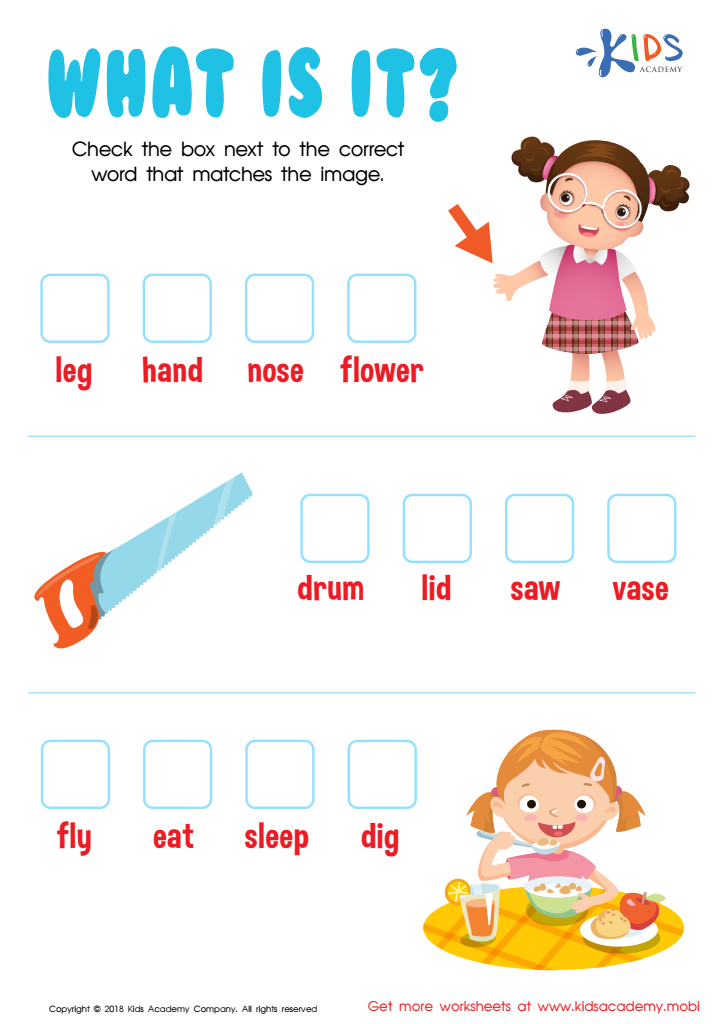
What Is It? Worksheet
 Assign to My Students











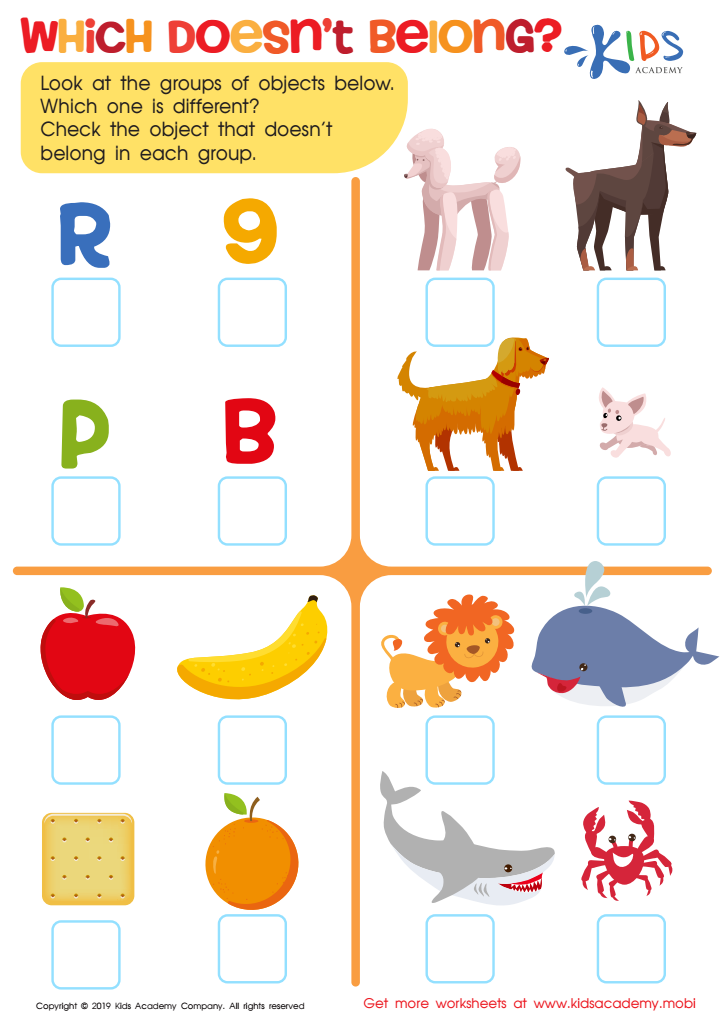
Which Doesn't Belong? Worksheet
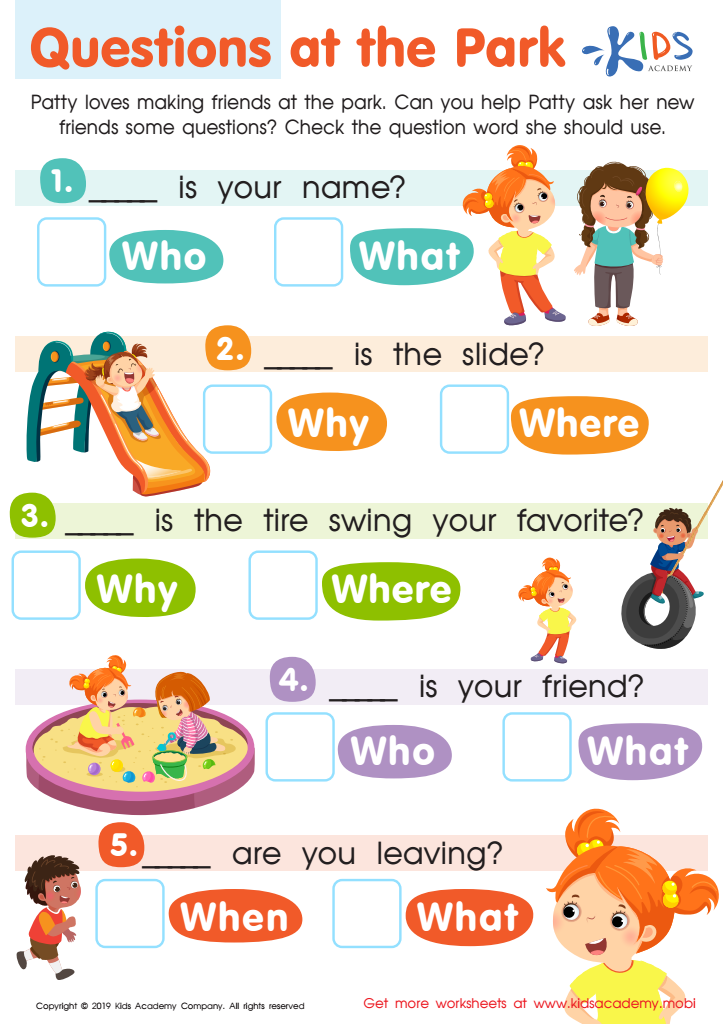
Questions at the Park Worksheet
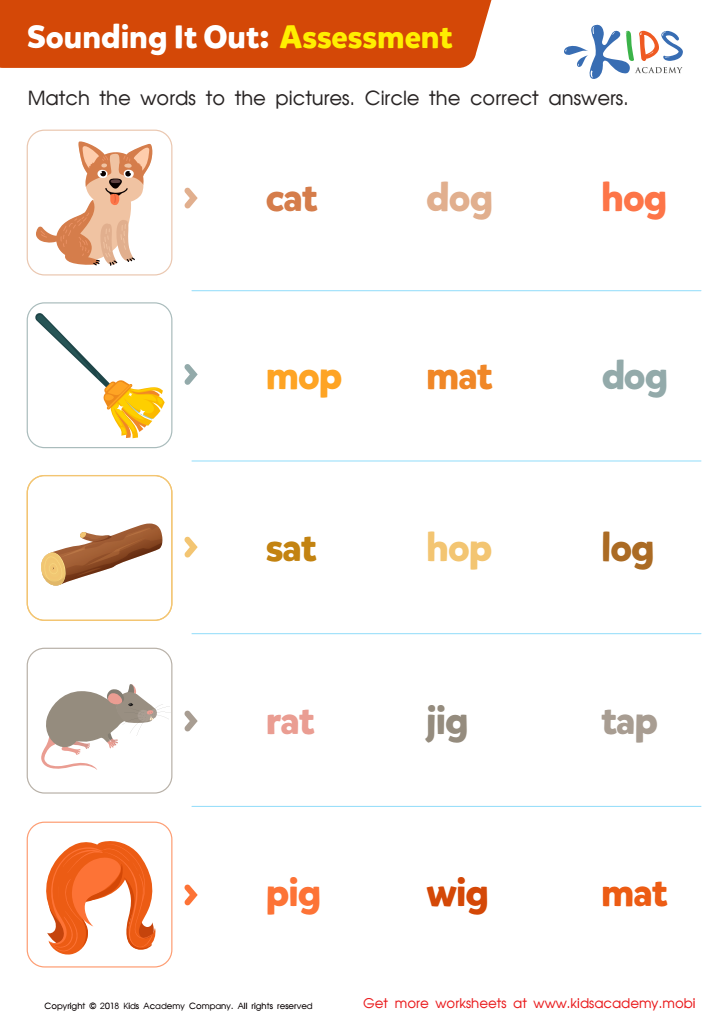
Sounding it Out: Assessment Worksheet
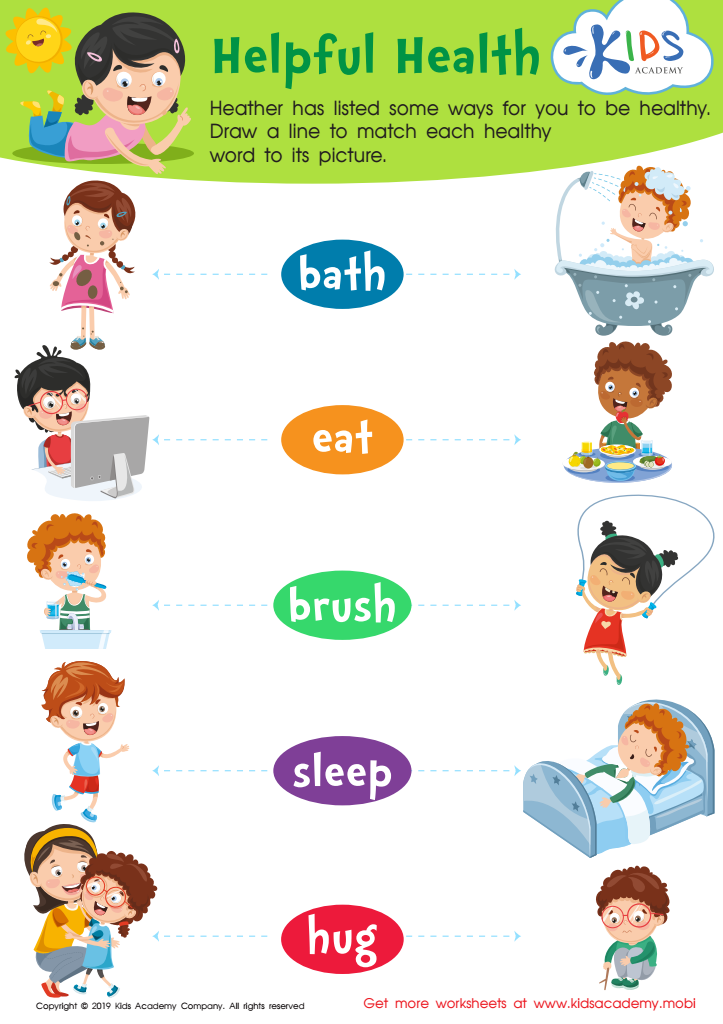
Helpful Health Worksheet
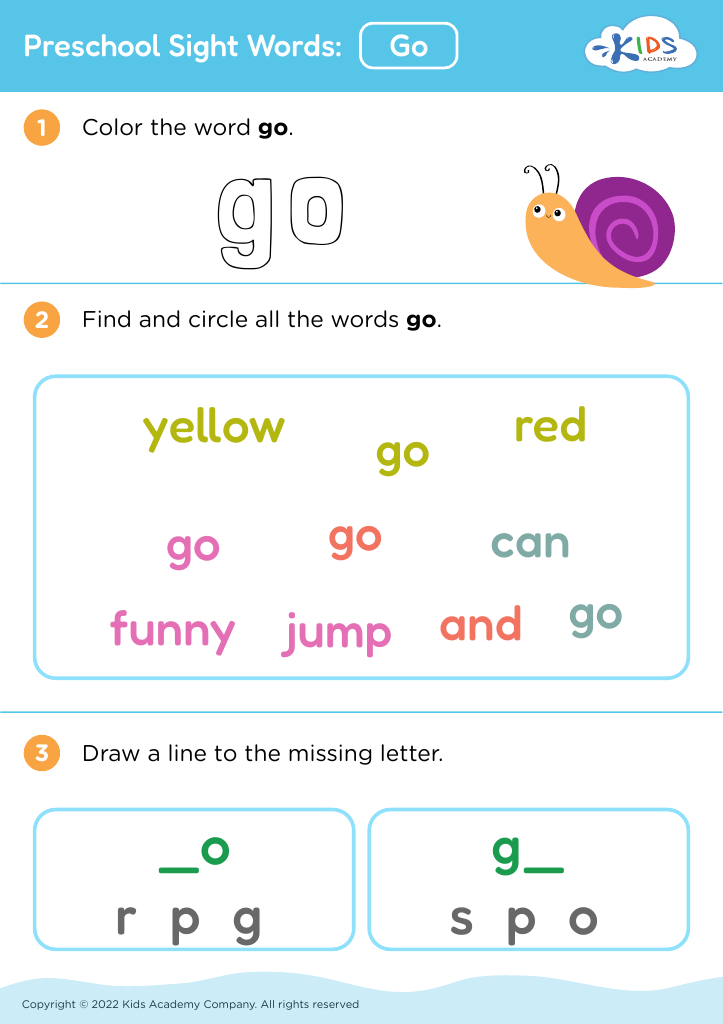
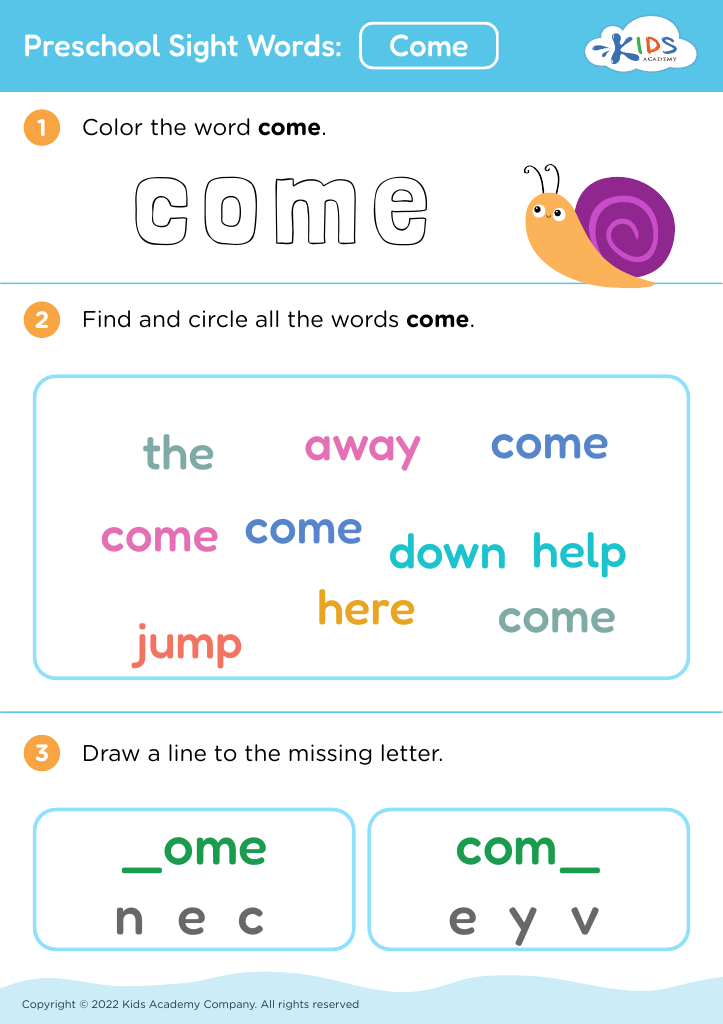
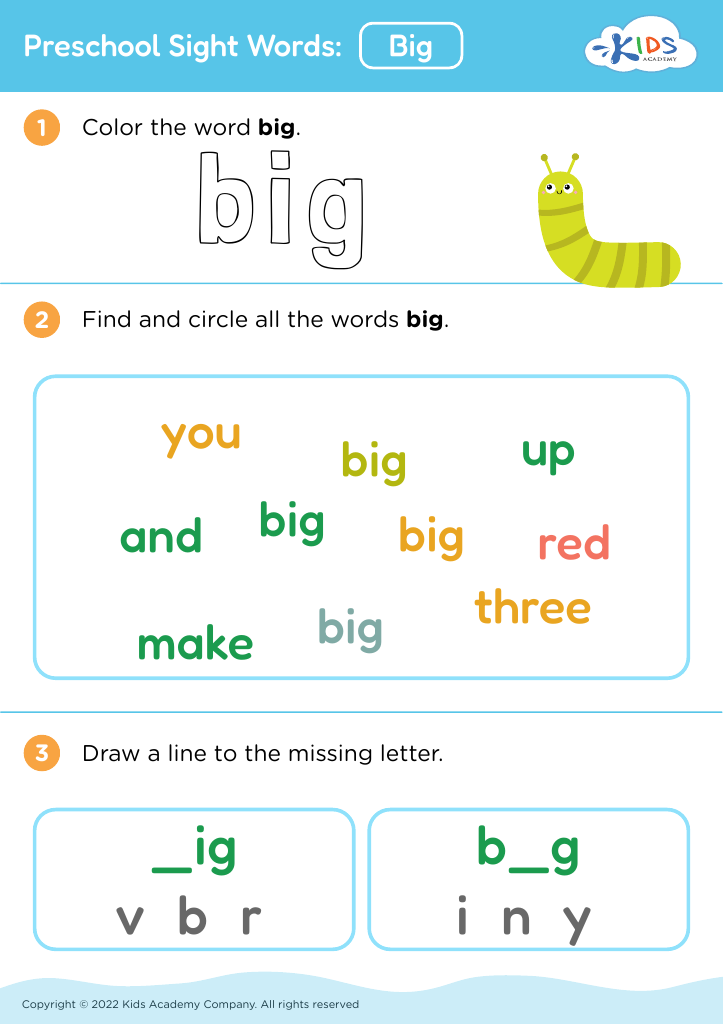








Parents and teachers should prioritize developing logical reasoning and building vocabulary in children ages 5-7 because these skills form the foundation for effective thinking and communication. At this age, children's brains are exceptionally receptive to learning, and nurturing these abilities can have long-lasting effects on their academic and social success.
Logical reasoning helps young children develop problem-solving skills and understand the world around them. It encourages them to think critically, make connections between different ideas, and approach challenges methodically. By engaging in activities that promote logical reasoning, such as simple puzzles and pattern recognition games, children learn to organize their thoughts and build a structured way of thinking.
Building vocabulary is equally important, as language is the primary means of communication. A rich vocabulary enhances reading comprehension, enabling children to understand and enjoy stories, follow instructions, and grasp new concepts across various subjects. It also improves their ability to express themselves clearly and confidently, which is crucial for effective social interaction and collaboration.
Together, logical reasoning and a strong vocabulary empower children to articulate their thoughts, ask meaningful questions, and engage in purposeful discussions. By fostering these skills, parents and teachers lay the groundwork for lifelong learning and equip children with tools to navigate complex situations both in school and beyond.








