
Number Recognition Building Vocabulary Worksheets for Ages 5-7
27 filtered results
Difficulty Level
Grade
Age
-
From - To
Subject
Activity
Standards
Boost your child’s early math skills with our engaging Number Recognition Building Vocabulary Worksheets designed for ages 5-7! These printable resources cultivate fundamental counting and number recognition abilities, preparing young learners for academic success. Each worksheet features vibrant illustrations and interactive activities that make learning fun and effective. Your child will explore numbers through various exercises that promote vocabulary development alongside numeracy skills, ensuring a holistic learning experience. Ideal for homeschool or classroom settings, our worksheets create a solid foundation for mathematics while enhancing language comprehension. Download now and watch your child's confidence soar as they master number recognition!
Favorites
With answer key
Interactive
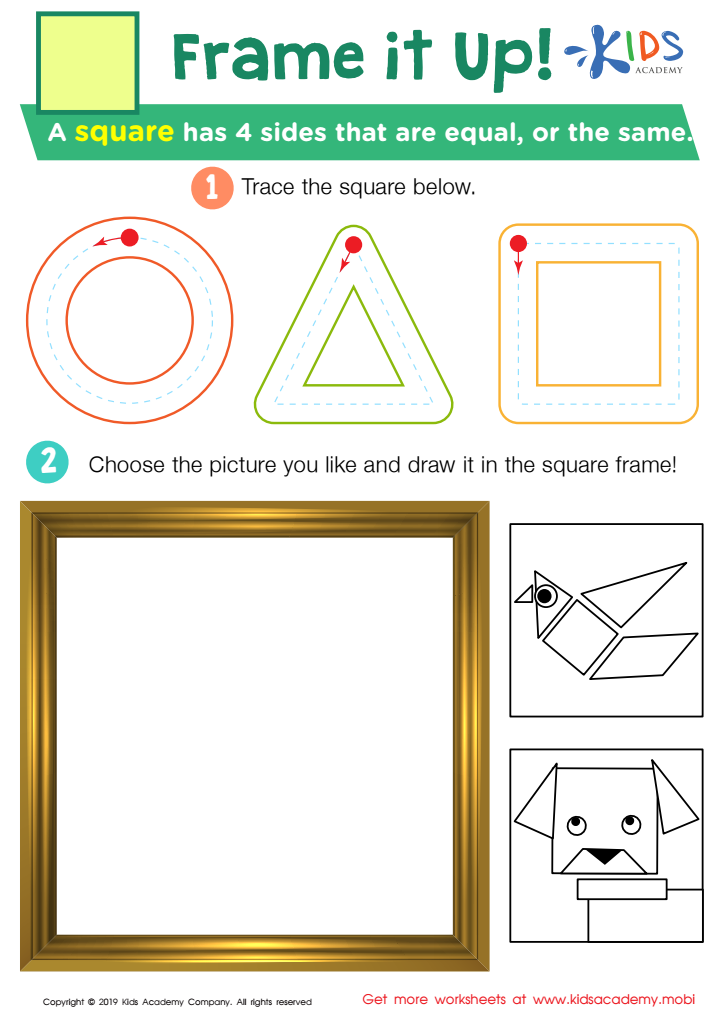
Frame it Up Worksheet
This worksheet helps kids learn the difference between squares and other shapes. It guides them to trace a square and draw a picture inside it. Examples of shapes-based drawings are included. Kids will have fun and clear up any confusion about squares.
 Assign to My Students
Frame it Up Worksheet
Worksheet











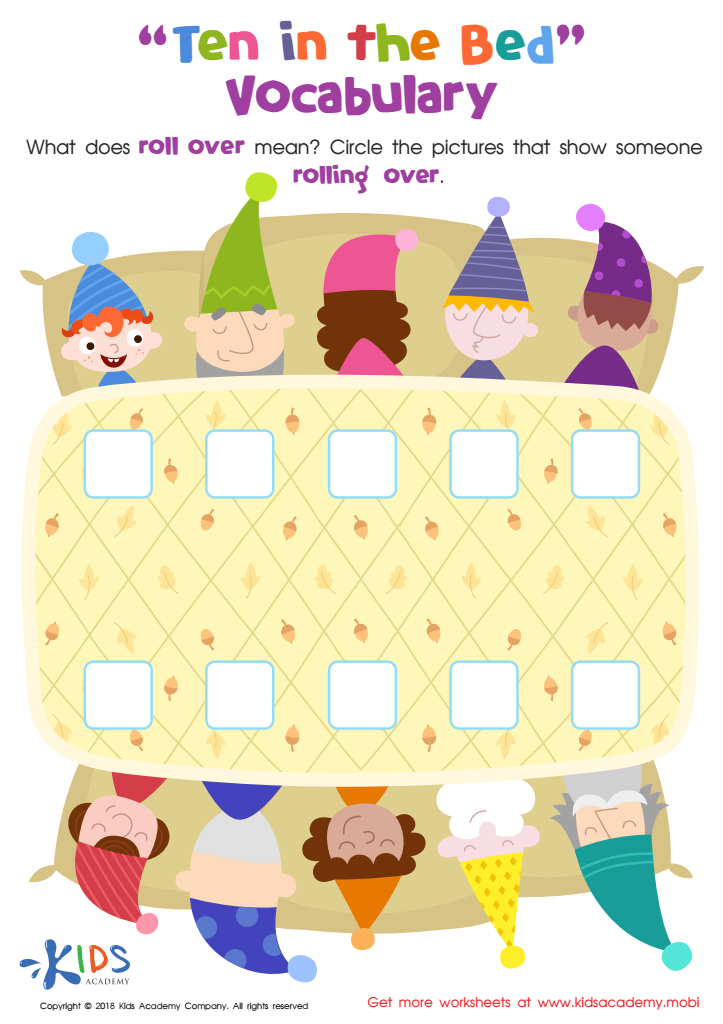
Ten in the Bed: Vocabulary Worksheet
It's essential for emerging readers to be proficient in positional and directional words. This worksheet uses cheerful faces to help students identify who has "rolled over". Knowing these words is an essential part of reading and writing for pre-K and Kindergarteners. It also helps them to follow directions and use precise language.
Ten in the Bed: Vocabulary Worksheet
Worksheet
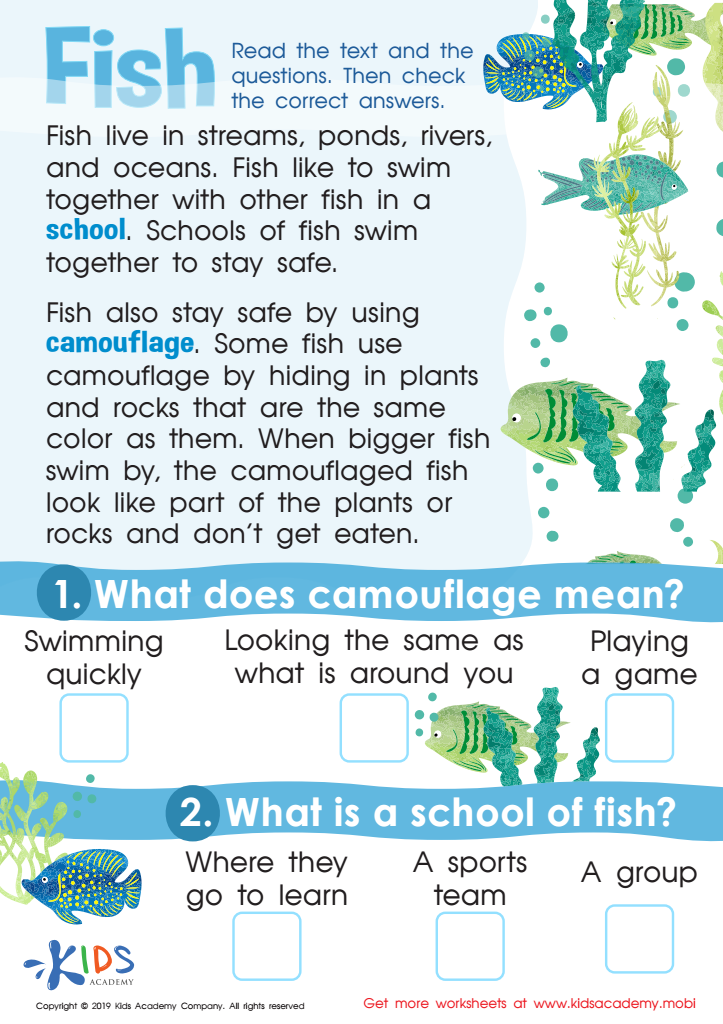
Fish Worksheet
Kids love learning about the creatures that live in water! This free PDF worksheet covers fish, teaching kids larger vocabulary and contextual reading comprehension. Questions prompt them to choose the right answer from multiple choices, just like in a classroom. It's a fun way to boost their reading skills and comprehension without them even realizing it!
Fish Worksheet
Worksheet
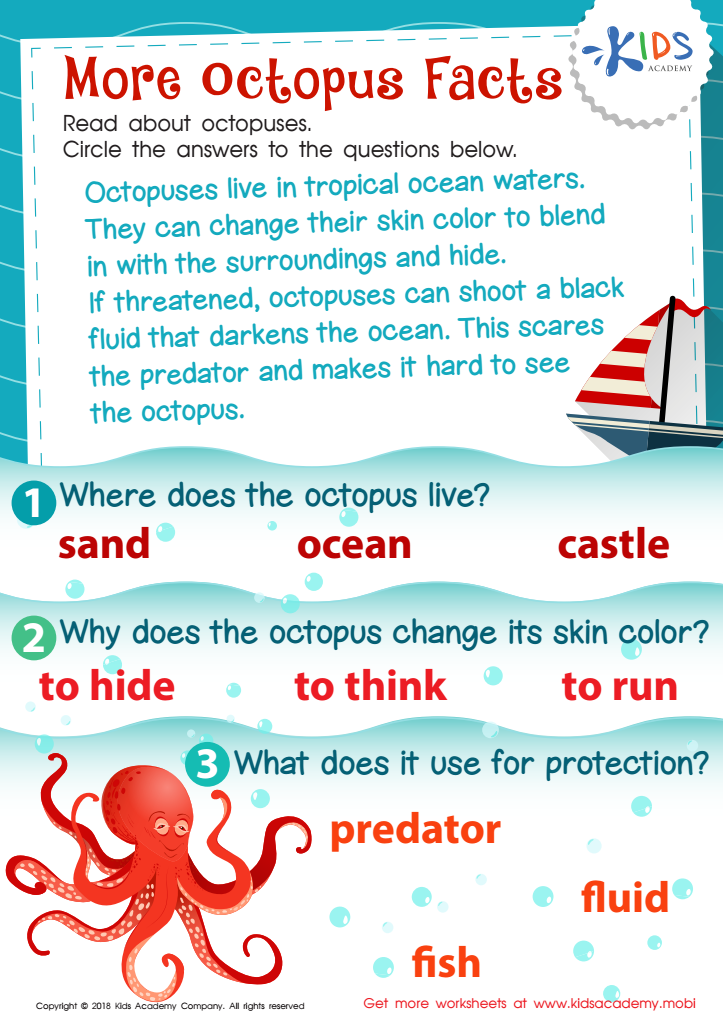
More Octopus Facts Worksheet
This worksheet will help your kids learn about the Octopus. Read the text carefully and have kids read with you. Now, ask them questions based on it and help them answer them by circling the right choices. Teaching your kids facts about animals will help them in the long run.
More Octopus Facts Worksheet
Worksheet
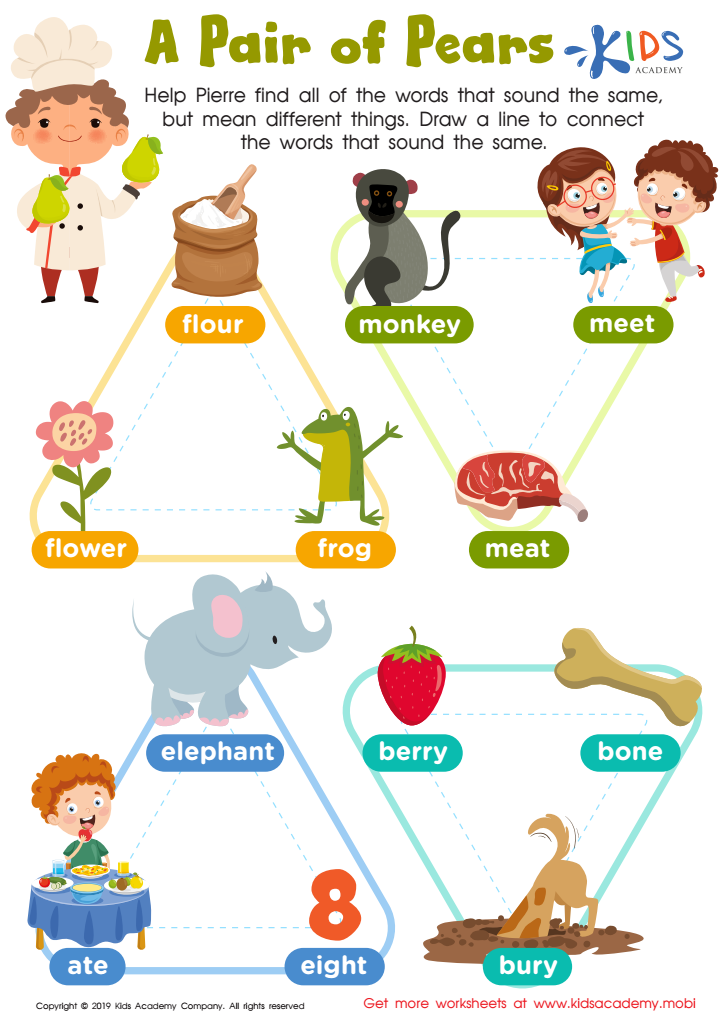
Pair Pears Worksheet
Young readers can have difficulty knowing when to use the right homophone. This free worksheet helps them use familiar imagery to understand better by connecting words that sound similar but are spelled and mean different things. Students will trace the lines to form a picture and have a reference image to differentiate between the different homophones.
Pair Pears Worksheet
Worksheet
Join Kids Academy for Free
Who is primarily going to use this learning content?





.jpg)


Number recognition and vocabulary building are essential skills for children aged 5-7, as they lay the foundation for future academic success. For parents and teachers, understanding the importance of these skills is crucial.
Firstly, number recognition helps children develop early math concepts. Recognizing numbers is the first step towards counting, basic arithmetic, and understanding quantity. Engaging children with number-related activities fosters critical thinking and problem-solving abilities, skills necessary in everyday life.
Additionally, vocabulary building in this age group supports literacy development. Children who can identify, understand, and use a broad range of words tend to have better reading comprehension and communication skills. A strong vocabulary enhances their ability to express thoughts and emotions effectively.
By encouraging number recognition and vocabulary development, parents and teachers can boost children's confidence, promote a love of learning, and facilitate smoother transitions into more complex subjects in later years. These early experiences also contribute to children's social skills, allowing them to articulate their ideas and collaborate with peers.
Overall, focusing on these foundational skills mitigates future learning challenges and equips children with the tools necessary for navigating a world where both numeracy and literacy are paramount.








