Enhance your child's reading abilities with our engaging Critical Thinking Skills Reading Worksheets designed specifically for ages 5-7. These worksheets encourage young learners to analyze, evaluate, and interpret information as they read. Featuring fun and interactive activities, they help develop essential reasoning and problem-solving skills while fostering a love for reading. Each worksheet is crafted to stimulate curiosity and encourage children to ask questions, promoting deeper comprehension. Ideal for both classroom and home use, these resources empower parents and educators to nurture critical thinkers. Dive into our collection to inspire a lifelong journey of learning and discovery!

Check out this FREE Trial Lesson on Reading for age 5-7!

Adjectives and Adverbs

Favorites
With answer key
Interactive
  • 5-7
  • Critical thinking skills
  • Reading
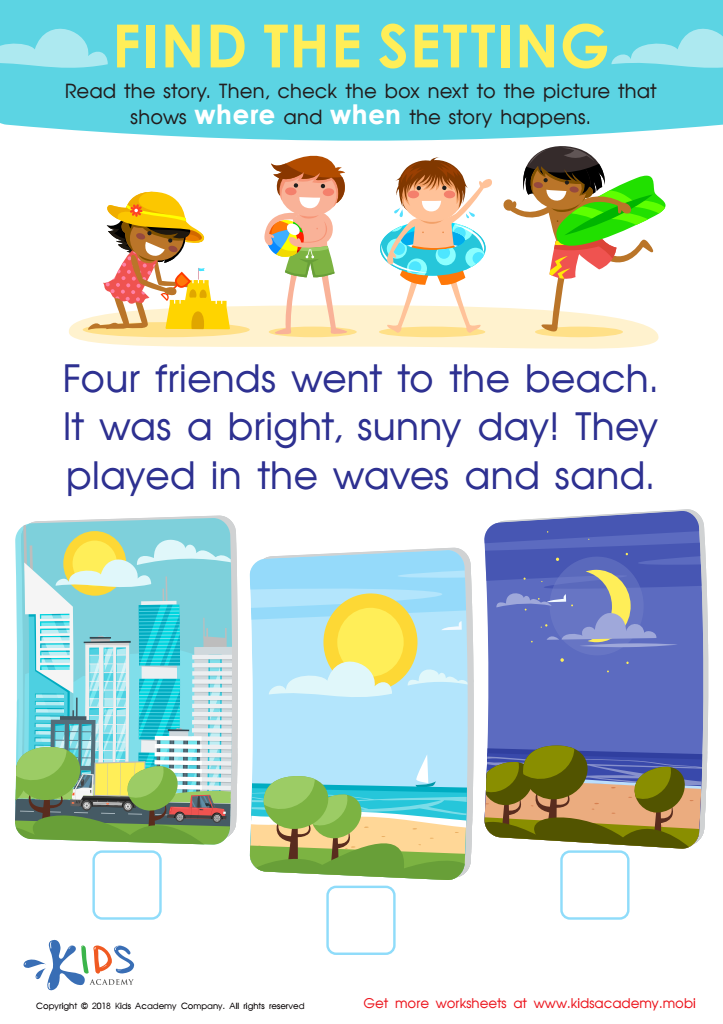
Find the Setting Worksheet

Find the Setting Worksheet

Writing a good story requires decisions about theme, plot, characters, and setting. Setting is the place and time where events occur. Read the story in this fun worksheet with your children and ensure they are paying attention. Guide them to check the box next to the picture that shows the story's setting. 80 words.
Find the Setting Worksheet
Worksheet
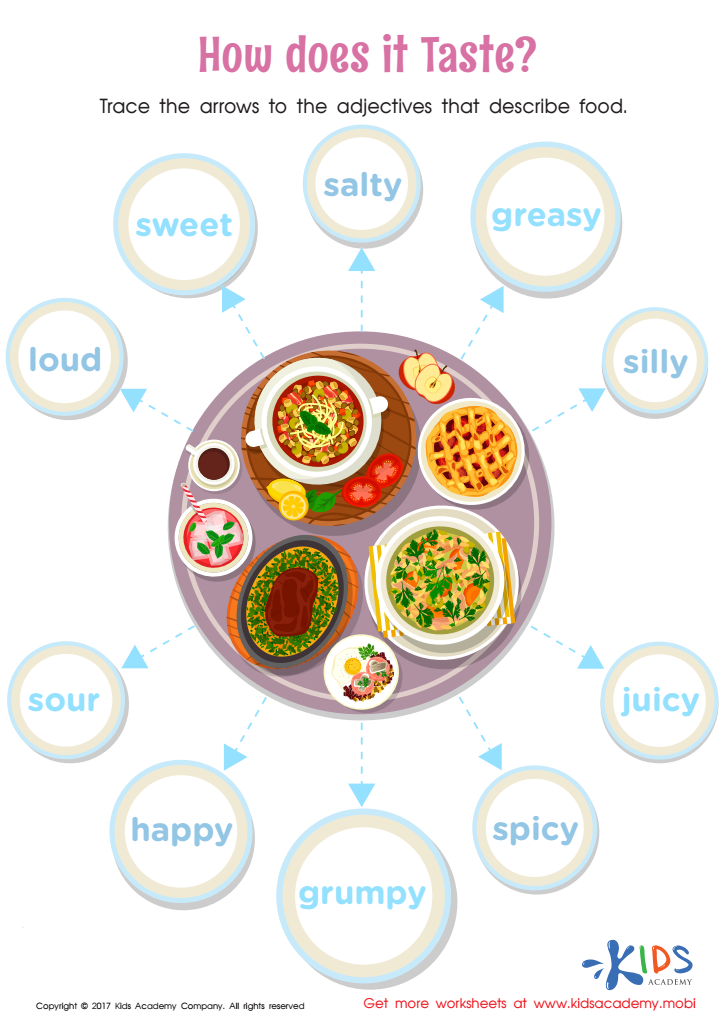
Food adjectives worksheet PDF

Food Adjectives Worksheet

Here’s a fun PDF worksheet to get your child’s taste buds tingling and help build descriptive language skills!
Food Adjectives Worksheet
Worksheet
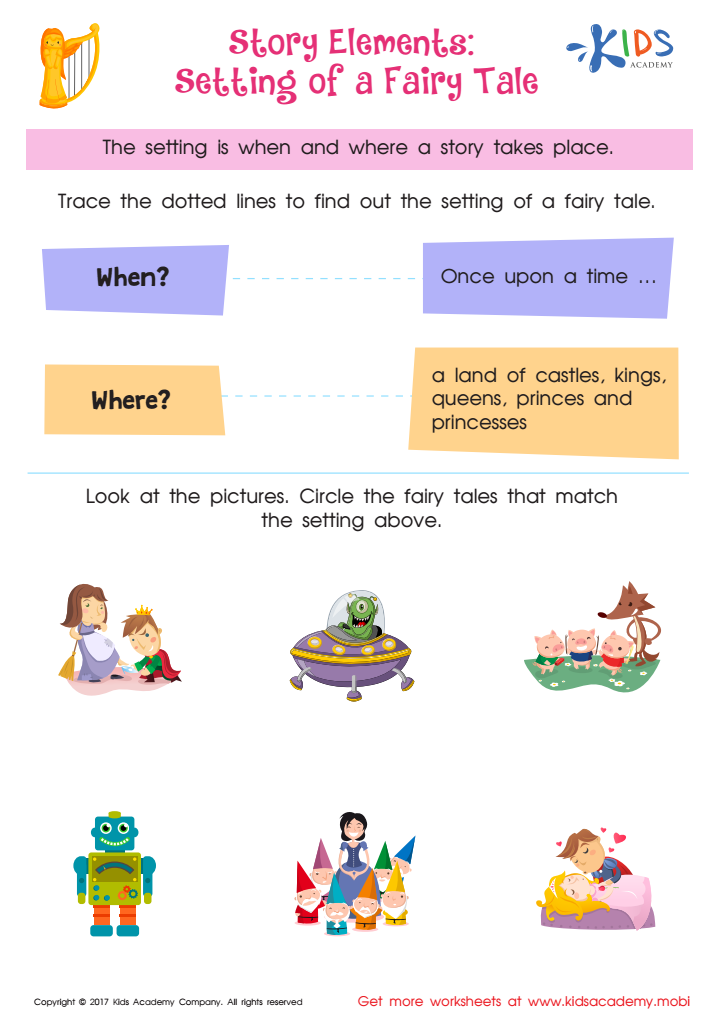
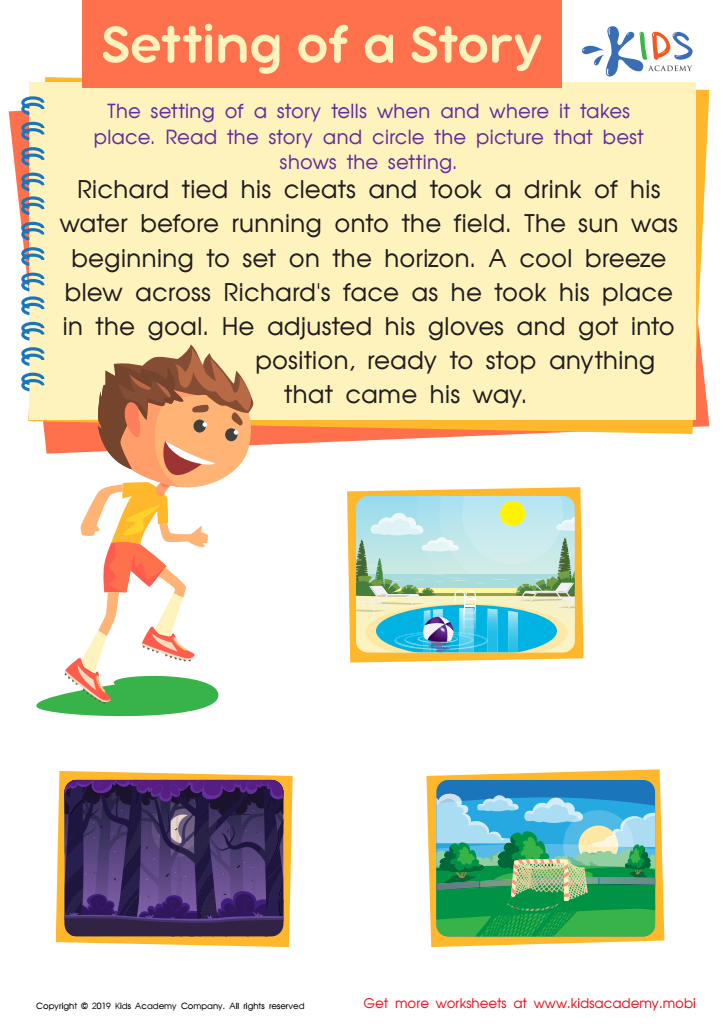
Worksheet: Story Elements

Story Elements: Setting of a Fairy Tale Printable
Help your child learn to analyze stories starting with setting. Use Story Elements worksheet to break down setting into two parts. This will help your child recognize setting quickly and understand its importance in the plot.
Story Elements: Setting of a Fairy Tale Printable
Worksheet
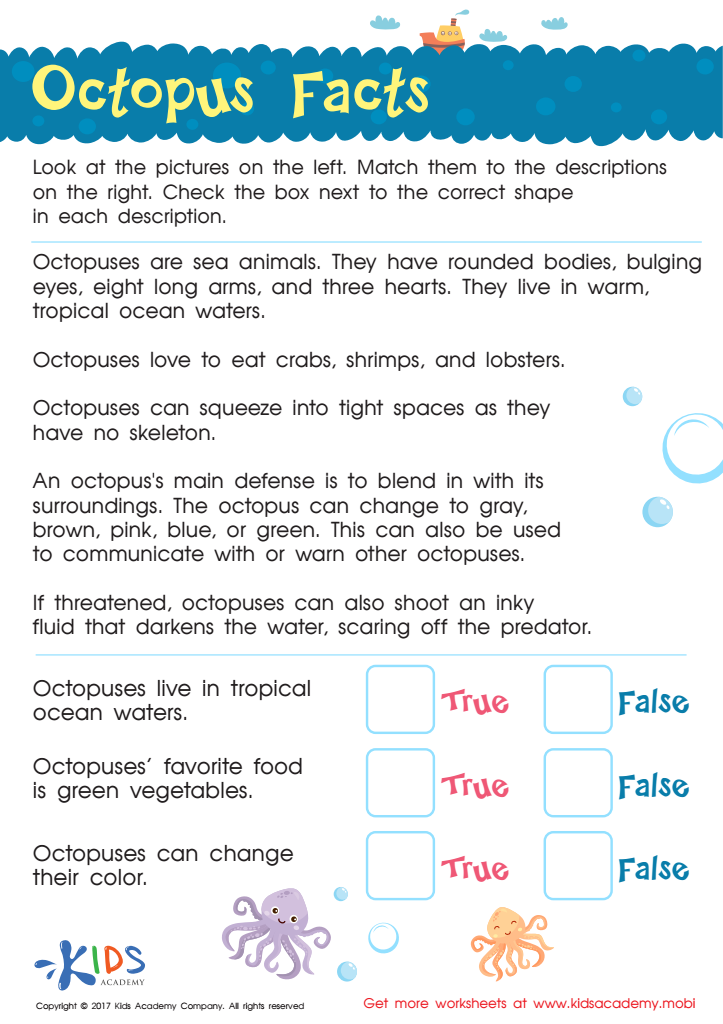
Octopus facts worksheet for kids

Octopus Facts Worksheet For Kids

Let your child dive into the world of octopuses with this fun worksheet. It offers invaluable practice in reading non-fiction texts, while they learn interesting facts about these strange sea creatures. It's a great way to help them hone their skills in reading comprehension.
Octopus Facts Worksheet For Kids
Worksheet
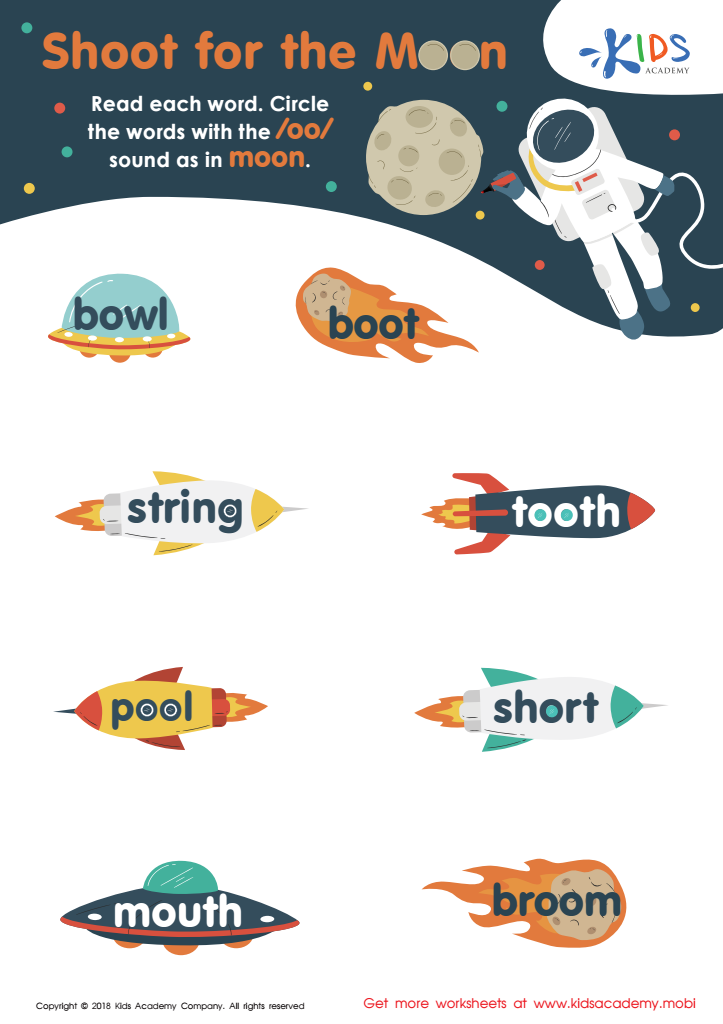
Reading: Shoot for the Moon Worksheet

Reading: Shoot for the Moon Worksheet

Ask your kids if they can name any common words with the /oo/ sound. Read each word with them and help them pronounce it. Then, have them circle the words that have the /oo/ sound as in moon.
Reading: Shoot for the Moon Worksheet
Worksheet
Setting of a Story Worksheet
Setting of a Story Worksheet
You need characters, theme, POV, plot and setting to tell a good story. Ask your kids to explain them and use this worksheet with a story to teach them about setting. Read the story with your kids, then have them circle the picture that best shows the setting.
Setting of a Story Worksheet

Worksheet
Grade 1 Sight Words: Open

Grade 1 Sight Words: Open

Grade 1 Sight Words: Open
Worksheet
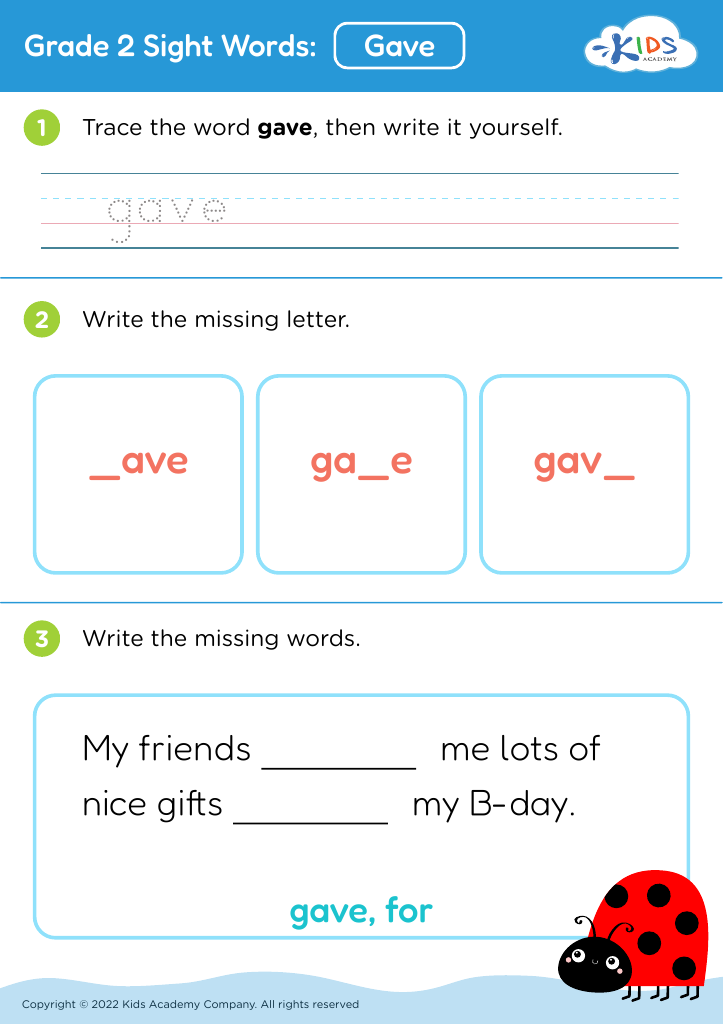
Grade 2 Sight Words: Gave

Grade 2 Sight Words: Gave

Grade 2 Sight Words: Gave
Worksheet
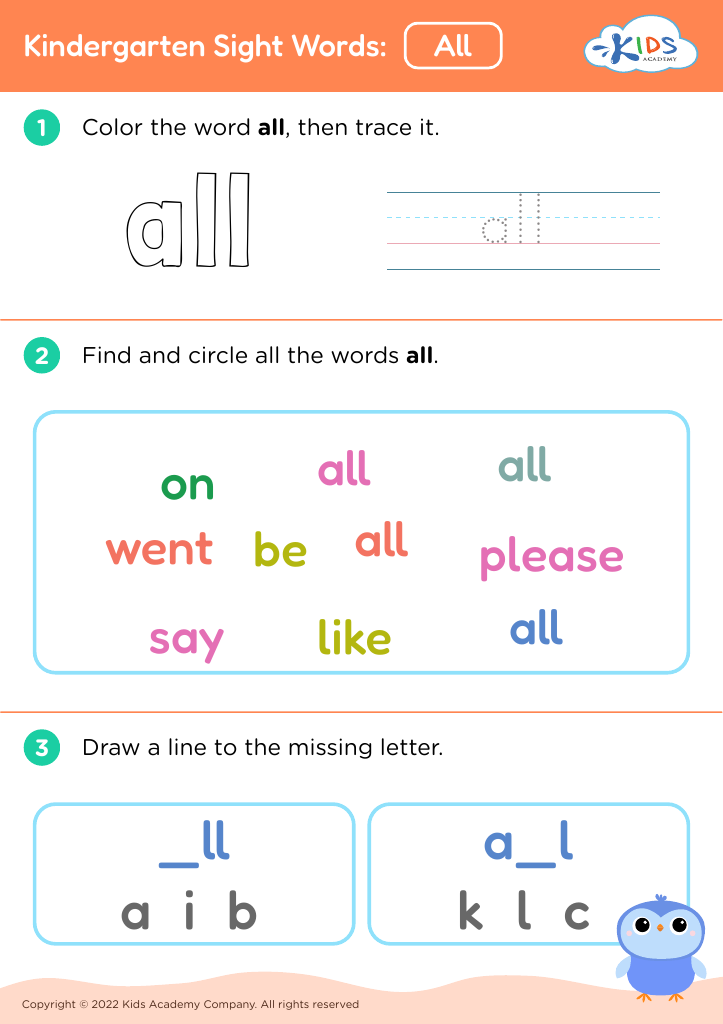
Kindergarten Sight Words: All

Kindergarten Sight Words: All

Kindergarten Sight Words: All
Worksheet


Critical thinking skills in reading for children aged 5-7 are essential for their cognitive and emotional development. At this age, children are in a crucial phase of forming their foundation for independent thought and problem-solving abilities. Teaching them to think critically about what they read encourages them not just to absorb information passively, but to engage with it actively. This enables them to discern between facts and opinions, make inferences, and draw conclusions—skills they will rely on throughout their education and life.

Moreover, developing critical thinking skills can enhance children's comprehension and retention of material. When they learn to question the text, analyze characters’ motives, and speculate on possible outcomes, they become more invested readers and thinkers. This fosters a love for reading that can ignite a lifelong desire for learning.

Parents and teachers play a vital role in nurturing these skills by encouraging discussions about the stories, asking open-ended questions, and promoting an environment where curiosity is welcomed. Ultimately, fostering critical thinking in early childhood education aligns with the broader goal of preparing children to navigate a complex world, paving the way for informed decision-making and responsible citizenship in the future.