Moral understanding Reading Worksheets for Ages 5-7
5 filtered results
-
From - To
Discover our Moral Understanding Reading Worksheets designed for ages 5-7! These engaging activities are crafted to help young learners comprehend important moral lessons through age-appropriate stories and questions. Each worksheet encourages children to explore concepts like honesty, kindness, empathy, and responsibility, fostering their critical thinking and social awareness. By integrating fun and informative content, our worksheets support reading comprehension while teaching valuable life skills. Perfect for at-home learning or classroom use, these resources ensure that children not only improve their literacy but also develop a strong moral foundation. Start nurturing thoughtful and compassionate individuals with our thoughtfully designed materials!
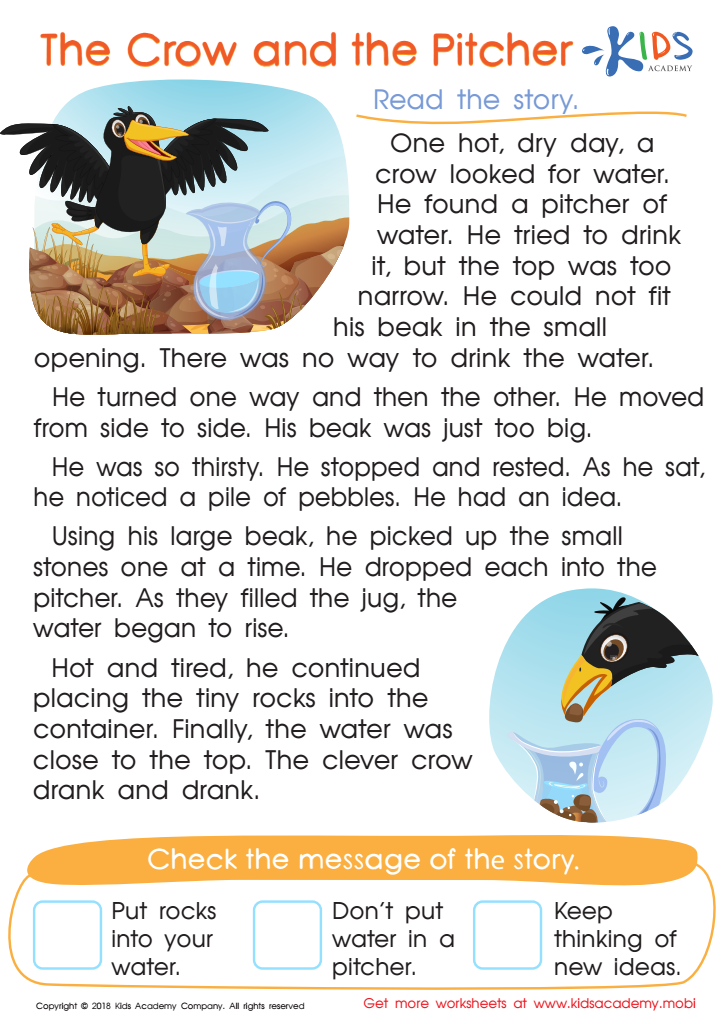
The Crow and the Pitcher Worksheet
 Assign to My Students
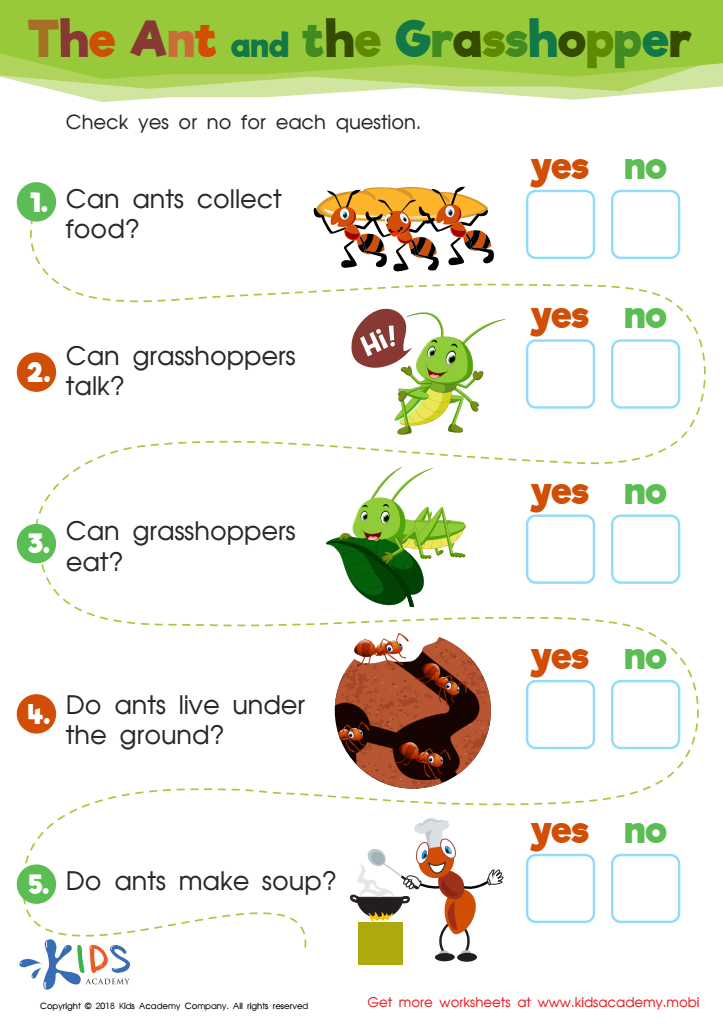
The Ant and The Grasshopper Worksheet
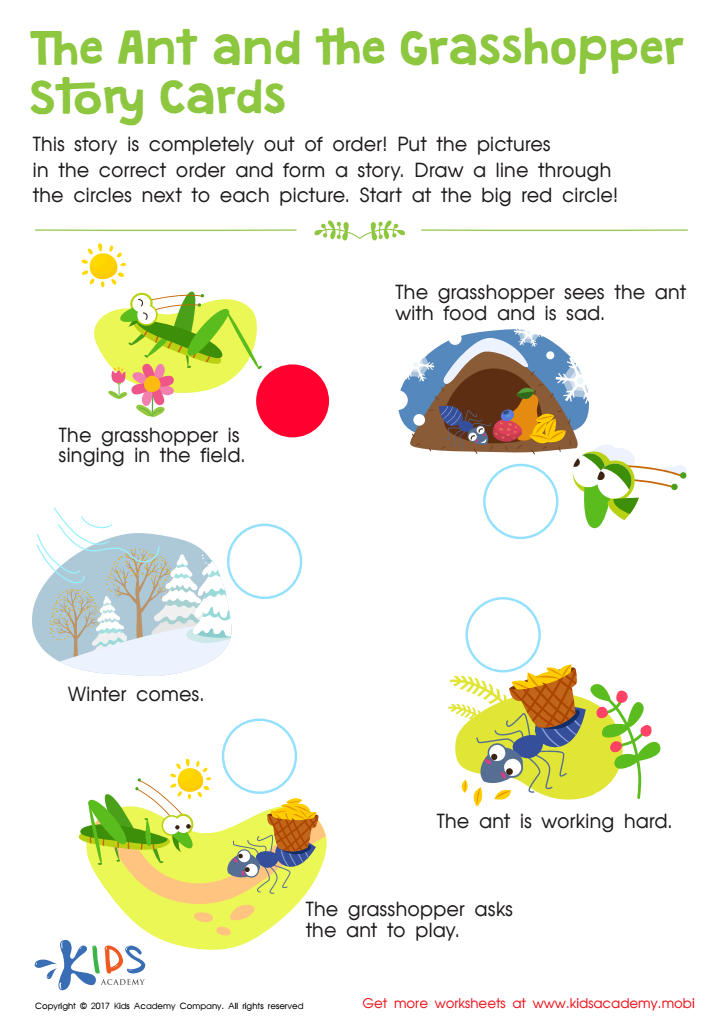
The Ant and The Grasshopper Worksheet
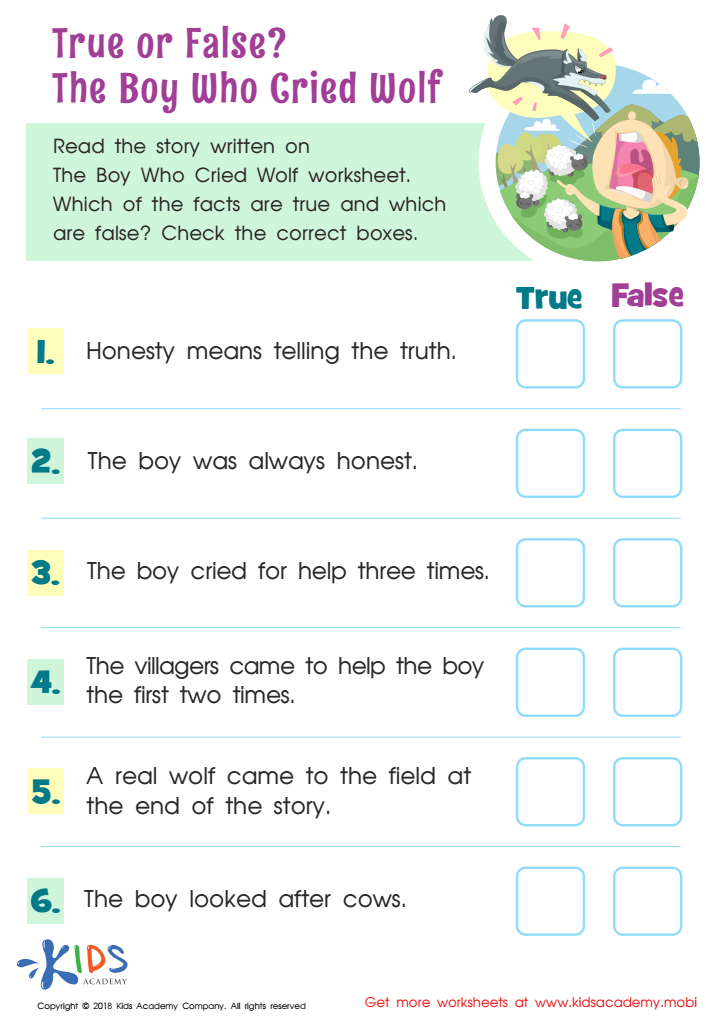
True or False? The Boy Who Cried Wolf Worksheet
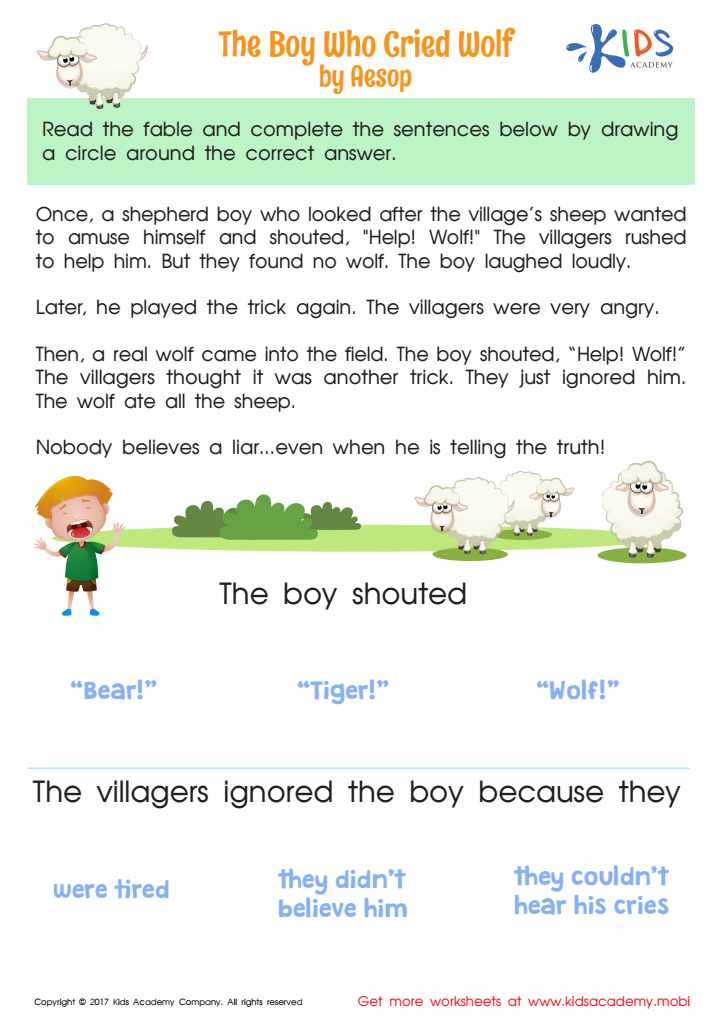
The Boy Who Cried Wolf Worksheet







Moral understanding is crucial for children aged 5-7 as it lays the foundation for their social and emotional development. At this age, children encounter various situations that require them to discern right from wrong, understand empathy, and navigate relationships. Engaging with moral-themed reading helps children grasp complex concepts like fairness, kindness, and responsibility in an accessible and relatable way.
For parents and teachers, fostering moral understanding through reading not only enhances language and comprehension skills but also stimulates critical thinking about ethical dilemmas and social norms. Books with diverse characters and scenarios encourage discussions around emotions and values, which can strengthen resilience and conflict resolution skills. These discussions help children develop their viewpoints and feel confident in expressing their thoughts and feelings.
Moreover, a strong moral foundation nurtures community-building vibes, promoting a positive school and home environment. When children learn to consider others' feelings and perspectives, they become kinder and more understanding individuals, contributing to a better society. Therefore, prioritizing moral understanding reading is essential for nurturing compassionate and socially responsible future citizens. By integrating stories into learning, both parents and teachers play a pivotal role in equipping children with the skills they need to thrive personally and socially.








