Rhyming skills development Reading Worksheets for Ages 5-7
3 filtered results
-
From - To
Help your child master rhyming skills with our engaging and educational Rhyming Skills Development Reading Worksheets for Ages 5-7. Perfectly tailored for young learners, these worksheets provide fun and interactive activities that build foundational language skills. As children identify, match, and create rhymes, they enhance their phonemic awareness and boost early reading abilities. With colorful illustrations and captivating content, our worksheets make learning entertaining and effective. Ideal for both classroom and at-home practice, you'll see improvements in your child's vocabulary, pronunciation, and reading comprehension. Start your journey to rhyming mastery today with our exceptional reading worksheets!

Rhyming Words Rhyming Worksheet
 Assign to My Students
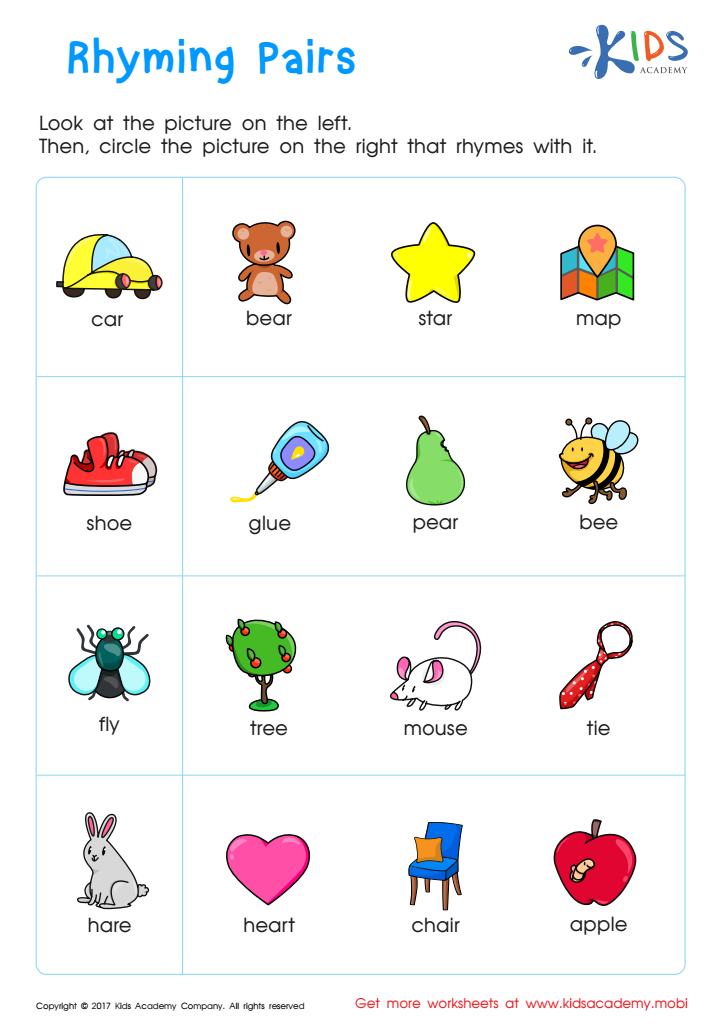

First Words: Picture Rhymes Worksheet



.jpg)




Rhyming skills development in early childhood education—particularly for ages 5-7—is pivotal for a child's reading and language proficiency. Parents and teachers should prioritize rhyming because it helps children recognize phonemic patterns, which are crucial for understanding how language works. Rhyming enhances phonological awareness, a predictor of future reading success, as it enables children to hear, identify, and manipulate sounds in words, which are foundational skills for reading and spelling.
Engaging with rhymes stimulates children's verbal abilities, encouraging vocabulary expansion and helping them grasp that words are made up of similar sounds. This rhythmic and repetitive nature of rhymes aids memory retention, making it easier for children to learn new words and concepts.
Moreover, rhyming can make reading fun and enjoyable, fostering a positive attitude towards learning and books. It can become a shared social activity, bridging connections between parent, teacher, and child through interactive read-aloud sessions, songs, and poems. These shared experiences help strengthen the emotional bonds and collaborative spirit in a learning environment.
Overall, developing rhyming skills helps lay a strong foundation for literacy, which can significantly influence a child's academic life and beyond. Investing attention and effort in this area ensures that children are well-prepared to tackle more advanced reading tasks with confidence.








