Sequencing events Reading Worksheets for Ages 5-7
3 filtered results
-
From - To
Introduce young learners to the essential reading skill of sequencing events with our specially designed worksheets for ages 5-7. These engaging activities help children understand the order of events in a story, enhancing their comprehension and narrative abilities. Perfect for both home and classroom use, our worksheets feature colorful illustrations and fun exercises that make learning enjoyable. By practicing sequencing, kids will improve their logical thinking and storytelling skills, building a strong foundation for future reading success. Explore our diverse collection and watch your child's confidence in reading and comprehension grow with each completed worksheet.
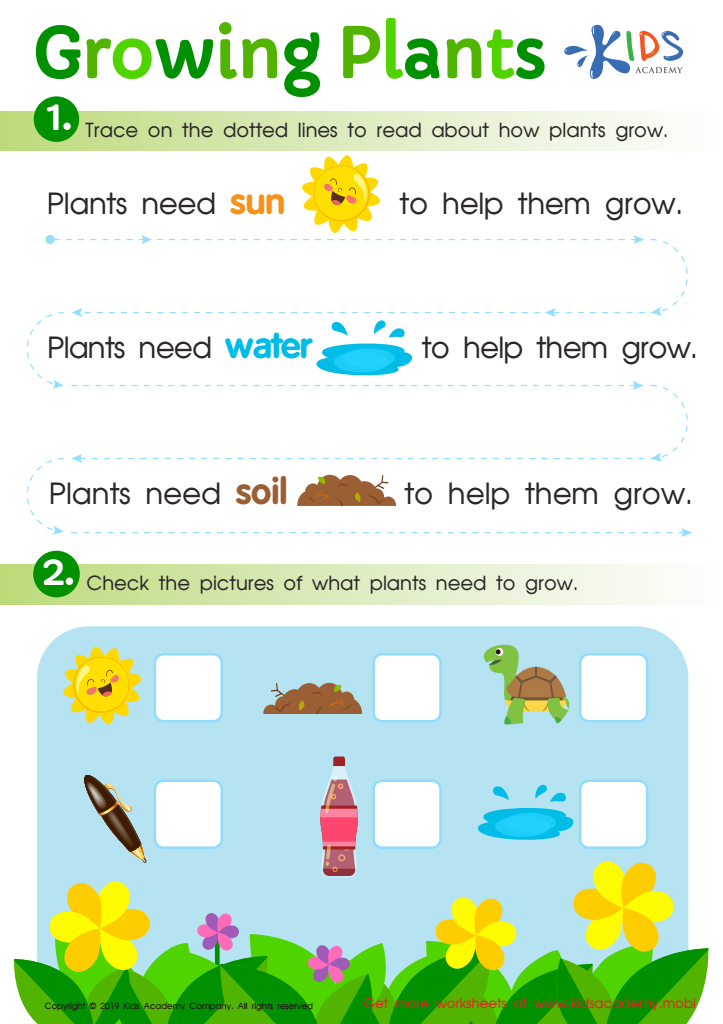
Growing Plants Worksheet
 Assign to My Students
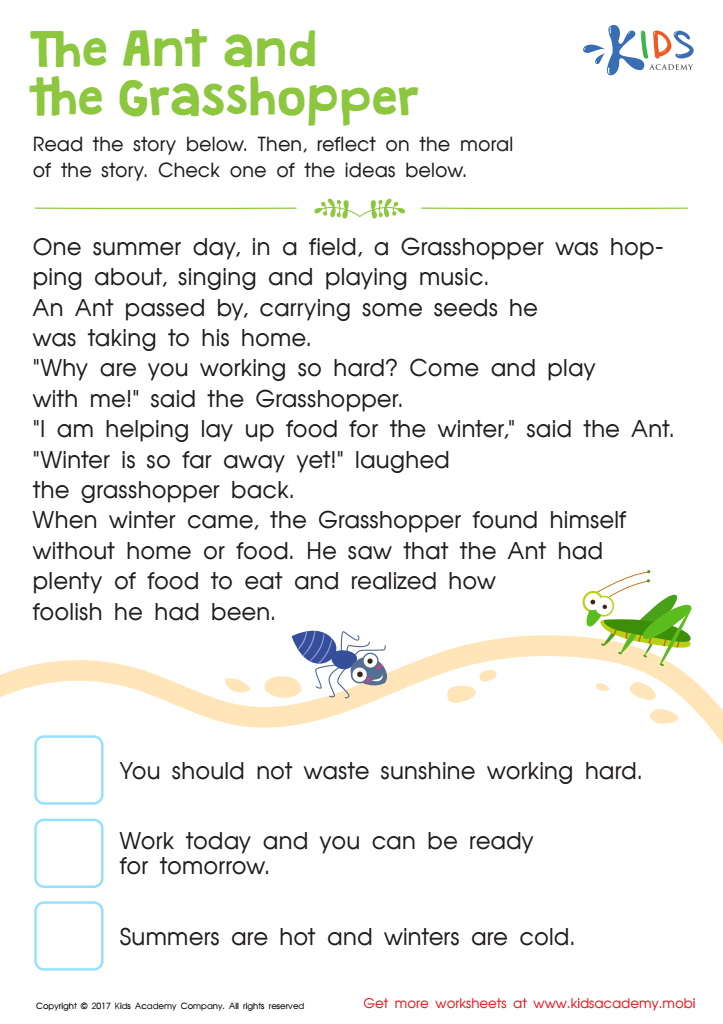
The Ant and The Grasshopper Printable
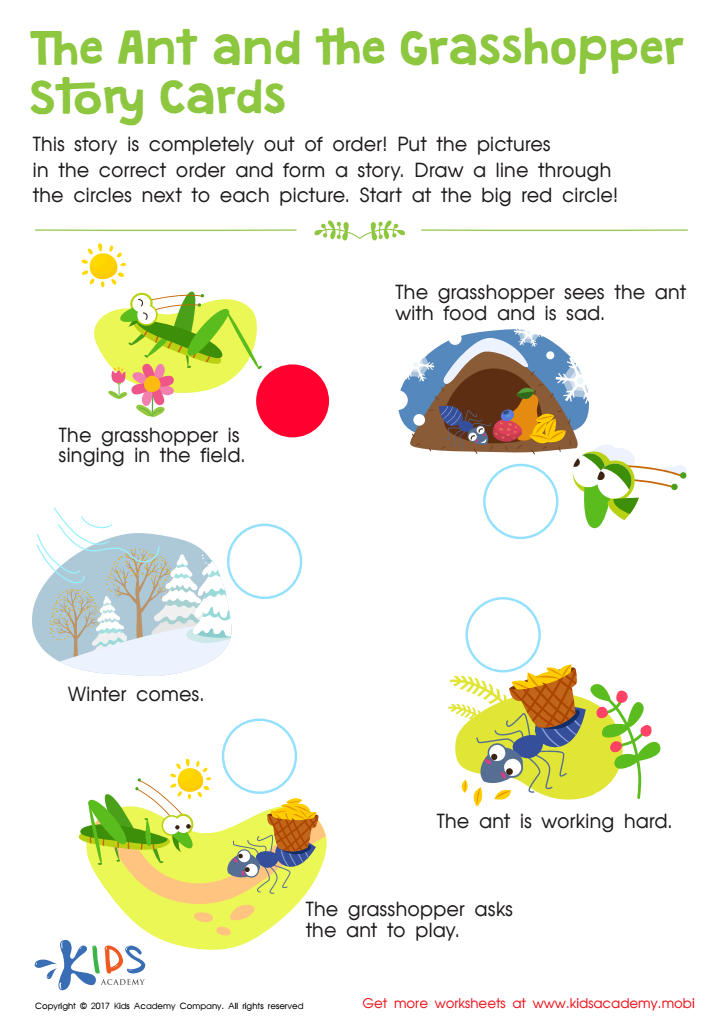
The Ant and The Grasshopper Worksheet


.jpg)





Sequencing events is crucial for young learners aged 5-7 because it lays a fundamental groundwork for literacy and cognitive development. At this age, children are at the beginning stages of developing comprehension skills, and understanding the sequence of events in a story helps them grasp the concept of cause and effect. This skill is not only pivotal in reading comprehension but also essential in daily life activities and problem-solving.
When children learn to recognize and predict sequences, they improve their ability to understand narratives and organize their thoughts coherently. This, in turn, aids memory retention and the ability to recount stories, which are vital components for oral communication and writing skills.
Furthermore, engaging with sequencing tasks can enhance a child's analytical and critical thinking skills. By arranging events in logical order, children practice sequencing as a method of imposing structure and order, both of which are foundational for complex thinking processes.
For teachers and parents, emphasizing sequencing activities through story timelines, picture cards, and chronological sorting games not only fosters a fun and interactive learning environment but also equips children with the skills to follow multi-step directions, an integral part of classroom tasks and everyday routines. Thus, prioritizing sequencing events in reading nurtures socio-emotional and intellectual growth, setting a sturdy stage for future academic and life success.








