Information recall Reading Comprehension Worksheets for Ages 5-7
3 filtered results
-
From - To
Enhance your child's reading skills with our Information Recall Reading Comprehension Worksheets, specially designed for children aged 5-7. These engaging worksheets focus on developing the crucial ability to extract and understand information from text. Each worksheet encourages kids to read closely and answer questions that promote critical thinking and comprehension. Tailored to align with early learning standards, our resources ensure an enjoyable and effective learning experience. Perfect for both home and classroom use, these worksheets will help young readers strengthen their skills while building confidence. Explore our diverse range of materials to make reading a fun and rewarding adventure!
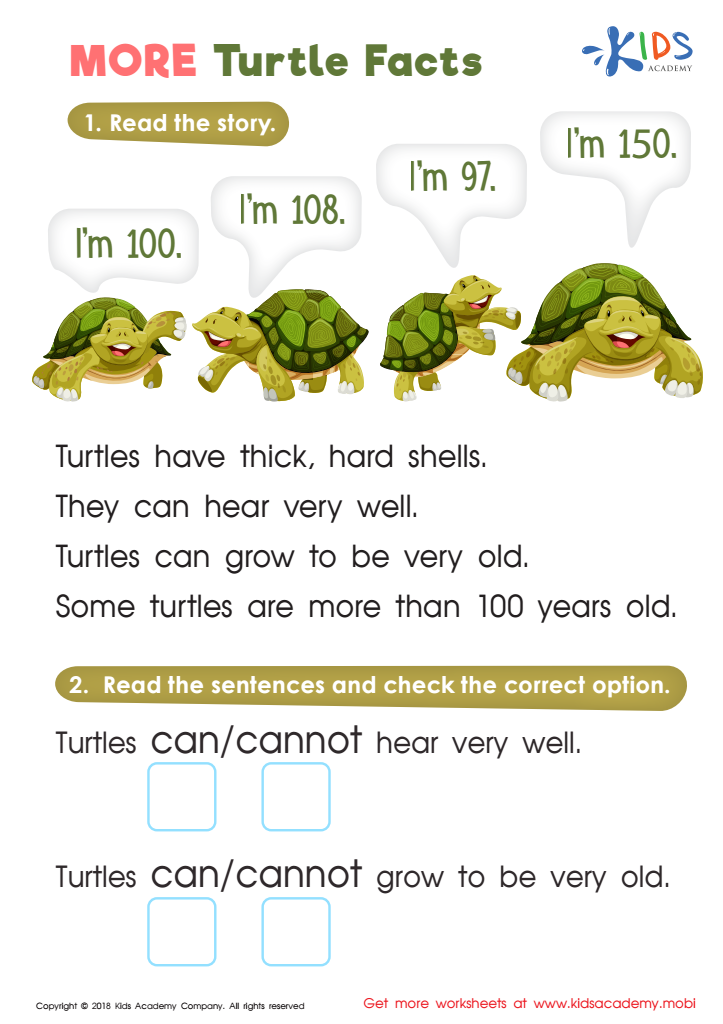
More Turtle Facts Worksheet
 Assign to My Students
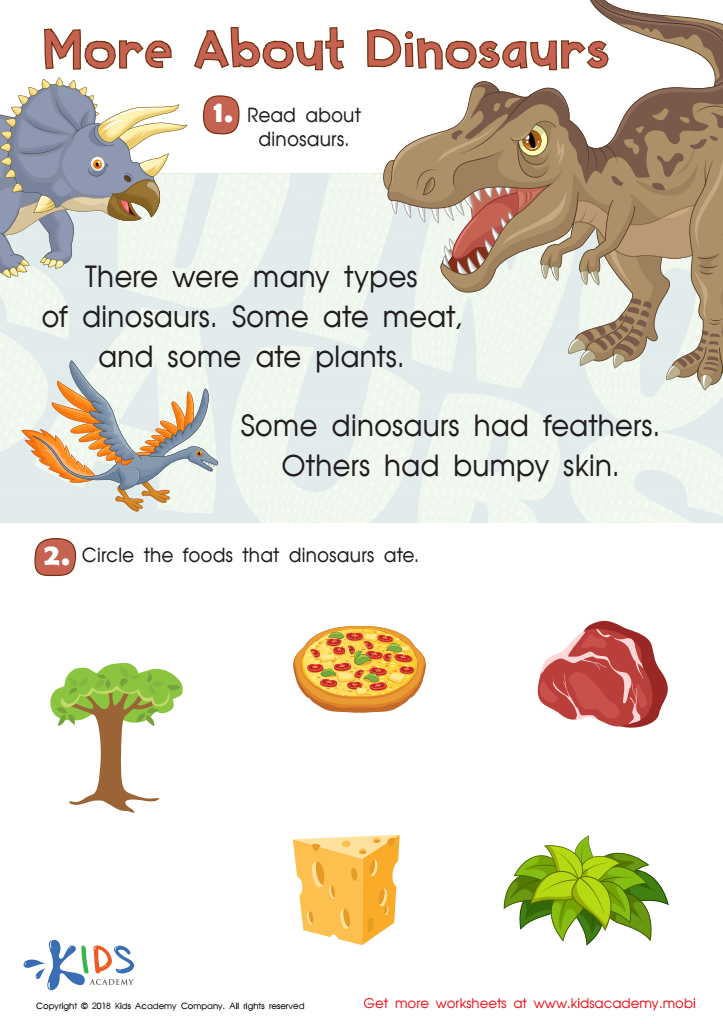
More About Dinosaurs Worksheet
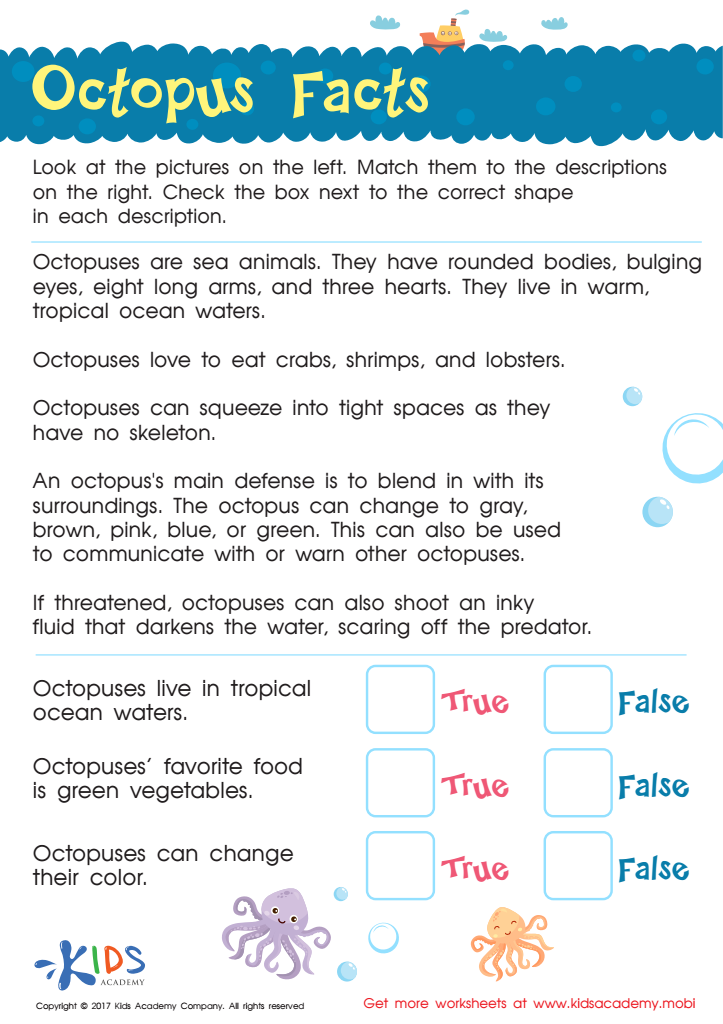
Octopus Facts Worksheet For Kids







Parents and teachers should prioritize information recall and reading comprehension for children ages 5-7 because these foundational skills are vital for academic success and cognitive development. At this age, children are beginning to interact more deeply with texts, making sense of stories and the information presented. Strong reading comprehension skills aid in their ability to understand and engage with the world around them.
When children learn to recall information accurately, they develop the ability to construct meaning from what they read, allowing them to participate in discussions and demonstrate their knowledge. This is critical not only in reading but across all subjects; understanding concepts in math or science often revolves around textual information. Furthermore, engaging in conversation about stories enhances vocabulary development and fosters social skills.
Early mastery of these skills aligns with long-term academic trajectories. Research shows that children who struggle with reading comprehension in early grades may face challenges later, potentially leading to lower achievement. By focusing on information recall and reading comprehension, parents and teachers can build a strong foundation for lifelong learning, instill a love for reading, and help children thrive academically and socially. Support and intervention at this stage can lead to empowerment and increased confidence in young learners.








