Moral understanding Reading Comprehension Worksheets for Ages 5-7
4 filtered results
-
From - To
Discover our engaging Moral Understanding Reading Comprehension Worksheets, specially designed for children aged 5-7. These worksheets promote critical thinking as young readers explore essential life lessons and ethical concepts through fun narratives. Each activity encourages kids to reflect on right and wrong, kindness, empathy, and decision-making skills. Our resources not only enhance reading skills but also foster social and emotional development, ensuring children grow into thoughtful individuals. Perfect for home or classroom use, these worksheets provide an interactive way to build understanding of morals while supporting literacy. Help your child develop a strong moral compass while enjoying the adventure of reading!
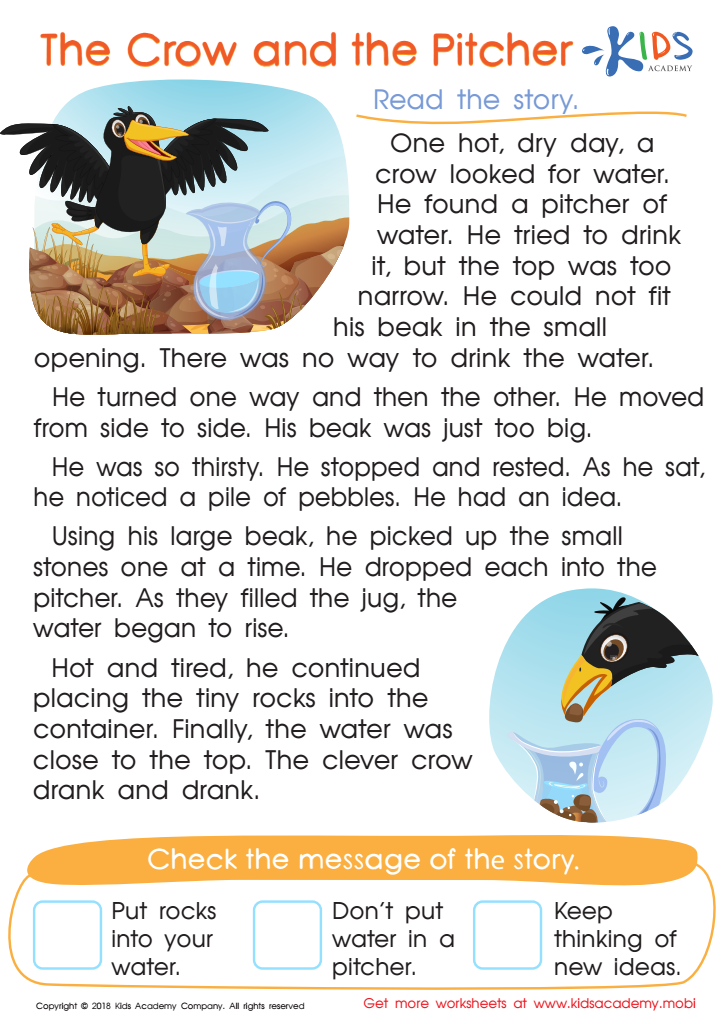
The Crow and the Pitcher Worksheet
 Assign to My Students
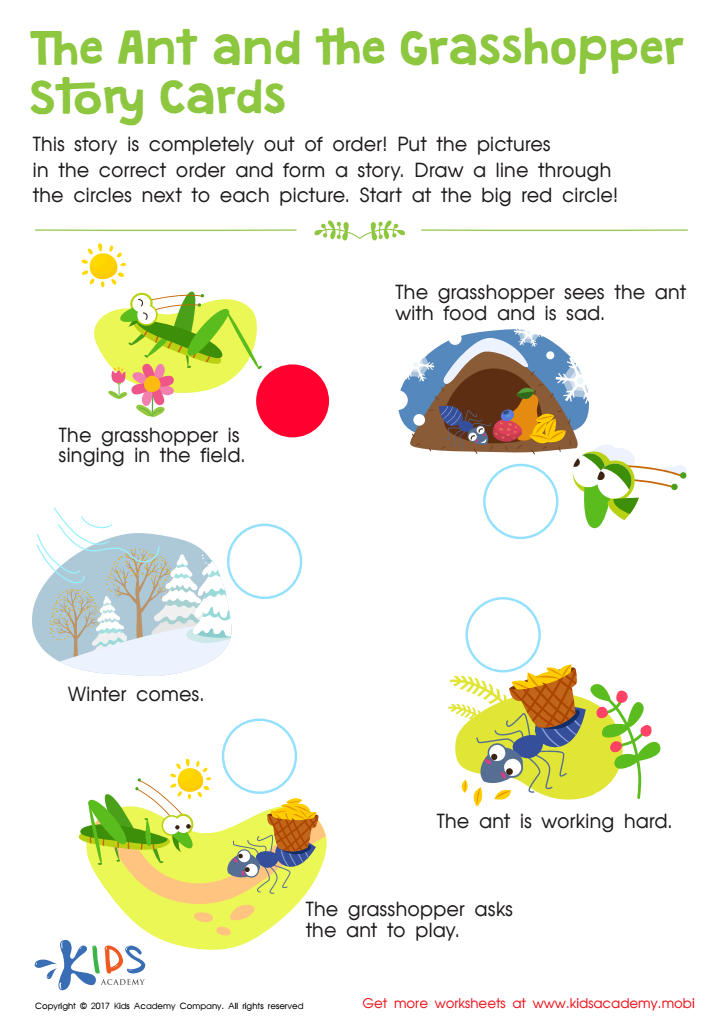
The Ant and The Grasshopper Worksheet
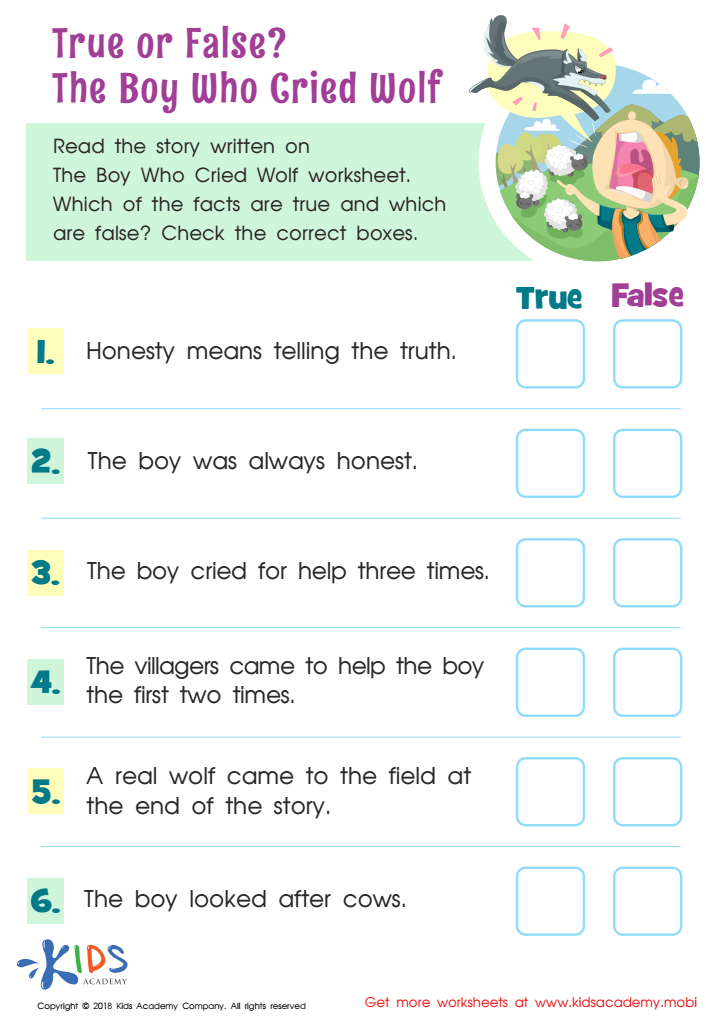
True or False? The Boy Who Cried Wolf Worksheet
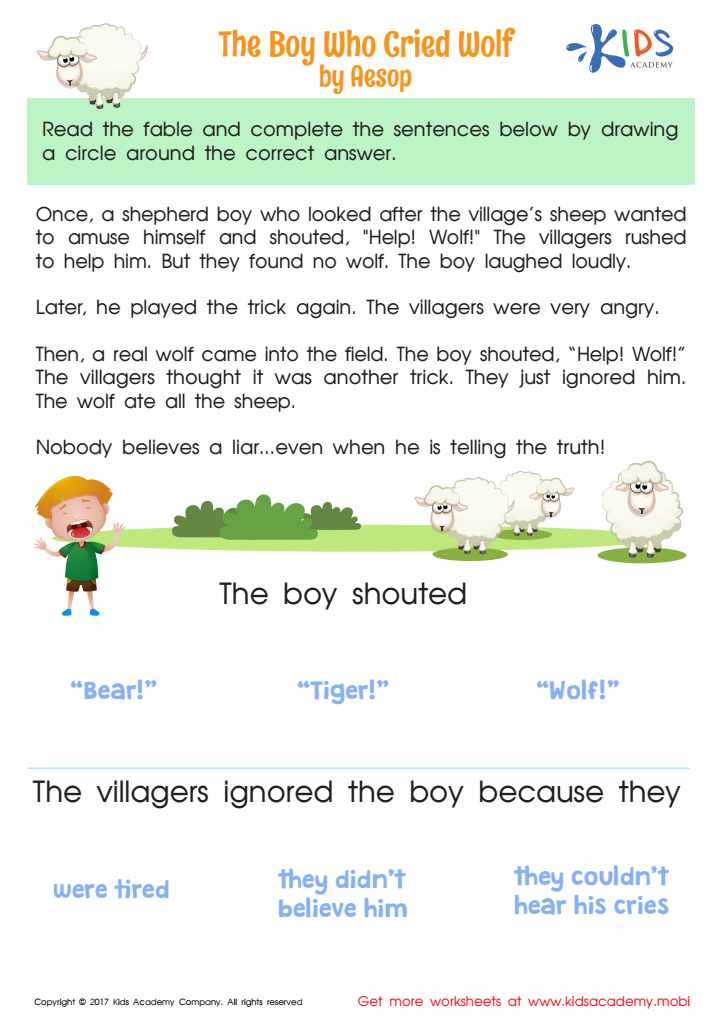
The Boy Who Cried Wolf Worksheet






Parents and teachers should prioritize moral understanding in reading comprehension for children aged 5-7 because it lays a vital foundation for both emotional intelligence and social skills. At this formative stage, children are not only learning to read and understand text, but they are also beginning to navigate complex human experiences and emotions. Incorporating moral themes in reading helps children discern right from wrong, fostering empathy and compassion as they develop.
Literature often presents characters facing dilemmas, allowing children to engage in critical thinking and reflect on their own values. Discussing these moral scenarios helps them articulate their feelings, understand diverse perspectives, and appreciate the consequences of actions, which are essential skills for developing responsible individuals.
Furthermore, enhancing moral understanding through reading boosts overall comprehension skills. As children connect emotionally with narratives, they are more likely to engage deeply with the text, remember plot details, and relate personal experiences, which enriches their vocabulary and language abilities.
In summary, fostering moral understanding through reading comprehension not only cultivates a child's ethical framework but also empowers them to communicate effectively, empathize with others, and participate actively in their communities, thereby shaping responsible future citizens.








