
Pattern recognition Reading Comprehension Worksheets for Ages 5-7
3 filtered results
Difficulty Level
Grade
Age
-
From - To
Subject
Activity
Standards
Enhance your child's reading comprehension skills with our engaging Pattern Recognition Worksheets, designed specifically for ages 5-7! These thoughtfully crafted resources help young learners identify patterns in texts, fostering critical thinking and deeper understanding. Each worksheet encourages children to connect ideas, recognize sequences, and predict outcomes, making reading a fun and interactive experience. With vibrant illustrations and age-appropriate content, these worksheets not only capture interest but also support essential literacy skills. Perfect for use at home or in the classroom, our Pattern Recognition Worksheets provide a valuable tool for developing early reading abilities and ensuring academic success. Explore and inspire a love for reading today!
Favorites
With answer key
Interactive
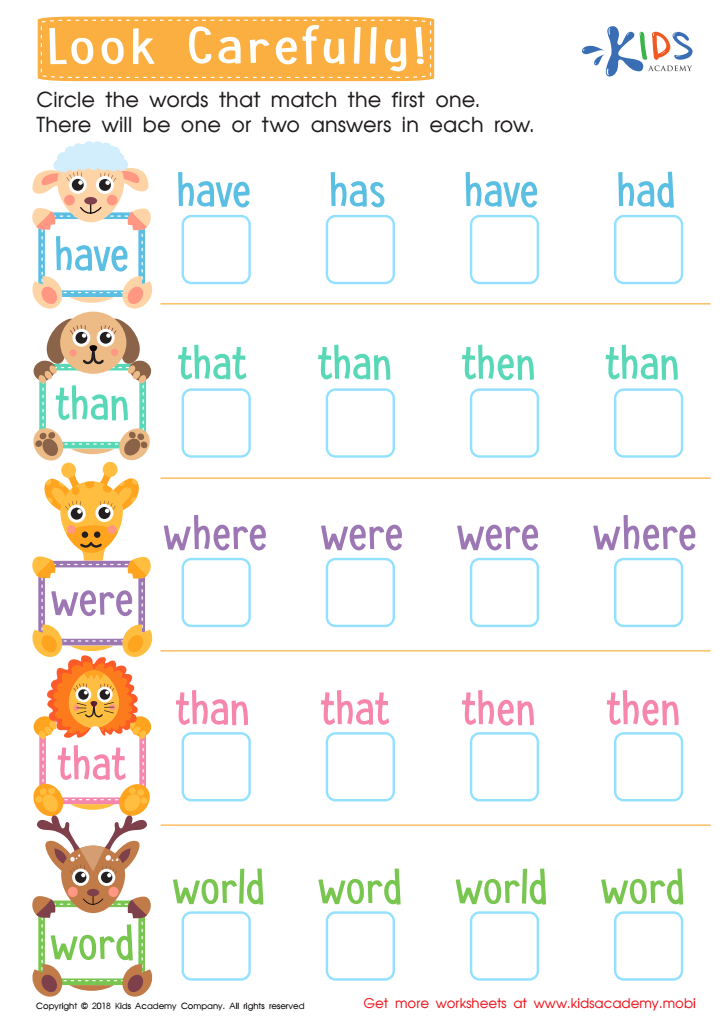
Look Carefully Worksheet
It's crucial to teach kids to identify sight words and become fluent readers. This free worksheet helps make it simpler for kids to learn the similarities and differences between similar words. They'll get practice by looking at the box word and selecting the one that matches from the row.
 Assign to My Students
Look Carefully Worksheet
Worksheet
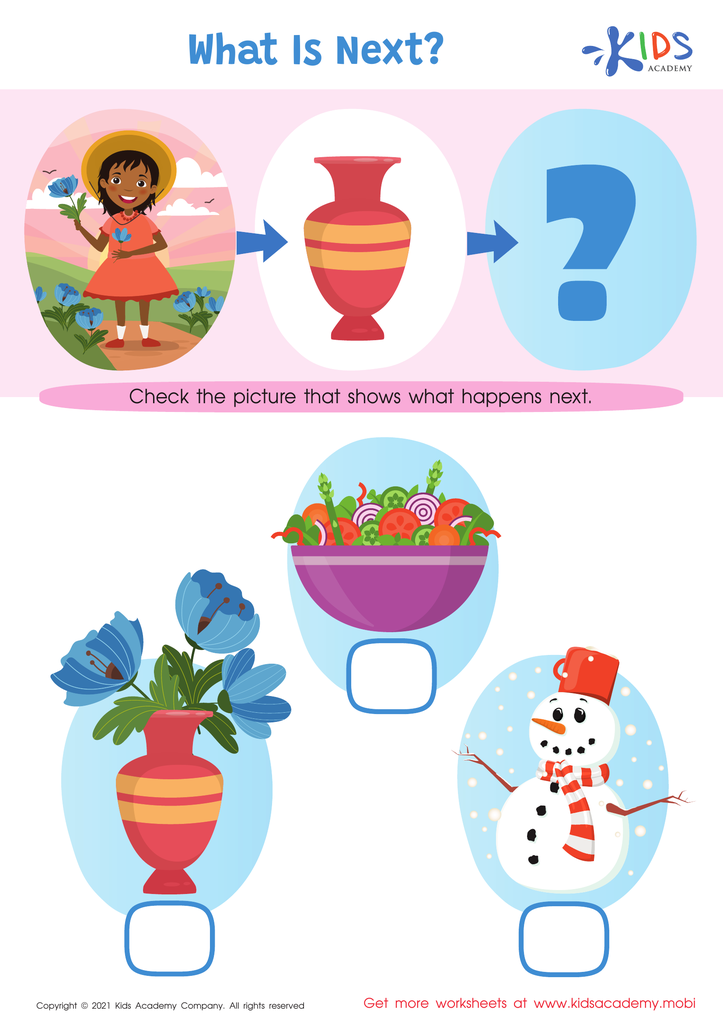
What is Next? Worksheet
The purpose of our company is to provide customers with the highest quality products and the best customer service experience in the industry.
We're committed to providing customers with excellent products and customer service. Our goal is to be the best in the industry.
What is Next? Worksheet
Worksheet
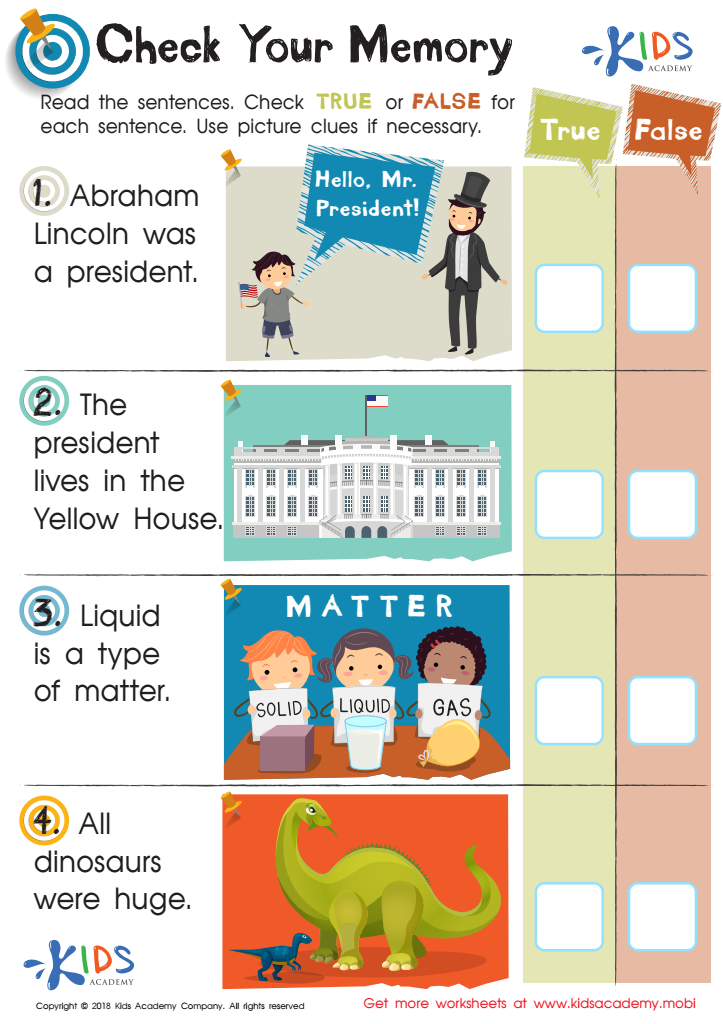
Check Memory Worksheet
Assisting your kids with their homework and using worksheets is a great way for them to learn. The vibrant visuals in this printout can help stimulate the mind and motivate your child. Have them read the sentences and then point to the associated images. Afterwards, ask them to state True or False for each sentence. If they are still uncertain, offer them the picture clues to assist further.
Check Memory Worksheet
Worksheet
Join Kids Academy for Free
Who is primarily going to use this learning content?








Pattern recognition in reading comprehension is crucial for children aged 5-7 as it lays the foundation for effective literacy skills. At this developmental stage, children are naturally inclined to identify relationships, leading to enhanced cognitive abilities. By recognizing patterns in language—such as rhymes, alliterations, and repetitive sentence structures—they develop critical thinking and prediction skills, allowing them to anticipate and make connections within texts.
When parents and teachers prioritize pattern recognition, they enable children to grasp the structure of stories and identify recurring themes, boosting their confidence as readers. These skills also facilitate vocabulary development, as children are likely to encounter and internalize new words within familiar contexts.
Moreover, early exposure to pattern recognition cultivates a love for reading, making the learning process engaging and enjoyable. By encouraging this practice, caregivers help children become independent readers who can analyze, infer, and summarize information, setting them up for ongoing academic success. In summary, embracing pattern recognition not only equips children with essential reading tools but also nurtures a lifelong passion for literature, making it a fundamental aspect of early education.








