
Visual Perception Skills Reading Comprehension Worksheets for Ages 5-7
3 filtered results
Difficulty Level
Grade
Age
-
From - To
Subject
Activity
Standards
Enhance your child's reading journey with our "Visual Perception Skills Reading Comprehension Worksheets" tailored for ages 5-7. These engaging worksheets are designed to bolster visual discrimination, memory, and sequential order skills, crucial for reading success. Each activity encourages young learners to distinguish shapes, patterns, and letters, laying a solid foundation for improved reading comprehension. By integrating playful exercises, children won't just learn—they'll enjoy the process. Perfect for parents and educators, these worksheets provide an enjoyable way for kids to boost their visual perceptual skills and reading prowess while having fun. Start your child's learning adventure today!
Favorites
With answer key
Interactive
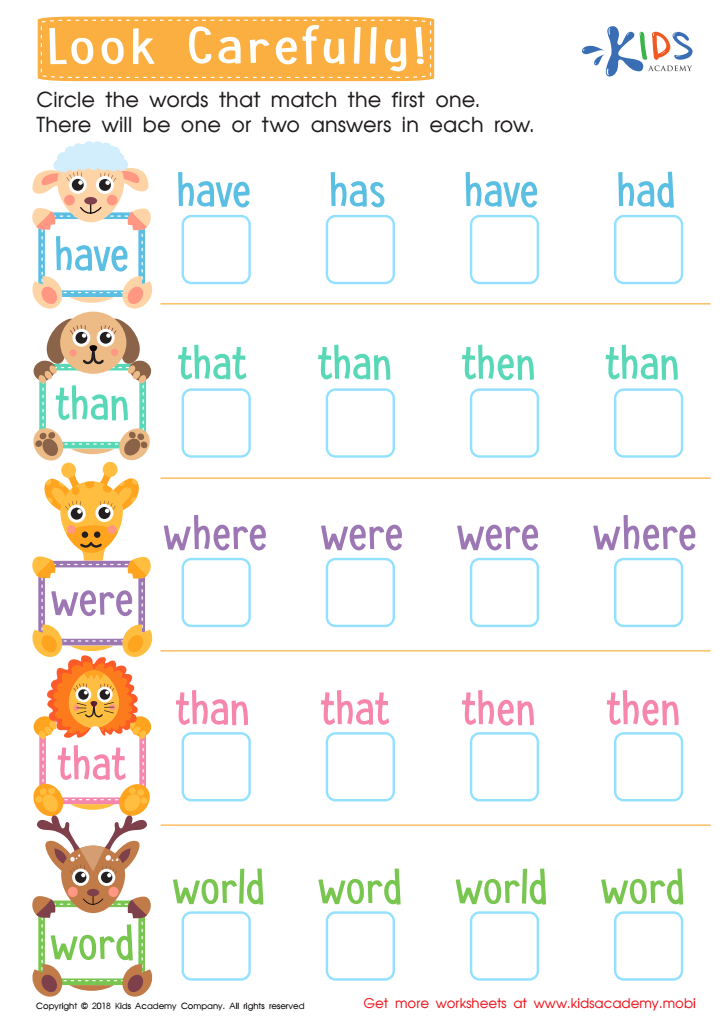
Look Carefully Worksheet
It's crucial to teach kids to identify sight words and become fluent readers. This free worksheet helps make it simpler for kids to learn the similarities and differences between similar words. They'll get practice by looking at the box word and selecting the one that matches from the row.
 Assign to My Students
Look Carefully Worksheet
Worksheet
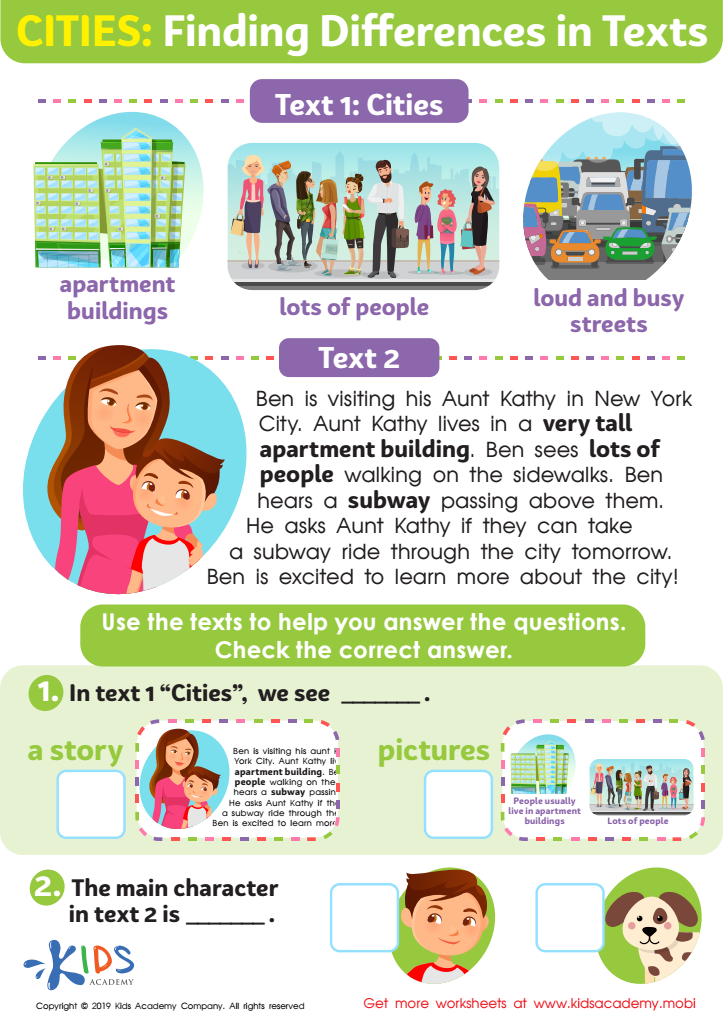
Cities: Finding Differences Worksheet
Critical thinking is essential for reading comprehension. New readers must be able to identify the key information in different text formats. This worksheet helps children learn what they might find in cities and how to differentiate between stories and pictures.
Cities: Finding Differences Worksheet
Worksheet
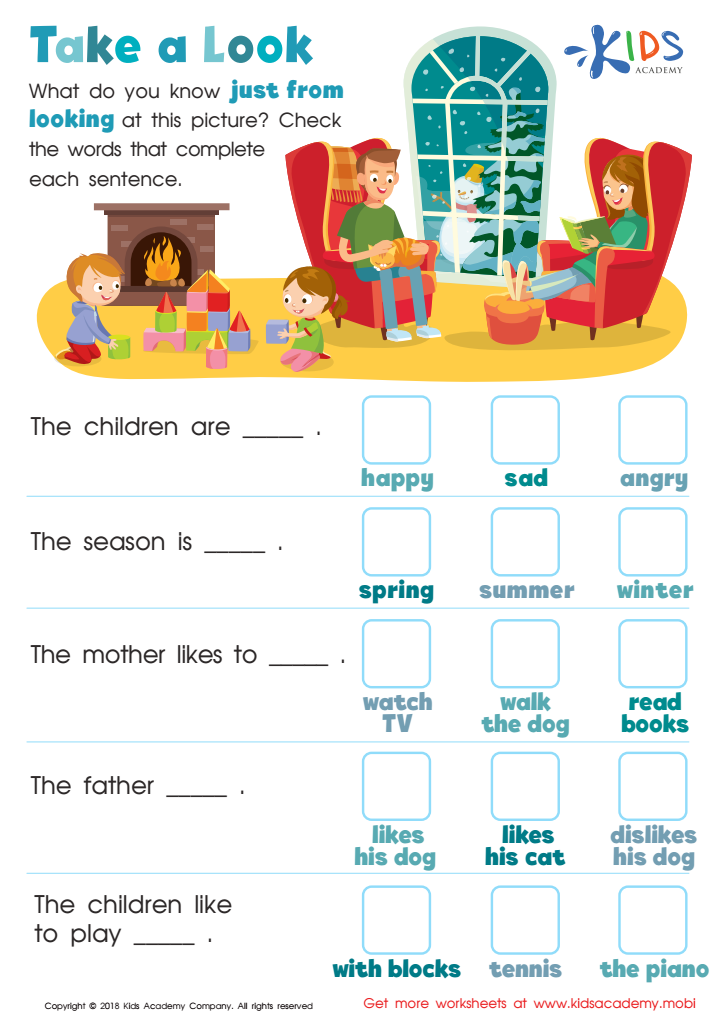
Take a Look - Part 1 Worksheet
Young learners gain understanding when using picture clues when reading. Looking at illustrations can help students learn the meaning of key vocabulary when reading fiction or informational text. Ask your students to look at the worksheet and observe what they can learn from the picture. It's a great comprehension strategy for early readers.
Take a Look - Part 1 Worksheet
Worksheet
Join Kids Academy for Free
Who is primarily going to use this learning content?








Visual perception skills, including visual discrimination, memory, and spatial relationships, are fundamental in early childhood development and directly influence reading comprehension for ages 5-7. Teachers and parents should be keen on nurturing these skills as they lay the groundwork for effective reading and learning experiences.
Visual discrimination helps children recognize differences in letters and words, paramount for reading fluently. For example, distinguishing between "b" and "d" or "p" and "q" is crucial. Similarly, visual memory enables a child to remember shapes, letters, and words they see, paving the way for recalling words and understanding sentences.
Moreover, spatial relationships skills, which help children understand how objects relate to one another, aid in recognizing word spacing and sentence structure, thereby enhancing readability. This can reduce reading errors and reliance on guesswork.
When visual perceptual skills are well-developed, children find reading a less frustrating and more rewarding experience, which can lead to higher engagement and better academic performance. Additionally, these skills support daily activities and holistic cognitive development, fueling a child's curiosity and learning capability.
Inadequate visual perception can result in reading difficulties, teacher frustration, and student disengagement. By supporting the development of these foundational skills, parents and teachers can foster confidence, improve academic outcomes, and instill a lifelong love for reading.








