Rhyming skills development Rhyming Words Worksheets for Ages 5-7
3 filtered results
-
From - To
Enhance your child's reading and language abilities with our Rhyming Words Worksheets, specially designed for ages 5-7. These engaging activities help children recognize, create, and complete rhymes, building essential literacy skills through fun and play. Our worksheets offer a variety of exercises that promote phonemic awareness and improve vocabulary, making learning enjoyable and effective. Perfect for teachers and parents, these resources foster a love for reading while strengthening foundational skills in young learners. Equip your child with the confidence to master rhyming words and ignite their imagination with our creative and interactive worksheets today!
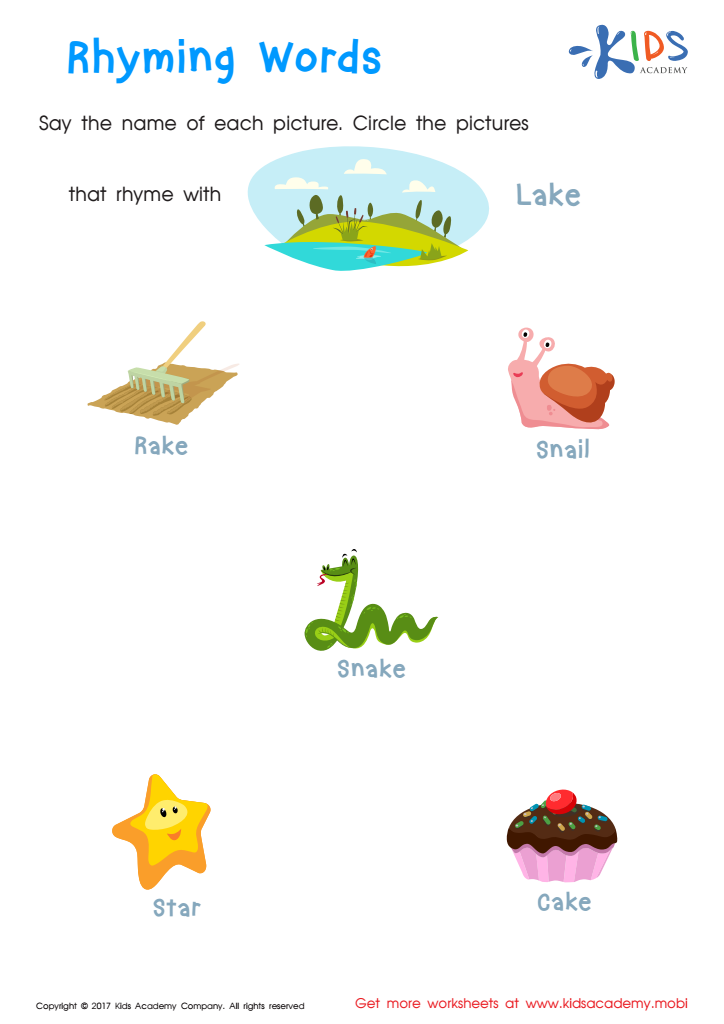
Rhyming Words Rhyming Worksheet
 Assign to My Students
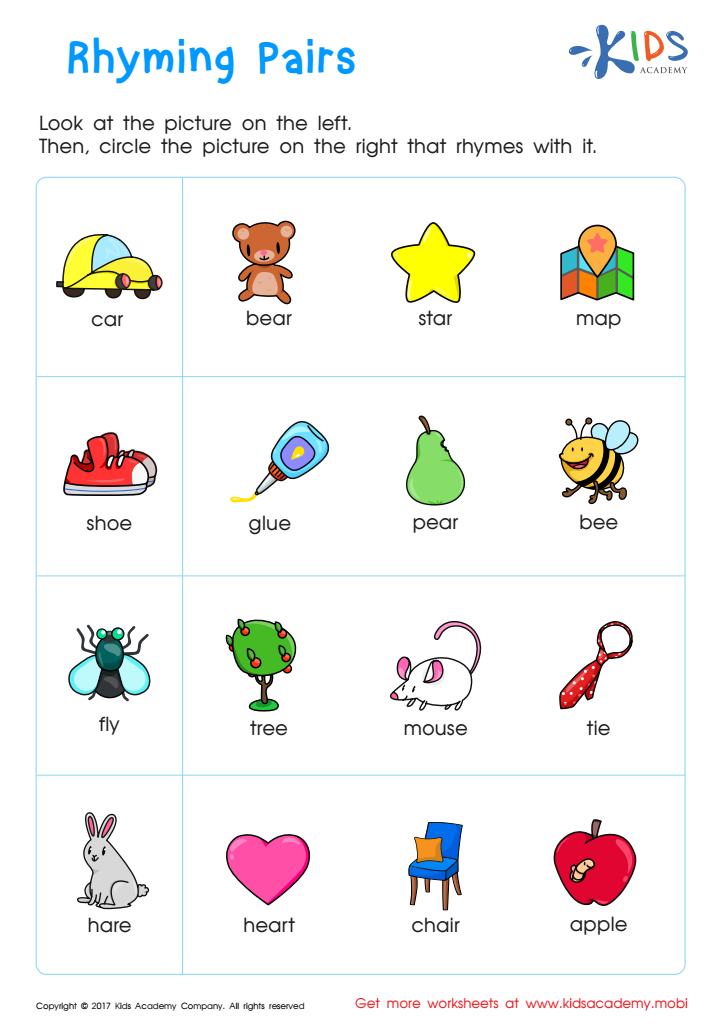
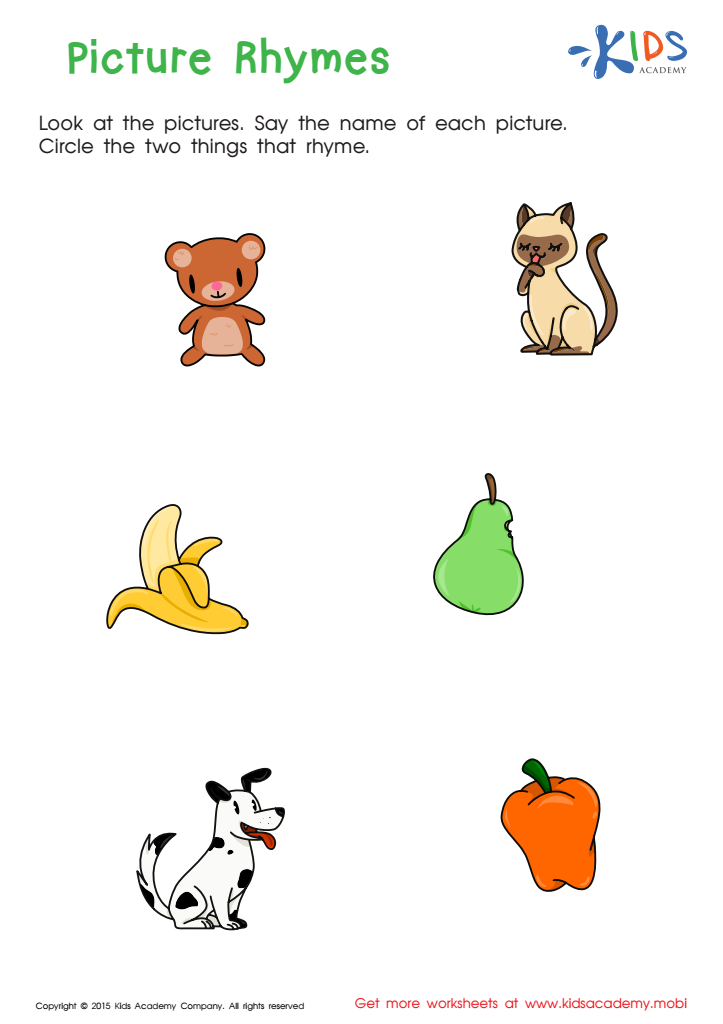
First Words: Picture Rhymes Worksheet








Rhyming skills are crucial in the early development of literacy for children aged 5-7. First, they enhance phonological awareness, which is the ability to recognize and manipulate sounds in spoken language. This skill is foundational for reading and writing, as it helps children understand how words are constructed and how similar sounds relate to one another.
Furthermore, rhyming activities engage children's listening skills and promote auditory discrimination, which are essential for decoding words while reading. For example, when children identify and create rhymes, they practice segmenting and blending sounds, making them more adept at tackling unfamiliar words.
Moreover, rhyming fosters language development and vocabulary expansion. It introduces children to new words and encourages them to explore language playfully and creatively. This not only aids in language acquisition but also boosts overall literacy by enhancing comprehension and expression.
Lastly, teaching children to recognize rhyme boosts their confidence in communication, as they become more enthusiastic about participating in language activities, from storytelling to songwriting. In sum, prioritizing rhyming skills development is vital for laying a strong foundational literacy skillset that supports children's lifelong reading and learning success.








