Vocabulary Building Rhyming Words Worksheets for Ages 5-7
3 filtered results
-
From - To
Enhance your child's vocabulary with our engaging Rhyming Words Worksheets, specifically designed for ages 5-7. These interactive worksheets promote language development by encouraging the recognition and production of rhyming words. Fun activities, colorful illustrations, and playful tasks make learning enjoyable and effective. As children complete each worksheet, they boost their phonetic awareness, build vocabulary, and improve their reading skills. Ideal for home or classroom use, our resources support early literacy and ignite a love for language. Help your young learners discover the magic of words with these captivating rhyming activities tailored to their developmental needs. Start their vocabulary journey today!
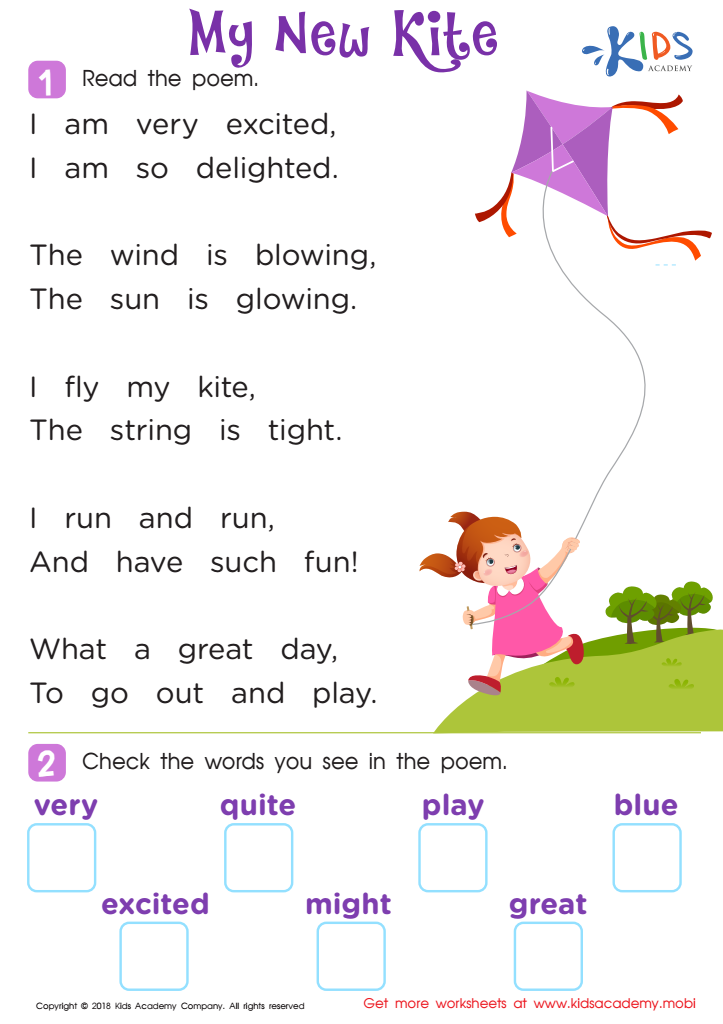
Poem: My New Kite Worksheet
 Assign to My Students
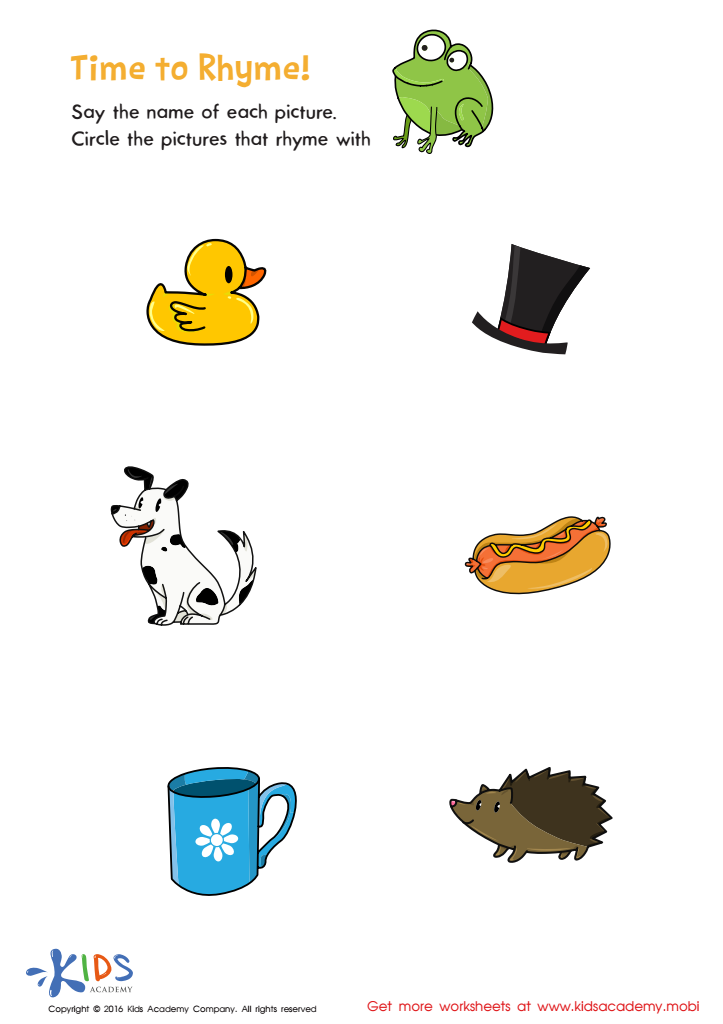
Rhyming Worksheet: Time to Rhyme Rhyming Worksheet
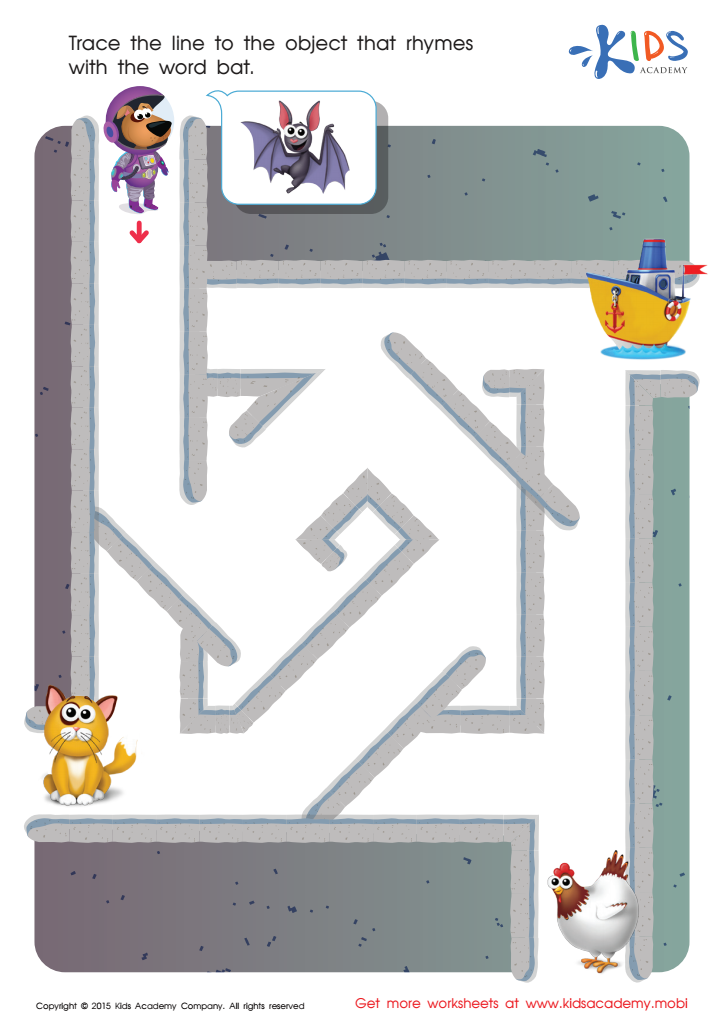
Bat Rhyming Words Worksheet








Vocabulary building through rhyming words is crucial for children aged 5-7, as it lays the foundation for early literacy and language skills. Rhyming helps children recognize the sounds and structures of language, making it easier for them to decode words and develop phonemic awareness. This skill is essential when they transition to reading, as it enhances their ability to sound out unfamiliar words.
Moreover, engaging with rhymes enriches a child's vocabulary by introducing new words and meanings in a fun, memorable way. When children learn through play, they are more likely to retain what they have learned. Rhyming games, songs, and poetry also foster creativity and imagination, crucial traits for cognitive development.
Additionally, vocabulary building through rhyming can boost confidence in young learners. When they master rhymes and can participate in interactive activities, children feel a sense of achievement, encouraging them to explore language further.
For parents and teachers, investing time in rhyming activities not only contributes to a child’s reading readiness but also creates joyful and meaningful learning experiences, forging strong oral language skills that will serve them throughout their educational journey. Caring about this aspect of literacy development sets the stage for lifelong learning.








