
Matching skills Science Worksheets for Ages 5-7
5 filtered results
Difficulty Level
Grade
Age
-
From - To
Subject
Activity
Standards
Discover our engaging "Matching Skills Science Worksheets" designed specifically for children aged 5 to 7! These worksheets provide a fun and interactive way for young learners to strengthen their matching skills while exploring various scientific concepts. Through vibrant illustrations and easy-to-follow activities, children will enhance their ability to recognize similarities and differences, boost their cognitive skills, and develop a solid foundation in science. Perfect for classroom use or at-home learning, these worksheets encourage critical thinking and creativity tailored to young minds. Download now to inspire your child's love for science and help them master essential matching skills!
Favorites
With answer key
Interactive
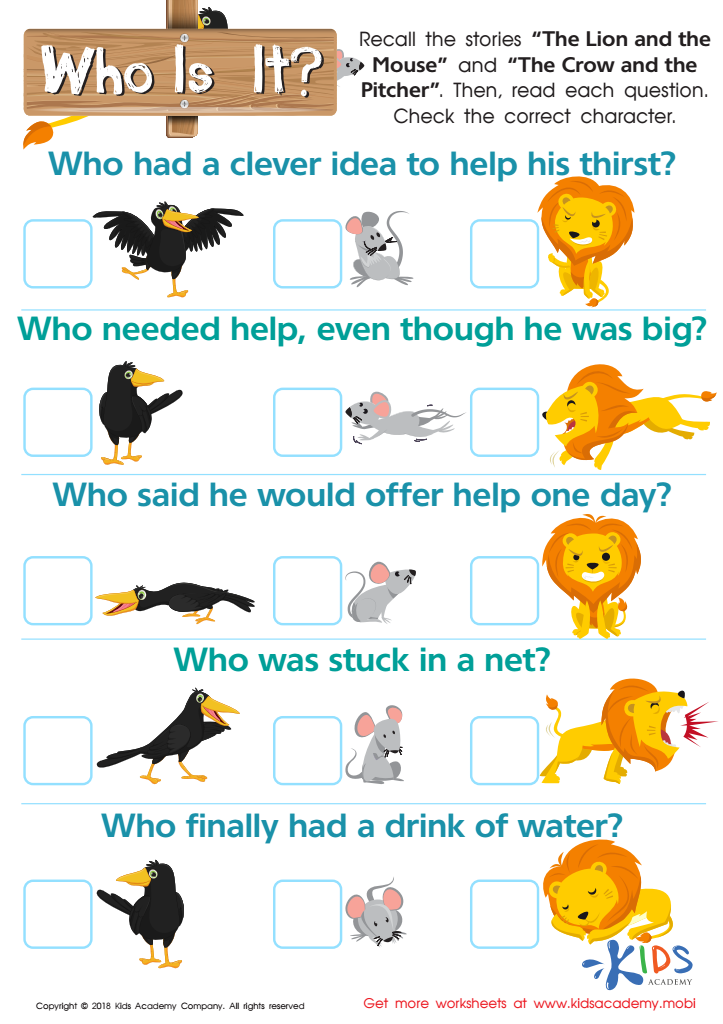
Who Is It? Worksheet
This worksheet helps students recall details from The Crow and the Pitcher and The Lion and the Mouse stories. Students will answer questions about the characters' actions. Use it to assess their understanding of both stories, as this is a key comprehension skill.
Who Is It? Worksheet
Worksheet
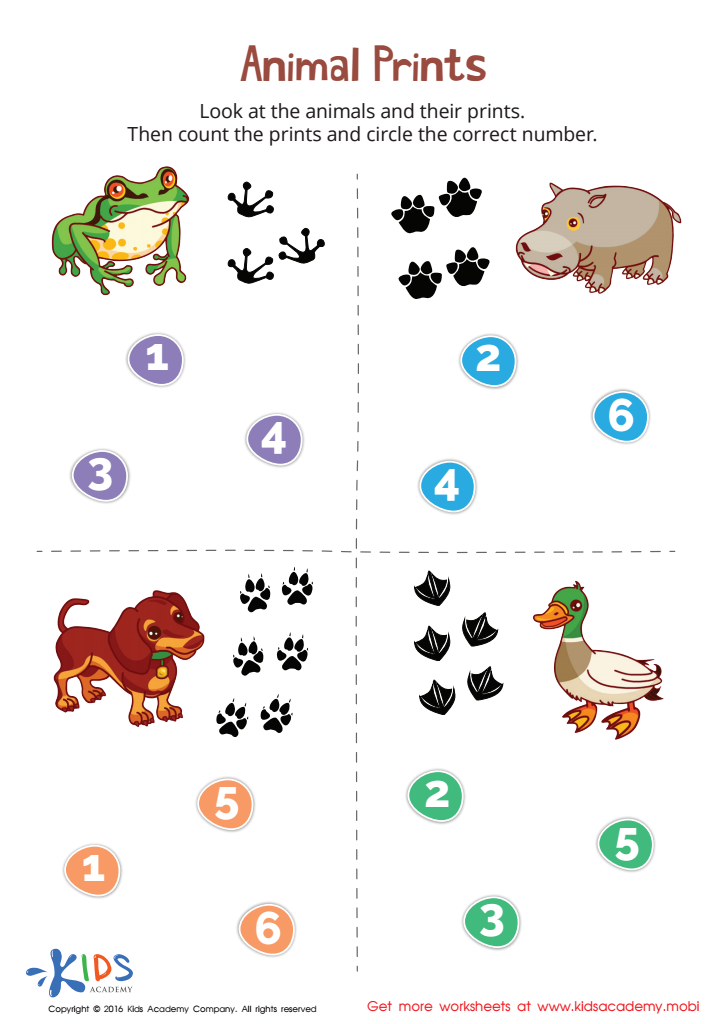
Animal Prints Match-Up Worksheet
Help your little learner build early math skills with this fun animal paw prints worksheet. With it, they'll count, recognize numbers, and learn about the animals that make the paw prints. Talk to them about the prints and ask them to count. They'll love exploring and learning about the different animals, all while sharpening essential math skills!
Animal Prints Match-Up Worksheet
Worksheet
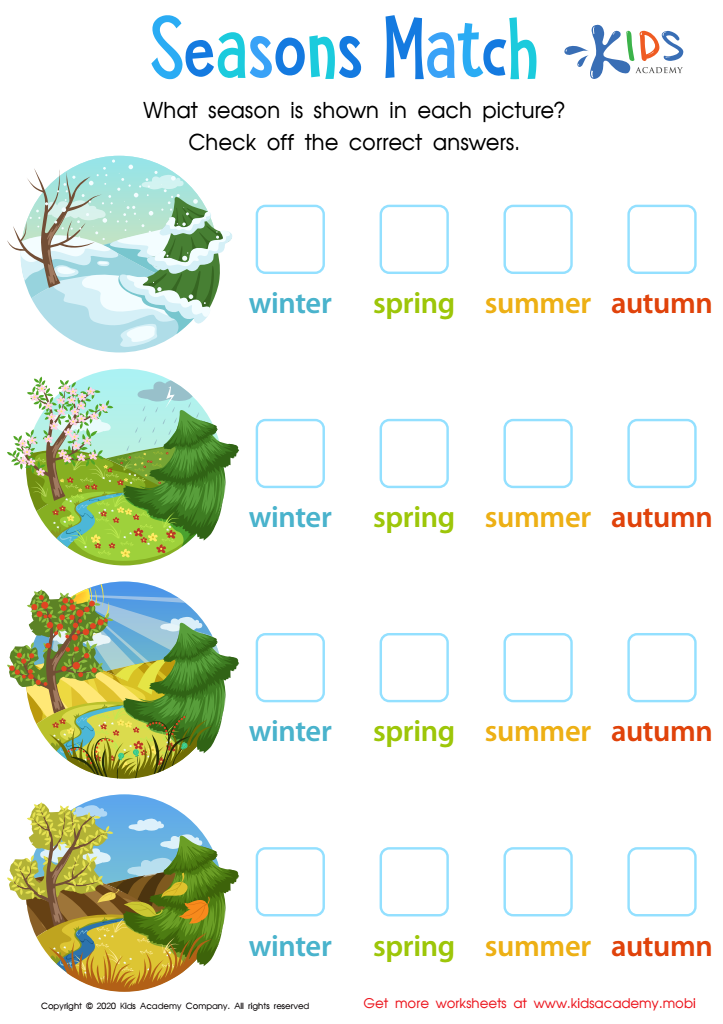
Seasons Match Worksheet
Preschoolers should begin learning about seasons and weather early. Most can tell what season it is by upcoming holidays or school activities. Test their knowledge with a printable PDF worksheet. It asks them to match each image with its corresponding season!
Seasons Match Worksheet
Worksheet
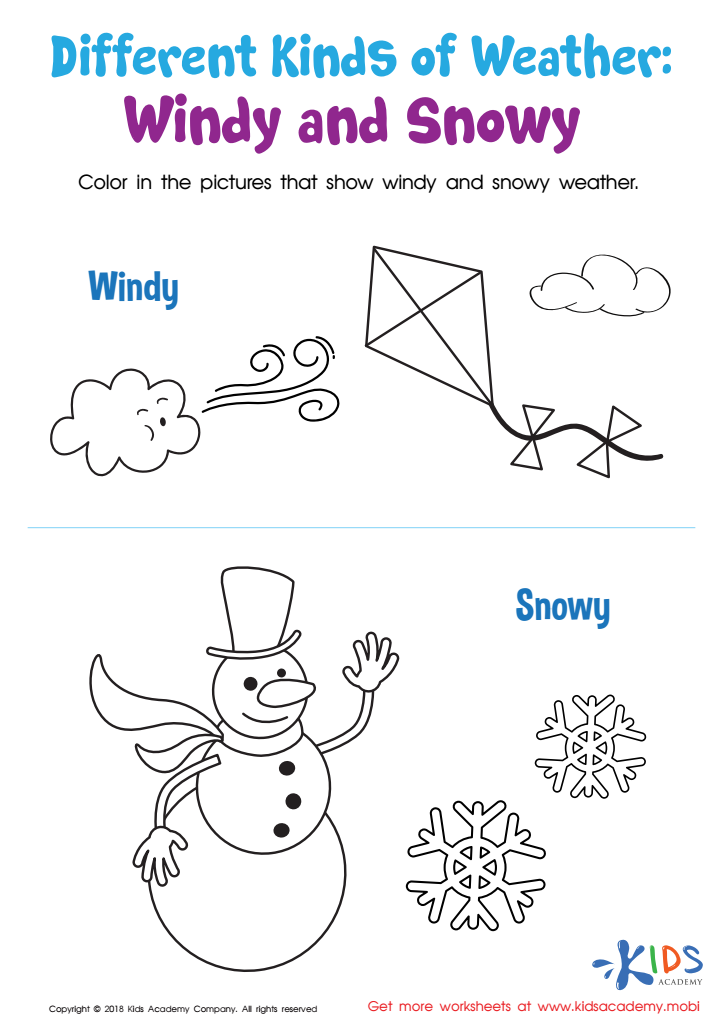
Different Kinds of Weather: Windy and Snowy Worksheet
Invite your little learner to practice their fine motor skills and learn about nature with this fun and charming PDF worksheet! Reinforce weather patterns and examine their environment as they color, giving them a foundation for understanding how weather affects them. No matter the weather, your learner will have a blast!
Download (PDF)
 Assign to My Students
Assign to My Students
Different Kinds of Weather: Windy and Snowy Worksheet
Worksheet
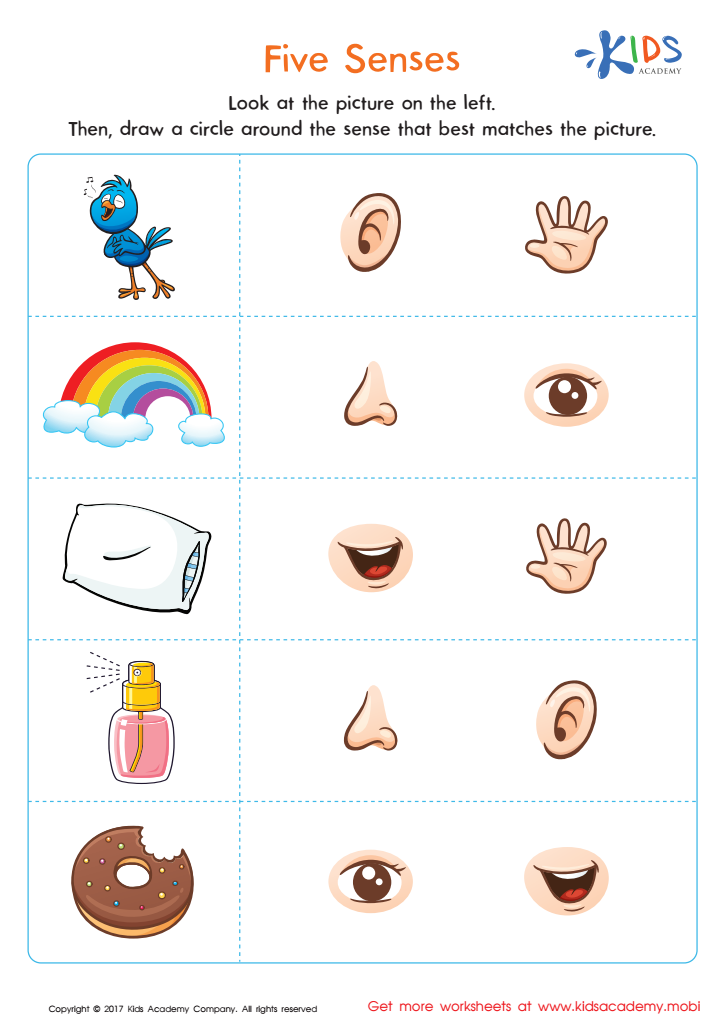
Five Senses Printable
For an easy way to jumpstart your child's critical thinking and introduce the five senses, print our free worksheets! These are great for reviewing each sense and practicing critical thinking skills. Work with your child and discuss each image. After completing the worksheet, find objects around the house so they can quiz themselves!
Five Senses Printable
Worksheet
Join Kids Academy for Free
Who is primarily going to use this learning content?






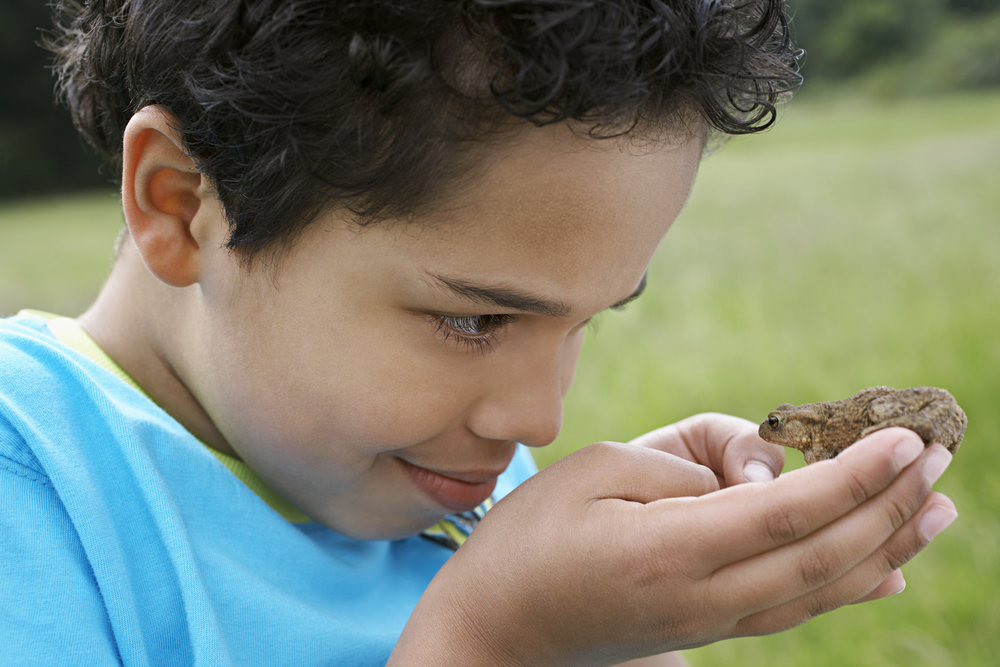
Matching skills in science for ages 5-7 are vital for a child's cognitive and social development. At this stage, children are naturally curious, and engaging them in scientific concepts through matching games can enhance their learning experience. These activities promote critical thinking and help develop observation skills, as children learn to identify similarities and differences between objects, animals, plants, or scientific concepts.
Moreover, matching activities foster language development; as children articulate their thoughts about what they are pairing, they enrich their vocabulary and comprehension of scientific terms. This early exposure to science nurtures a sense of wonder and encourages lifelong learning.
Parents and teachers should also recognize the social interaction that matching activities provide. These can be done in pairs or small groups, promoting teamwork and communication skills, which are essential for future social integrations. Additionally, enhancing these skills early lays the foundation for more complex scientific information as children grow.
Ultimately, integrating matching skills in science not only cultivates analytical skills and an understanding of the natural world but also supports emotional intelligence by reinforcing positivity through shared learning experiences. Hence, creating richer educational environments is crucial for holistic development at this early age.







