Understanding photosynthesis Science Worksheets for Ages 5-7
3 filtered results
-
From - To
Explore our “Understanding Photosynthesis” science worksheets, crafted for curious minds ages 5-7. These engaging printables guide young learners through the fundamental process plants use to make food, using fun visuals and simple language tailored for early grade children. Your little botanist will enjoy activities that explain how sunlight, water, and carbon dioxide come together to create energy. Ideal for classroom or home use, these worksheets build foundational science skills, encourage exploration, and foster a love for nature. Make learning photosynthesis an exciting adventure with Kids Academy’s expertly designed resources!
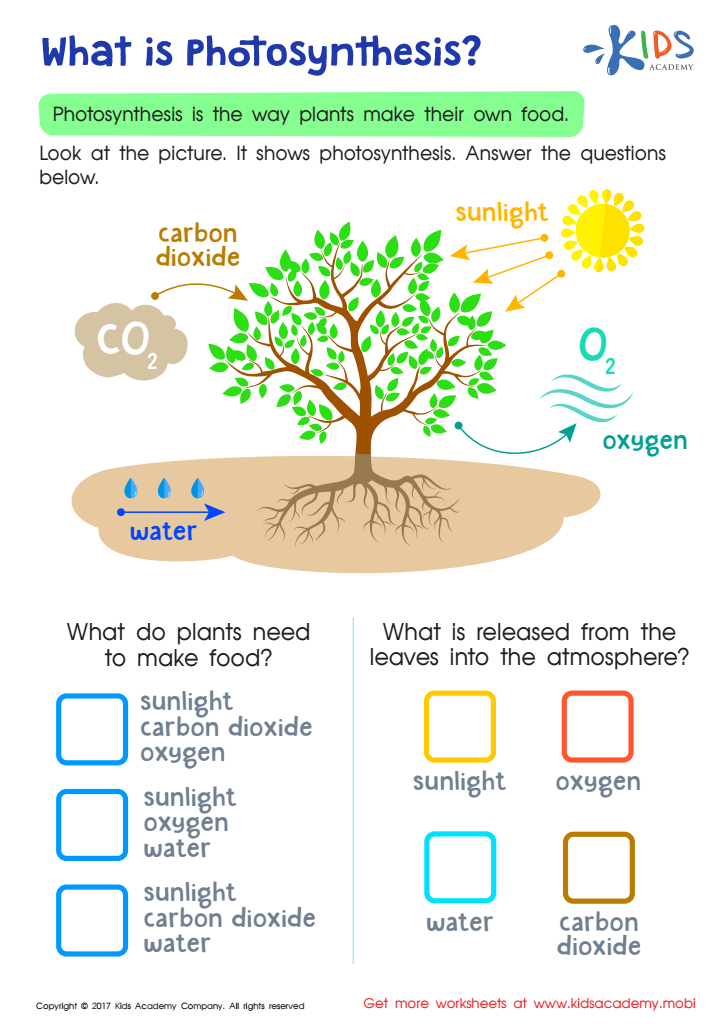
What is Photosynthesis Printable
 Assign to My Students
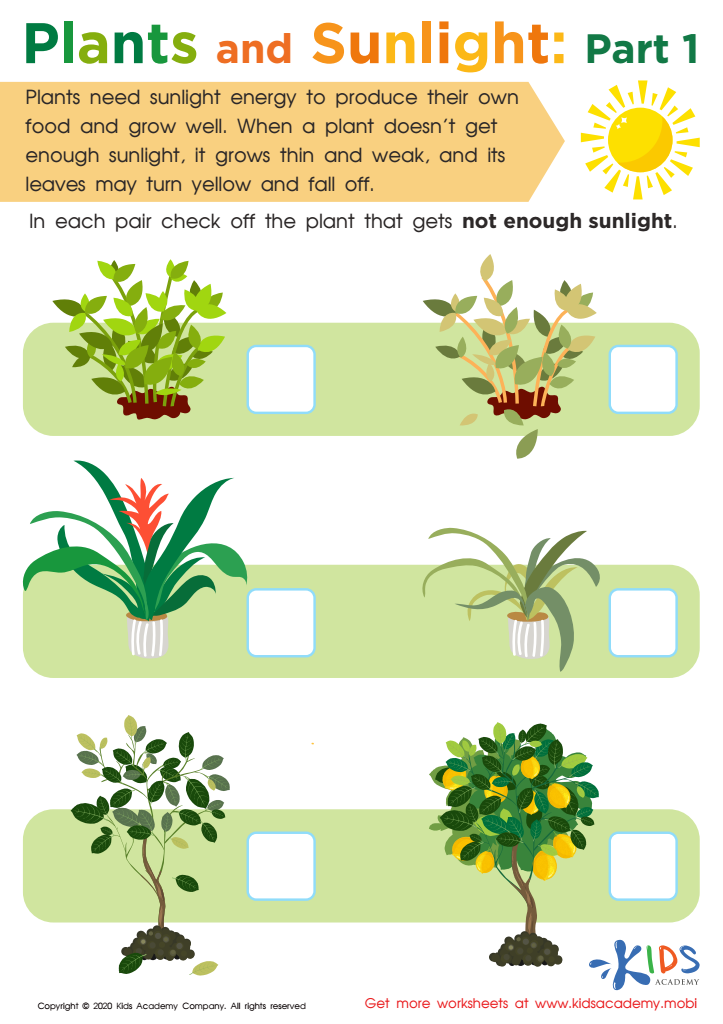
Plants and Sunlight: Part 1 Worksheet
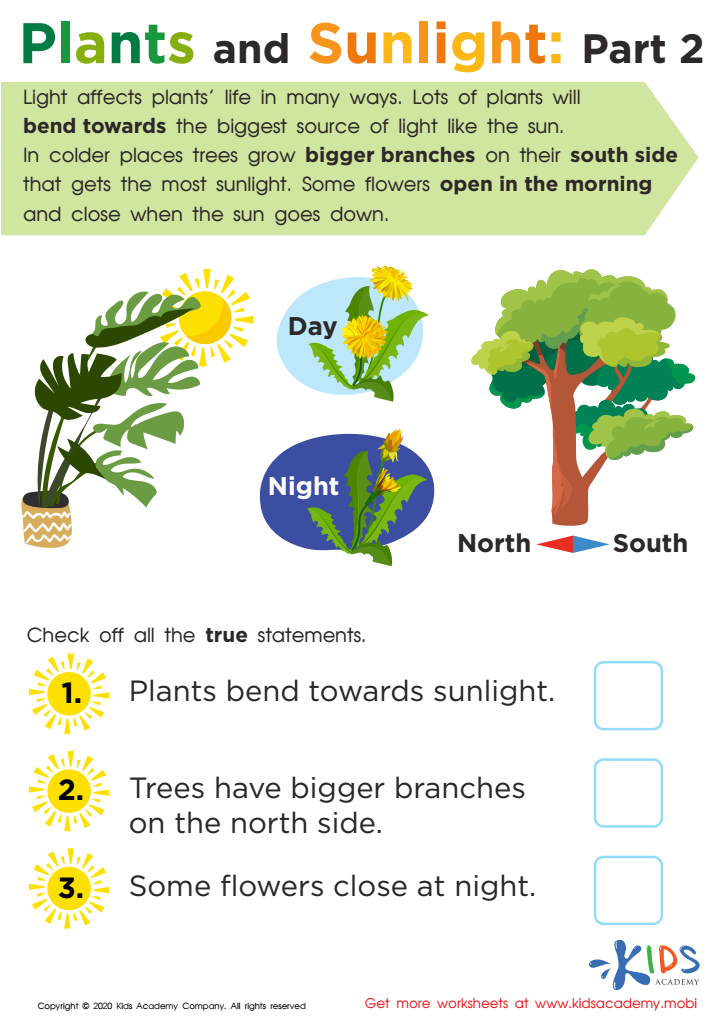
Plants and Sunlight: Part 2 Worksheet






Understanding photosynthesis is important for young children, ages 5-7, because it lays the foundation for a lifelong appreciation of nature and science. Photosynthesis, the process by which plants convert sunlight into energy, is a fundamental concept in biology that explains how plants grow and produce the oxygen we breathe.
Introducing this concept early helps children develop critical thinking and curiosity about the world around them. It encourages observational skills as kids watch plants grow and understand the importance of sunlight, water, and air. Additionally, it instills a sense of responsibility and connection to nature, fostering eco-friendly behaviors as they learn the essential role plants play in sustaining life on Earth.
Teachers and parents should care because a solid grasp of photosynthesis can also spark interest in broader scientific inquiries and environmental stewardship. Engaging, age-appropriate activities like growing a classroom garden or simple experiments with light and plants make learning interactive and fun, reinforcing scientific thinking and problem-solving skills.
By cultivating an early interest in photosynthesis, we are not just teaching children about plants; we are nurturing their ability to ask questions, seek answers, and appreciate the intricate interdependence of life and the environment. This early start prepares them for more complex scientific concepts in the future and nurtures informed, environmentally conscious citizens.







