
Reading comprehension Physical Science Worksheets for Ages 5-7
5 filtered results
Difficulty Level
Grade
Age
-
From - To
Subject
Activity
Standards
Enhance your child's understanding of physical science with our engaging reading comprehension worksheets designed specifically for ages 5-7. These printable resources combine captivating stories with critical science concepts, helping young learners improve their reading skills while exploring the fascinating world of physical science. Each worksheet features age-appropriate language and interactive exercises that promote comprehension, retention, and joyful learning. With vibrant illustrations and relatable scenarios, children will stay motivated and curious. Foster a love for science and reading today! Discover our collection of worksheets and give your child the tools they need to excel academically and cultivate their natural curiosity.
Favorites
With answer key
Interactive
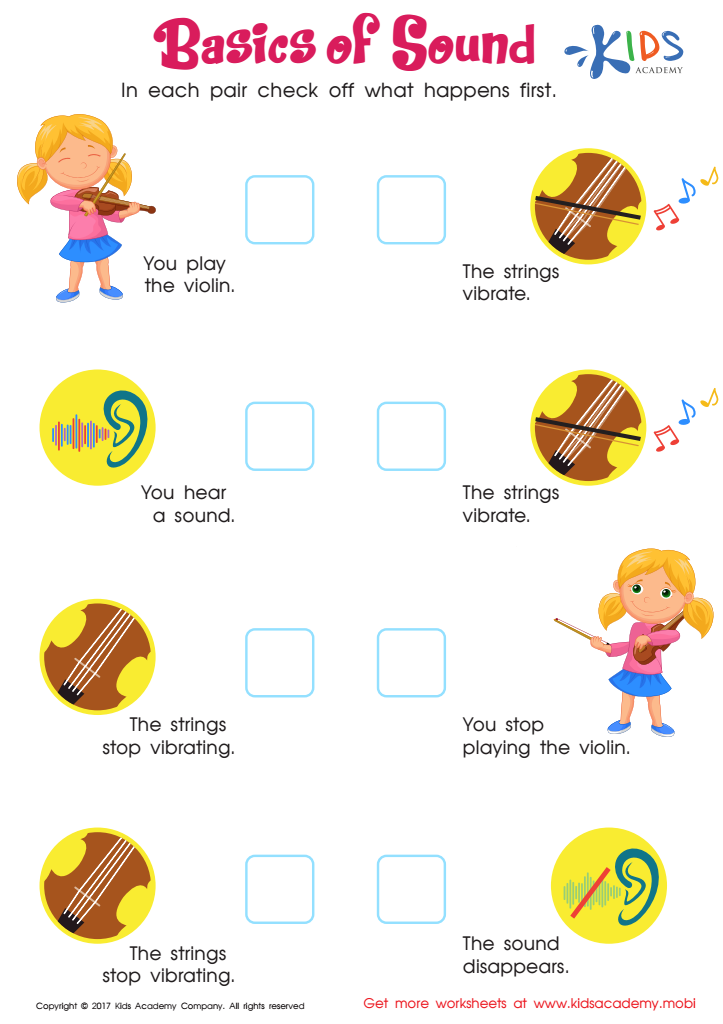
Basics Of Sound Worksheet
Sound is the result of vibrations. As a violinist creates music on her instrument, we can observe how the vibrations start and stop, producing a pleasing sound. This worksheet helps kids understand the basics of physical science behind sound.
 Assign to My Students
Basics Of Sound Worksheet
Worksheet
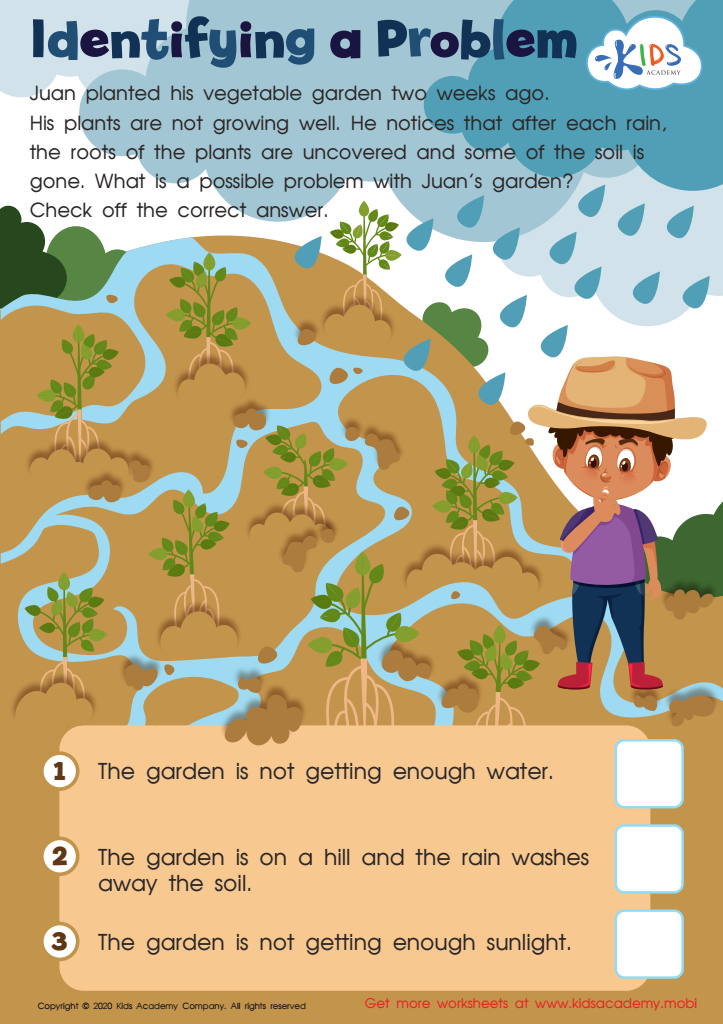
Identifying a Problem Worksheet
Help Juan figure out why his vegetable garden isn't doing well! Print this PDF science worksheet. Read the explanation and observe the scene. What could be causing the problem? Check off the correct answer to complete the challenge. Weather or soil conditions may be the cause – analyze to find out!
Identifying a Problem Worksheet
Worksheet
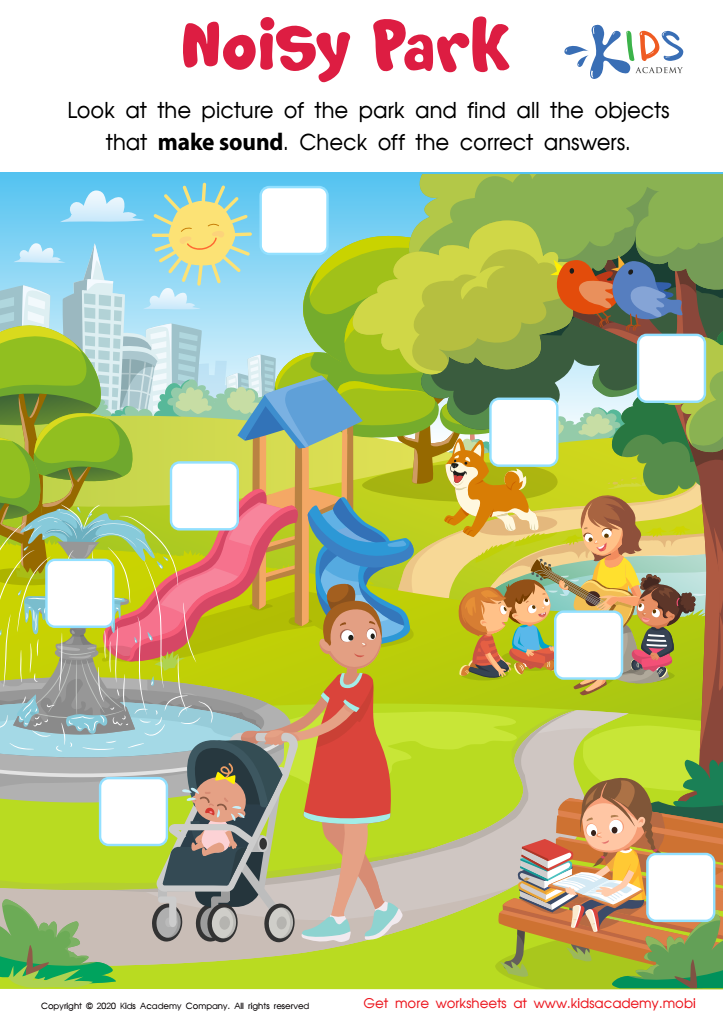
Noisy Park Worksheet
Get your students ready for the exercise by asking them to name things they see and do at the park. Then, have them identify the things in the picture, look for objects that make sounds, and verify the answers.
Noisy Park Worksheet
Worksheet
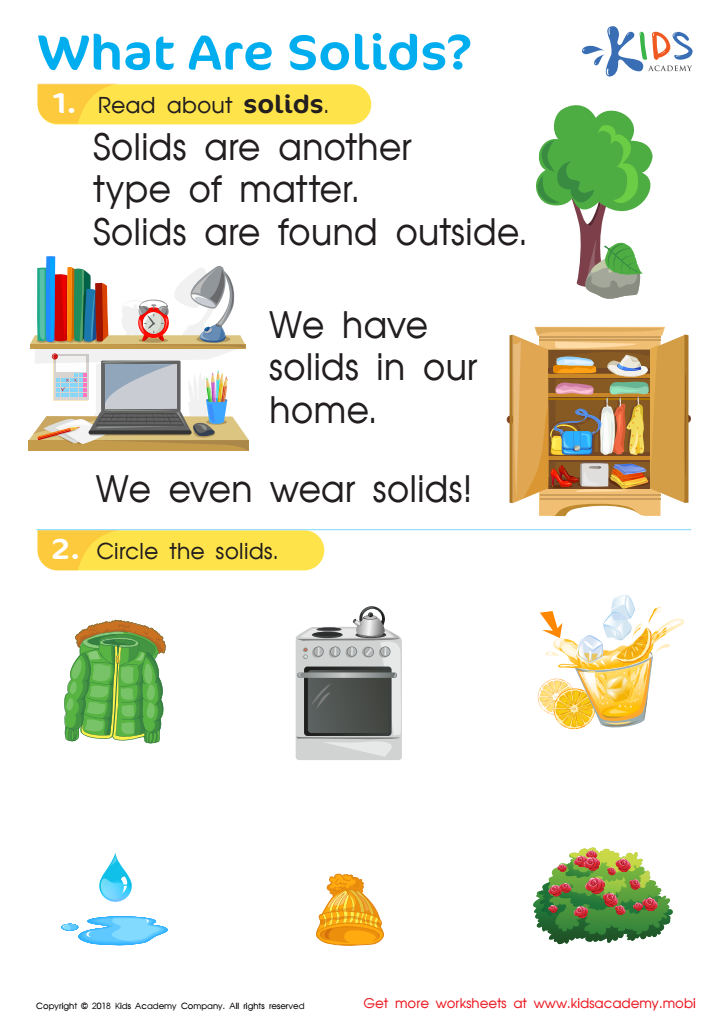
What Are Solids? Worksheet
Help your kids understand matter's three forms - solid, liquid, and gas - with examples. Ask them to give their own and where to find them. Then, read and discuss the worksheet's facts about solids. Afterward, have them circle the solids among the provided objects.
What Are Solids? Worksheet
Worksheet
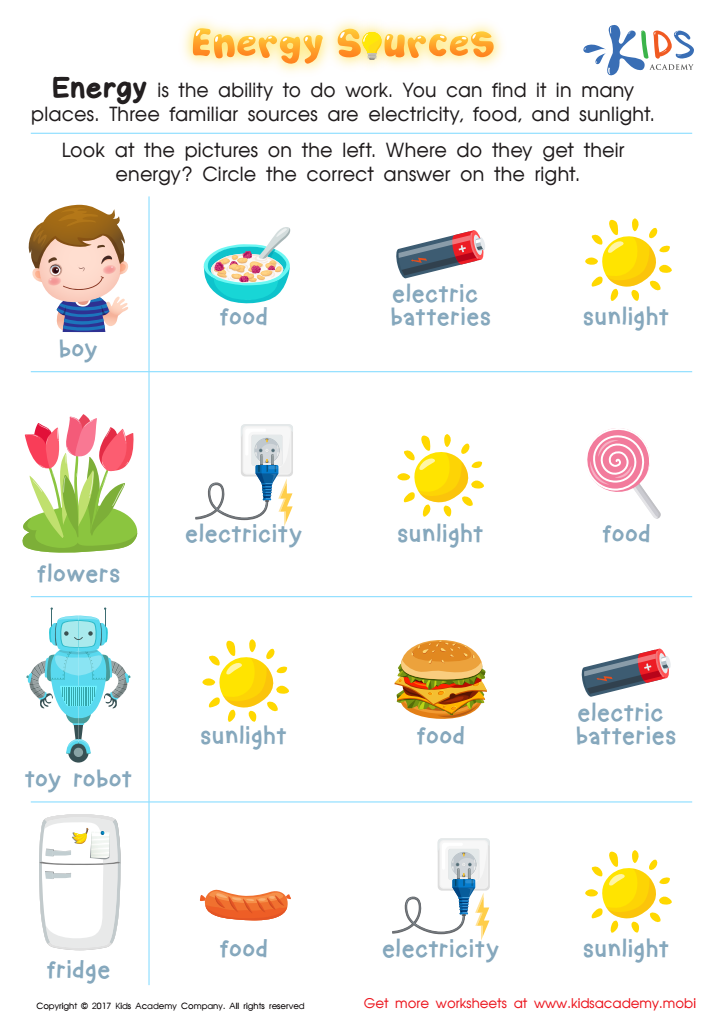
Energy Sources Printable
Introduce energy sources with this worksheet PDF — explore the sun, batteries, and more! Get your mini scientist excited about energy and power up their learning.
Energy Sources Printable
Worksheet
Join Kids Academy for Free
Who is primarily going to use this learning content?








Reading comprehension in physical science for young learners aged 5-7 is crucial for several reasons. Firstly, this skill lays the foundation for understanding complex scientific concepts later on. For children, developing the ability to read and understand science texts enhances their awareness of the world, sparking curiosity and creativity—a key component of scientific inquiry.
Moreover, reading comprehension in physical science helps to cultivate critical thinking skills. As children learn to make inferences and draw conclusions from what they read, they become better problem solvers. This skill can be especially valuable in science, where observation and interpretation play vital roles.
Additionally, integrating physical science into reading promotes STEM (Science, Technology, Engineering, and Mathematics) literacy from an early age. By fostering a love for reading coupled with scientific exploration, parents and teachers can inspire a generation that values and engages with science. This is significant in a world increasingly driven by science and technology.
Furthermore, enhancing reading comprehension skills supports overall academic achievement. Encouraging children to explore science through reading can lead to a more profound understanding of both subjects while nurturing their enthusiasm for learning. Ultimately, when stakeholders invest in these skills, they contribute to a child's holistic development.







