Shape Recognition Physical Science Worksheets for Ages 5-7
3 filtered results
-
From - To
Introduce young learners to the fundamentals of shape recognition with our engaging Shape Recognition Physical Science Worksheets. Tailored for children ages 5-7, these worksheets reinforce essential geometry skills through hands-on activities in physical science contexts. Our expertly designed printables make learning fun and interactive, sparking curiosity and enhancing cognitive development. Each worksheet is crafted to help kids easily identify and differentiate shapes, fostering critical thinking and observation. Perfect for classroom or at-home learning, these resources support early math success and lay the groundwork for future scientific exploration. Unlock your child's potential with Kids Academy's Shape Recognition Physical Science Worksheets today!
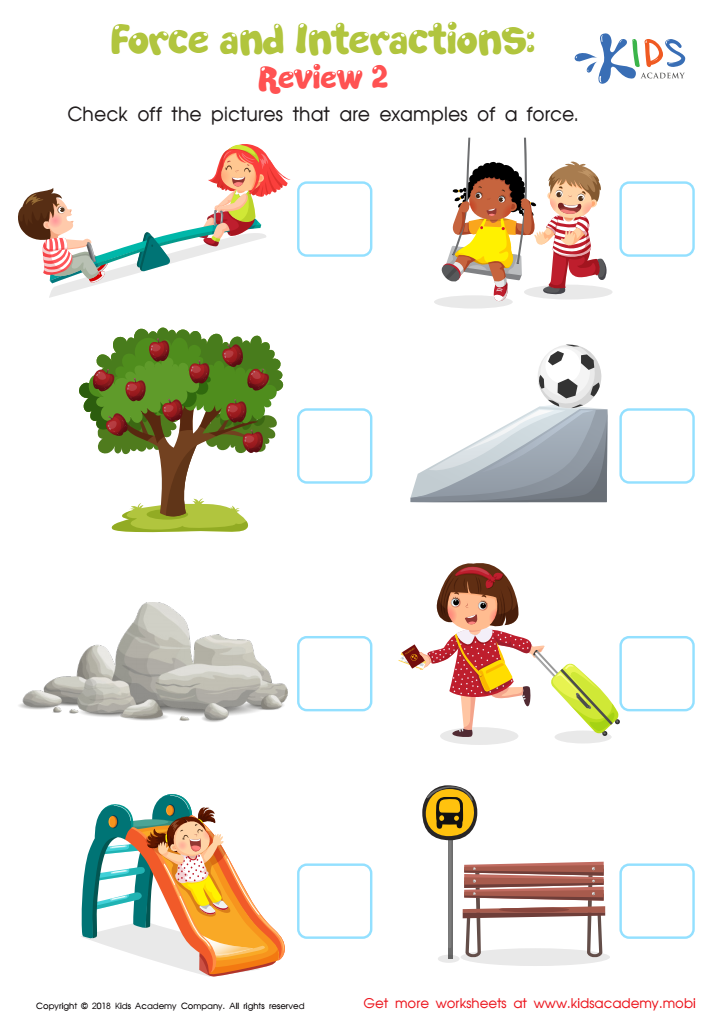
Force and Interactions: Review 2 Worksheet
 Assign to My Students
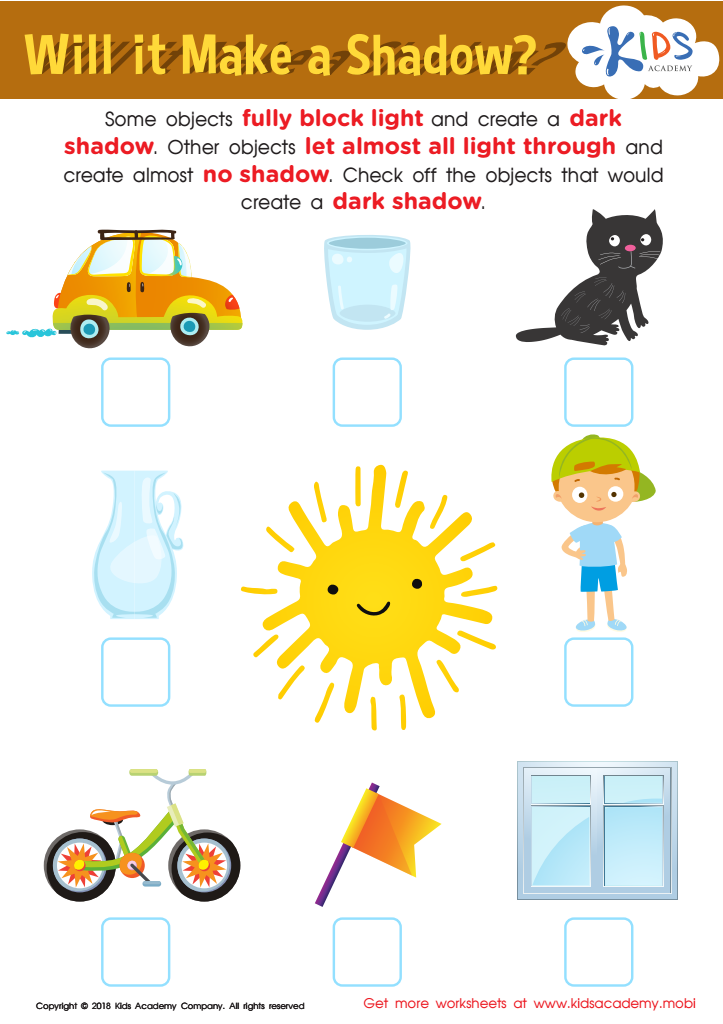
Will It Make a Shadow? Worksheet
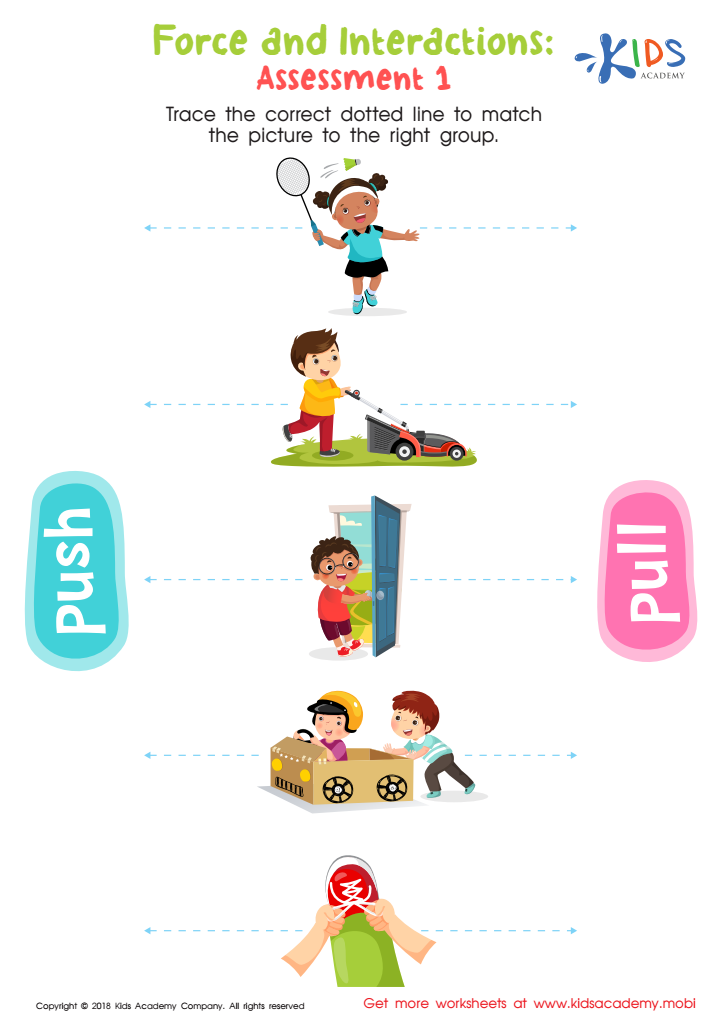
Force and Interactions: Assessment 2 Worksheet







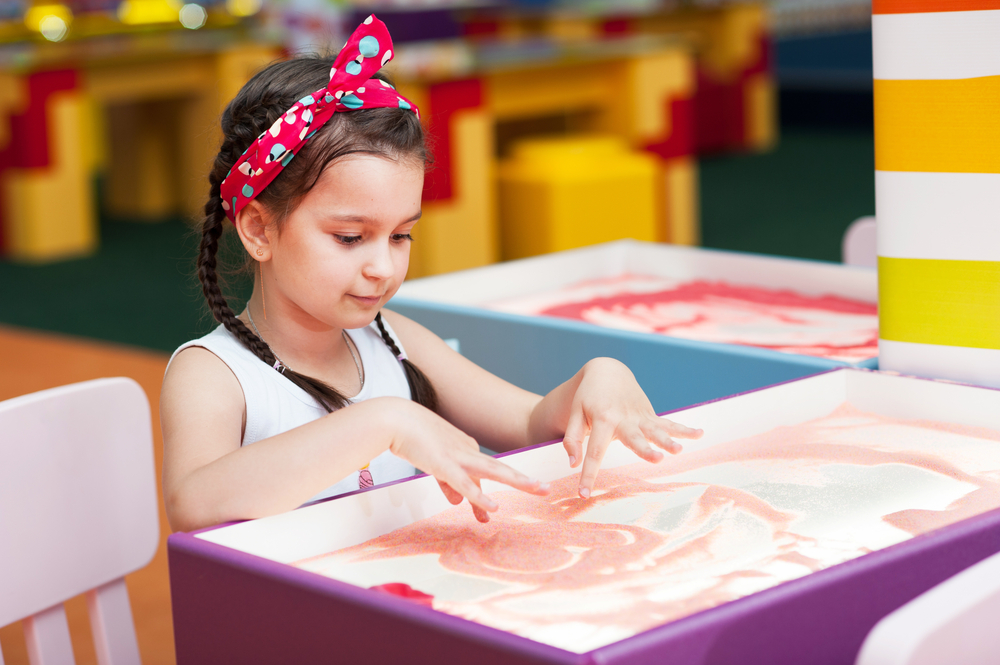
Shape recognition lays a vital foundation for cognitive development in children ages 5-7, playing a crucial role in physical science learning. Parents and teachers should prioritize it because it enhances spatial awareness, critical thinking, and problem-solving skills. These foundational shapes are often stepping stones to more complex concepts in geometry, physics, and engineering.
Shape recognition actively engages a child’s brain, helping them to understand and organize the world around them. By recognizing and differentiating shapes, children develop their visual-spatial skills, which are important in daily tasks and numerous future scientific learning endeavors.
Furthermore, understanding shapes aids in developing early math skills. For instance, recognizing that squares, triangles, and circles have specific properties helps children grasp the basics of geometry, measurement, and even arithmetic operations.
Additionally, shape recognition can enhance vocabulary and language development. By learning and using terms like "symmetric," "circular," and "triangular," children enhance their descriptive abilities and communication skills.
Incorporating physical science activities that focus on shape recognition can also make learning more interactive and enjoyable, promoting better retention of information and a love for science. Parents and teachers who foster shape recognition are thereby providing children with essential tools for academic success and practical life skills.







