Animal recognition Plants and Animals Worksheets for Ages 5-7
6 filtered results
-
From - To
Discover the exciting world of animals with our "Animal recognition Plants and Animals Worksheets for Ages 5-7"! Designed to ignite curiosity and foster learning, these worksheets help young learners identify various animals through engaging activities. Children aged 5-7 can enjoy coloring, matching, and labeling, which enhance their observation and recognition skills. From household pets to wild creatures, each worksheet offers visually appealing tasks that make learning fun and interactive. Supplement your child's education with our expertly crafted science worksheets and watch their understanding of the animal kingdom grow. Perfect for at-home learning or classroom use!
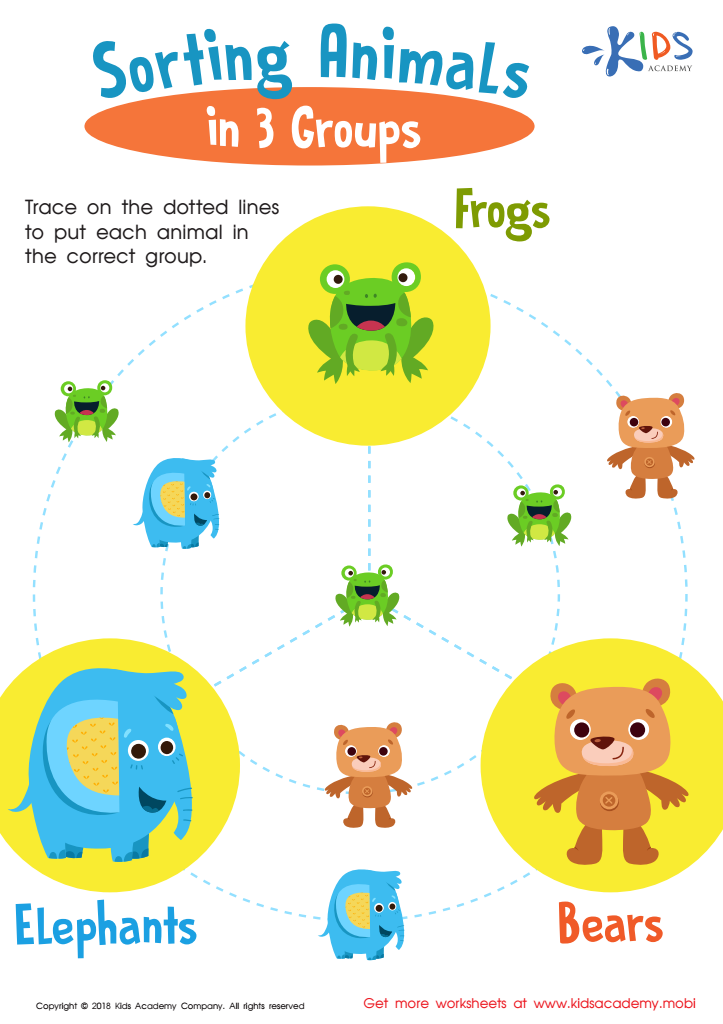
Sorting Animals in 3 Groups Worksheet
 Assign to My Students











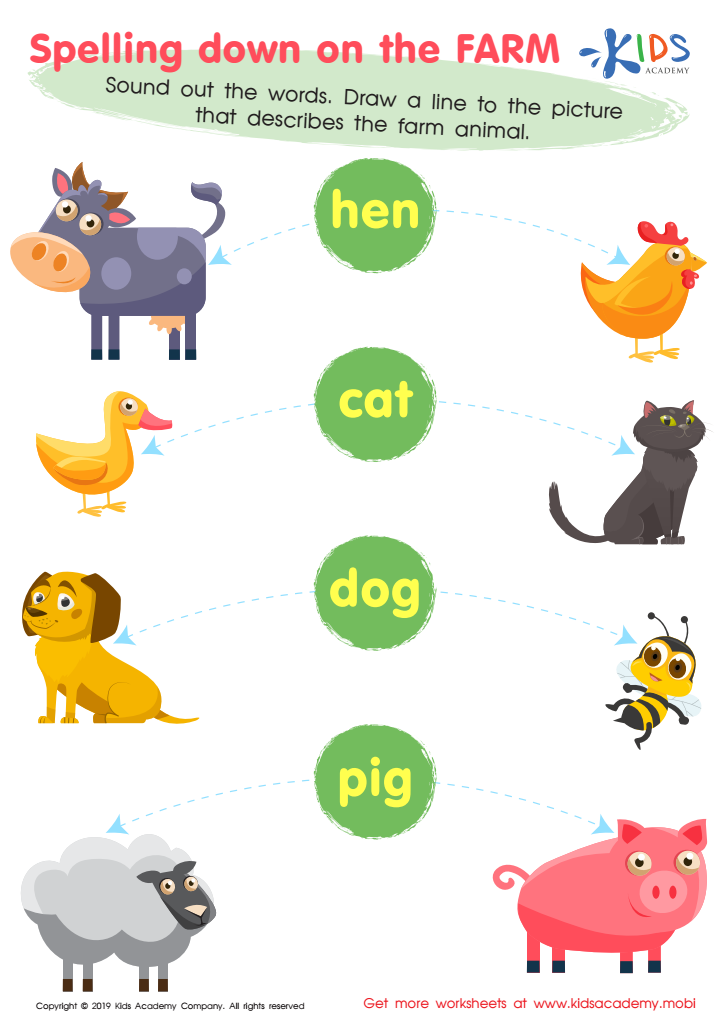
Spelling Down on the Farm Worksheet
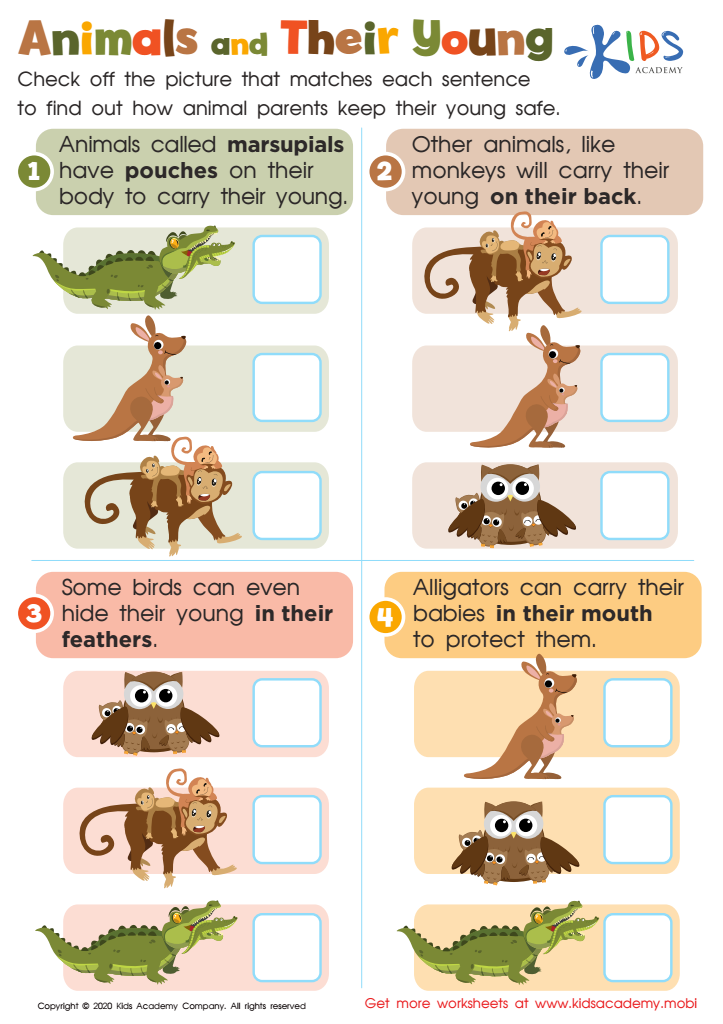
Animals and Their Young Worksheet
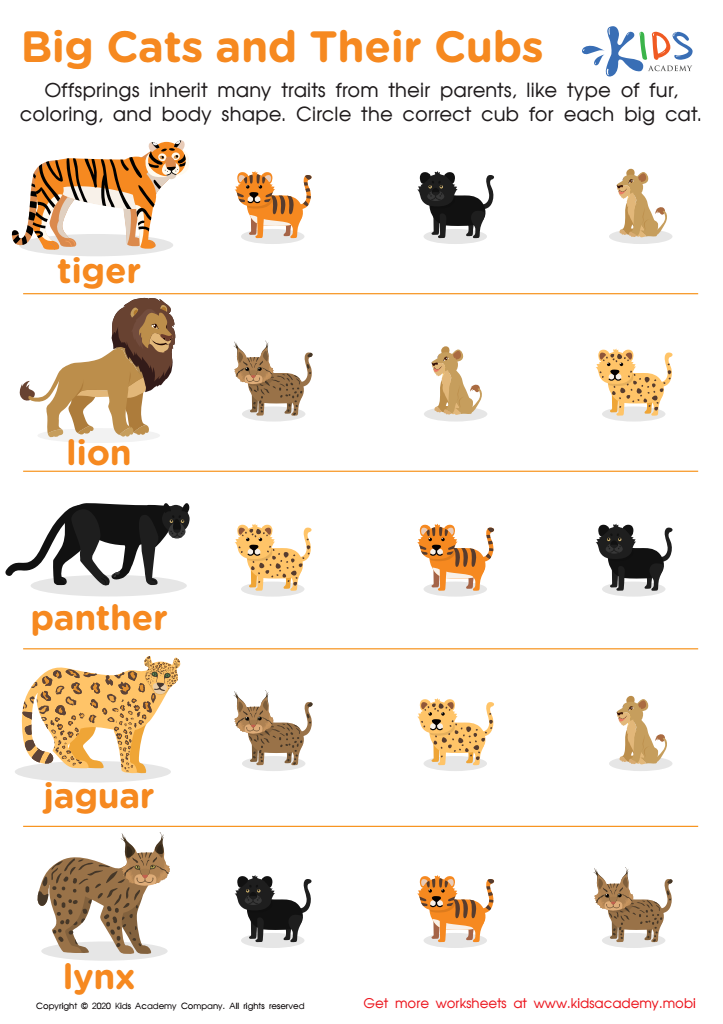
Big Cats and Their Cubs Worksheet
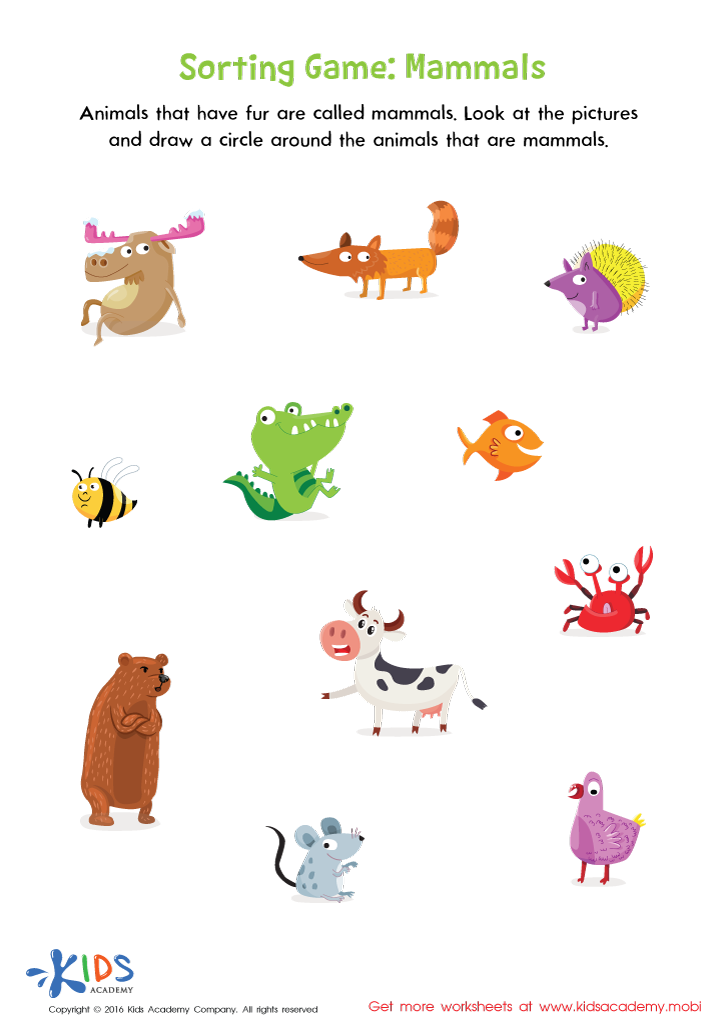
Mammals Sorting Worksheet
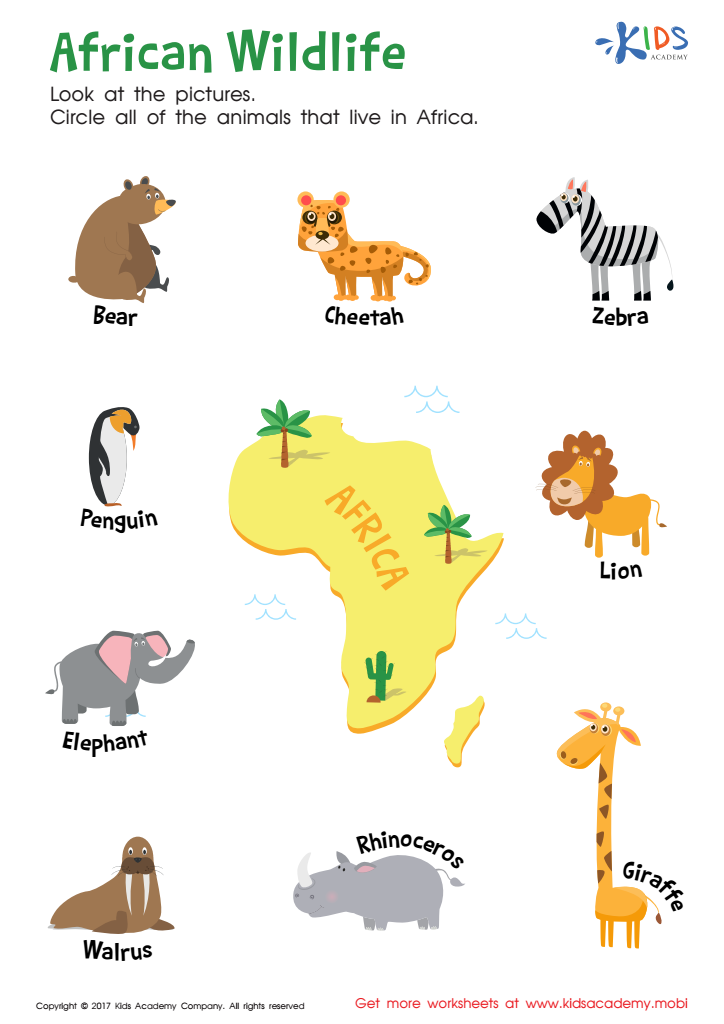








Parents and teachers should value animal recognition for children aged 5-7 as it fosters early cognitive and emotional development. At this formative stage, children are highly curious and perceptive. Recognizing different animals, their habitats, and characteristics nurtures observational skills and enhances vocabulary. For instance, learning about the crocodile's scales versus the smooth skin of a dolphin not only enriches language but also sharpens detail-oriented thinking.
Furthermore, understanding animal life teaches empathy and respect for nature. When children grasp the diversity and interdependence of living organisms, they learn to appreciate and care for the environment. This early eco-awareness can lead to responsible, environment-friendly behaviors in the future.
From an educational standpoint, incorporating animals into lessons makes learning engaging and relatable. Interactive activities like visiting zoos or nature walks complement traditional classroom teaching, making abstract concepts more tangible. Socially, discussing animals and their traits fosters peer interaction and collaborative learning, essential skills at this age.
Overall, animal recognition is not just about identifying creatures; it is a multifaceted educational tool that contributes to a child's intellectual, emotional, and social growth. By integrating it into early learning, parents and teachers lay a foundation for lifelong curiosity and responsibility toward the natural world.








