Understanding life cycles Plants and Animals Worksheets for Ages 5-7
6 filtered results
Difficulty Level
Grade
Age
-
From - To
Subject
Activity
Standards
Discover the fascinating world of life cycles with our engaging "Understanding Life Cycles: Plants and Animals Worksheets" designed for ages 5-7. These printable worksheets introduce young learners to the stages of development in both plants and animals, fostering curiosity and knowledge about nature. Through vibrant illustrations and interactive activities, children will explore concepts like growth, reproduction, and transformation, making science both fun and accessible. Perfect for homework, class projects, or homeschooling, these resources support essential learning skills while encouraging creativity and critical thinking. Help your child appreciate the beauty of life cycles and the interconnectedness of all living things!
Favorites
With answer key
Interactive
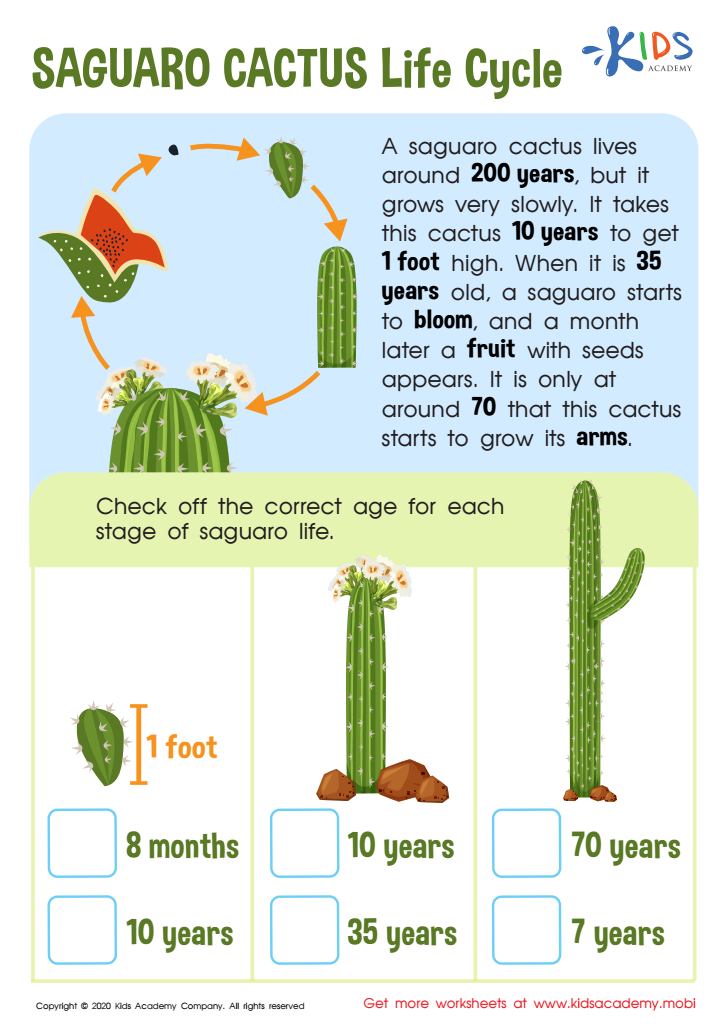
Saguaro Cactus Life Cycle Worksheet
Teach your child about the saguaro cactus, which takes 35 years to bloom and can live up to twice the lifespan of a human! Print this free PDF worksheet to engage learners with an interesting passage. Check off the correct answers to reflect their learning!
 Assign to My Students
Saguaro Cactus Life Cycle Worksheet
Worksheet

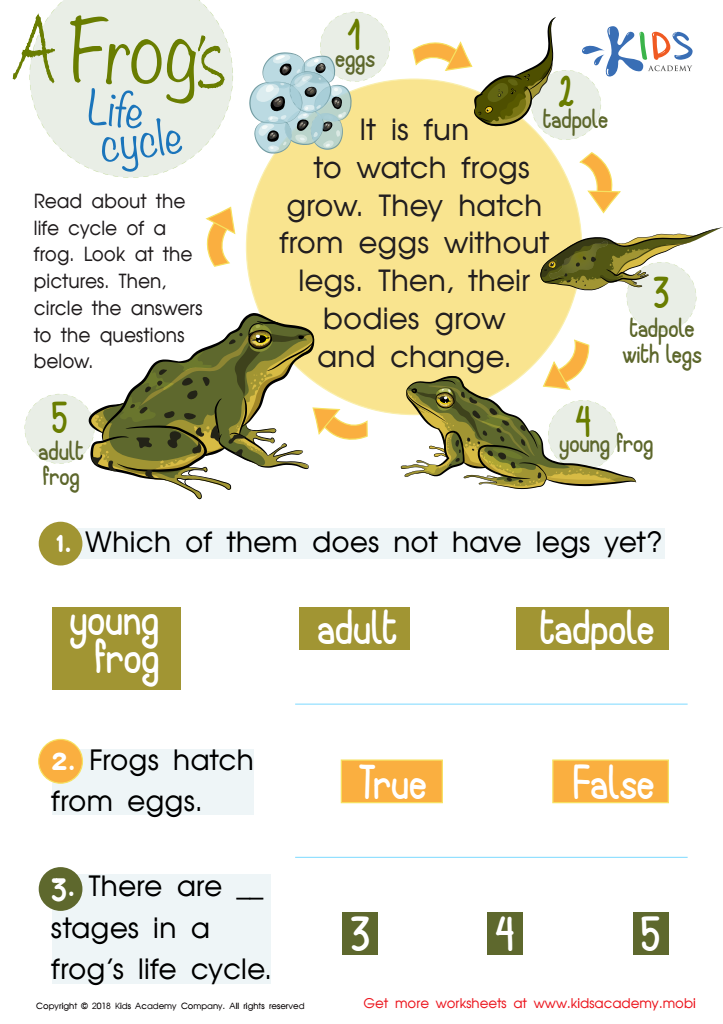
A Frog’s Life Cycle Worksheet
Encourage your kids to learn about frogs! Ask them to tell you some features, then read and discuss the text that explains the frog's life cycle. Show them the pictures to help them visualize it. Finish by helping them answer the questions at the bottom of the worksheet.
A Frog’s Life Cycle Worksheet
Worksheet
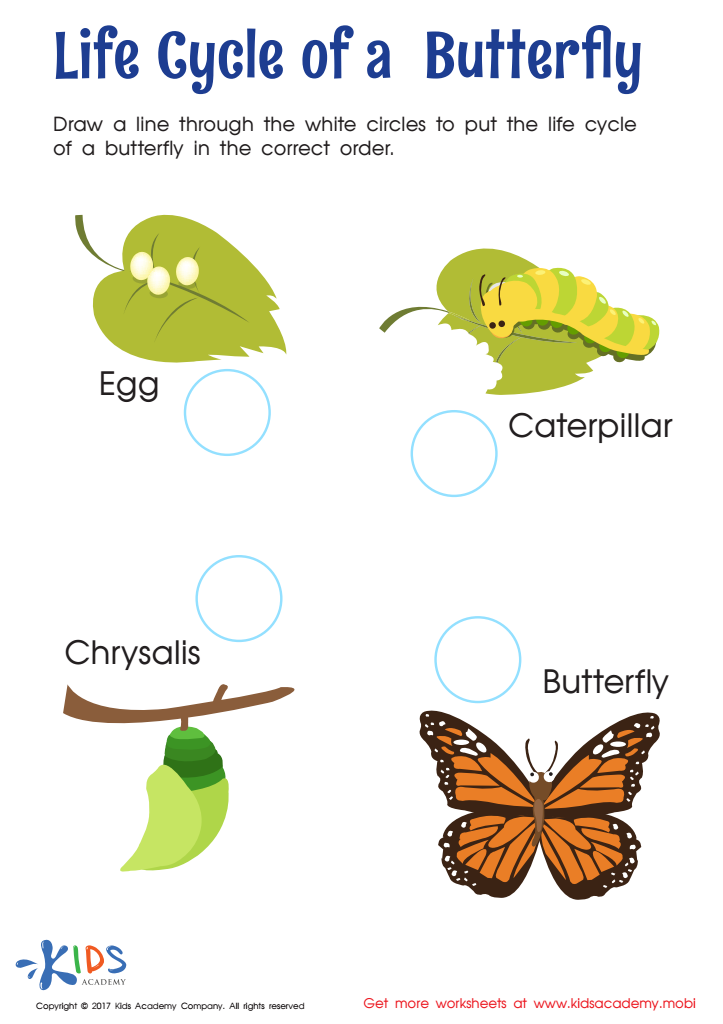
Life Cycle of Butterfly Worksheet
Kids Academy offers an exciting activity – a Life Cycle of a Butterfly Worksheet PDF. It shows four stages in the lifecycle of a butterfly with vivid pictures. Kids put the stages in the correct order to study the lifecycle.
Life Cycle of Butterfly Worksheet
Worksheet
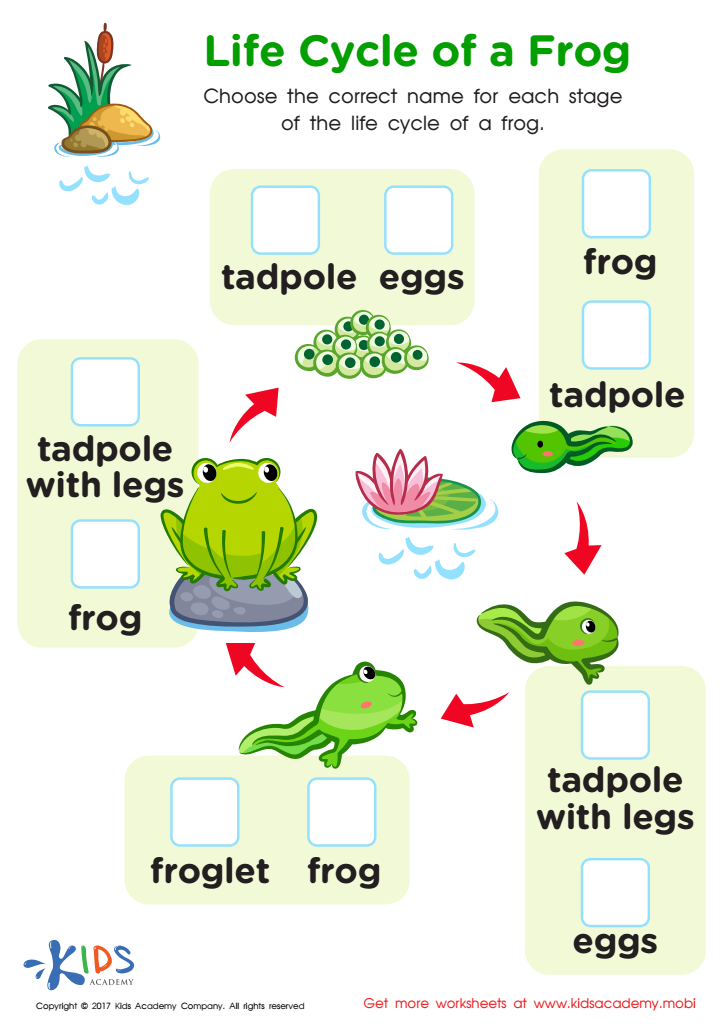
Life Cycle Frog Printable
Kids can explore the life cycle of frog with this fun worksheet! Draw lines from one stage to the next to follow the transformation from tadpole to frog and learn about the cycle of life.
Life Cycle Frog Printable
Worksheet
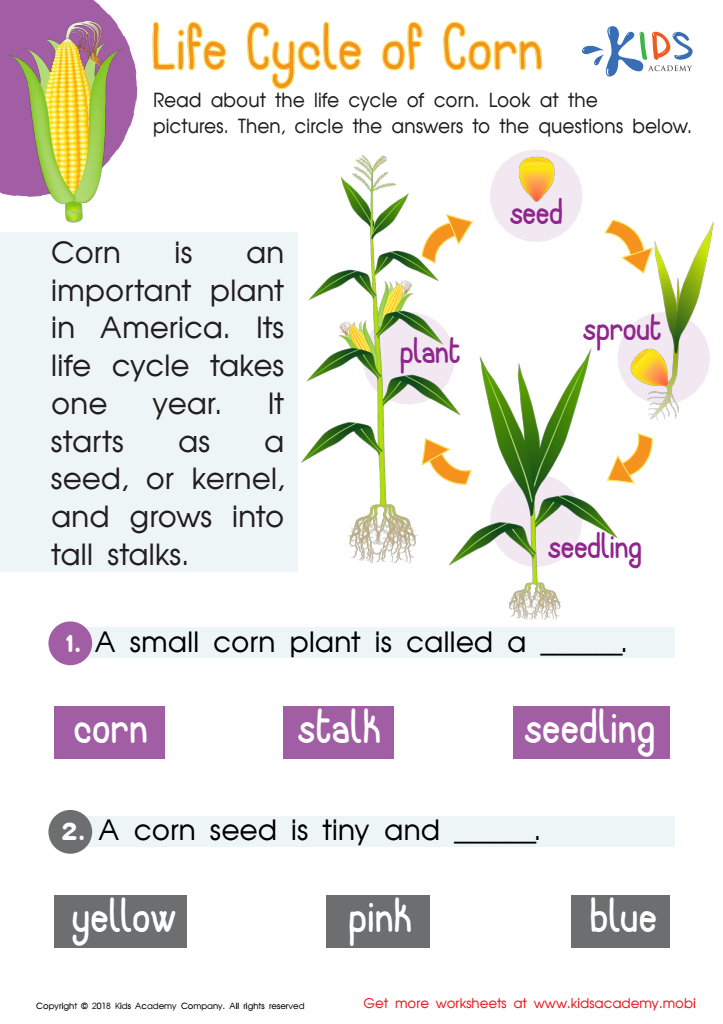
Life Cycle of Corn Worksheet
Help your kids learn about corn! Ask them what foods it's used to make. Read this worksheet and look at the pictures to learn the life cycle of corn. Then, have them circle the answers to the questions at the bottom. Corn is an important crop for farmers, used to make many foods we eat today.
Life Cycle of Corn Worksheet
Worksheet
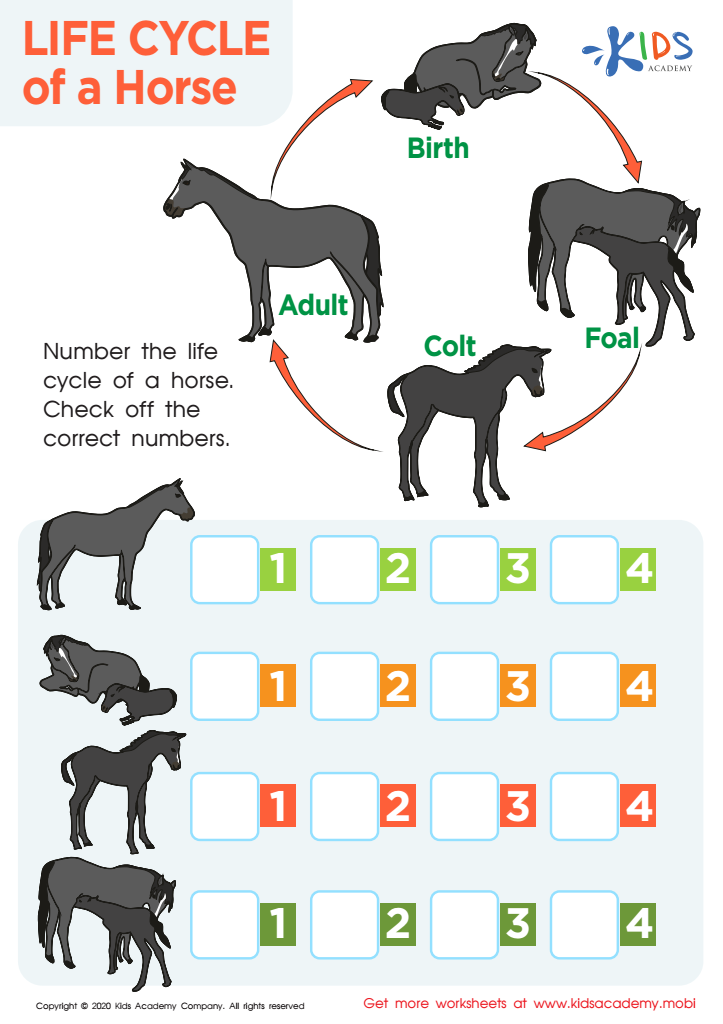
Life Cycle of a Horse Worksheet
Kids Academy's science worksheet on horses' lifecycles offers an engaging way for kids to learn! They'll study the diagram and label each stage of life, from birth to adulthood, and then number the pictures to mark the correct sequence. Fun and educational - a perfect way to get your kids learning!
Life Cycle of a Horse Worksheet
Worksheet
Join Kids Academy for Free
Who is primarily going to use this learning content?





Understanding life cycles of plants and animals is crucial for children aged 5-7 as it lays the foundation for their scientific knowledge and appreciation of nature. At this age, kids are naturally curious and eager to learn about the world around them. Teaching them about life cycles fosters this curiosity, helping them to observe and inquire about various stages of growth, from germination to flowering in plants, or from egg to butterfly in animals.
This knowledge promotes critical thinking and observation skills, encouraging children to ask questions like "Why do leaves change color?" or "How do butterflies grow?" Moreover, understanding life cycles instills a sense of respect and responsibility for the environment. Kids learn the importance of each stage in a cycle, leading to greater awareness of ecosystems.
For parents and teachers, integrating life cycle lessons into curriculum also aligns with many educational standards while providing opportunities for interactive learning through gardening or observing animal growth. Overall, teaching life cycles enhances children's cognitive development, promotes ecological understanding, and builds a strong foundation for future scientific learning, ultimately nurturing the next generation of informed and engaging stewards of the Earth.