Vocabulary development Plants and Animals Worksheets for Ages 5-7
4 filtered results
Difficulty Level
Grade
Age
-
From - To
Subject
Activity
Standards
Enhance your child's vocabulary skills with our engaging Plants and Animals Worksheets, specially designed for ages 5-7. These interactive resources introduce young learners to essential terms related to flora and fauna, fostering curiosity and comprehension. Through vibrant illustrations and fun activities, kids will explore various plant and animal concepts while expanding their language skills. Each worksheet encourages creativity and critical thinking, making learning enjoyable and effective. Perfect for homeschooling or classroom settings, these worksheets are an excellent way to support early science education. Equip your little ones with the vocabulary they need to describe the natural world around them!
Favorites
With answer key
Interactive
Mammal Body Parts Worksheet
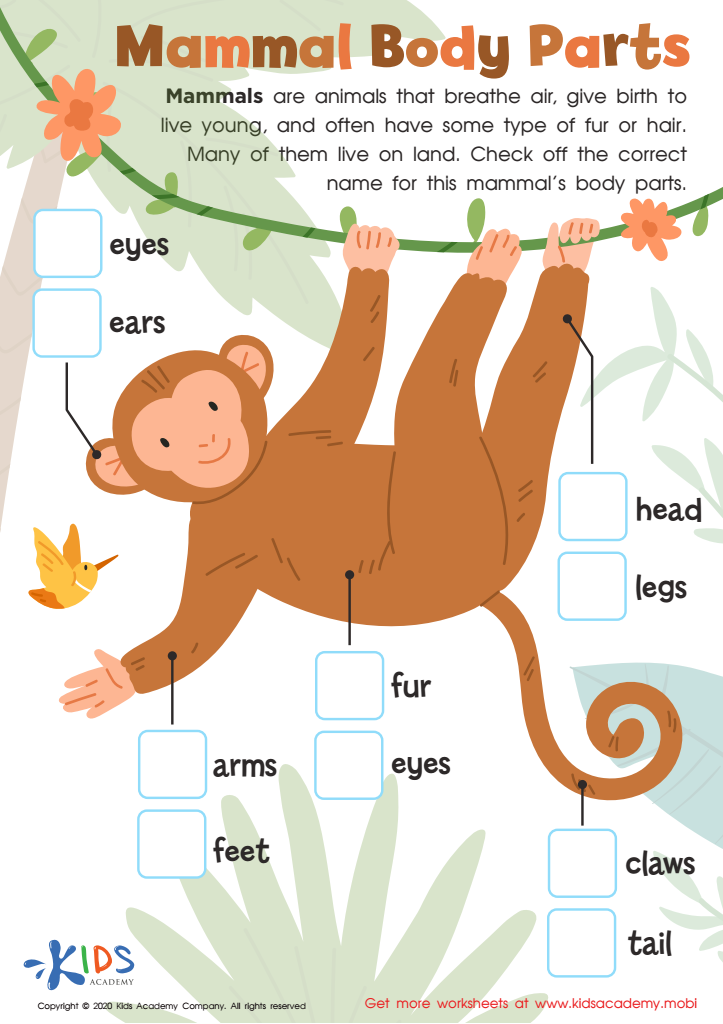
Help your little scientist identify a mammal's body parts with this cute and colorful worksheet. It includes fur, arms, legs, tails, and more! Read the passage to learn what makes an animal a mammal, then have them check off the boxes to identify parts of the monkey. It's a fun way to learn about animals in the animal kingdom!
 Assign to My Students
Mammal Body Parts Worksheet
Worksheet

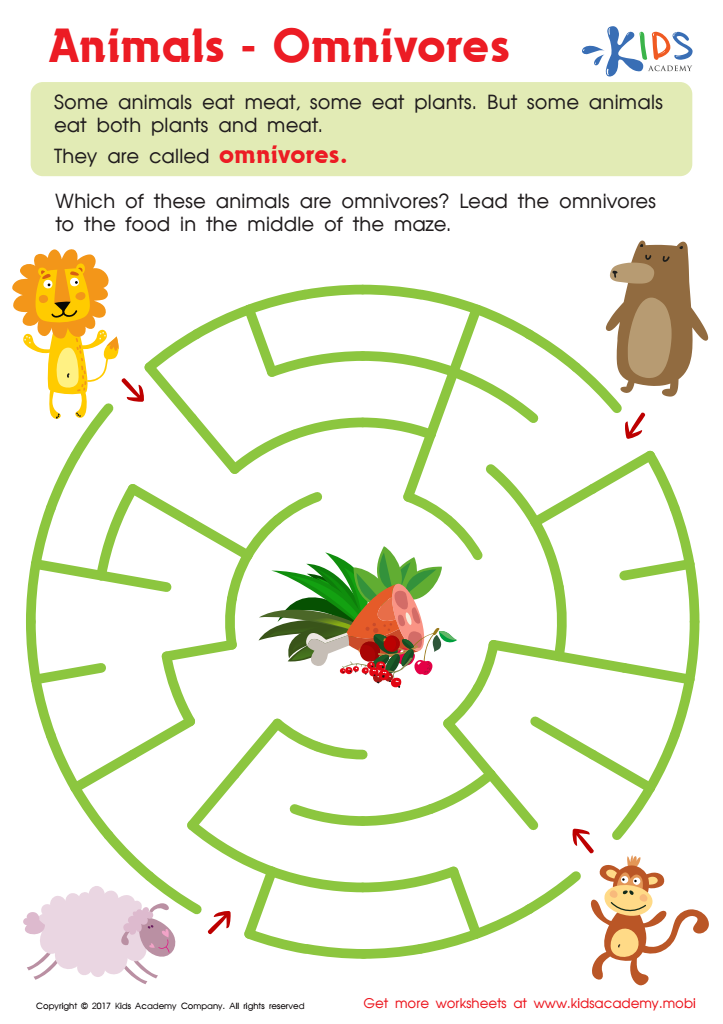
Omnivores Animals Worksheet
Kids can explore omnivores animals with this worksheet! It presents herbivores, carnivores and omnivores, with the main activity being a maze. Kids must guide a bear through it to get to its food. See how much they know about omnivores!
Omnivores Animals Worksheet
Worksheet
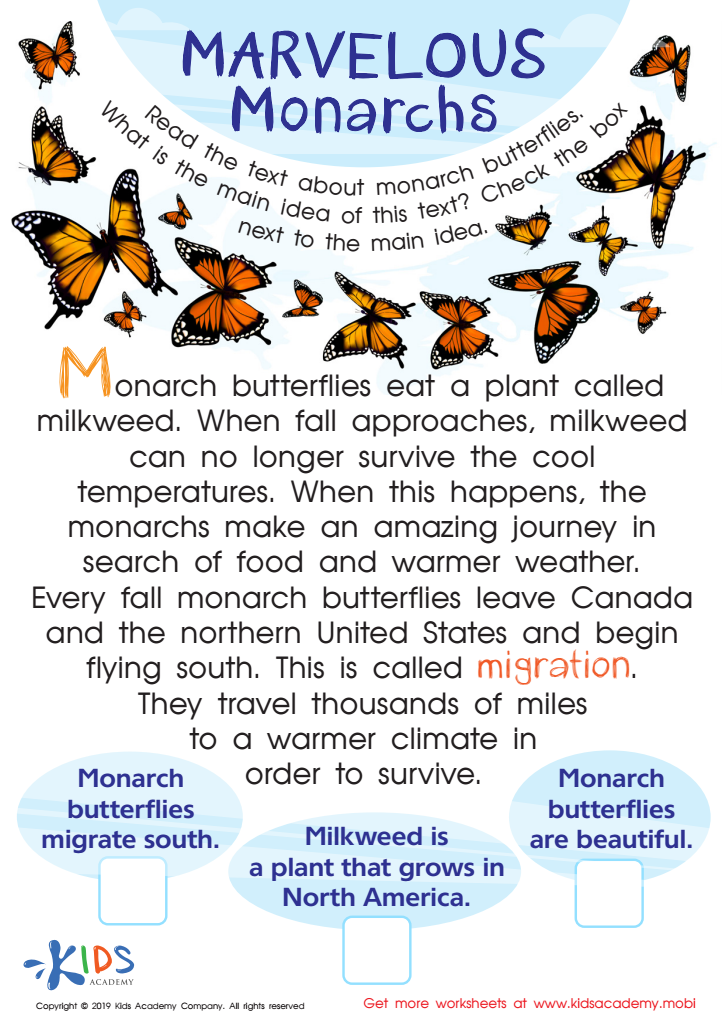
Marvelous Monarchs Worksheet
Help your kids have fun while reading - start with small words and short sentences. This worksheet can test your kids' reading and comprehension skills. Ask them to read the text about Monarch butterflies and help them locate the main idea.
Marvelous Monarchs Worksheet
Worksheet
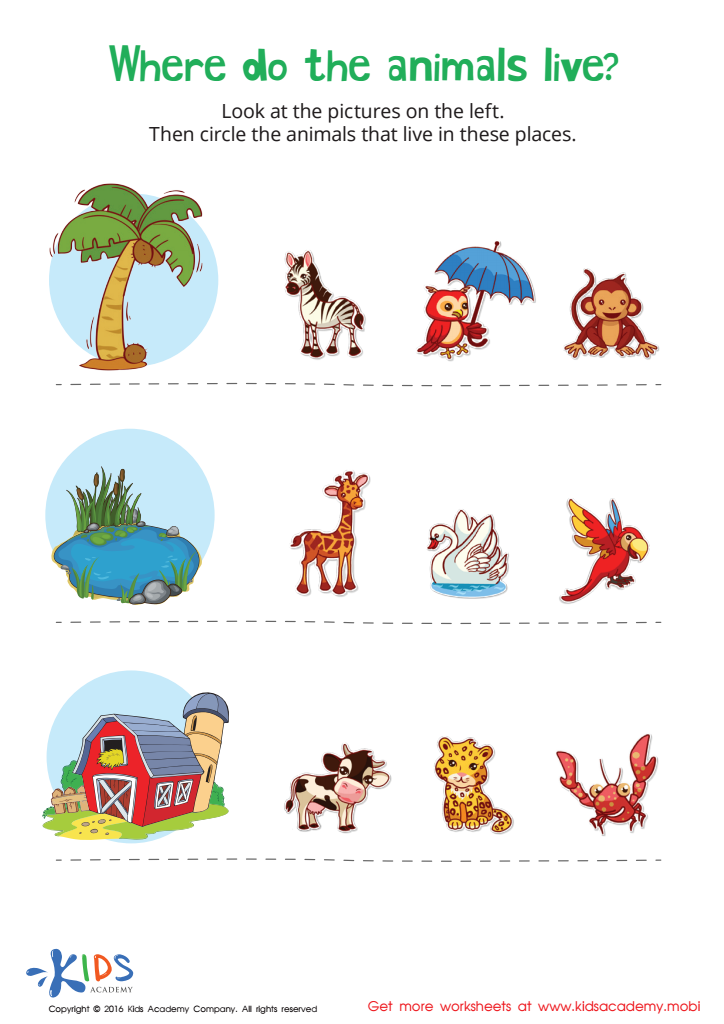
Where Animals Live Worksheet
Teaching early reading and math skills is important, but don't forget about science. With the Where Animals Live PDF worksheet, kids can identify their favorite animals and the environments they live in. Ask them what type of environment the animals like and introduce them to geography. It's great for logical reasoning and classification skills. Your kid will practice with their favorite animals and love the trip to the zoo afterwards!
Where Animals Live Worksheet
Worksheet
Join Kids Academy for Free
Who is primarily going to use this learning content?







Vocabulary development in the context of plants and animals is crucial for children aged 5-7, as it lays the foundation for their understanding of the natural world and enhances their communication skills. During these formative years, children are naturally curious about their surroundings, making it an ideal time to introduce terminology related to plants and animals. This encourages exploration and observation, fostering a deeper appreciation for biodiversity.
By learning vocabulary specific to plants and animals, children enrich their language, enabling them to articulate their thoughts and experiences more clearly. This not only boosts their confidence but also helps them engage in discussions and collaborative learning experiences with peers and adults. Furthermore, a strong vocabulary in this area supports critical thinking and scientific reasoning, essential skills for future academic success.
Moreover, knowledge about plants and animals reinforces concepts in science and environmental education, promoting awareness about ecosystems and the importance of conservation. As parents and teachers nurture this vocabulary development, they cultivate future stewards of the environment who can form meaningful connections with the world around them. Ultimately, fostering vocabulary growth in this context equips children with essential tools for both personal growth and societal contribution.