
Understanding history History Worksheets for Ages 5-7
3 filtered results
Difficulty Level
Grade
Age
-
From - To
Subject
Activity
Standards
Discover our engaging "Understanding History" worksheets, designed specifically for ages 5-7. These activities help young learners explore essential historical concepts in a fun and interactive way. With colorful illustrations and age-appropriate content, these worksheets introduce students to notable events, significant figures, and cultural milestones. Students will strengthen their critical thinking skills as they connect the past with the present through captivating exercises. Perfect for classroom or home use, our worksheets foster curiosity about history while enabling children to develop a foundational understanding of their world. Download now to ignite your child's interest in history and make learning enjoyable!
Favorites
With answer key
Interactive
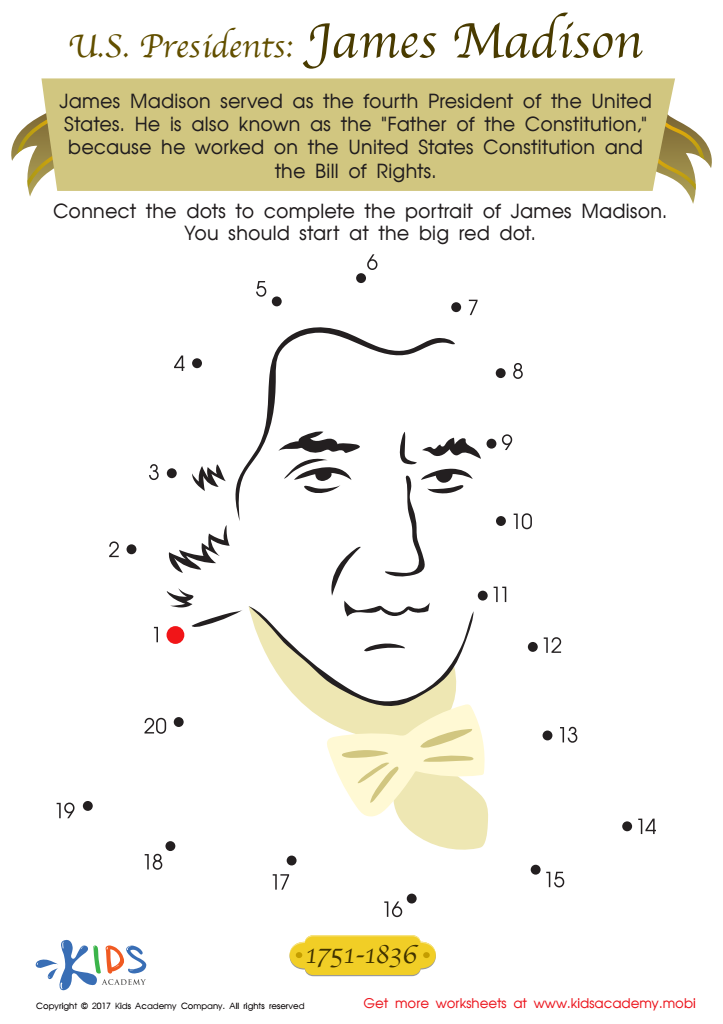
President Madison Printable
Introduce your child to the nation's fourth president, James Madison. This worksheet helps them learn about the "Father of the Constitution" and his contributions to American history. Discover Madison's legacy with your child today!
President Madison Printable
Worksheet
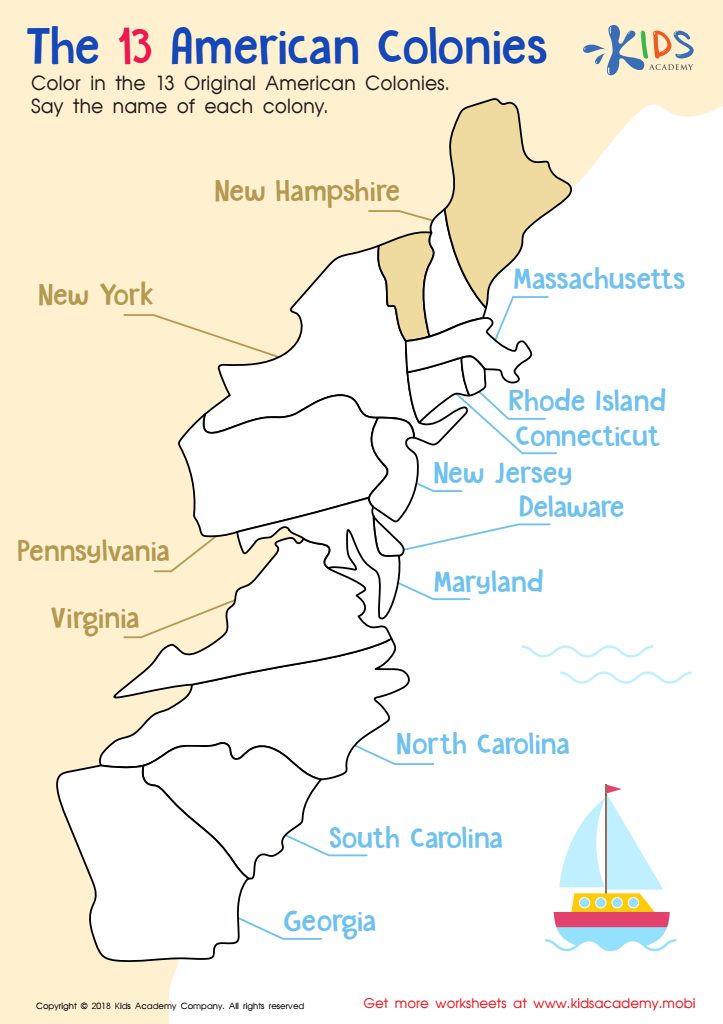
The 13 American Colonies Worksheet
Ensure kids are knowledgeable in maths, English, science, history, and geography. Test their American knowledge: Can they name the 13 Original American Colonies? Use the worksheet; have them color each colony and name it out loud.
Download (PDF)
 Assign to My Students
Assign to My Students
The 13 American Colonies Worksheet
Worksheet
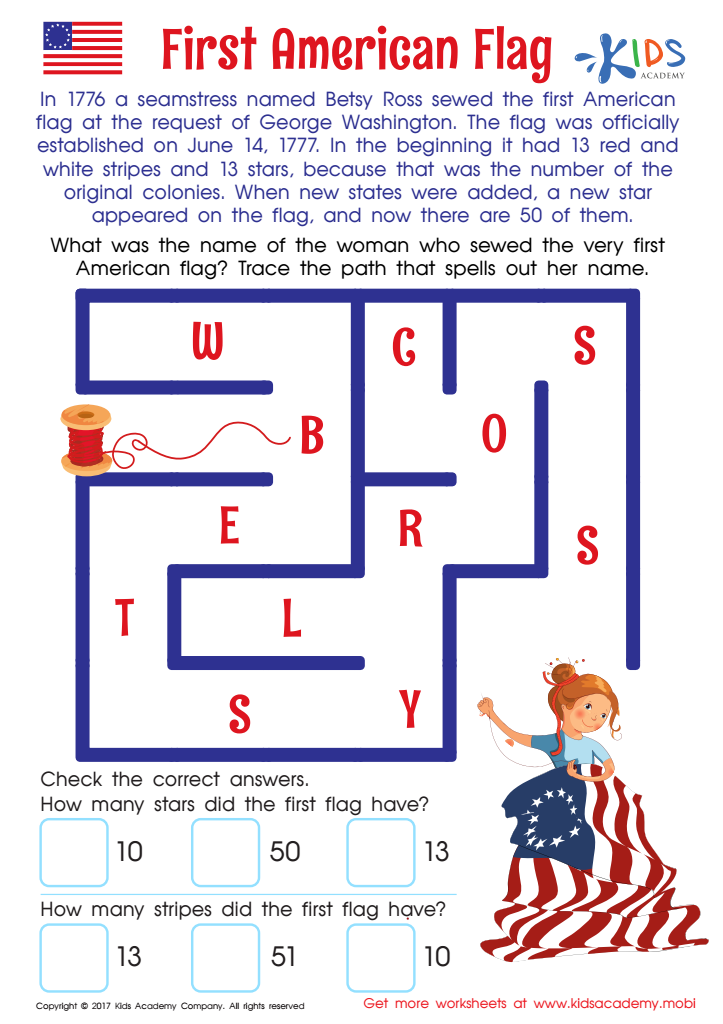
First American Flag Worksheet
Betsy Ross sewed the first American flag at the request of George Washington. This worksheet helps kids learn about this milestone in U.S. history, plus the design and origins of the flag.
First American Flag Worksheet
Worksheet
Join Kids Academy for Free
Who is primarily going to use this learning content?








Understanding history is vital for children aged 5-7, as it lays the foundation for critical thinking and self-awareness. At this age, children are naturally curious about the world around them. Introducing them to history helps fulfill that curiosity in a meaningful way, allowing them to learn about different cultures, significant events, and important figures in a way that's relatable and engaging.
Teaching history also promotes empathy; children begin to see life from other people's perspectives, fostering a greater appreciation for diversity and inclusion. Moreover, basic historical knowledge reinforces a sense of identity and belonging, connecting children with their heritage and the shared stories of humanity.
By understanding past events, children can better grasp their own present circumstances and the world they live in. It encourages them to ask questions, seek connections, and understand cause-and-effect relationships, cultivating their analytical skills from an early age.
Additionally, engaging children with history through storytelling, visuals, and interactive activities makes learning enjoyable. By catering to various learning styles, teachers and parents can instill a love for knowledge and a sense of wonder about the past, helping children become informed, thoughtful citizens as they grow.








