Color Identification Writing Worksheets for Ages 5-7
3 filtered results
-
From - To
Explore our engaging Color Identification Writing Worksheets designed for children ages 5-7! These worksheets foster early writing skills while helping young learners recognize and name colors. Incorporating interactive activities, children will practice their fine motor skills through tracing and writing exercises. As they identify colors in fun images and complete colorful prompts, they will enhance their vocabulary and boost their creativity. Ideal for home or classroom use, these worksheets make learning enjoyable and effective. Download our Color Identification Writing Worksheets today to inspire your child's love for learning while they develop essential writing and color recognition skills!

Christmas Tree Tracing Winter Words Worksheet
 Assign to My Students
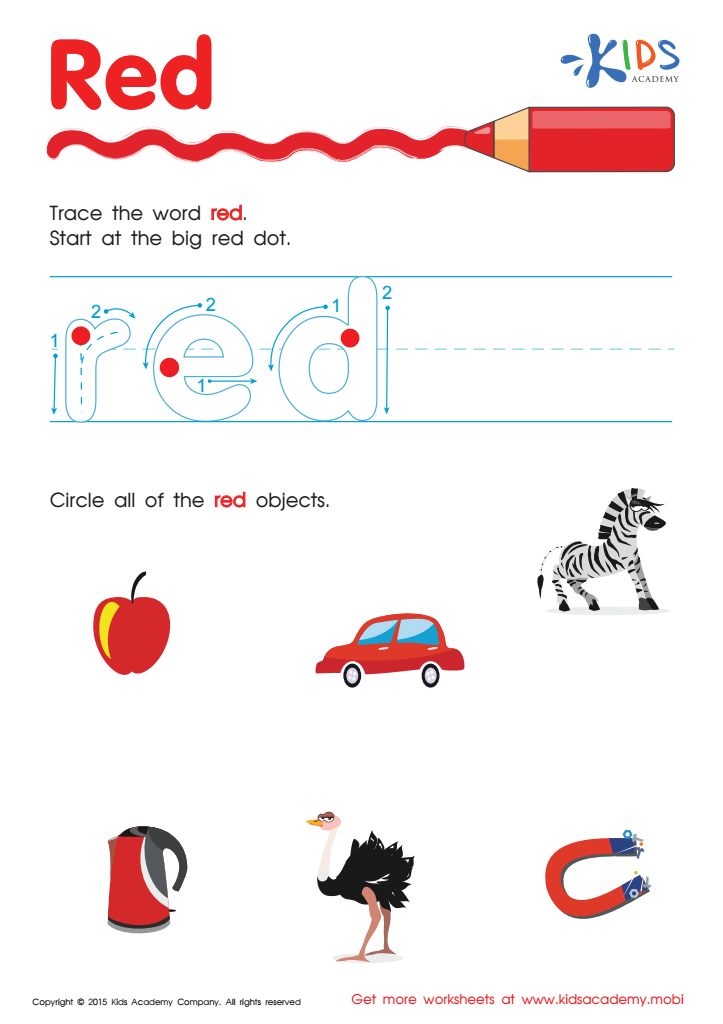
Red Tracing Color Words Printable
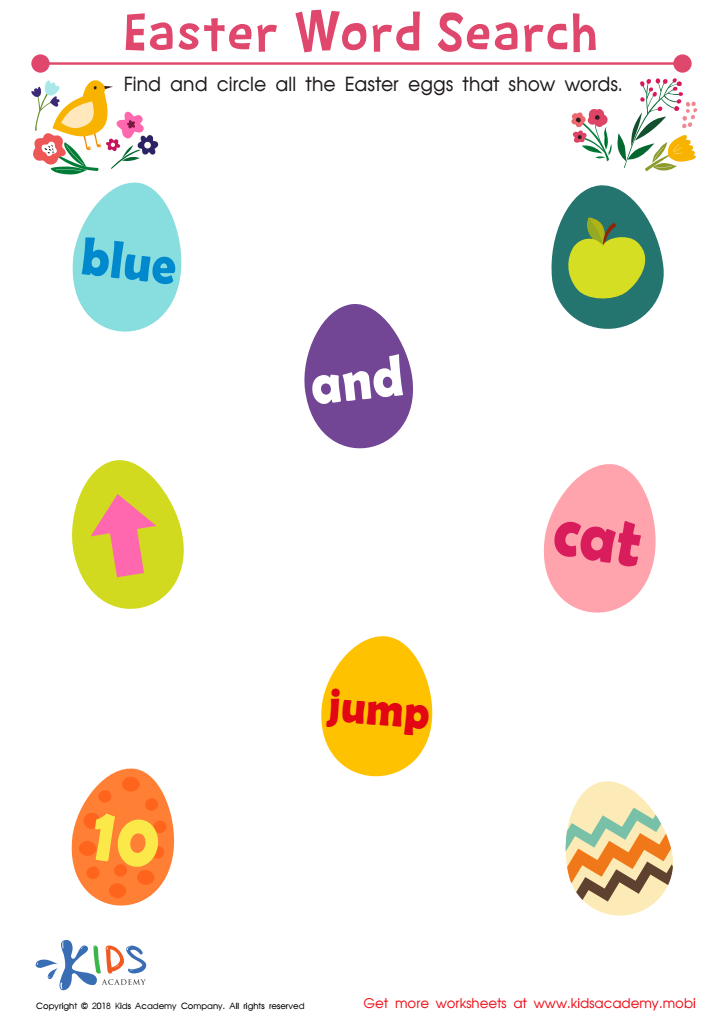
Easter Word Search Worksheet








Color identification is a critical skill for children ages 5-7, serving as a foundation for their cognitive and language development. At this age, children are naturally curious and learn best through engaging, hands-on activities. Understanding colors not only enhances their ability to describe their world, but it also fosters creativity and expression through art and play.
For parents and teachers, emphasizing color identification and writing helps children build essential literacy skills. By practicing color words through writing, children improve their fine motor skills and hand-eye coordination, which are crucial for writing later on. Additionally, connecting colors to everyday objects encourages vocabulary development, enabling children to communicate more effectively.
On a broader scale, color identification supports children's emotional and social development by helping them express preferences, feelings, and experiences, which can foster conversation and relationship building. When children identify and use colors in context, they're engaging in experiential learning — a key component in early childhood education.
Ultimately, focusing on color identification can create a vibrant learning environment where children feel encouraged to explore, ask questions, and engage meaningfully with the world around them. This early foundational skill sets the stage for future academic success.








