
Spelling Skills Tracing Words Worksheets for Ages 5-7
5 filtered results
Difficulty Level
Grade
Age
-
From - To
Subject
Activity
Standards
Enhance your child's spelling skills with our engaging Spelling Skills Tracing Words Worksheets, designed specifically for ages 5-7. These interactive worksheets help young learners practice their handwriting while mastering essential vocabulary. Each tracing sheet encourages children to familiarize themselves with different words, promoting letter recognition and spelling proficiency in a fun and stress-free manner. Ideal for preschool and early grade school activities, these worksheets support cognitive development and literacy. Parents and educators can seamlessly incorporate these activities into daily routines, fostering a love for learning and strengthening foundational skills. Download now for a playful and effective way to boost your child's spelling abilities!
Favorites
With answer key
Interactive
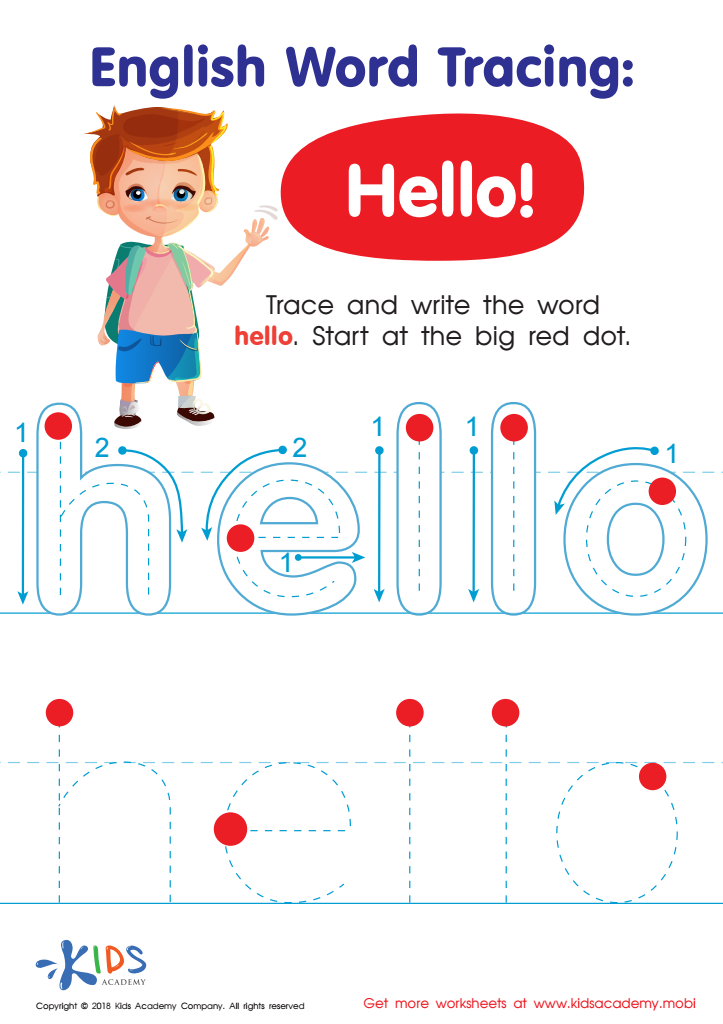
English Word Tracing: Hello Worksheet
Searching for free worksheets to help your kids refine their motor skills, handwriting and English word knowledge? Get this cheerful PDF! It offers your children the chance to practice tracing words like Hello, while following a top-to-bottom, left-to-right patterning.
 Assign to My Students
English Word Tracing: Hello Worksheet
Worksheet
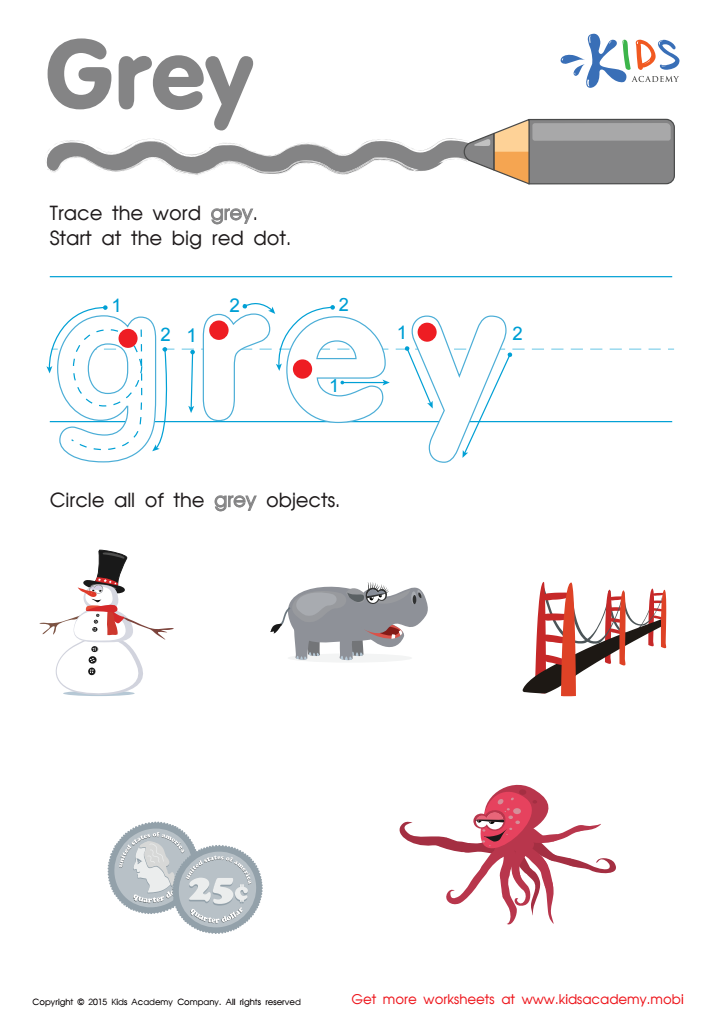
Grey Tracing Color Words Worksheet
Help your kindergartener boost their writing skills with this free printable handwriting worksheet! They can trace the sight word "grey" with a grey crayon, starting at the big red dots. Sounding out and tracing the letters can help strengthen their handwriting. Ask them to name and circle all the grey objects to give extra practice. Get more free worksheets here!
Grey Tracing Color Words Worksheet
Worksheet
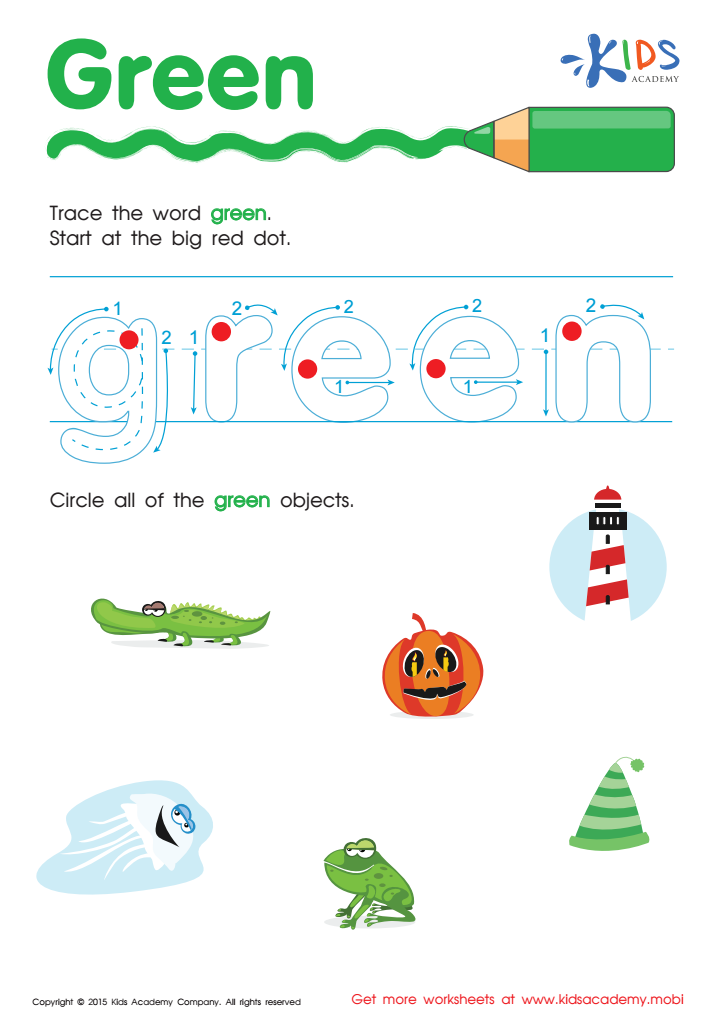
Green Tracing Color Words Worksheet
Encourage writing and spelling practice with this vibrant free handwriting worksheet. Have your child trace the new name of a primary color, "green," and circle green items in the picture. Ask them what else can be green for a challenging activity. Through this worksheet, your kindergartener can learn and play at the same time. For more free printables, look here.
Green Tracing Color Words Worksheet
Worksheet
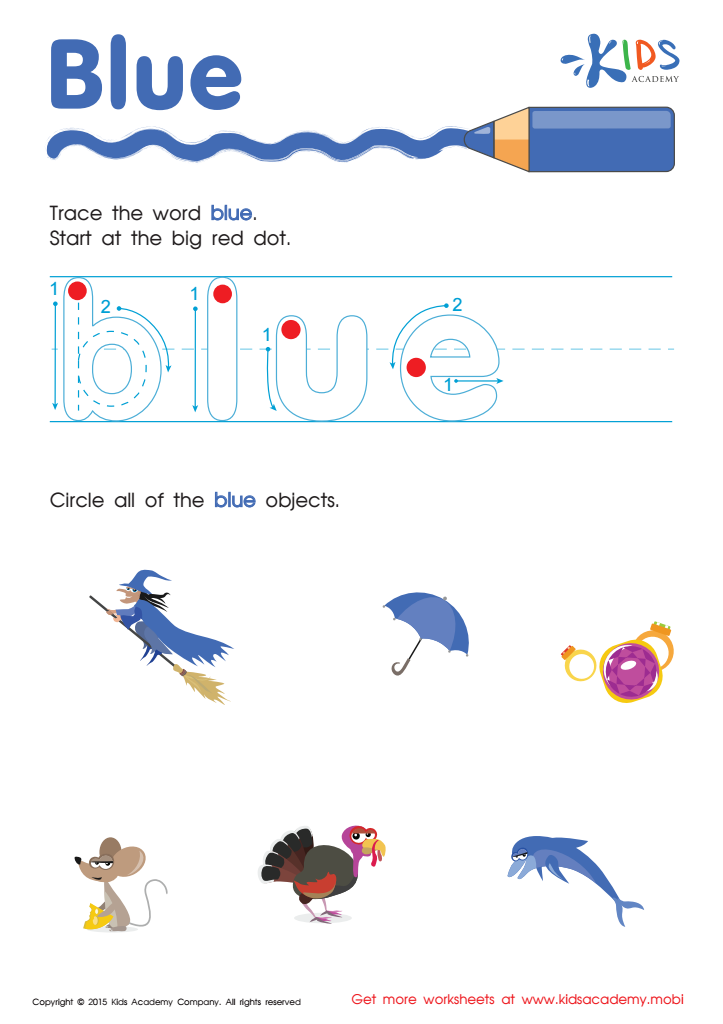
Blue Tracing Color Words Printable
Encourage your child's motor skills by having them trace the word "blue" with their blue crayon on this free printable handwriting worksheet, starting at the red dots. Ask them to circle all the blue objects they see. Check out here for more handwriting practice.
Blue Tracing Color Words Printable
Worksheet
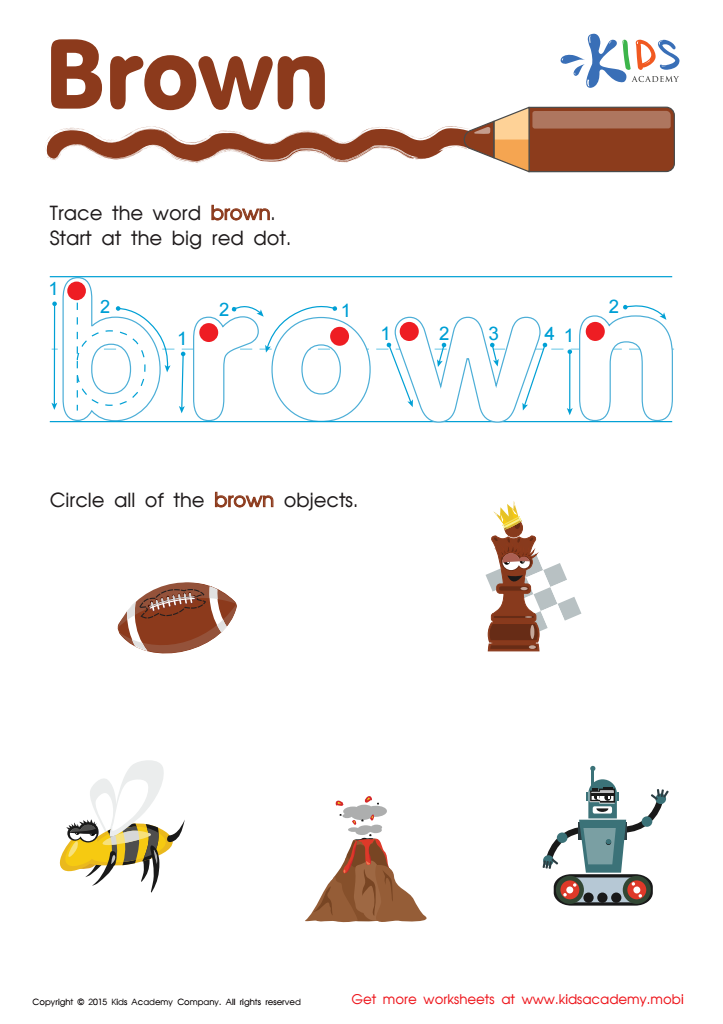
Brown Tracing Color Words Worksheet
This worksheet helps kids develop fine motor muscles and practice writing. Have them trace the word "brown" with a crayon, then find the brown objects in the picture. Ask them to look around and say what's brown in their room to make it more fun. Writing basics and a bit of fun - check out this free printable handwriting worksheet! For more tracing color words, check out here.
Brown Tracing Color Words Worksheet
Worksheet
Join Kids Academy for Free
Who is primarily going to use this learning content?







Parents and teachers should prioritize spelling skills through tracing words for children aged 5-7 because this formative stage is critical for developing foundational literacy skills. During these early years, children's brains are exceptionally receptive to learning languages, making it an ideal time to introduce spelling concepts. Tracing words not only helps with letter recognition but also improves fine motor skills, as children learn how to hold a pencil and control their movements.
Moreover, tracing words engages visual and tactile senses, catering to different learning styles. This hands-on activity reinforces memory retention through repetition, allowing children to understand the structure of words and phonetics. As they trace, they become aware of spelling patterns and rules which lays the groundwork for more advanced literacy skills in the future.
Additionally, spelling fluency enhances reading skills, enabling children to sound out new words and increase their vocabulary, which is crucial for effective communication. In a digitally dominated world, the ability to spell correctly is essential for social, academic, and future career success. Thus, tracing words serves as a vital tool that fosters confidence and competence in young learners, setting them on a path toward literacy and lifelong learning.








