
Lowercase identification Alphabet Worksheets for Ages 5-8
5 filtered results
Difficulty Level
Grade
Age
-
From - To
Subject
Activity
Standards
Introduce your child to the magical world of letters with our Lowercase Identification Alphabet Worksheets designed for ages 5-8! These engaging worksheets make learning fun while helping children recognize and familiarize themselves with lowercase letters. Packed with colorful illustrations and interactive activities, they cater to different learning styles, ensuring every child can thrive. Ideal for home or classroom use, these worksheets promote essential skills like letter recognition, writing, and vocabulary development. Watch your young learner blossom as they practice tracing, coloring, and identifying lowercase letters. Start their alphabet adventure today and set the foundation for lifelong literacy!
Favorites
With answer key
Interactive
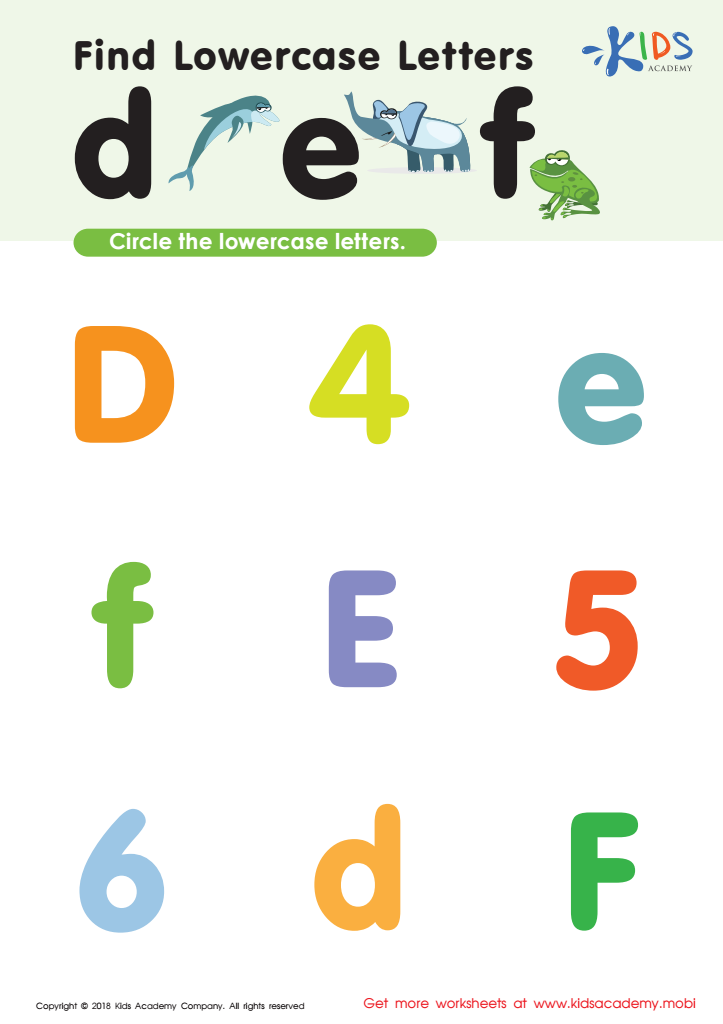
Find Lowercase Letters d e f Worksheet
Engage your child's brain with this fun, colorful worksheet. They'll identify and circle lowercase letters among other numbers and uppercase letters in bright colors. This will keep their attention as they learn, and can be downloaded in PDF form!
 Assign to My Students
Find Lowercase Letters d e f Worksheet
Worksheet
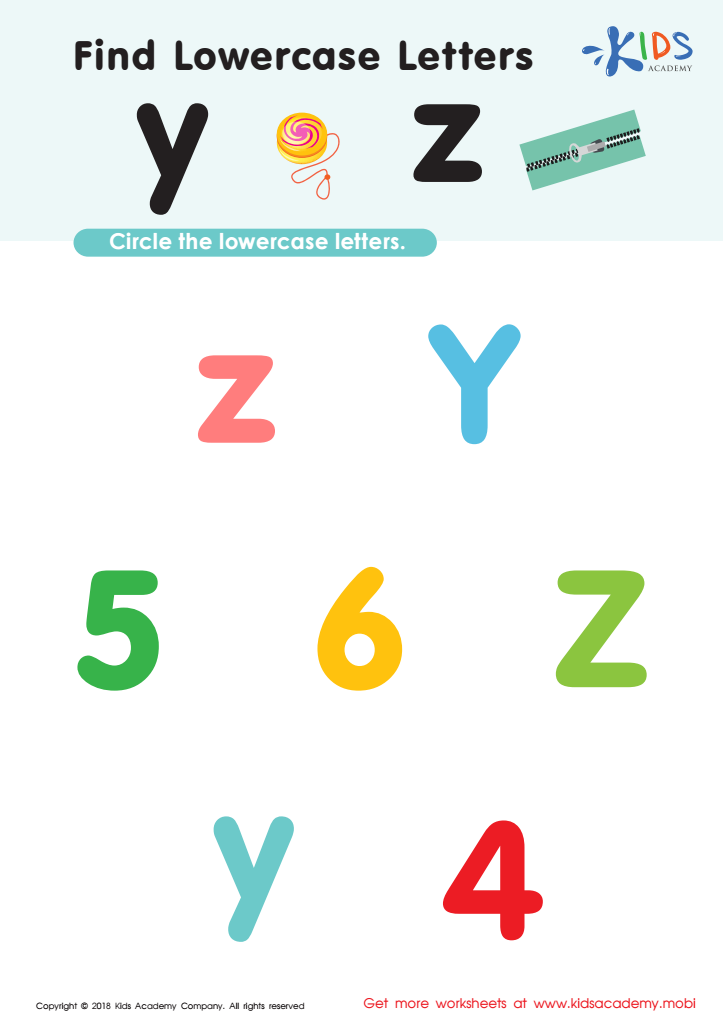
Find Lowercase Letters y z Worksheet
Help your kid learn the alphabet. Before they can move on to words and reading, they must first know the lower and uppercase letters. Show them how to find the letters y and z in this worksheet, which is filled with uppercase letters and numbers. Together, find and circle them.
Find Lowercase Letters y z Worksheet
Worksheet
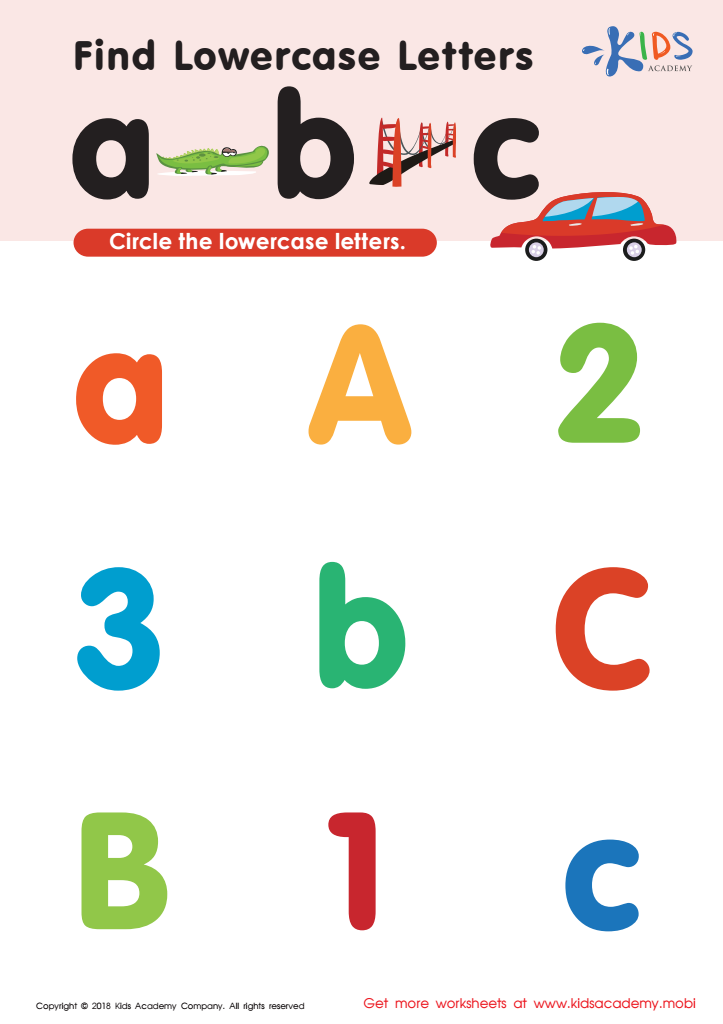
Find lowercase letters a b c Worksheet
Help your child identify lowercase letters with this worksheet. Carefully look at each letter and have your child circle the lowercase ones. This exercise is vital in helping them understand the alphabet and the difference between lower and uppercase letters.
Find lowercase letters a b c Worksheet
Worksheet
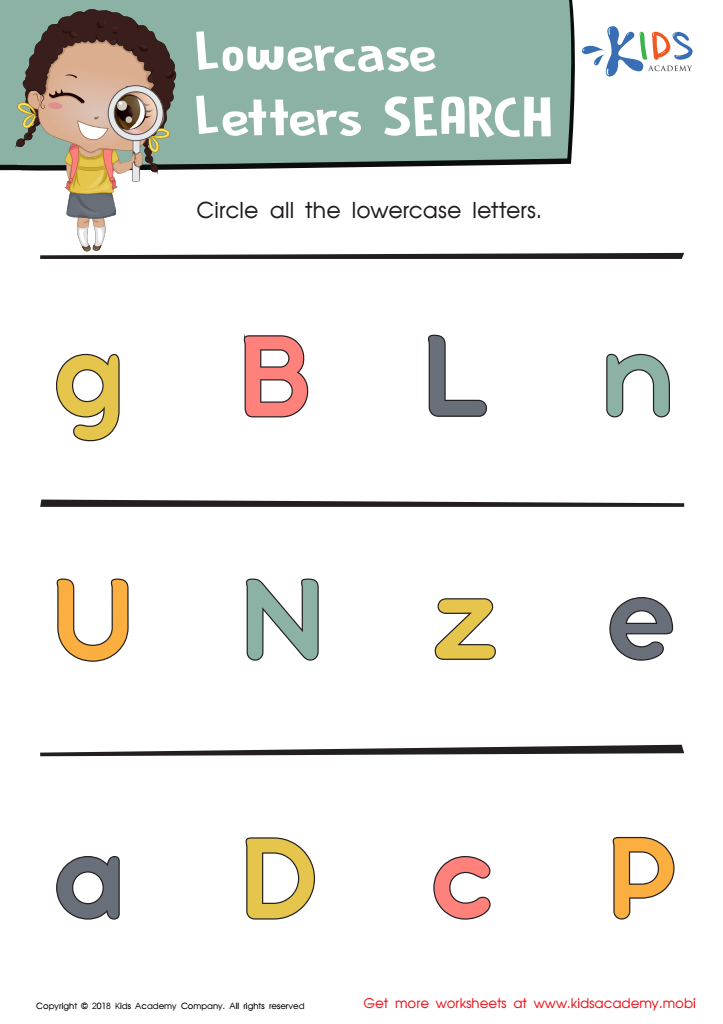
Lowercase Letters Search: Assessment Worksheet
Circle all the lowercase letters in this worksheet. Identify them among a mix of uppercase and lowercase letters. Your child will have fun with this exercise thanks to its bright primary colors. Enjoyment and learning go hand-in-hand!
Lowercase Letters Search: Assessment Worksheet
Worksheet
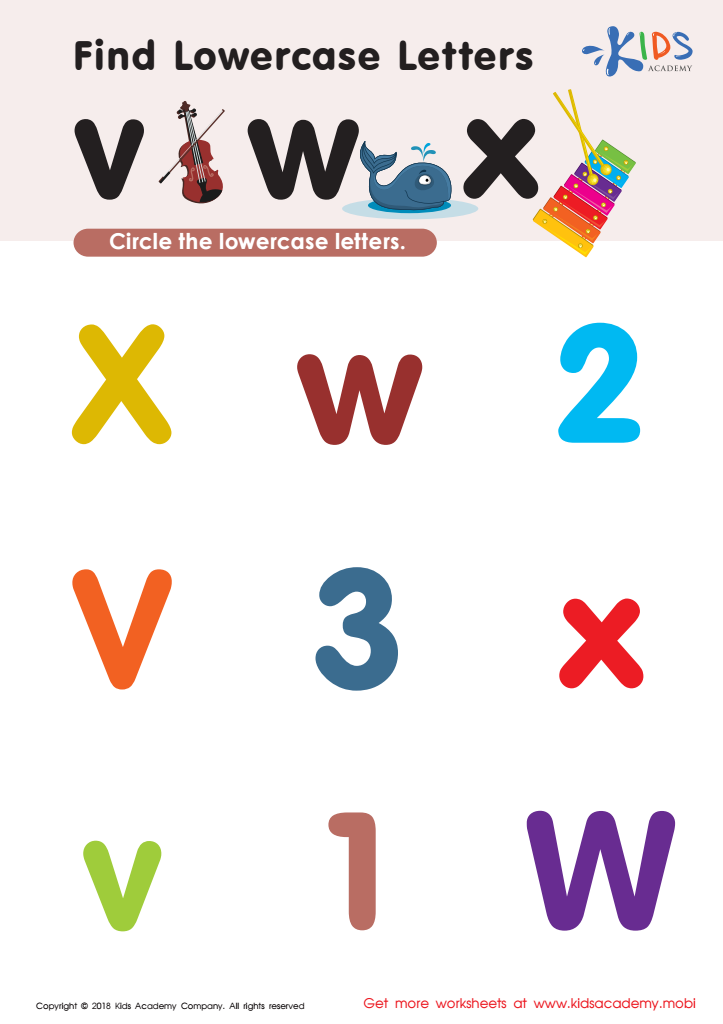
Find Lowercase Letters v w x Worksheet
If your child doesn't know the alphabet, get them this helpful worksheet. It's an easy exercise to build their understanding of the alphabet and lowercase letters. Find the letters v, w, and x among other uppercase letters and numbers in the downloadable PDF.
Find Lowercase Letters v w x Worksheet
Worksheet
Join Kids Academy for Free
Who is primarily going to use this learning content?







.jpg)
Lowercase alphabet recognition is a crucial milestone for children aged 5 to 8, and both parents and teachers play a vital role in supporting this development. Understanding lowercase letters is fundamental for several reasons. Firstly, these letters are prevalent in everyday text, from children’s books to street signs, making lowercase recognition essential for reading proficiency.
Recognizing lowercase letters helps children improve their phonetics and blends sounds, enhancing their overall literacy skills. An intimate familiarity with lowercase letters significantly eases the transition to reading words and sentences, contributing to reading fluency and comprehension at an early age.
Additionally, grasping lowercase letters instills confidence in children as they progress through writing and spelling exercises. Authentically expressing themselves through writing becomes much more accessible when they can confidently use lowercase letters.
Moreover, parents and teachers create a conducive learning environment when they prioritize lowercase identification, helping to foster a love for reading and writing that can last a lifetime. Building strong foundational skills in literacy early on ensures that children are well-prepared to tackle the more advanced challenges that arise in their education. Thus, active involvement in lowercase identification catalyzes a child’s lifelong journey in learning.







