
Reading proficiency Alphabet Worksheets for Ages 5-8
7 filtered results
Difficulty Level
Grade
Age
-
From - To
Subject
Activity
Standards
Unlock the joy of reading with our Reading Proficiency Alphabet Worksheets designed for ages 5-8. These engaging, educational worksheets are perfect for young learners to strengthen their reading skills. Each worksheet focuses on alphabet recognition, phonics, and word formation, building a solid foundation for future literacy. Our fun and colorful activities make learning enjoyable and help kids stay motivated. Ideal for classroom use or at-home practice, these worksheets support critical learning milestones in early reading development. Help your child achieve reading success with our expertly crafted resources! Visit our website to explore and download now.
Favorites
With answer key
Interactive
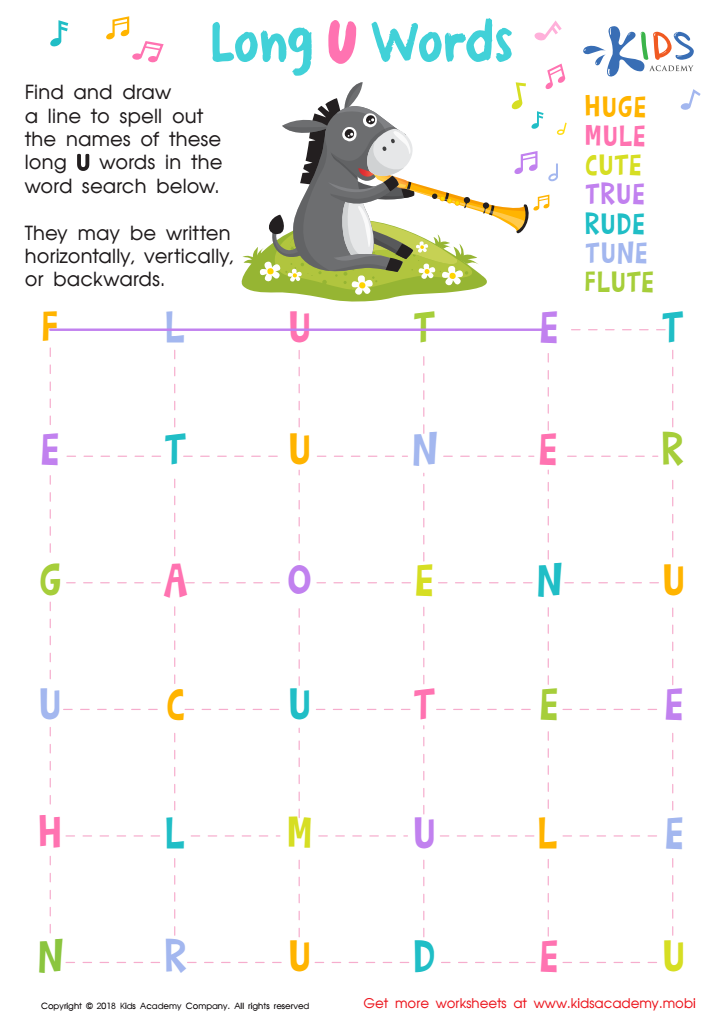
Long /u/ Words Worksheet
Your child needs to learn phonetics to enunciate and differentiate words. This fun worksheet encourages them to find and draw lines connecting the long 'U' words in the word search. Help them read the words on the right side of the picture, then look for them in the word search (horizontally, backwards or vertically).
Long /u/ Words Worksheet
Worksheet
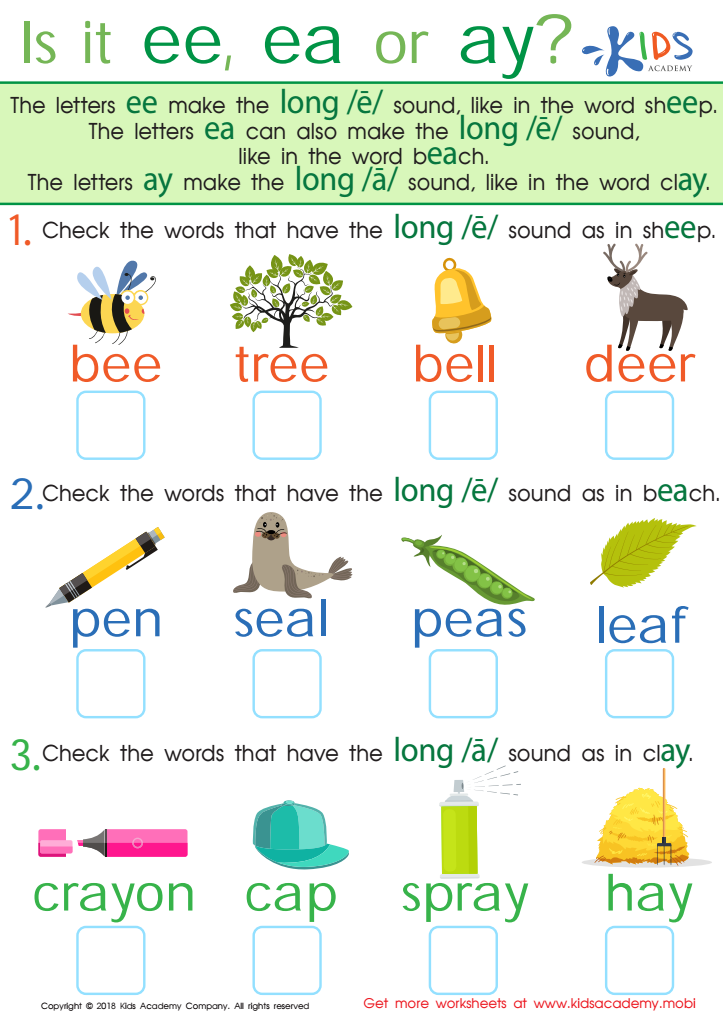
Is It EE, EA, or AY? Worksheet
When 'ee', 'ea' and 'ay' are in words, they usually make the long /e/ and /a/ sounds. Examples of words with 'ee' are "sheep", 'beach' and 'seat' with 'ea', and 'clay' and 'play' with 'ay'. Check this colourful worksheet with your kids; help them find the words that make the long /e/ sound like 'sheep'.
Is It EE, EA, or AY? Worksheet
Worksheet
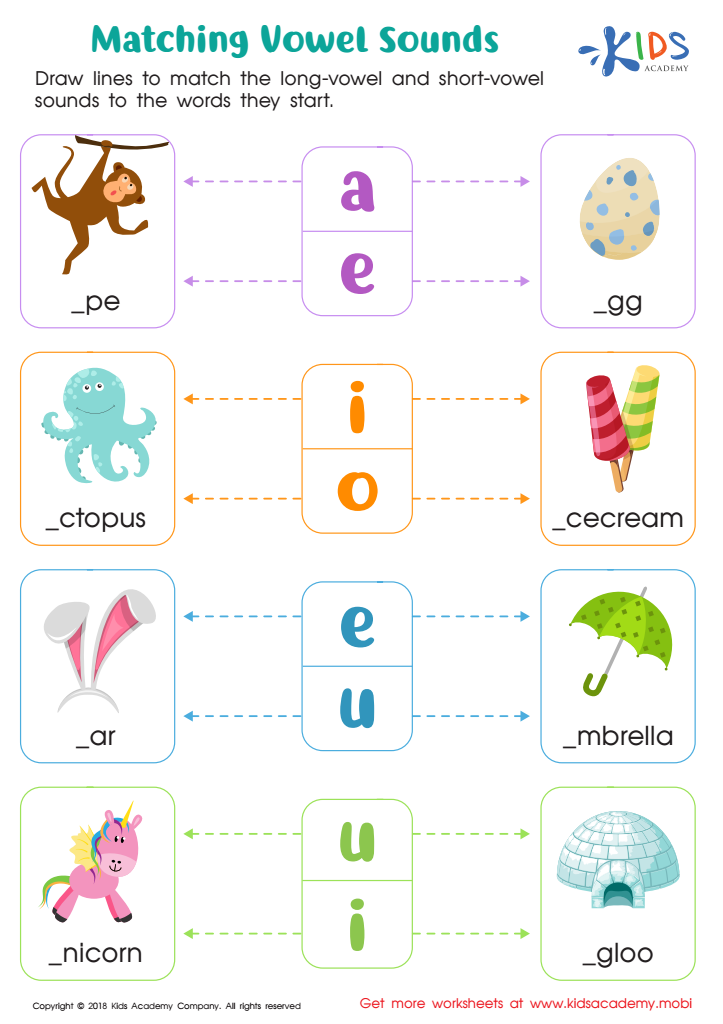
Matching Vowel Sounds Worksheet
Teach your child phonics with a fun worksheet! Ask your child to name a vowel sound and listen if it's long or short. Differentiating between long and short vowel sounds can be tricky, but this matching worksheet makes it easy for kids to understand. Have fun and master phonics - the worksheet will help them understand the difference between long and short vowel sounds!
Matching Vowel Sounds Worksheet
Worksheet
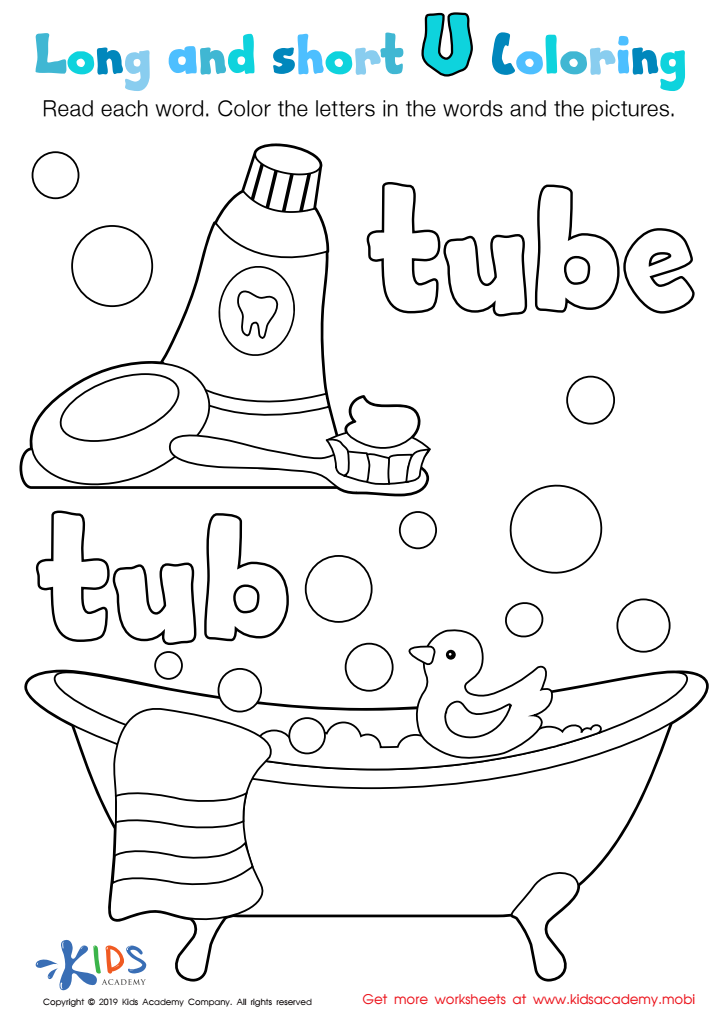
Long and Short U Worksheet
Revised: Spice up your lesson on long and short vowels with this fun printout! Kids read the words "tube" and "tub," then reinforce the sound by coloring in the words and pictures. It's a great way to make phonics class enjoyable!
Download (PDF)
 Assign to My Students
Assign to My Students
Long and Short U Worksheet
Worksheet
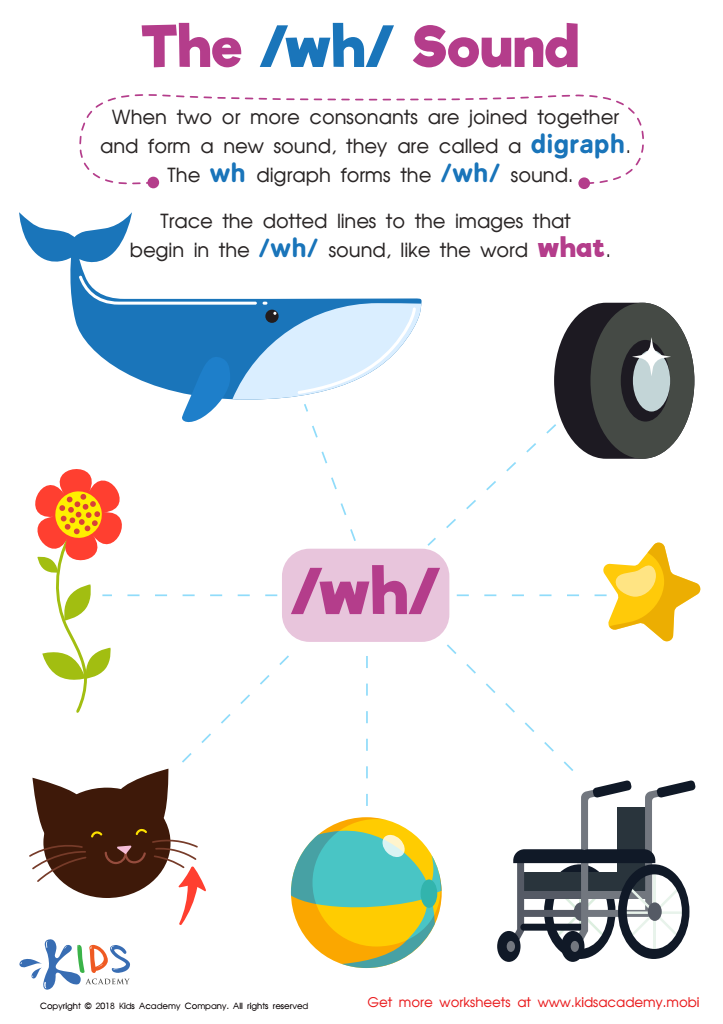
The /wh/ Sound Worksheet
Digraphs join two consonants to make a new sound, like /wh/. Give examples, like "whale", "when" and "why". Ask kids to name pictures in a worksheet and trace dotted lines to images beginning with the /wh/ sound; "what" is one example.
The /wh/ Sound Worksheet
Worksheet
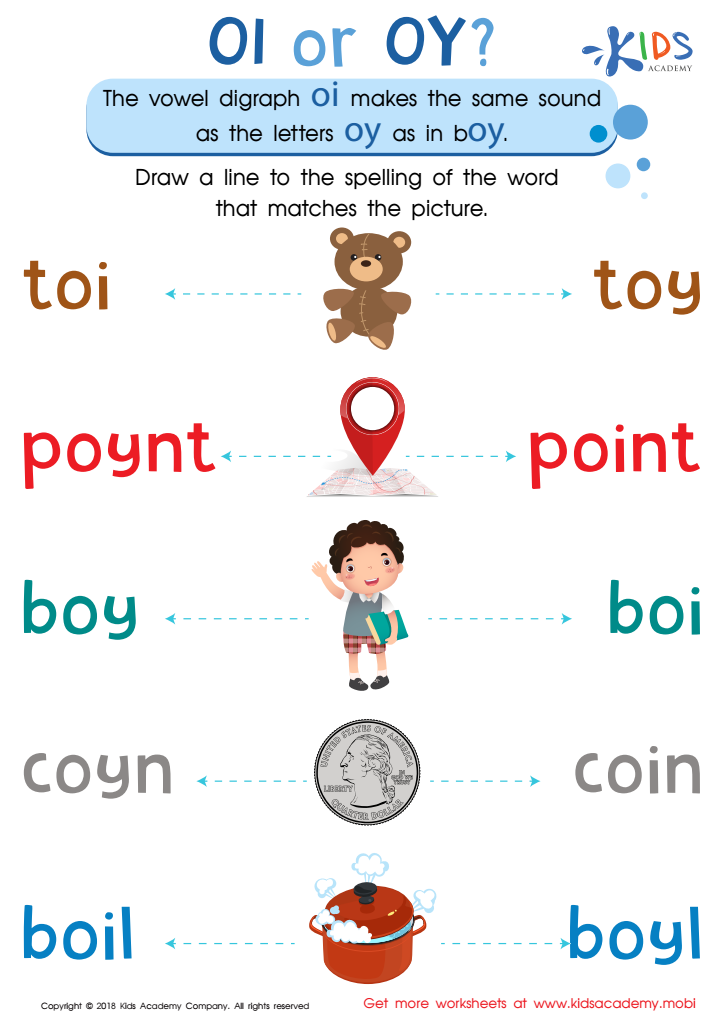
Reading: OI and OY Worksheet
Ask your students if they know the rule for words with /oi/ or /oy/ sound. If not, it's easy to learn! Rule: If /oy/ at end of word, spell with 'oy'; if /oi/ in middle of word, spell with 'oi'. Use this worksheet to help them master these digraphs and improve their ability to decode.
Reading: OI and OY Worksheet
Worksheet
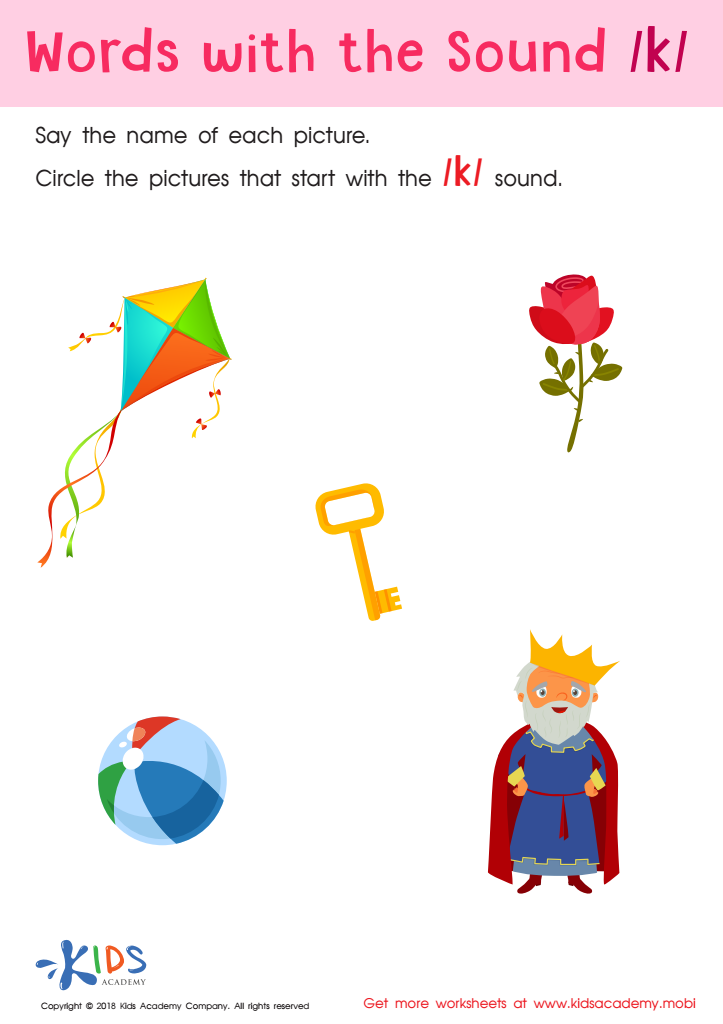
Words with sound k Reading Worksheet
Help your preschooler master the hard "k" sound with this fun worksheet from Kids Academy! Ask your child to say each picture aloud and circle only the pictures that start with "k". This early reading exercise will boost phonics skills and is sure to be loved by your little learner!
Words with sound k Reading Worksheet
Worksheet
Join Kids Academy for Free
Who is primarily going to use this learning content?







Parents and teachers should prioritize reading proficiency for ages 5-8 because it lays the foundation for lifelong learning and academic success. At this critical stage, children are transitioning from "learning to read" to "reading to learn," and mastering the Alphabet is crucial for this development. Proficiency in the Alphabet enables children to recognize letters and sounds, facilitating early word recognition and phonemic awareness, which are essential building blocks for reading fluently.
Early reading skills are linked to better performance in other academic areas. Children who develop strong reading skills by the end of 3rd grade are more likely to succeed in subjects like math, science, and social studies because they can comprehend and analyze the material presented. Moreover, reading fluency enhances vocabulary, language development, and cognitive skills, fostering better communication and understanding of the world.
From a socio-emotional perspective, early reading proficiency boosts a child's confidence and instills a love for learning. It encourages curiosity and imagination, giving children the tools they need to explore new ideas and cultures. Moreover, families and teachers who engage in shared reading activities create rich, bonding experiences, forging stronger relationships and modeling the importance and joy of reading.
Ultimately, investing time and effort in developing reading proficiency in young children equips them with the essential skills needed for future academic and personal growth.







