Vowel Recognition Long Vowels Worksheets for Ages 5-8
9 filtered results
Difficulty Level
Grade
Age
-
From - To
Subject
Activity
Standards
Unlock your child's reading potential with our engaging Vowel Recognition Long Vowels Worksheets, specifically designed for children aged 5-8! These worksheets focus on identifying and mastering long vowels through fun activities that promote interactive learning. Each worksheet invites little learners to practice vowel sounds in words, enhancing phonics skills essential for literacy development. With colorful visuals and a variety of exercises, children will enjoy exploring vowels in different contexts, making lessons both educational and entertaining. Perfect for home or classroom use, these resources aim to build confidence in young readers while fostering a lasting love for learning. Get started today!
Favorites
With answer key
Interactive
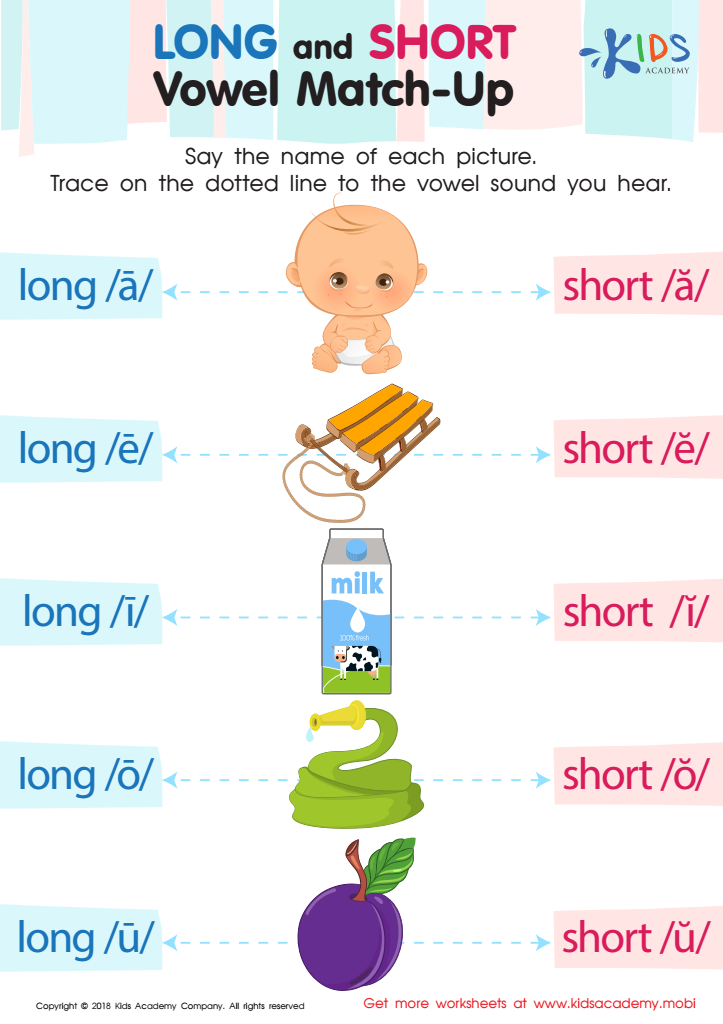
Long and Short Vowel Match up Reading Worksheet
Help your reader build confidence and refine their decoding skills! This worksheet combines long and short vowel recognition with a traceable component to improve fine motor skills. Your learner will name each picture and trace the dotted lines to get to the correct vowel sounds.
Long and Short Vowel Match up Reading Worksheet
Worksheet
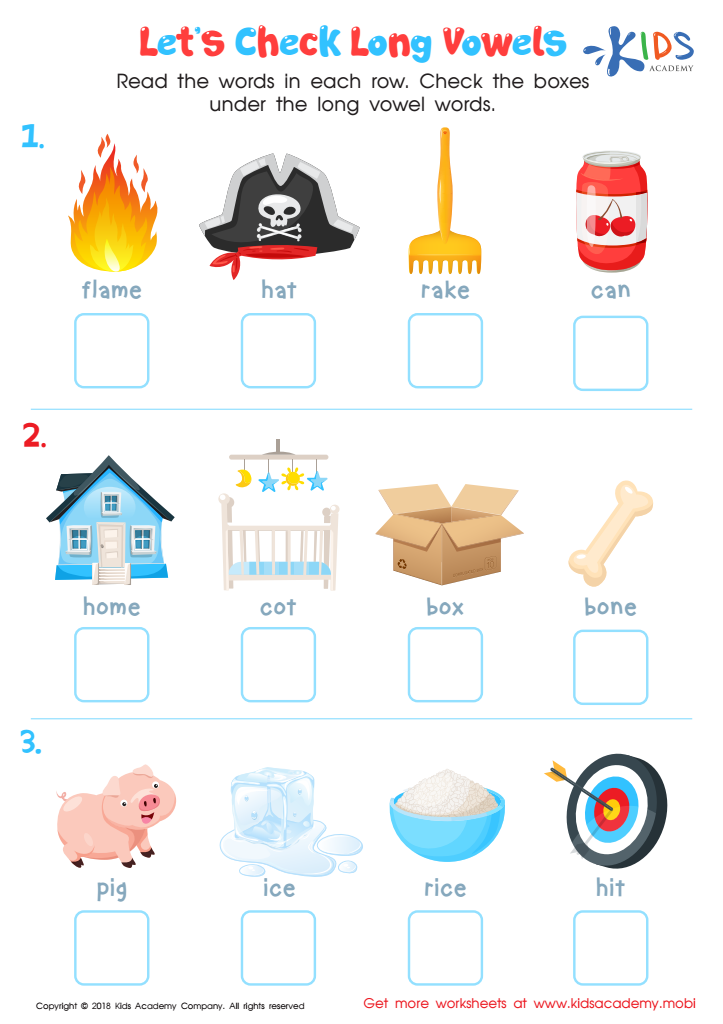
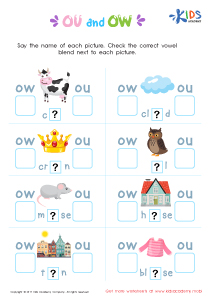
Let's Check Long Vowels: Assessment Worksheet
This worksheet helps your child identify objects and learn long vowel sounds. Ask them to say the names of the four objects in each row. Then, help them check the boxes to confirm they know the long vowel sounds. This will help them develop their reading skills.
Let's Check Long Vowels: Assessment Worksheet
Worksheet
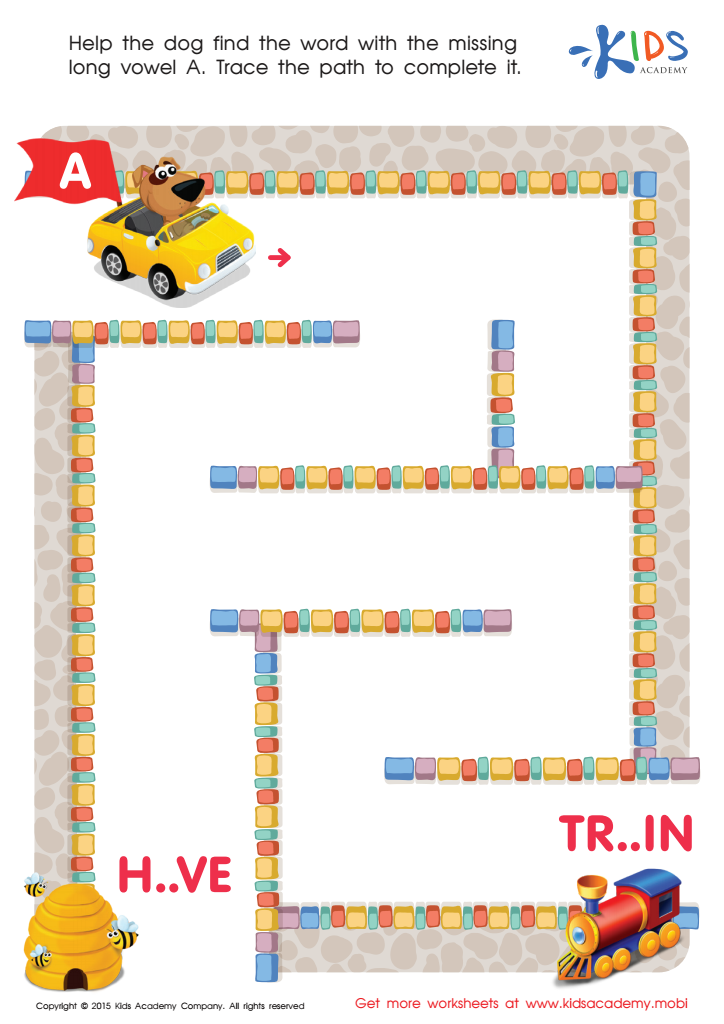
Long Vowel Sound A Worksheet
Teach your young learner about the long vowel A with this colorful free printable phonics worksheet. The long vowel A says its name while the short vowel A does not. Complete the worksheet by tracing the root to the toy train and helping the dog by filling in the missing letter A. Have them practice writing and spelling with phonics while having fun!
Long Vowel Sound A Worksheet
Worksheet
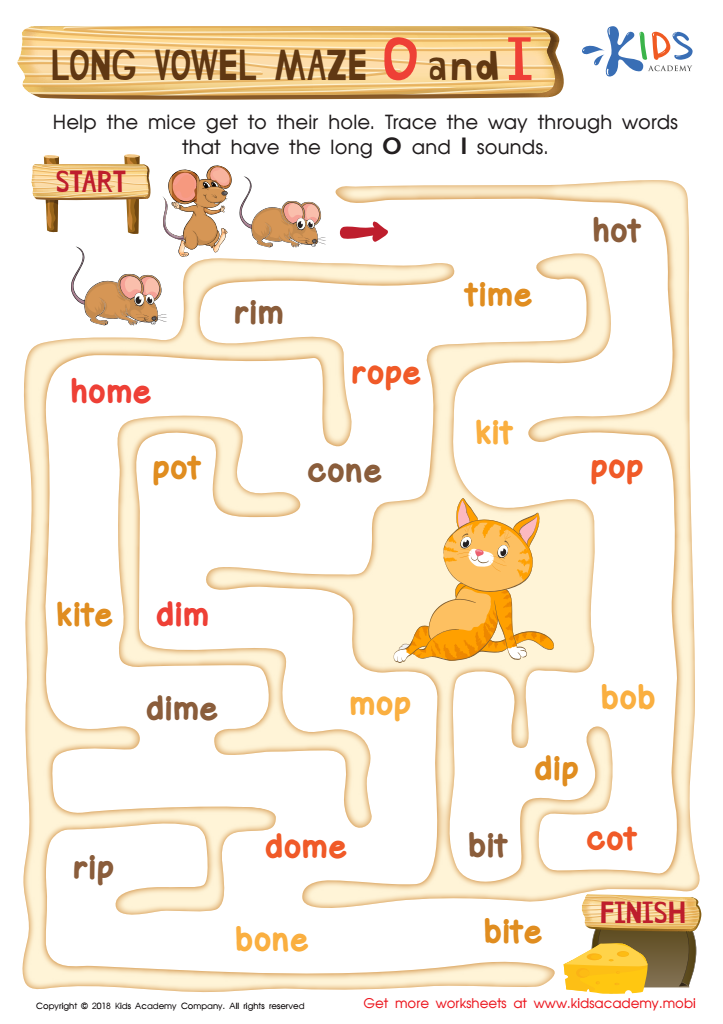
Long Vowel Maze /o/ and /i/ Worksheet
Help your new readers have fun and build their sight word vocabulary! Guide the mice to their prize cheese by having them trace the route on the worksheet, using words with the long o and long i sounds. But watch out for the kitty!
Long Vowel Maze /o/ and /i/ Worksheet
Worksheet
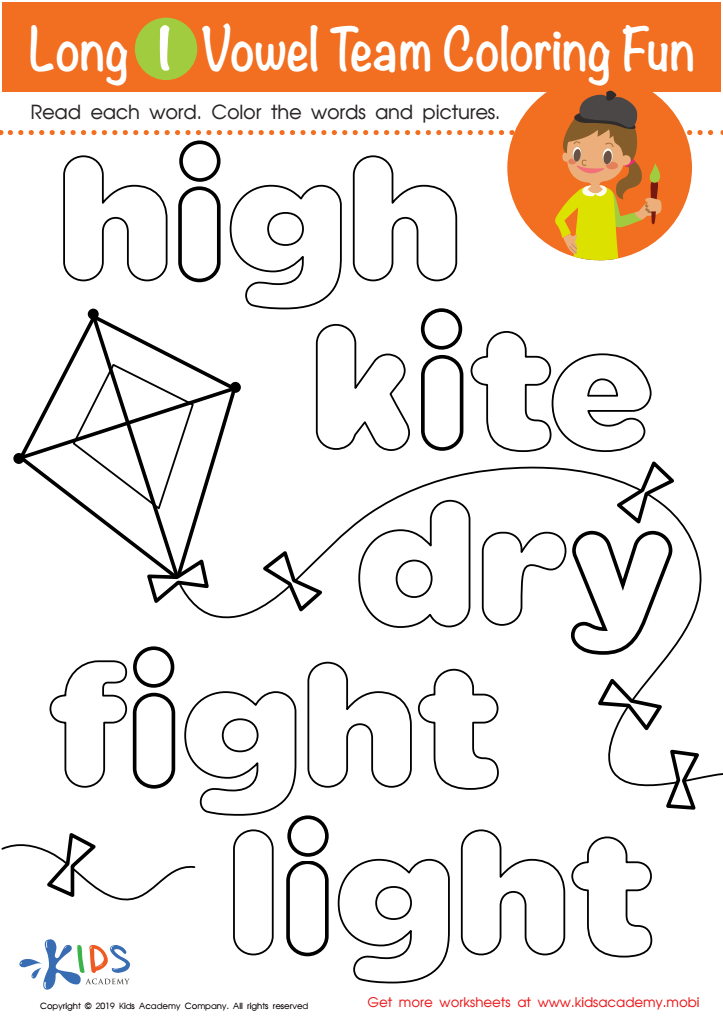
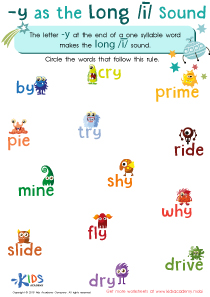
Long I Vowel Team Coloring Worksheet
This worksheet provides practice with letter combinations that make the long "i" sound while enhancing creativity and motor skills with a fun coloring activity. Unknowingly, new readers learn key phonics skills while having fun!
Download (PDF)
 Assign to My Students
Assign to My Students
Long I Vowel Team Coloring Worksheet
Worksheet
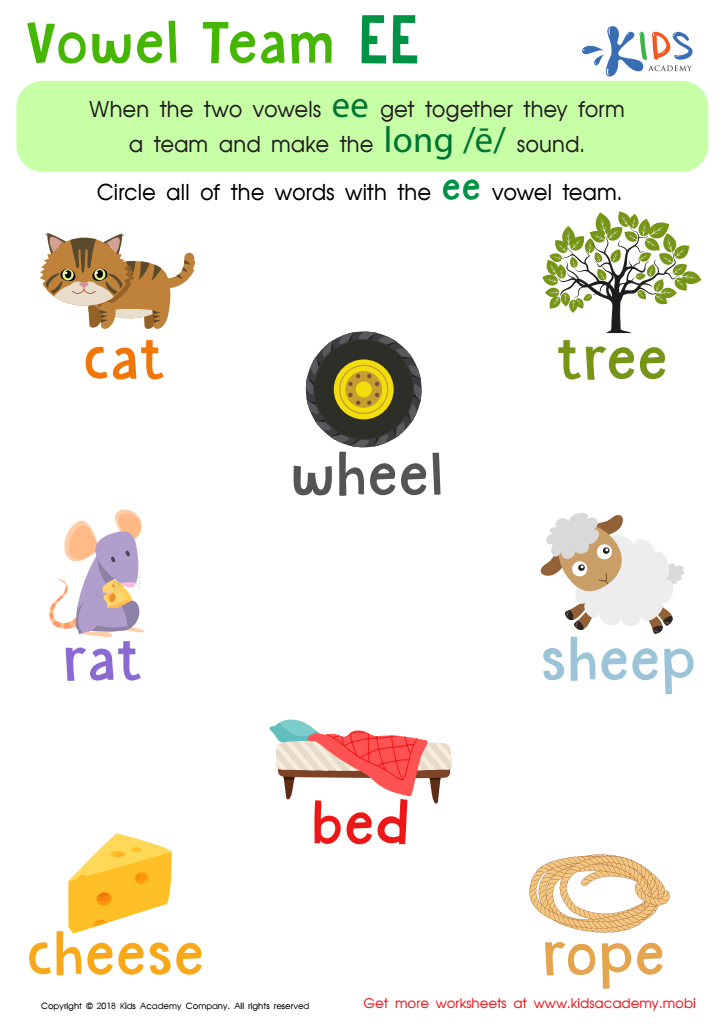
Reading: Vowel Team EE Worksheet
This worksheet is perfect for helping young learners master the /ee/ vowel team. It shows the first vowel with a long sound and the second vowel silent. It also provides pictures for unfamiliar words for readers of all levels. It's an ideal resource for teaching phonics skills.
Reading: Vowel Team EE Worksheet
Worksheet
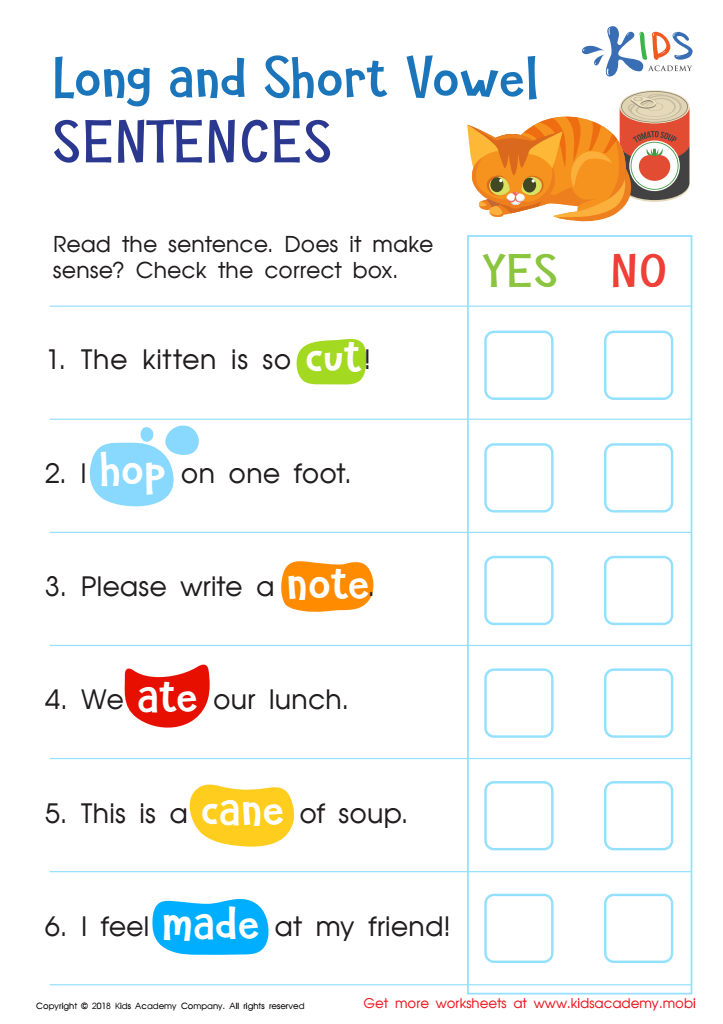
Long and Short Vowel Sentences: Assessment Worksheet
This printable worksheet helps kids practice differentiating between short and long vowel sounds. They'll use context clues to figure out which words make sense in simple sentences. A great way to build reading and writing skills!
Long and Short Vowel Sentences: Assessment Worksheet
Worksheet
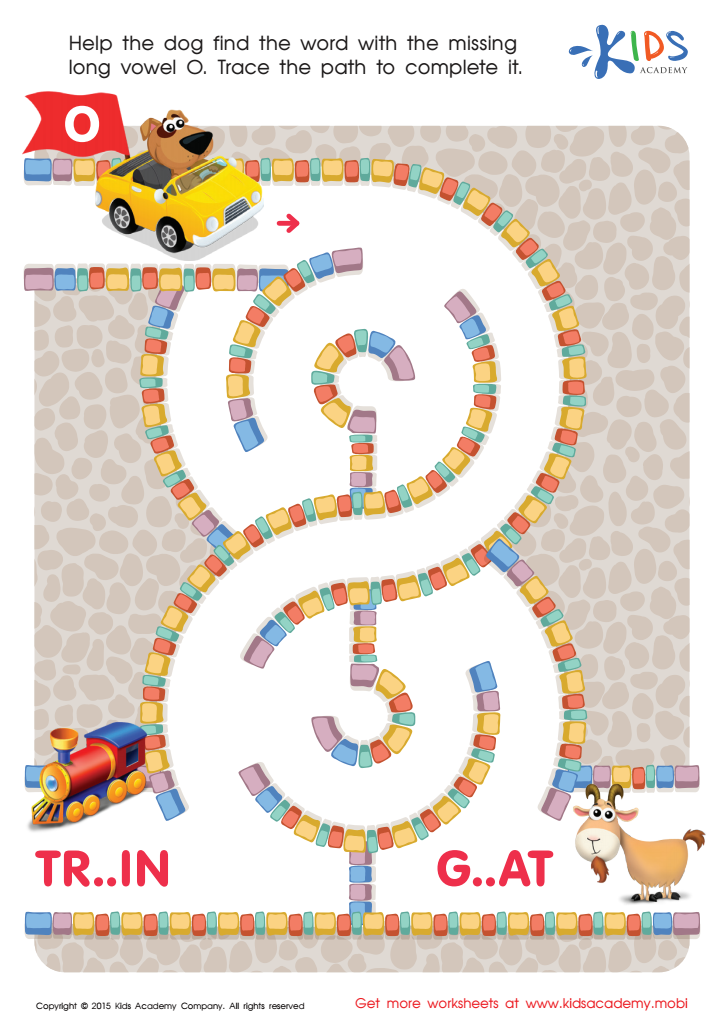
Long Vowel Sound O Worksheet
Help the goat find her missing O! Guide your little learner through this fun maze to help the goat get its vowel sound back. Make phonics learning engaging and enjoyable with this free printable worksheet.
Long Vowel Sound O Worksheet
Worksheet
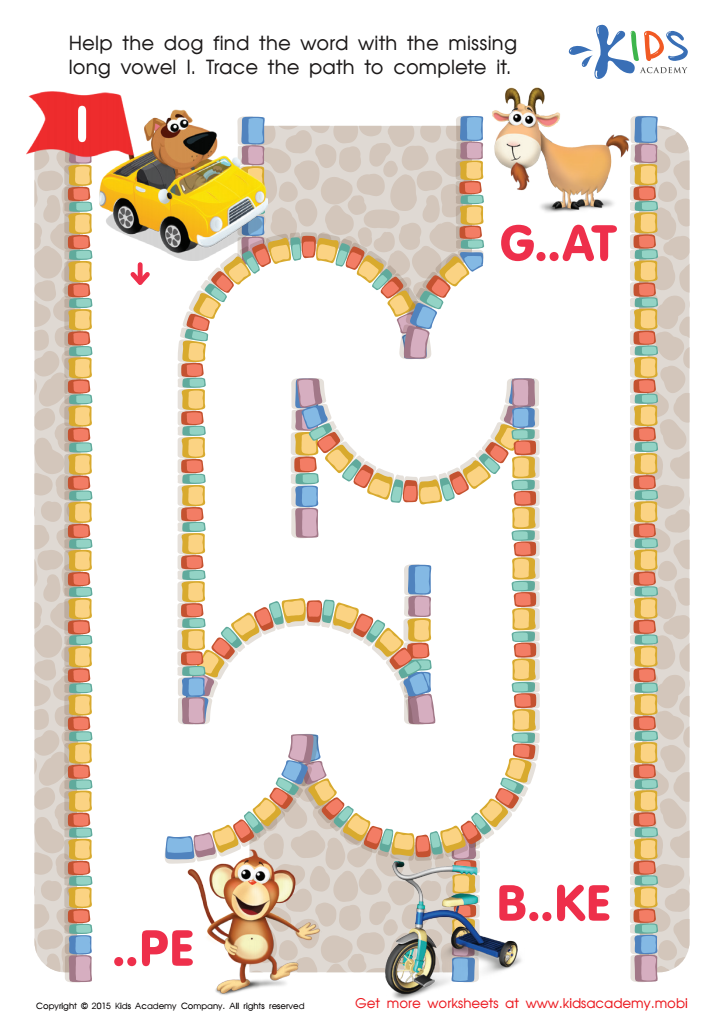
Long Vowel Sound I Worksheet
Learning long vowels is essential to becoming a good reader. Ask your child to distinguish between the long and short I vowel sounds. Remind them that the long I says its name, while the short I doesn't. With this fun printable phonics worksheet, your kid can practice writing and spelling while helping a dog find his way through a maze. Check out our phonics worksheets for more learning activities.
Long Vowel Sound I Worksheet
Worksheet
Join Kids Academy for Free
Who is primarily going to use this learning content?



Vowel recognition, particularly long vowels, is a crucial foundational skill for children aged 5 to 8. Understanding long vowels—where vowels say their name (like "a" in "cake" or "i" in "ride")—is essential for developing reading fluency and comprehension. When children achieve proficiency in recognizing these sounds, they gain confidence in decoding unfamiliar words, which in turn inspires a love for reading.
Parents and teachers should care about this skill because it not only supports literacy development but also reinforces phonemic awareness, which is the ability to hear and manipulate sounds in words. Long vowels play a significant role in spelling; familiarizing students with these sounds helps them spell more accurately. Additionally, early mastery of vowel recognition enhances vocabulary acquisition, setting the stage for academic success.
Encouraging activities that revolve around long vowels—such as reading games, phonics exercises, and interactive storytelling—align with developmental milestones. By prioritizing vowel recognition, adults fuel children's interest in learning, promote better communication skills, and prepare them for more advanced reading and writing tasks in the future. Ultimately, fostering this foundational skill can open a world of possibilities for young learners, setting them on a path toward lifelong literacy.