Comparative skills Worksheets for Ages 5-8
3 filtered results
-
From - To
Introduce your young learners to essential comparative skills with our engaging worksheets designed for ages 5-8. Encourage cognitive development through interactive activities focusing on comparing sizes, lengths, weights, and quantities. Each worksheet features vibrant illustrations and relatable scenarios, making learning enjoyable and effective. By practicing these comparisons, children enhance their critical thinking and problem-solving abilities. Perfect for classroom or home use, these worksheets seamlessly integrate into any early learning curriculum. Spark curiosity and build a strong foundation in analytical skills with our expertly crafted comparative skills worksheets, brought to you by Kids Academy. Download and kickstart your child's learning journey today!
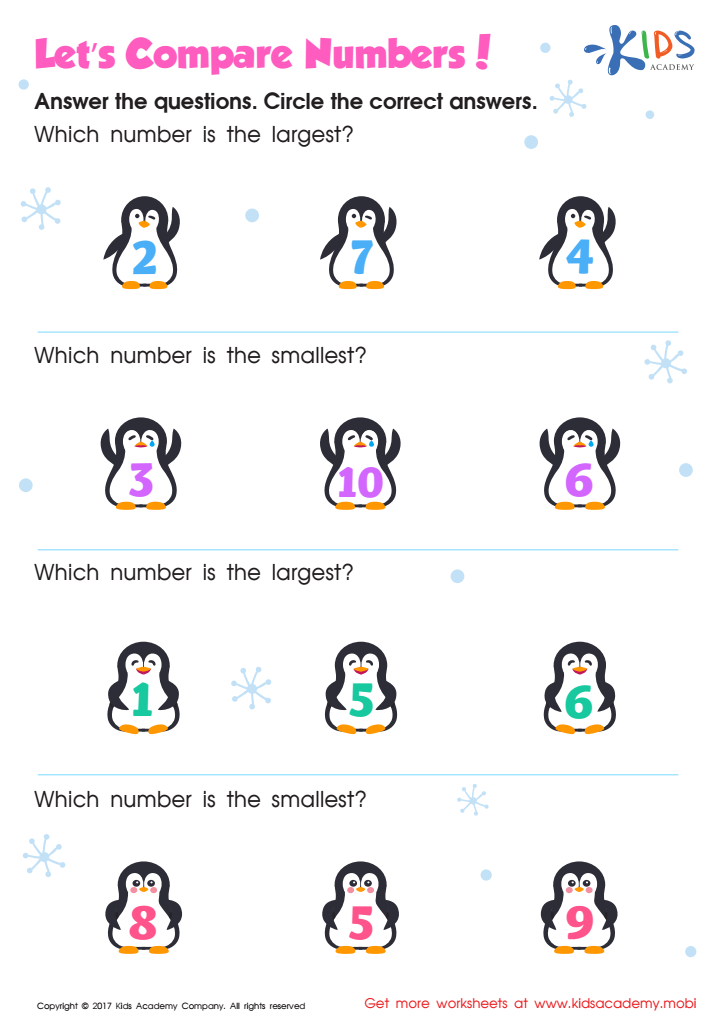
Comparing Numbers 1–10 Worksheet Kindergarten
 Assign to My Students
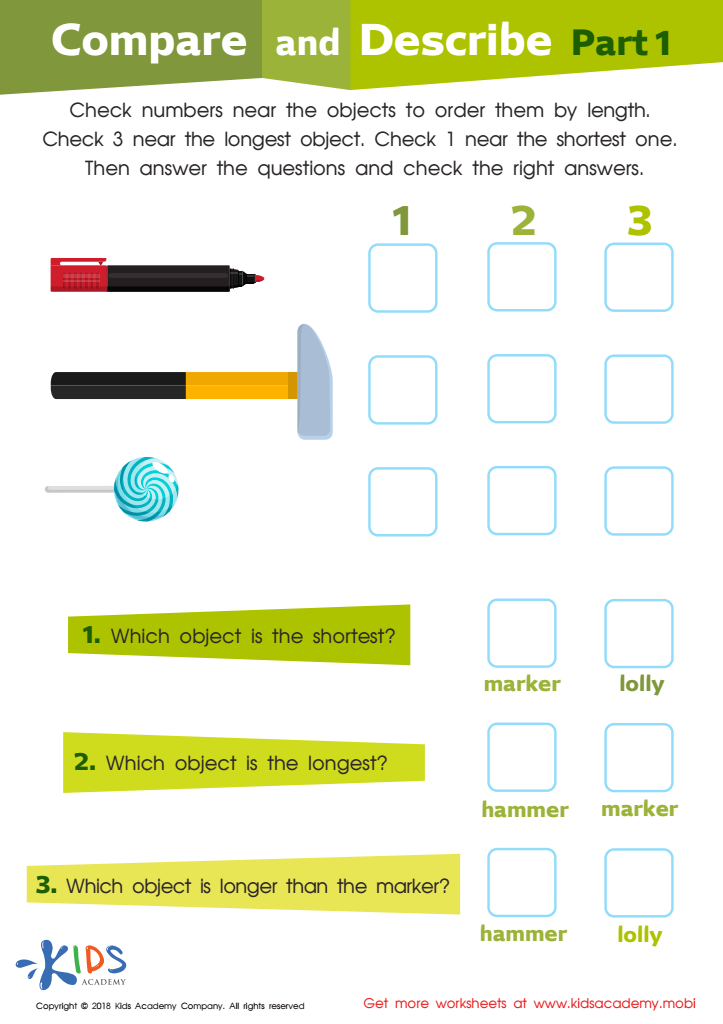
Compare and Describe: Part 1 Worksheet
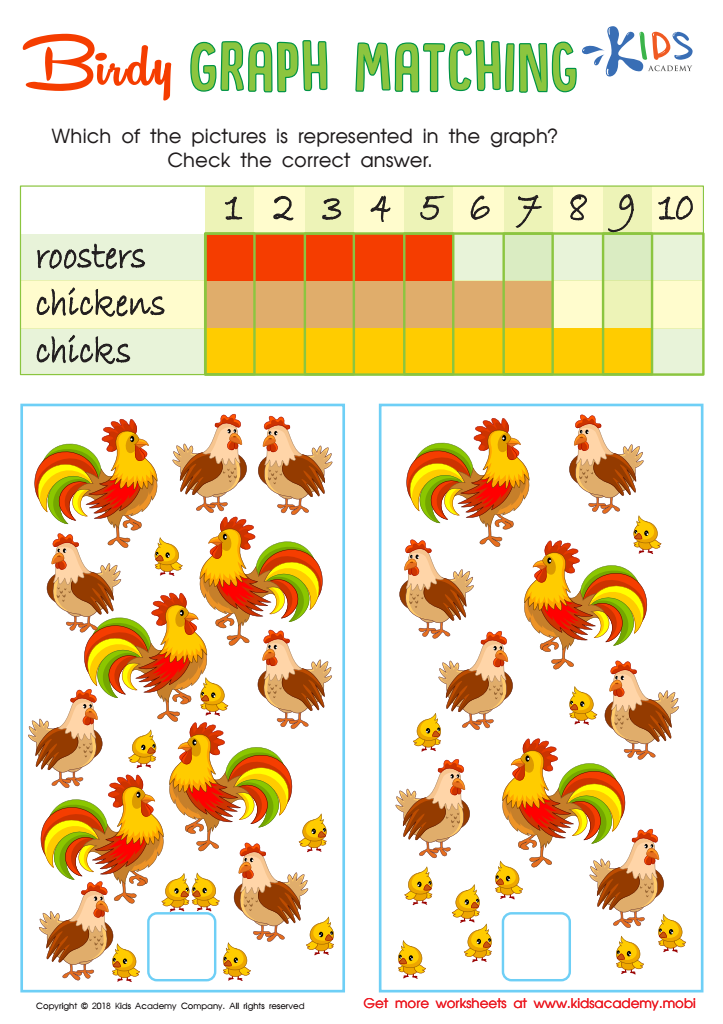
Birdy Graph Matching Worksheet


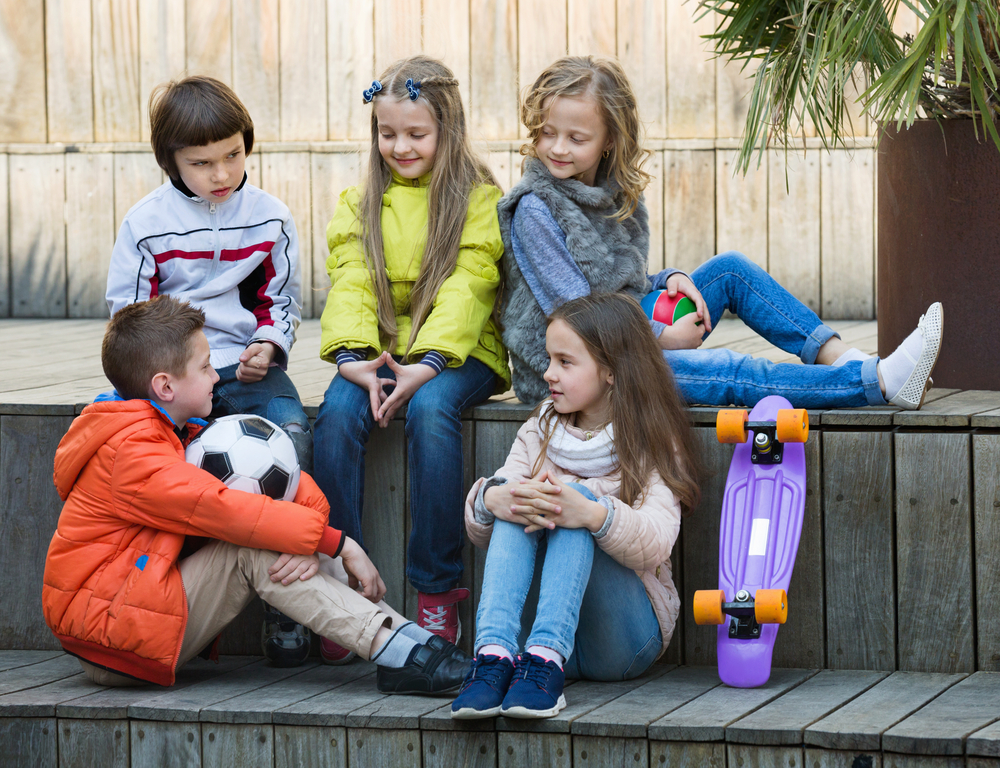



Comparative skills for children aged 5-8 are essential for their cognitive, social, and emotional development. These skills encompass the ability to notice similarities and differences among objects, ideas, and people, and they are fundamental for critical thinking, problem-solving, and decision-making.
From a cognitive perspective, developing comparative skills helps children categorize information more efficiently, leading to enhanced memory and understanding. When children can compare and contrast, they make connections between new and existing knowledge, which deepens their comprehension across subjects like mathematics, science, and language arts.
Socially, comparative skills enable children to empathize and understand diverse perspectives. By recognizing similarities and differences among their peers, children become more tolerant and inclusive, which fosters a positive classroom and home environment. This understanding is vital for developing meaningful relationships and navigating social situations.
Emotionally, these skills promote self-awareness and self-confidence. When children compare their progress or abilities with past performances rather than peers, they can set personal goals and celebrate individual growth, leading to higher self-esteem and resilience.
In summary, promoting comparative skills among young children is crucial for their all-round development. It equips them with intellectual tools for academic success, social strategies for harmonious interactions, and emotional strength for personal growth. Whether parents or teachers, focusing on these skills will build a robust foundation for a child's future learning and development.








