Comparing Fractions Worksheets for Ages 5-8
137 filtered results
-
From - To
Introduce your young learners, ages 5-8, to the exciting world of fractions with our Comparing Fractions Worksheets. Designed to make learning fun and engaging, these worksheets help kids easily grasp the concept of comparing fractions with vibrant visuals and simple exercises. Ideal for home or classroom use, these printables support foundational math skills, ensuring students build a solid understanding that will boost their confidence. Crafted by educational experts, the activities are age-appropriate and align with early grade math standards. Print and start your child’s journey towards mastering fractions today!
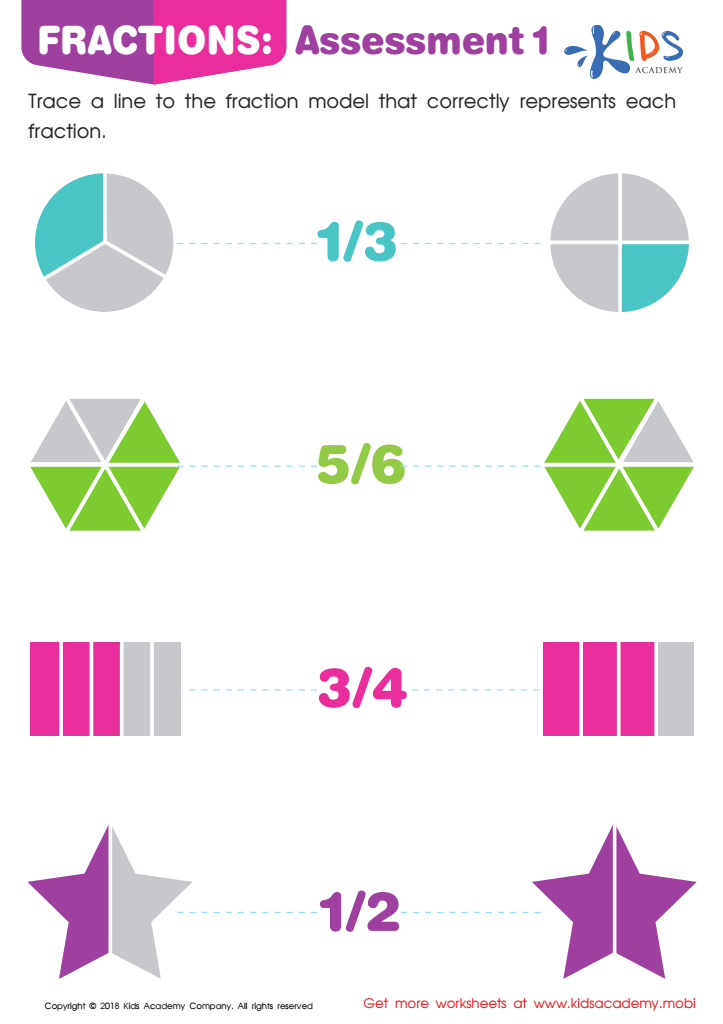
Fractions: Assessment 1 Worksheet
 Assign to My Students
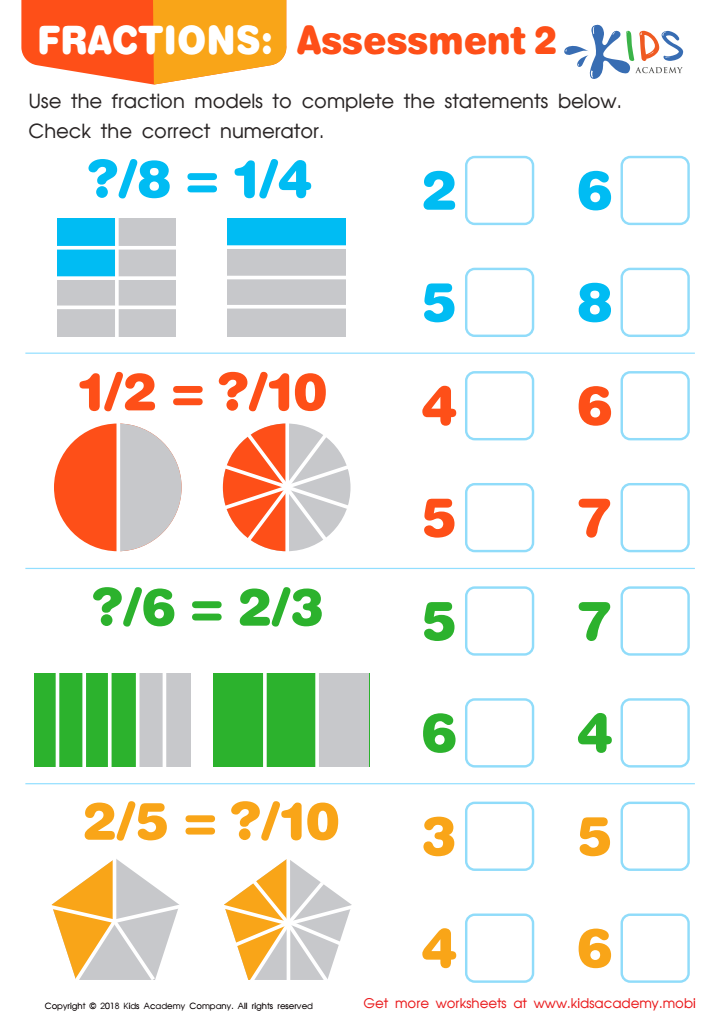
Fractions: Assessment 2 Worksheet
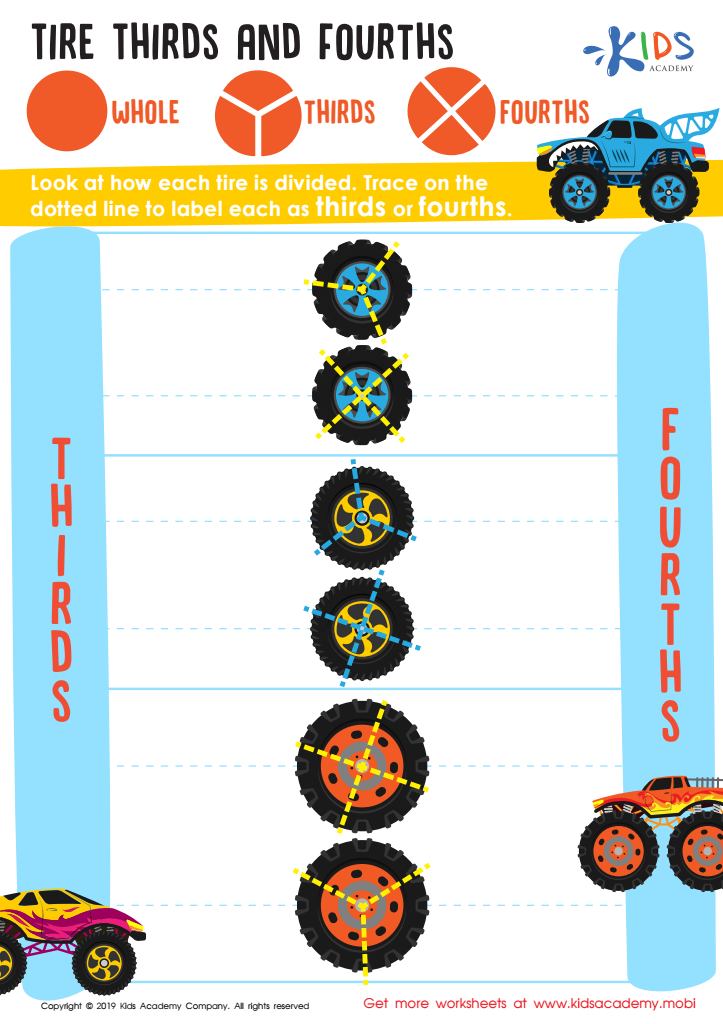
Tire Thirds and Fourths Worksheet
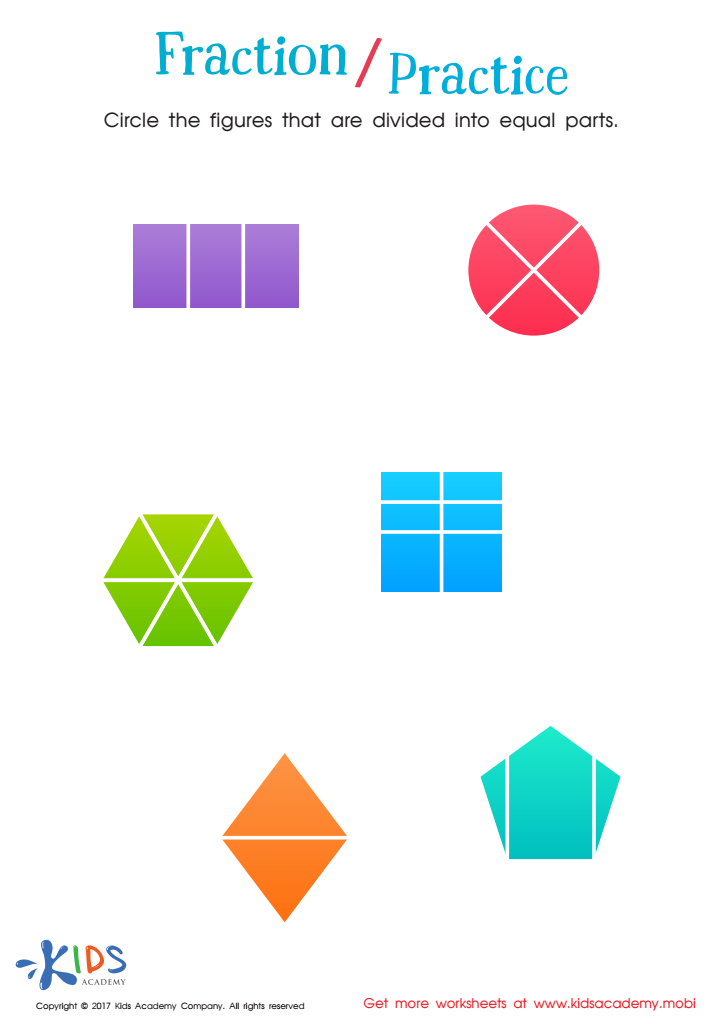
Fractions: Shapes Worksheet
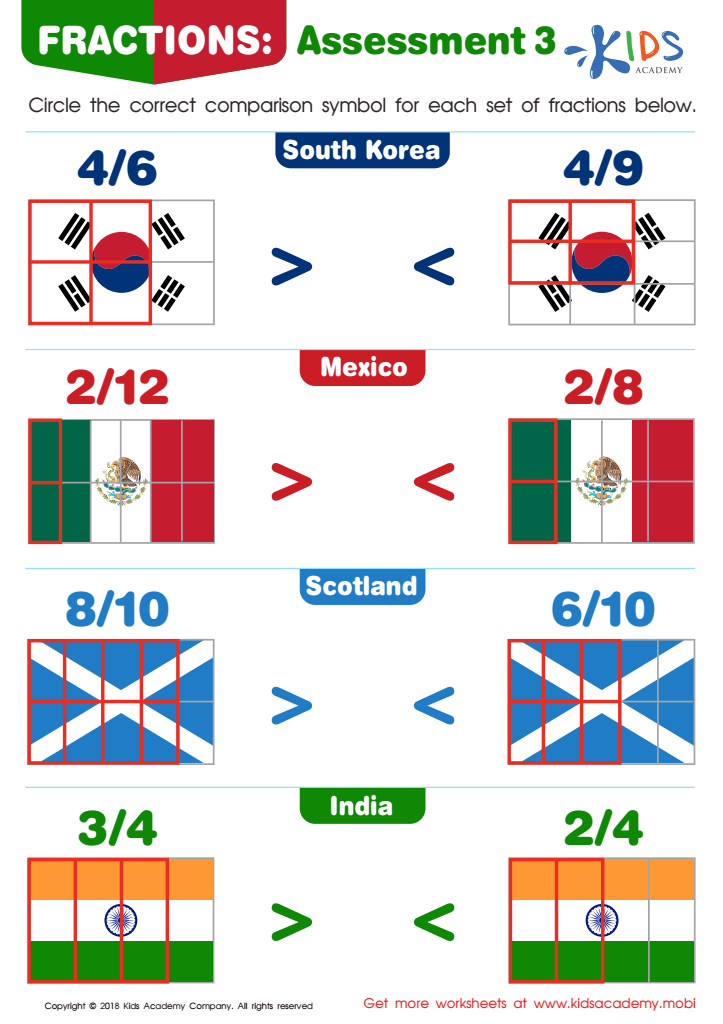
Fractions: Assessment 3 Worksheet
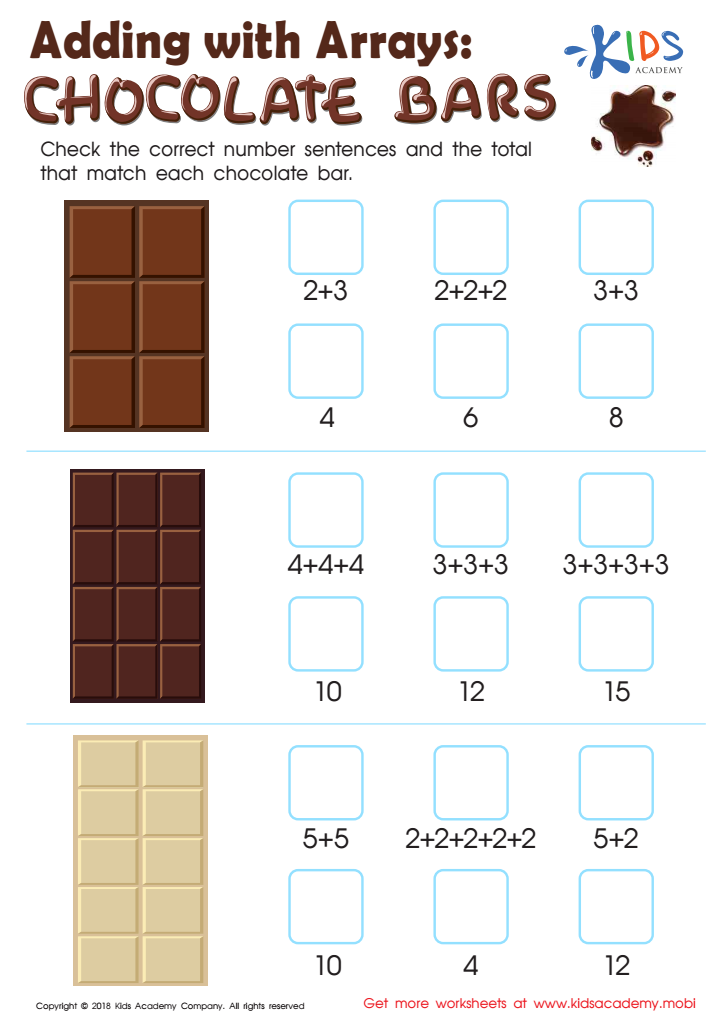
Adding with Arrays: Chocolate Bars Worksheet






Understanding how to compare fractions is an essential skill for children ages 5-8, setting a foundation for future mathematical concepts and everyday decision-making. When young learners grasp the idea of comparing fractions, they develop critical thinking and reasoning abilities. This skill helps them understand that fractions are parts of a whole and that these parts can be compared to one another, forming the basis of more advanced math topics such as decimals, percentages, and ratios.
Teachers and parents should prioritize comparing fractions as it enhances problem-solving skills. Children learn to decipher which fractions are greater, lesser, or equal, aiding their overall number sense and ability to judge proportions in real-life contexts, such as determining if one-half of a pizza is more than one-fourth of another.
Moreover, mastering fractions at an early age boosts confidence in tackling a range of mathematical disciplines, contributing to academic success. This understanding also plays a critical role in encouraging logical thinking, promoting persistence in working through complex problems, and fostering a positive attitude towards mathematics. Additionally, by comparing fractions, children improve their abilities to collaborate and communicate their thought processes, which are valuable lifelong skills. Therefore, both teachers and parents should actively support and emphasize the learning of fractions in early education.








