Comparing sizes Worksheets for Ages 5-8
12 filtered results
-
From - To
Discover an exciting range of comparing sizes worksheets designed for ages 5-8! These fun, educational printables help children develop critical thinking and math skills by engaging them in activities that require identifying, comparing, and measuring various objects. Each worksheet is thoughtfully crafted to make learning enjoyable and interactive, promoting a deeper understanding of concepts like bigger vs. smaller, taller vs. shorter, and heavier vs. lighter. Perfect for use in both classrooms and at home, our comparing sizes worksheets are excellent tools for fostering your child's mathematical abilities and preparing them for future academic success. Download now and start learning today!
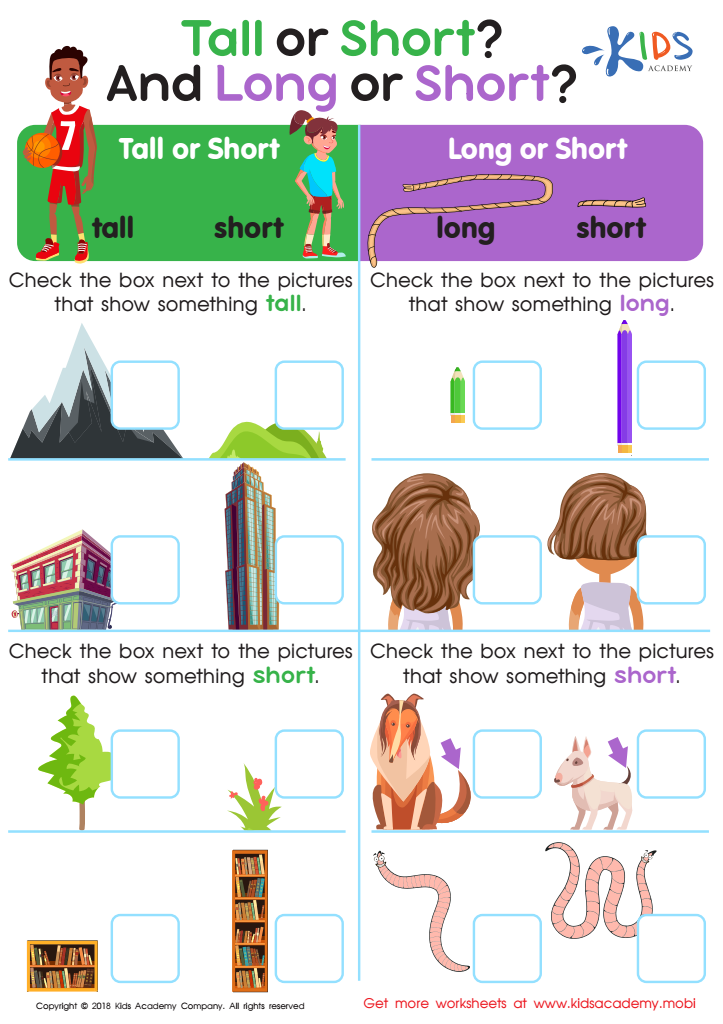
Tall or Short and Long or Short? Worksheet
 Assign to My Students
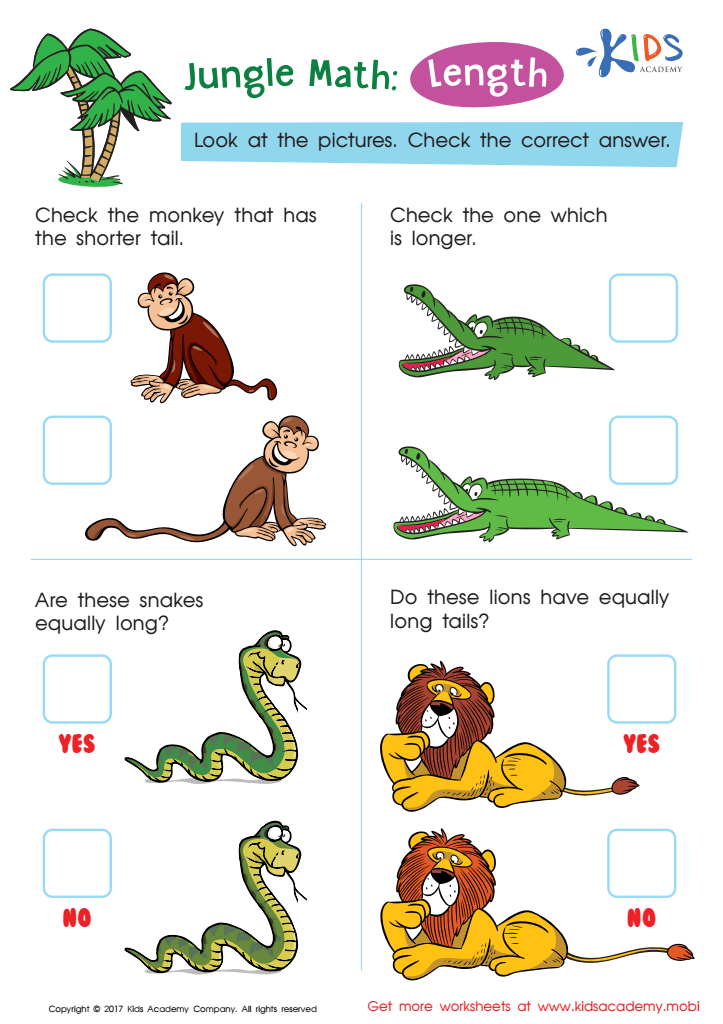
Which One Is Longer - Length Worksheet
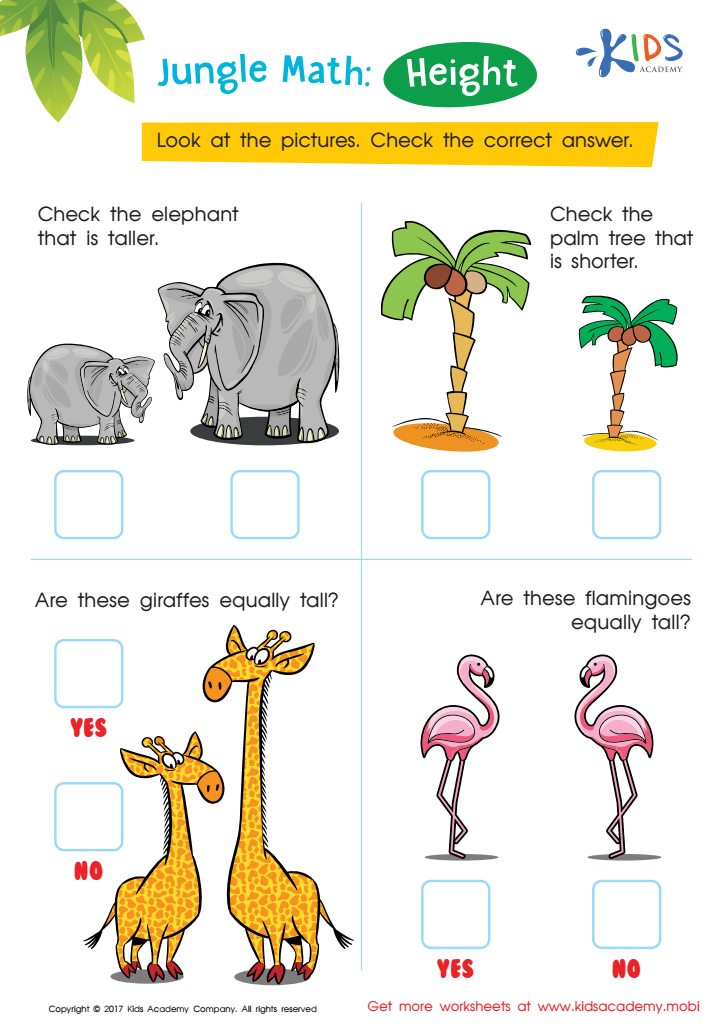
Which Is Taller Worksheet
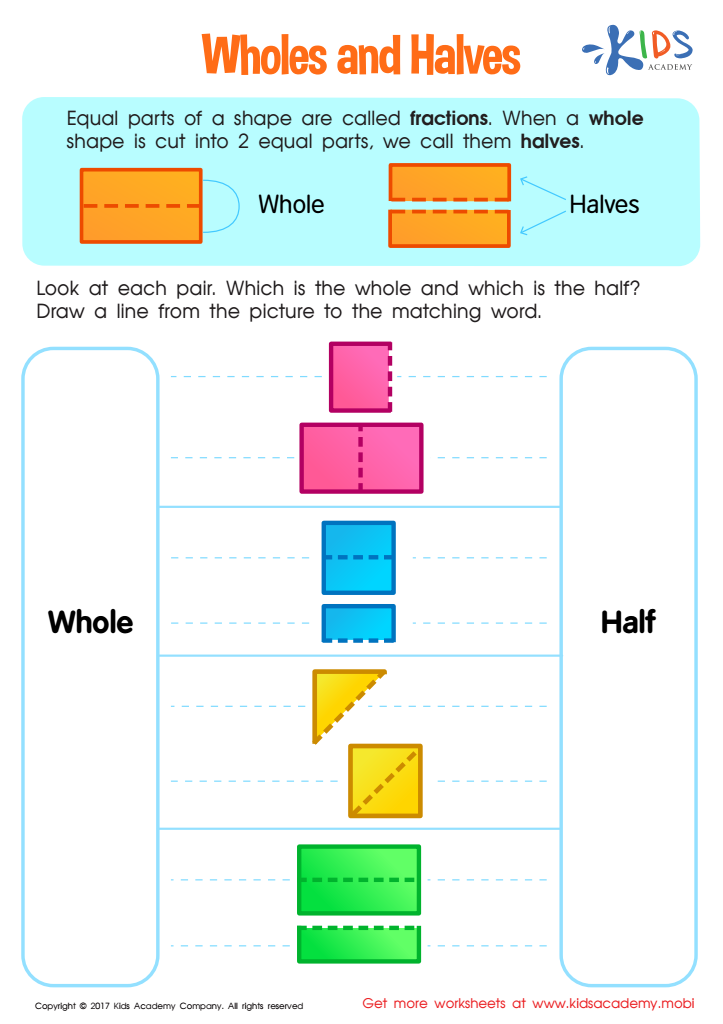
Wholes and Halves Worksheet
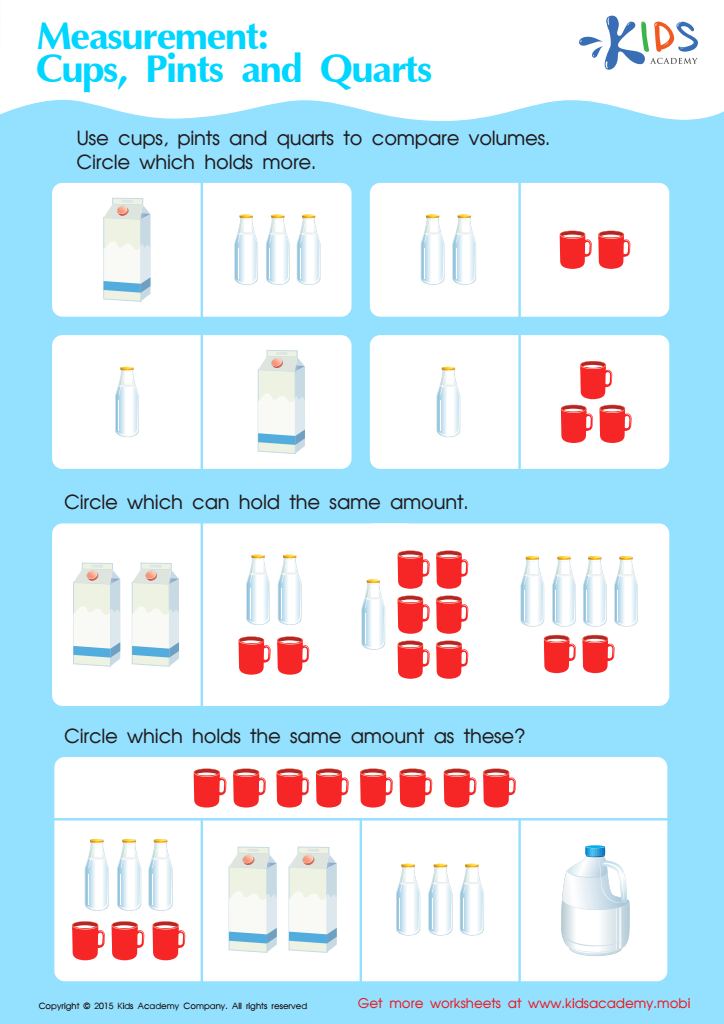
Measurement: Compare Volumes Worksheet
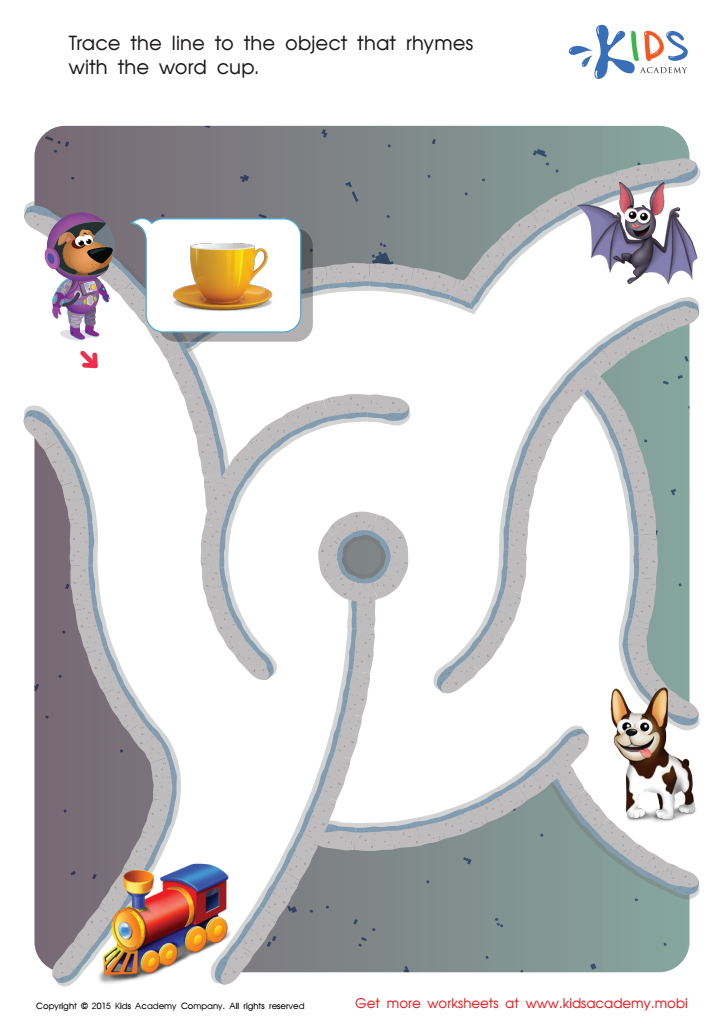
Cup Rhyming Words Worksheet
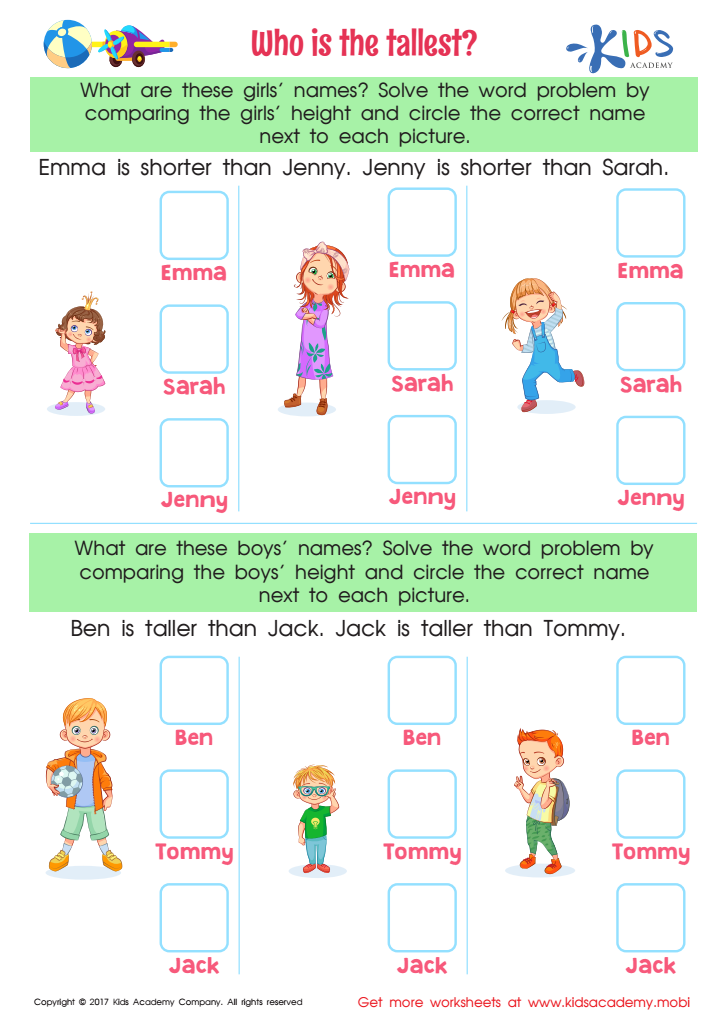
Who Tallest Printable
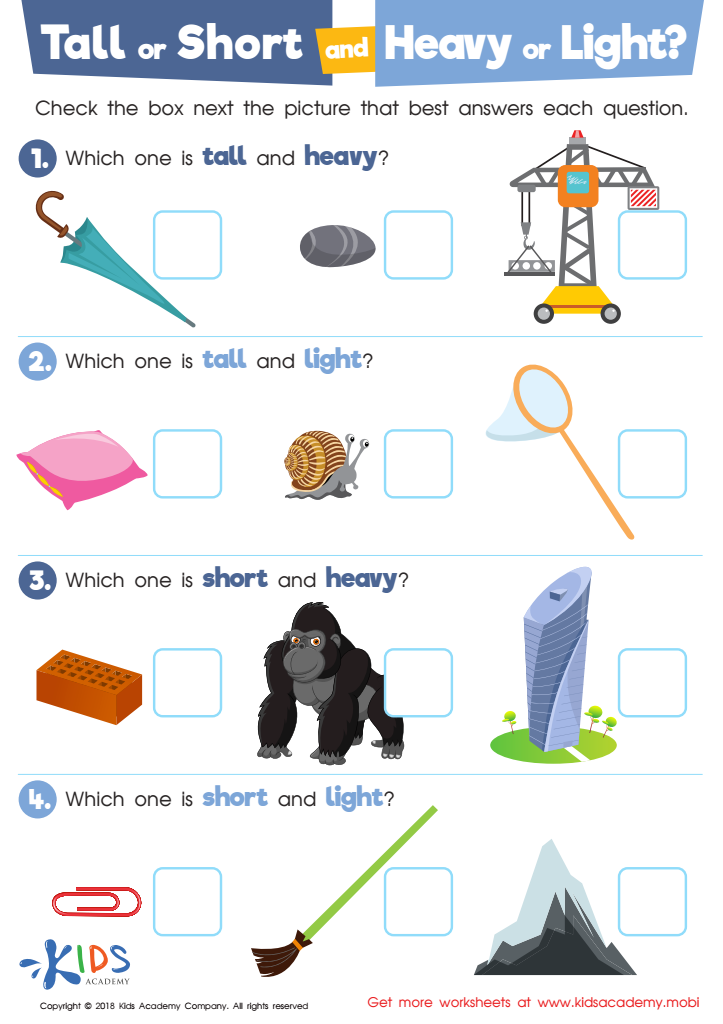
Tall or Short and Heavy or Light? Worksheet
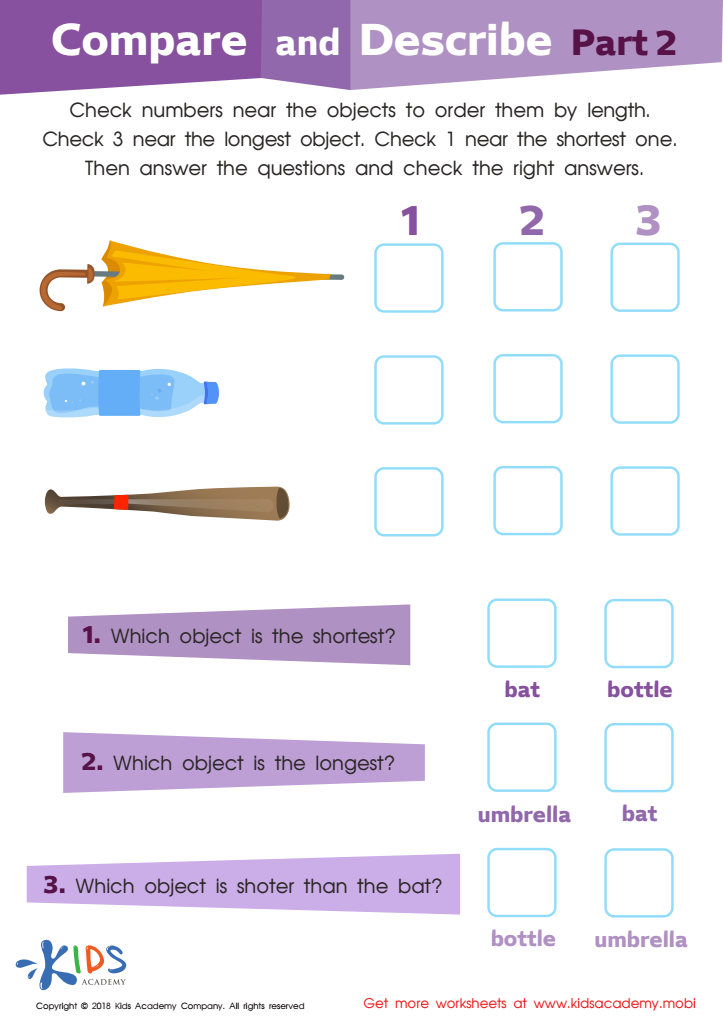
Compare and Describe: Part 2 Worksheet
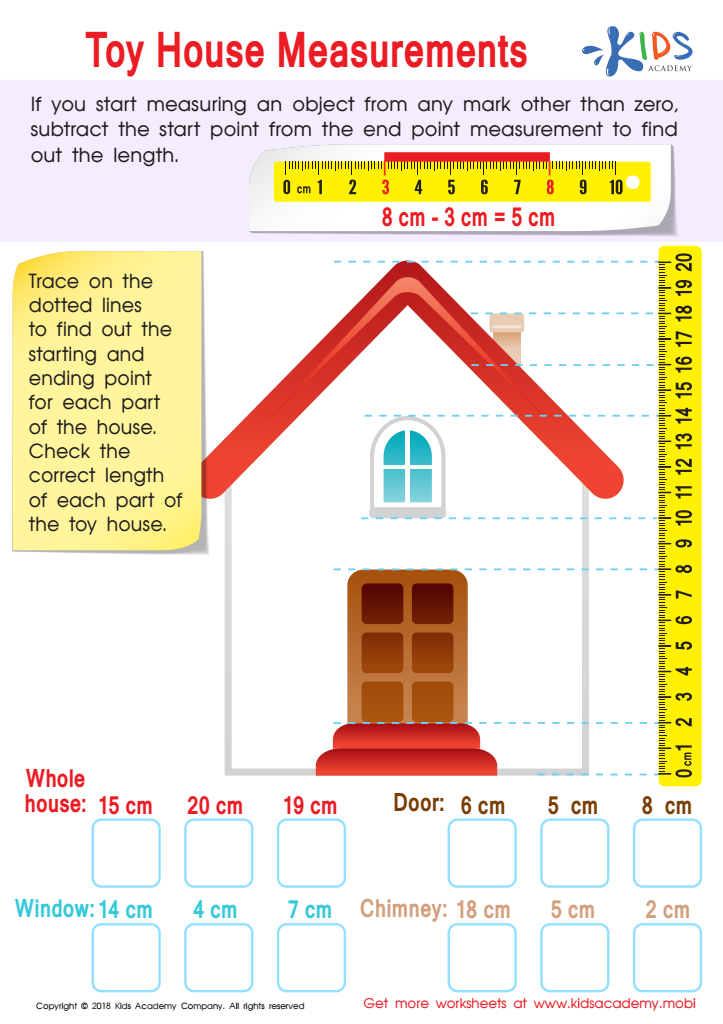
Toy House Measurements Worksheet
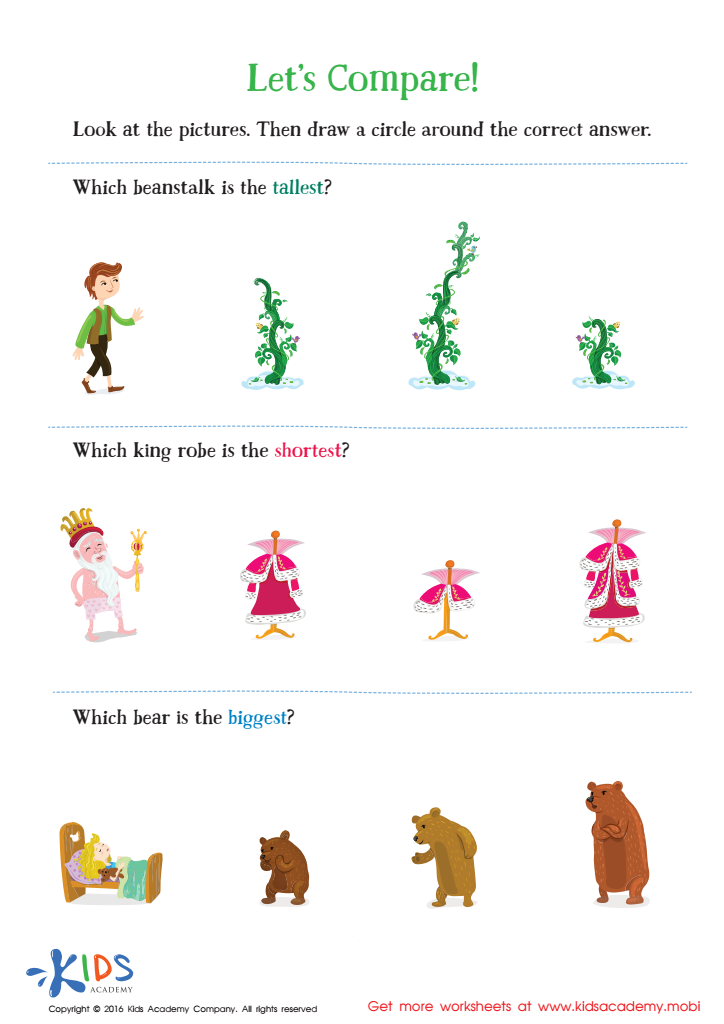
Fairy Tale Worksheet: Let's Compare





Parents and teachers should care about teaching children ages 5-8 to compare sizes because it is a foundational mathematical skill that extends beyond arithmetic into real-world applications. This essential skill helps children develop spatial awareness and cognitive abilities, which are crucial for problem-solving and logical thinking. By comparing sizes, children learn to observe, analyze, and describe the world around them, enhancing their vocabulary and communication skills.
Furthermore, understanding size differences lays the groundwork for more advanced mathematical concepts, including measurement, geometry, and algebra. For example, grasping why one object is larger or smaller than another helps children understand quantities and numerical relationships, such as greater than, less than, or equal to. This basic math vocabulary and concept recognition are vital in primary education and beyond.
Engagement in size comparisons also fosters critical social and life skills, such as following instructions, making predictions, and drawing conclusions. In hands-on activities, like sorting toys or building blocks, children practice cooperation, sharing, and taking turns, which promotes emotional and social development.
Overall, incorporating size comparison activities in early education prepares children for future academic success and nurtures a well-rounded, inquisitive mindset essential for lifelong learning.








