Unlock your child's potential with our "Developing Problem-Solving Skills Worksheets" designed specifically for ages 5-8! These engaging, interactive worksheets help young learners tackle challenges through exciting scenarios and creative exercises. Tailored to enhance critical thinking and decision-making capabilities, each worksheet encourages kids to explore various problem-solving strategies while making learning fun. Parents and educators will appreciate the structured approach that not only boosts cognitive skills but also fosters independence and confidence. Dive into a world of engaging tasks that inspire curiosity and creativity in children. Prepare your budding problem solvers for future academic success while they play and learn!

Check out this FREE "Developing problem-solving skills" Trial Lesson for age 5-8!

Compare Length

Favorites
With answer key
Interactive
  • 5-8
  • Developing problem-solving skills
Comparing with a Third Object Worksheet

Comparing with a Third Object Worksheet

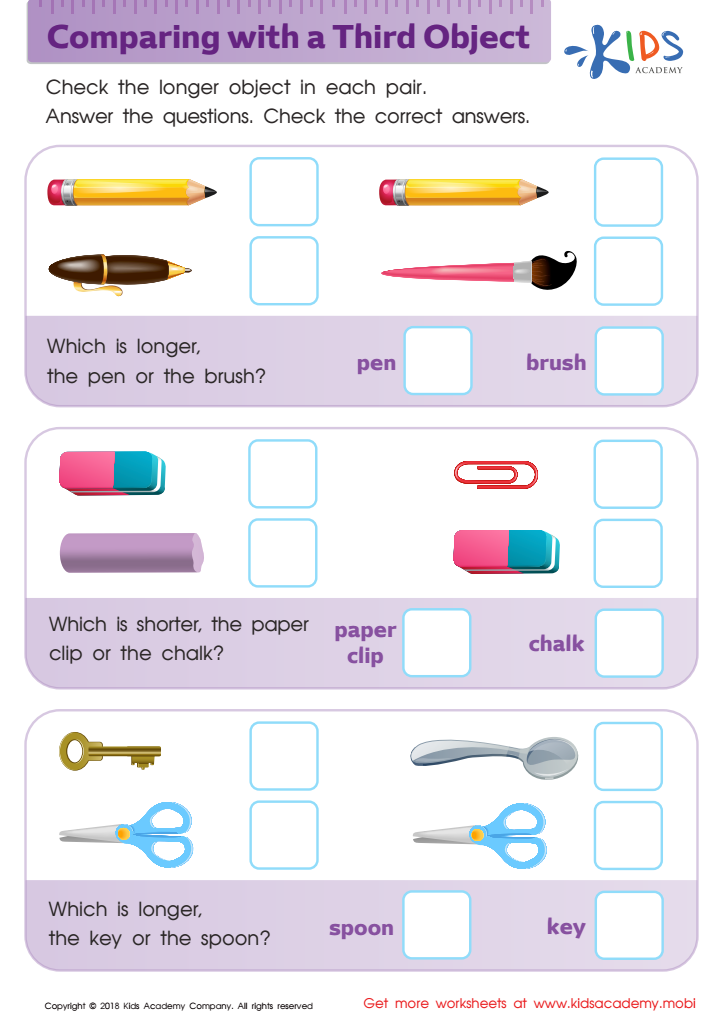
Help your child master measurement skills with this free downloadable math worksheet! Ask them to compare each pair of objects, checking the box for the longer one. Then, read the question and compare the objects across the pairs before ticking the box and continuing to the next group of pictures.
Comparing with a Third Object Worksheet
Worksheet
Mass Word Problems Worksheet

Mass Word Problems Worksheet

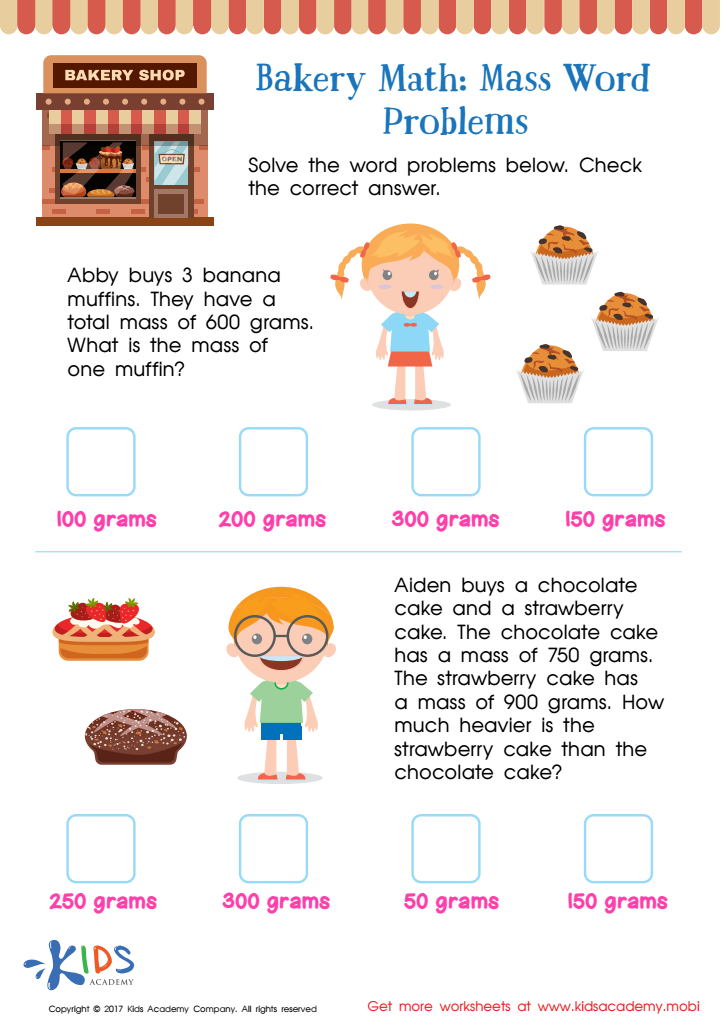
This worksheet challenges kids with tricky mass word problems. It offers valuable practice with grams. Through division and subtraction, children gain experience handling mass.
Mass Word Problems Worksheet
Worksheet
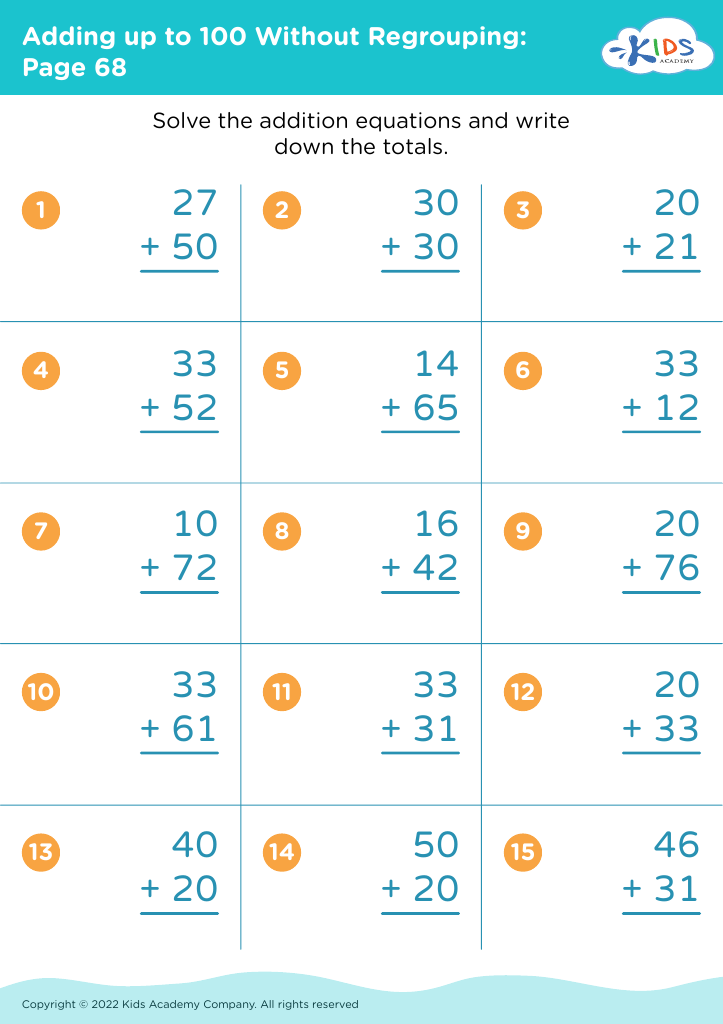
Adding up to 100 Without Regrouping: Page 68
Worksheet
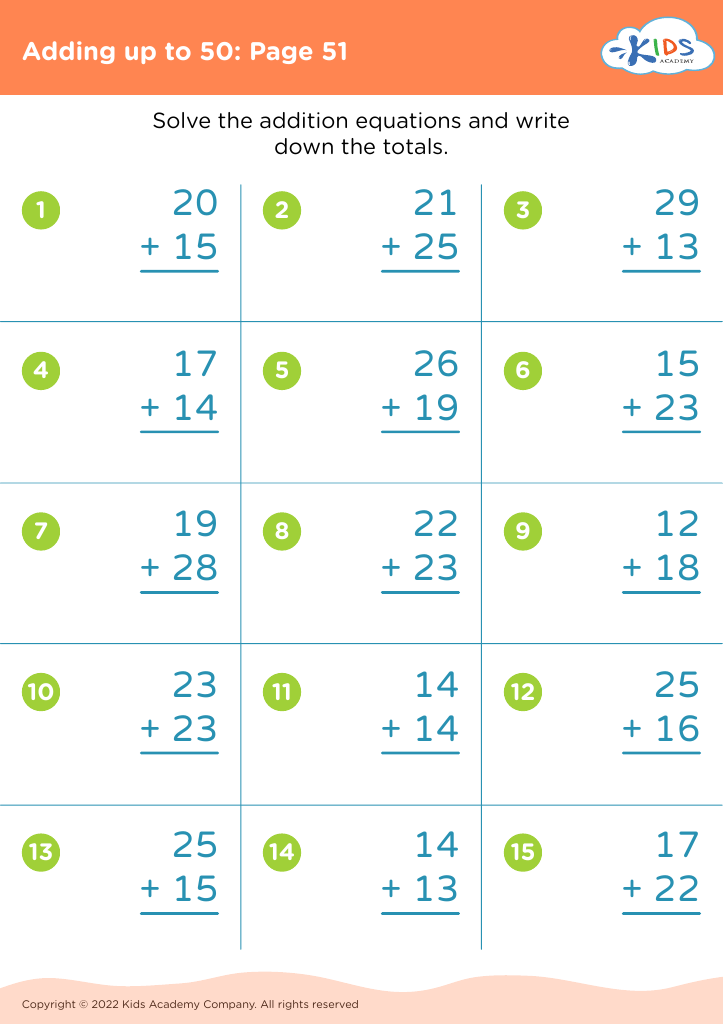
Adding up to 50: Page 51

Adding up to 50: Page 51

Adding up to 50: Page 51
Worksheet
Under the Sea Addition Worksheet

Under the Sea Addition Worksheet

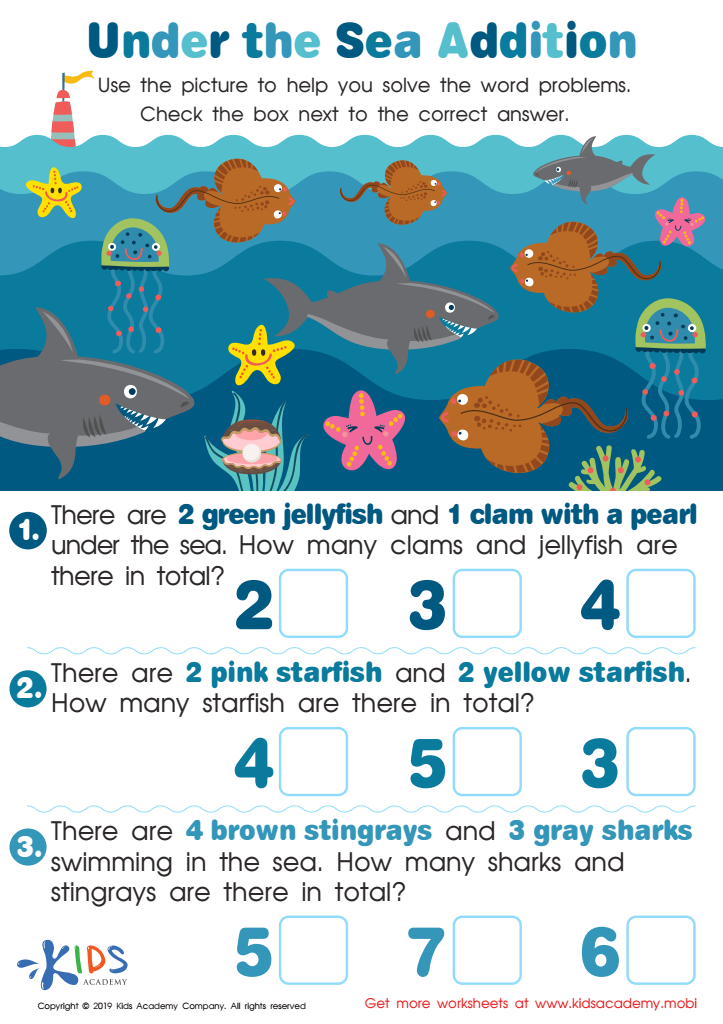
Ask your kids to identify undersea animals in a picture, then solve the word problems at the bottom with it! If they're into the nature channel or marine life, they'll love this worksheet. Check the box next to the correct answer for each one. 80 words
Under the Sea Addition Worksheet
Worksheet
Magnet Multiplication: 1-Step Word Problems Worksheet
Magnet Multiplication: 1-Step Word Problems Worksheet
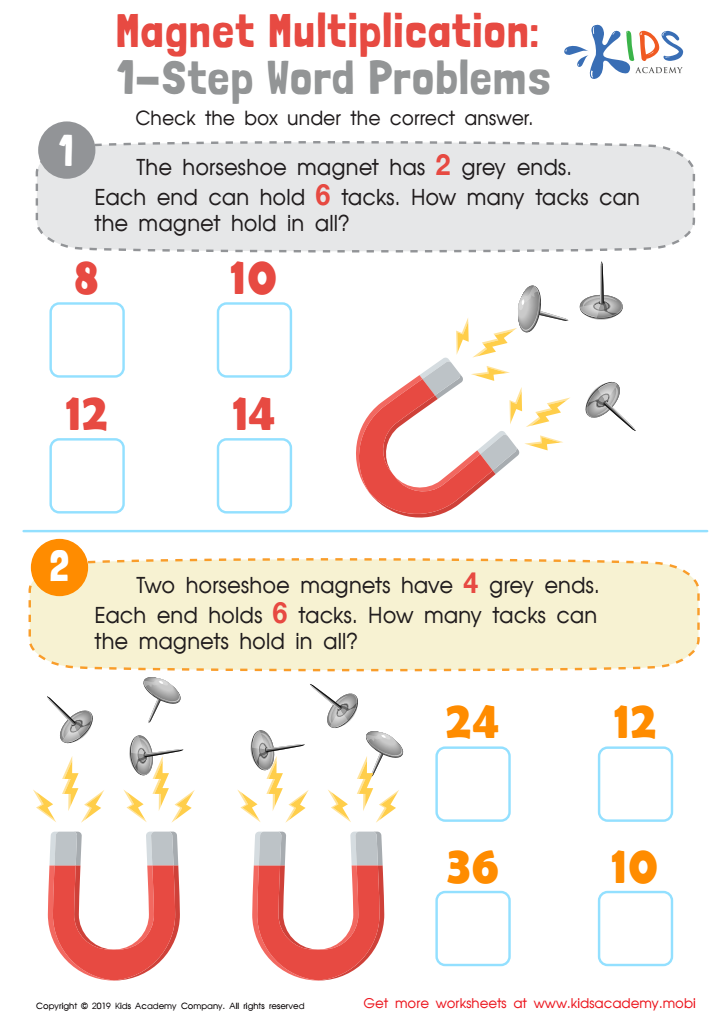
Refresh your students' knowledge about magnets with a simple math worksheet. Download the PDF with two word problems, along with pictures to help. Read the problems to the class, and help them identify the correct answer by checking the box. This activity will help them harness their science knowledge and practice their math skills.
Magnet Multiplication: 1-Step Word Problems Worksheet
Worksheet
Adding Up to 5 in the Forest: Page 26
Worksheet
Adding up to 100 with Regrouping: Page 70
Worksheet
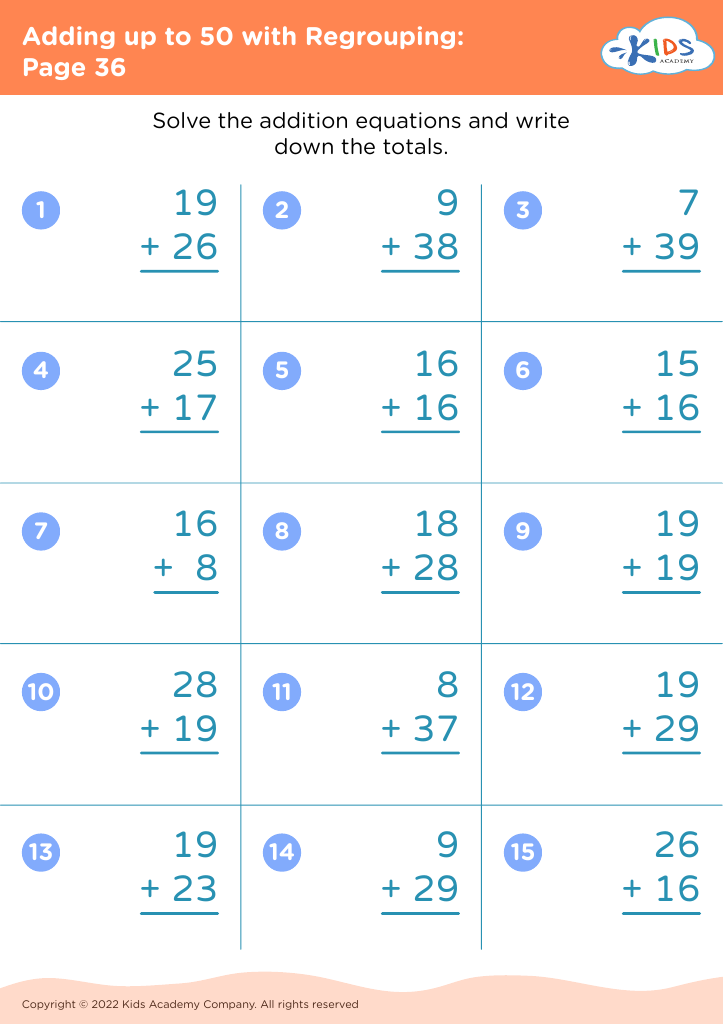
Adding up to 50 with Regrouping: Page 36
Worksheet
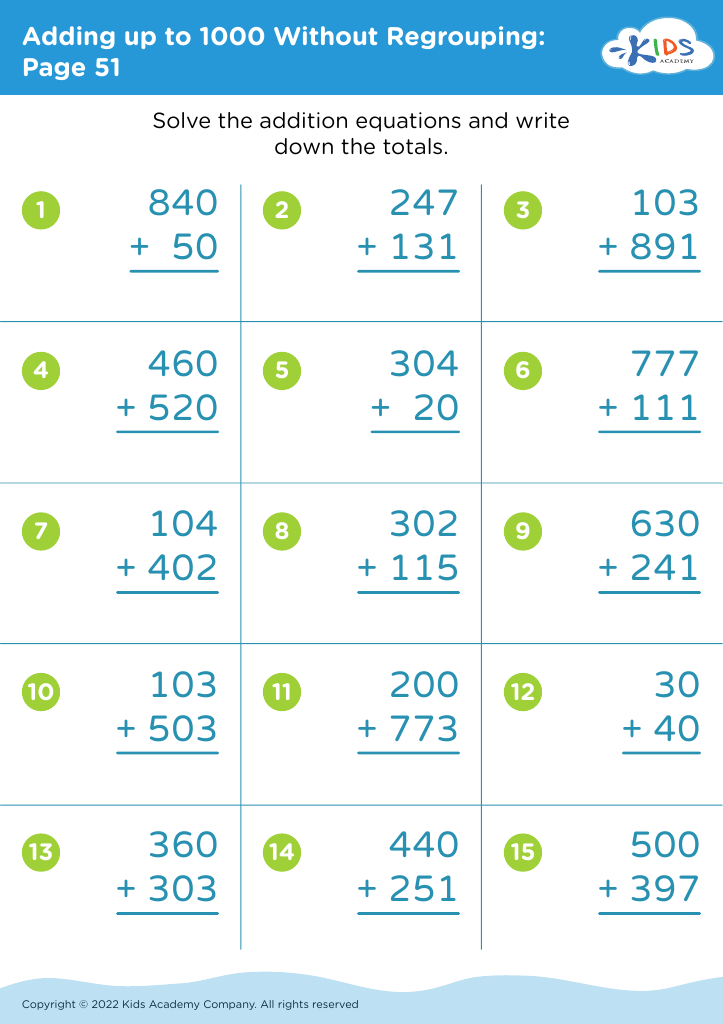
Adding up to 1000 Without Regrouping: Page 51
Worksheet


Developing problem-solving skills in children aged 5-8 is crucial for their cognitive and emotional development. At this age, children are eager to explore, experiment, and understand their world. Supporting their ability to solve problems fosters critical thinking, enabling them to analyze situations, evaluate options, and make informed decisions. These skills not only aid academic success, as they apply to subjects like math and science, but also enhance social skills.

Children often face conflicts with peers or challenges in understanding tasks; robust problem-solving skills equip them to navigate these situations effectively. When parents and teachers encourage problem-solving, they also foster perseverance and resilience. Children learn that mistakes are part of the learning process, making them more adaptive and open-minded.

Moreover, in our rapidly changing world, being able to think critically and approach problems creatively is invaluable. Encouraging young learners to think outside the box helps cultivate innovation and independence. Ultimately, when parents and teachers prioritize problem-solving skills, they are investing in a generation equipped to face challenges with confidence, empathy, and a strong sense of agency.