
Emotional recognition Worksheets for Ages 5-8
3 filtered results
Difficulty Level
Grade
Age
-
From - To
Subject
Activity
Standards
Enhance your child's emotional intelligence with our engaging and interactive Emotional Recognition Worksheets designed for ages 5-8. Through fun activities, these worksheets help young learners identify and understand various emotions, fostering empathy and social skills. Each printable resource encourages children to recognize feelings in themselves and others, promoting healthy communication and emotional expression. With colorful illustrations and age-appropriate scenarios, kids will enjoy exploring the complexities of emotions while developing critical life skills. Perfect for homeschooling, classroom settings, or supplemental learning, our emotional recognition worksheets pave the way for confident, emotionally aware children ready to navigate the world around them.
Favorites
With answer key
Interactive
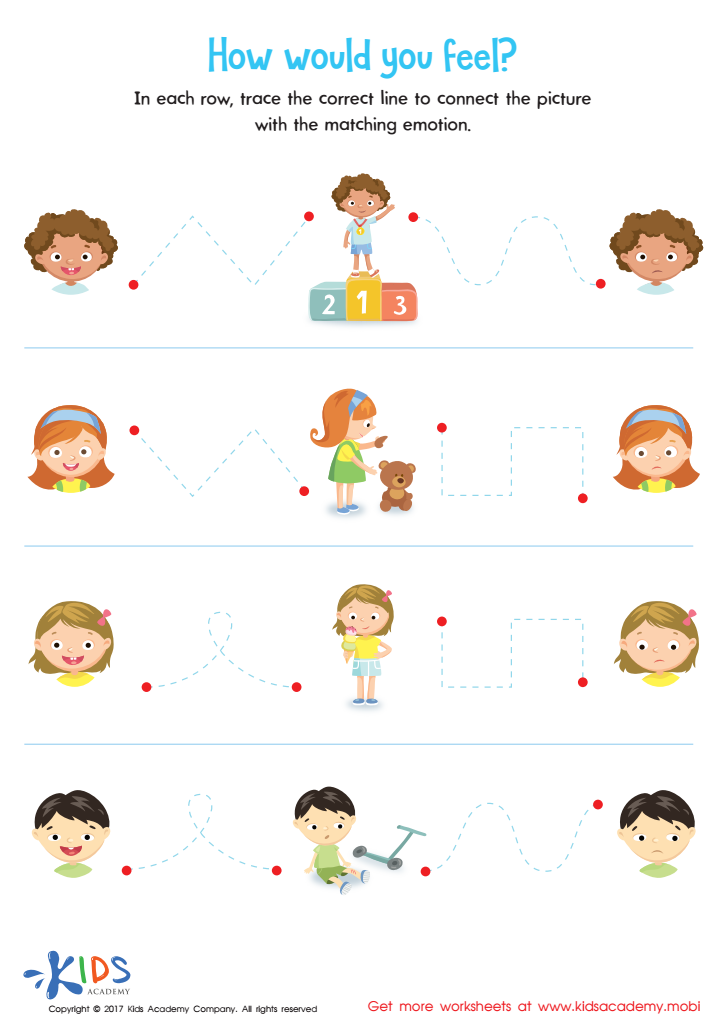
Feelings and Emotions Worksheet
Kids must learn how to deal with situations and handle their own emotions. This worksheet helps them practice empathy and resilience, making them more self-aware and confident. It also helps them to relate their life experiences to common disappointments and develop coping mechanisms.
 Assign to My Students
Feelings and Emotions Worksheet
Worksheet
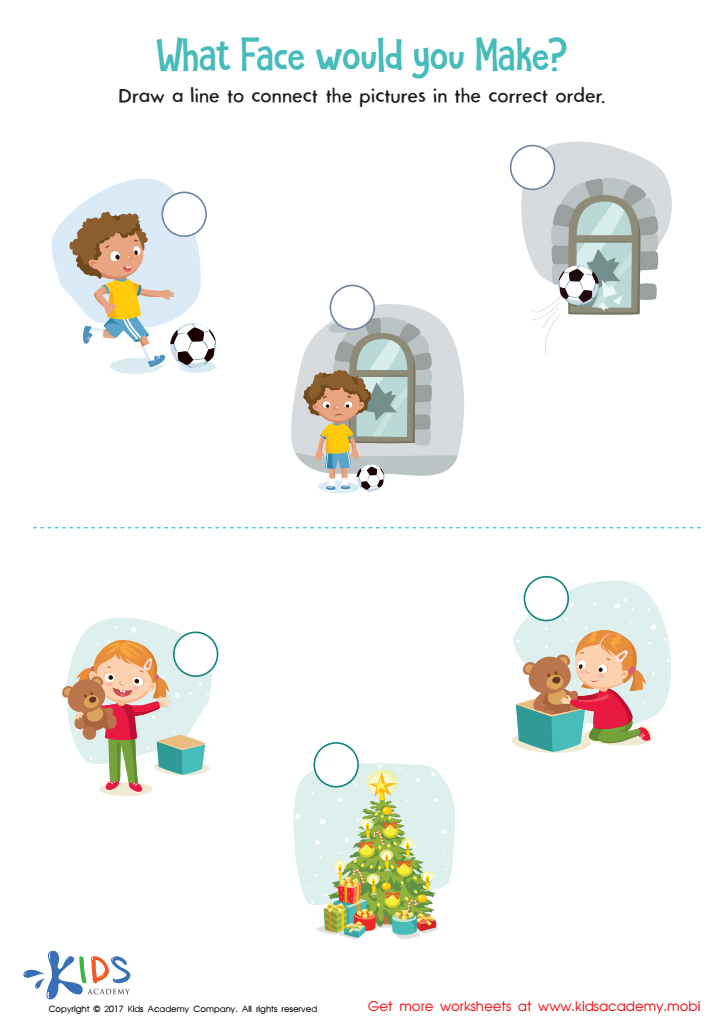
Understanding Emotions Worksheet
This worksheet helps children build social and emotional skills. As they complete it, they imagine themselves in the boy's situation, practicing empathy. It's an engaging and meaningful way to learn.
Understanding Emotions Worksheet
Worksheet
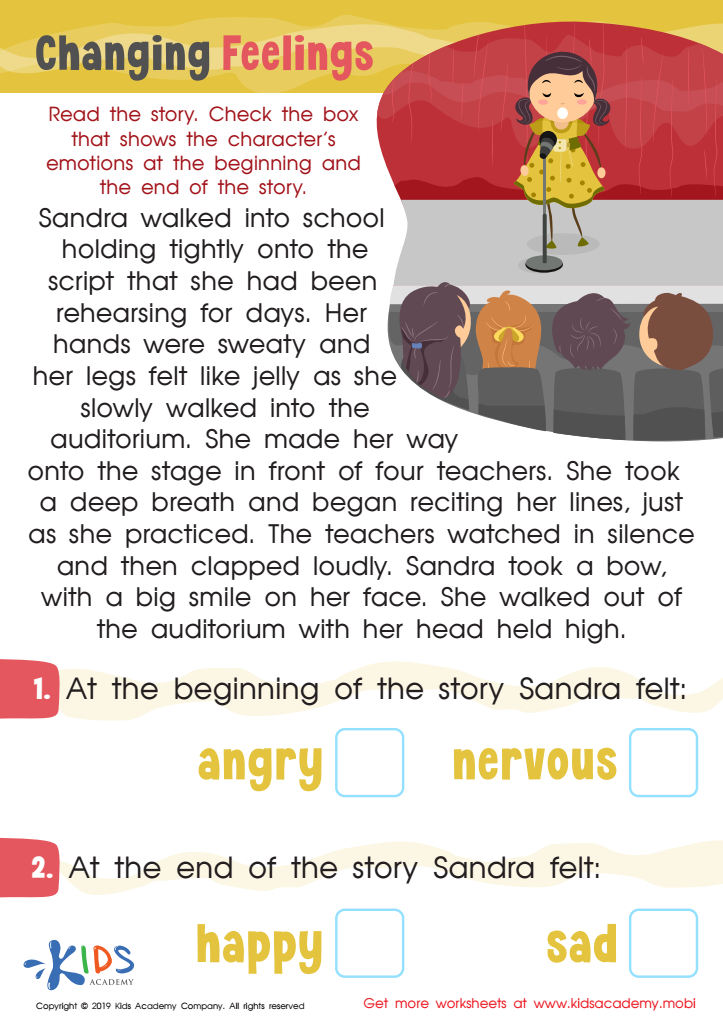
Changing Feelings Worksheet
Help your kids practice reading skills with this exercise. Ask them to read the short passage, then check the boxes showing the character's emotions at the start and end. This will help them improve their reading and understanding.
Changing Feelings Worksheet
Worksheet
Join Kids Academy for Free
Who is primarily going to use this learning content?







Emotional recognition is crucial for children aged 5-8 as it lays the foundation for their social and emotional development. During these formative years, children begin to navigate their own feelings and those of others. Teaching them to recognize emotions helps foster empathy, resilience, and effective peer interactions.
When parents and teachers prioritize emotional recognition, they equip children with essential tools for identifying and expressing their feelings. This skill enables them to manage conflicts more constructively, reduces bullying, and promotes positive relationships. Young children often struggle to articulate their emotions; hence, helping them recognize facial cues and body language can enhance their communication skills significantly.
Additionally, emotional recognition promotes mental health. Understanding their own emotions can empower children to seek help when needed, reducing the risk of anxiety and depression. By creating an environment that supports emotional literacy, parents and teachers cultivate a safe space where children feel valued and understood.
In summary, fostering emotional recognition in young children not only enhances their interpersonal skills but also contributes to their overall well-being, enabling them to thrive academically and socially. For these reasons, it is essential for parents and educators to actively engage in promoting this vital skill.








