
Fine motor skills (drawing lines) Worksheets for Ages 5-8
7 filtered results
Difficulty Level
Grade
Age
-
From - To
Subject
Activity
Standards
Enhance your child's fine motor skills with our engaging "Drawing Lines" worksheets designed for ages 5-8. These colorful and interactive printables provide fun exercises that help young learners practice tracing, drawing, and connecting lines, promoting hand-eye coordination and control. As children navigate through various shapes and patterns, they develop essential early writing skills. Our worksheets are aligned with educational standards, making learning enjoyable at home or in the classroom. Perfect for parents and teachers looking to support skill development in a playful way. Explore our collection and empower your child’s creativity and dexterity today!
Favorites
With answer key
Interactive
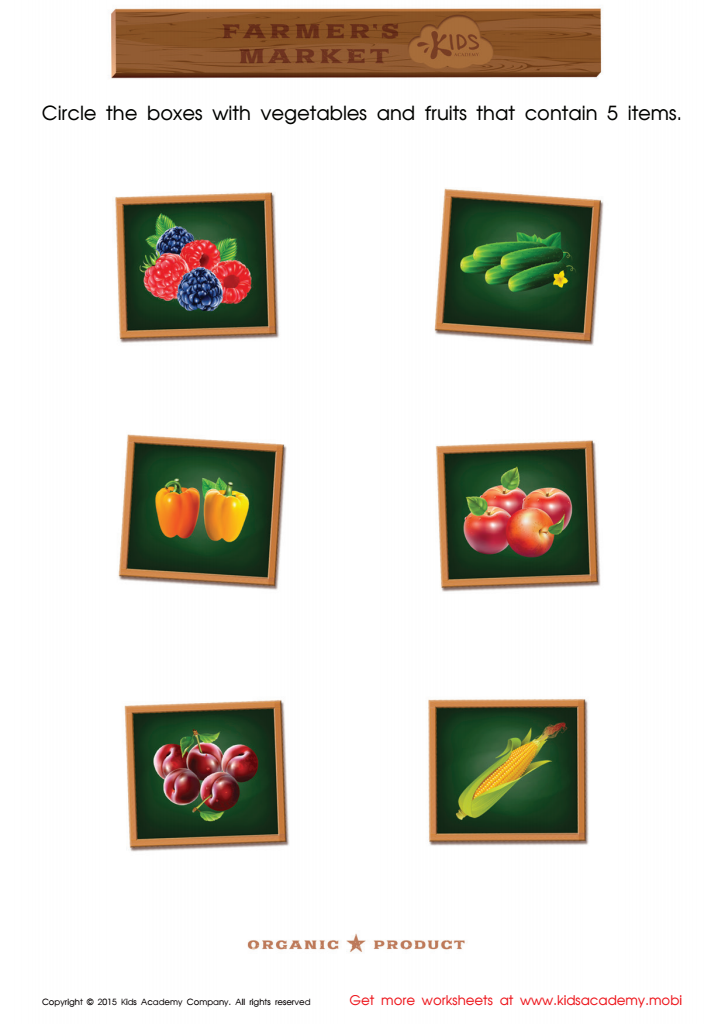
Count and Match Vegetables 1 – 7 Math Worksheet
Print this bright math worksheet from Kids Academy and give your child a fun way to enhance their counting skills. Based on Singapore Math, the colourful pictures make it easy for children to comprehend math. Get additional free worksheets here!
 Assign to My Students
Count and Match Vegetables 1 – 7 Math Worksheet
Worksheet
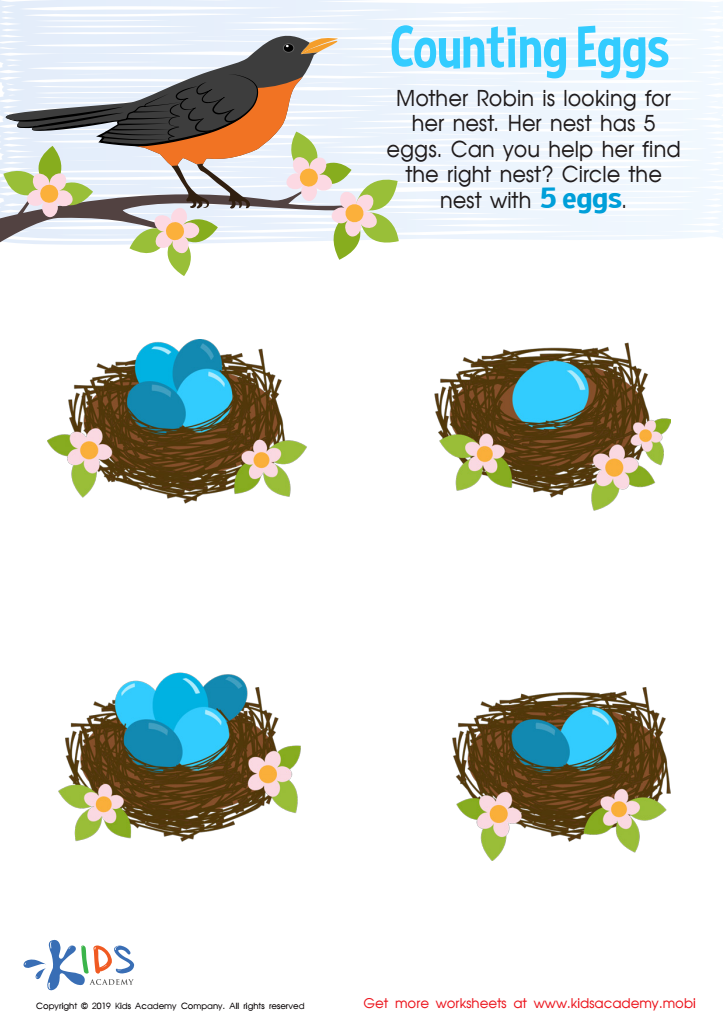
Counting Eggs Worksheet
Help the Mother bird find her nest! Show your kids this printout, have them point at the bird and the nests. Ask them to count the eggs in each nest carefully. Finally, help her by circling the one with 5 eggs.
Counting Eggs Worksheet
Worksheet
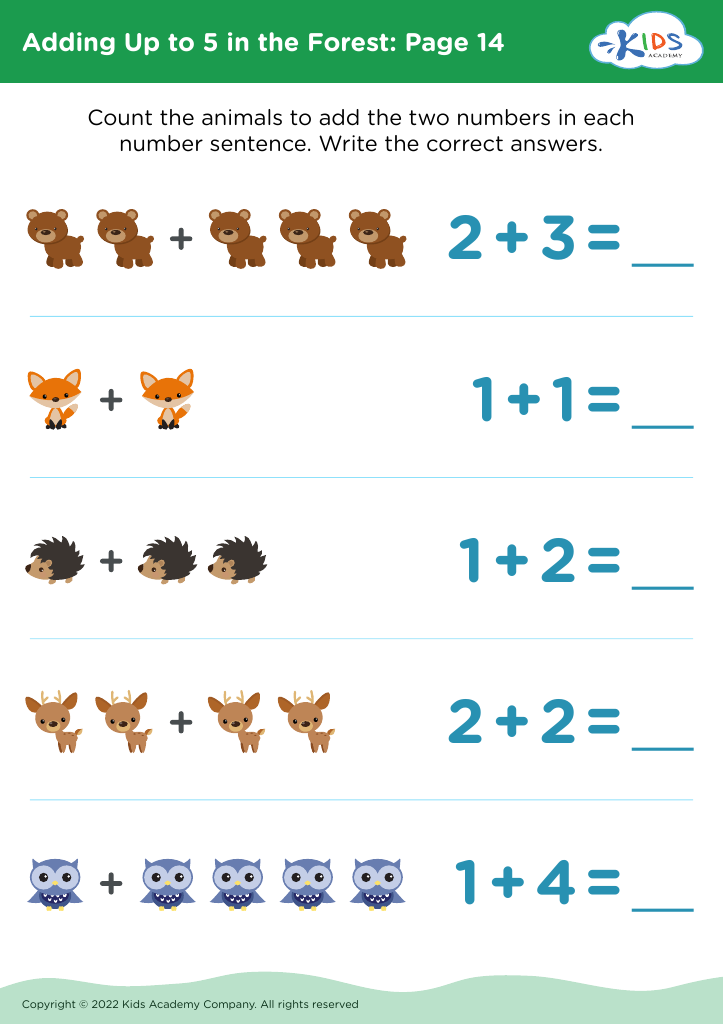
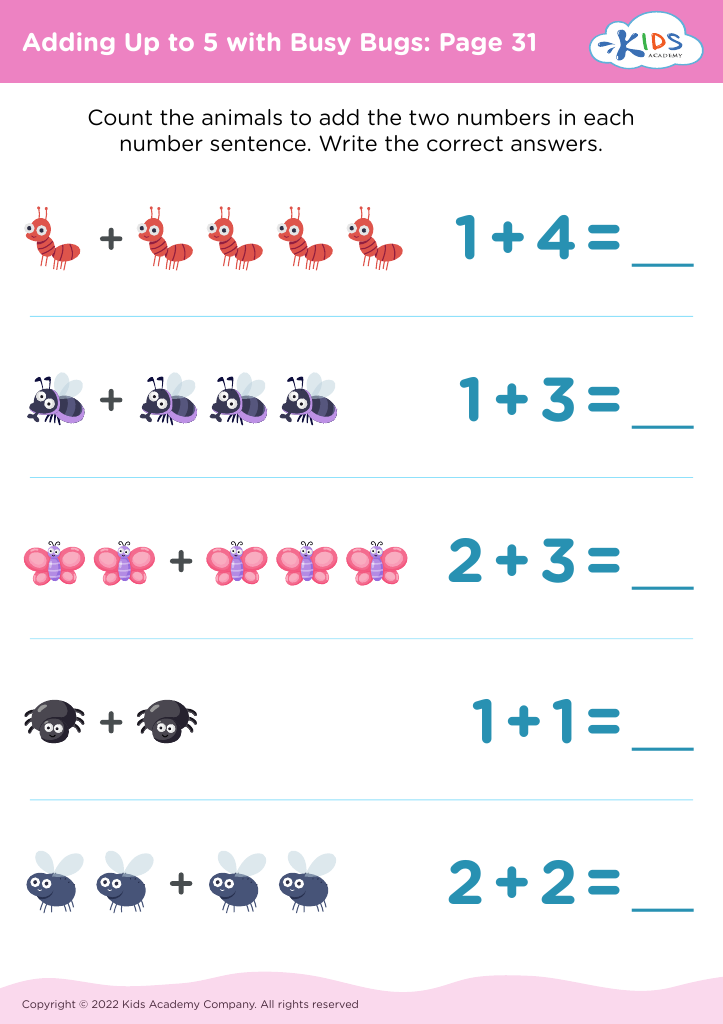
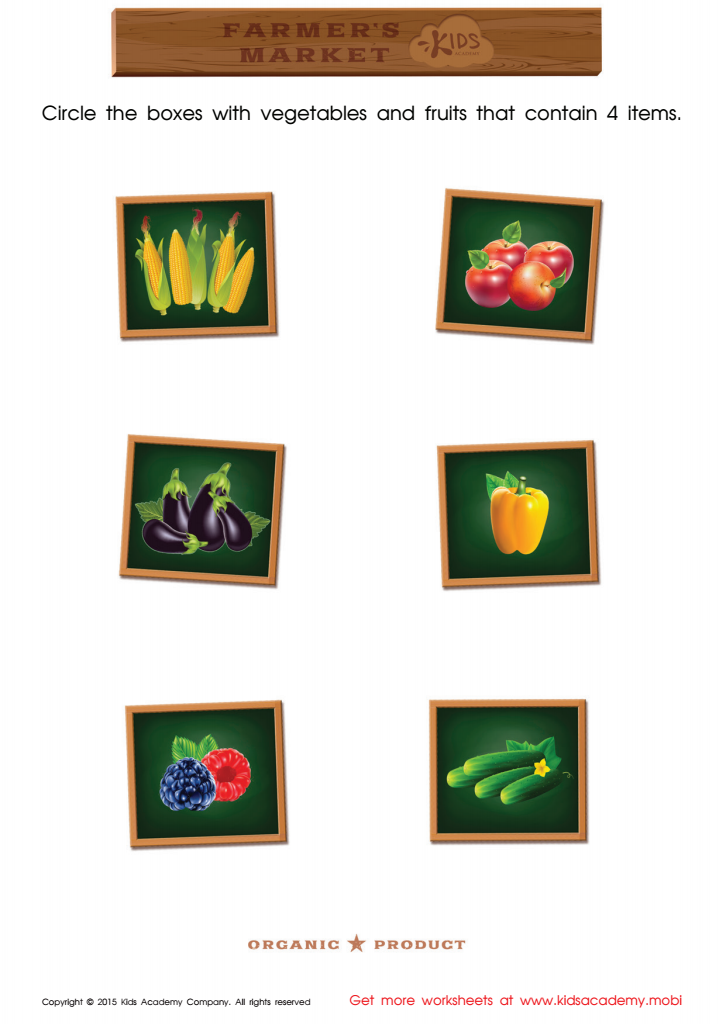
Count and Match Vegetables 2 – 8 Math Worksheet
Download this fun, colorful math worksheet from Kids Academy and help your kid improve their counting skills. Match the boxes to the same number of vegetables, using the pictures to visualize the problem. Get more free printables from Kids Academy by topic.
Count and Match Vegetables 2 – 8 Math Worksheet
Worksheet
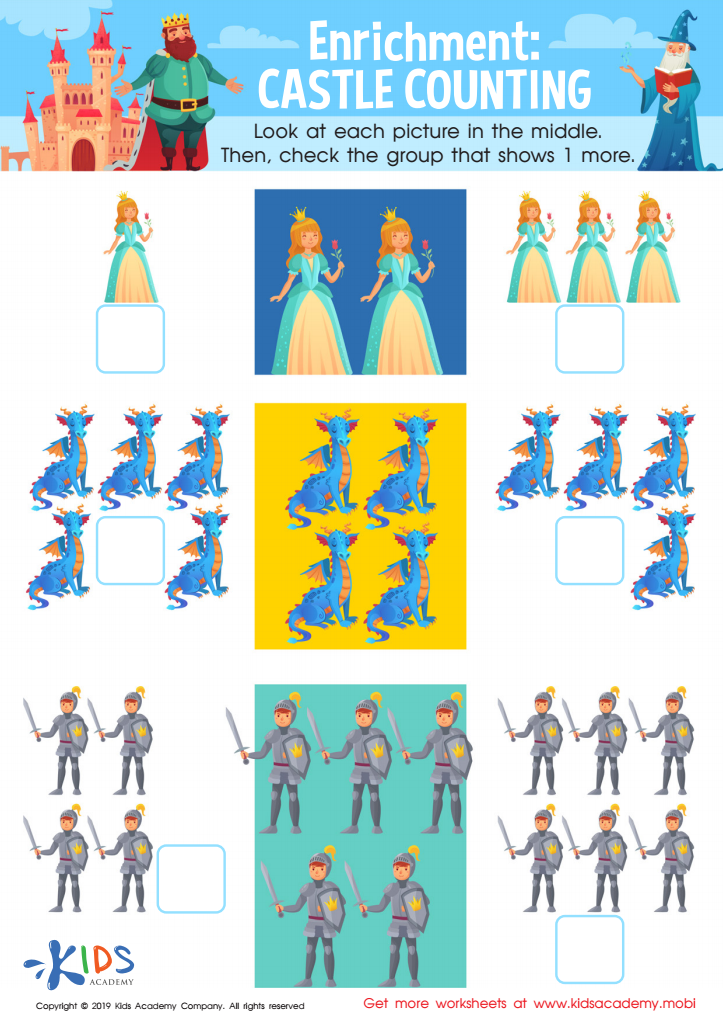
Enrichment: Castle Counting Worksheet
Help your kids learn to count. Start with easy counting of numbers as high as possible. Use the pictures in this printout. Point to the middle one, help them identify it and then count one more than it. Do this to help them get ready for more difficult math concepts like addition, subtraction and multiplication.
Enrichment: Castle Counting Worksheet
Worksheet
Join Kids Academy for Free
Who is primarily going to use this learning content?








Fine motor skills are crucial for children aged 5-8, as they significantly impact a child’s overall development and academic success. These skills encompass the ability to use small muscles in the hands and fingers for tasks that involve coordination, such as drawing lines, cutting with scissors, and writing. Mastery of fine motor skills enhances a child’s ability to engage in various activities that contribute to their learning and creativity.
Drawing lines, in particular, plays an essential role in developing hand-eye coordination, control, and precision. These skills are foundational not only for writing but also for artistic expression, problem-solving, and everyday tasks like buttoning shirts or tying shoelaces. When parents and teachers encourage drawing and similar activities, they boost students’ confidence and increase their willingness to participate in academic tasks.
Furthermore, strong fine motor skills have been linked to improved literacy and number skills, as children often need to write letters and numbers accurately. Supporting the development of fine motor skills also prepares children for future educational experiences, paving the way for more complex tasks later on. Therefore, teachers and parents play a vital role in nurturing these skills to maximize every child’s potential.








