Fraction simplification Worksheets for Ages 5-8
74 filtered results
-
From - To
Discover our engaging Fraction Simplification Worksheets tailored for children ages 5-8. These worksheets provide a fun and interactive way for young learners to grasp the concept of simplifying fractions. With colorful visuals and age-appropriate exercises, your child will build foundational math skills while enhancing their confidence in handling fractions. Each worksheet is designed to cater to varying skill levels, ensuring that every child can progress at their own pace. Perfect for at-home learning or classroom activities, our resources include step-by-step examples and practice problems. Help your child master fraction simplification in an enjoyable way with our thoughtfully crafted worksheets!
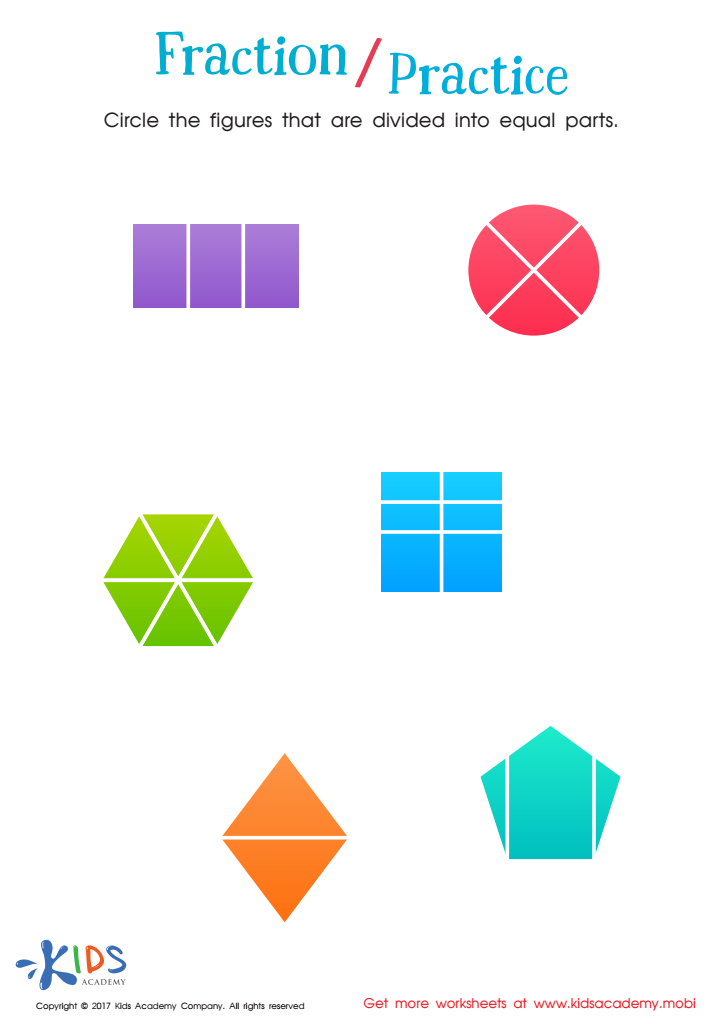
Fractions: Shapes Worksheet
 Assign to My Students
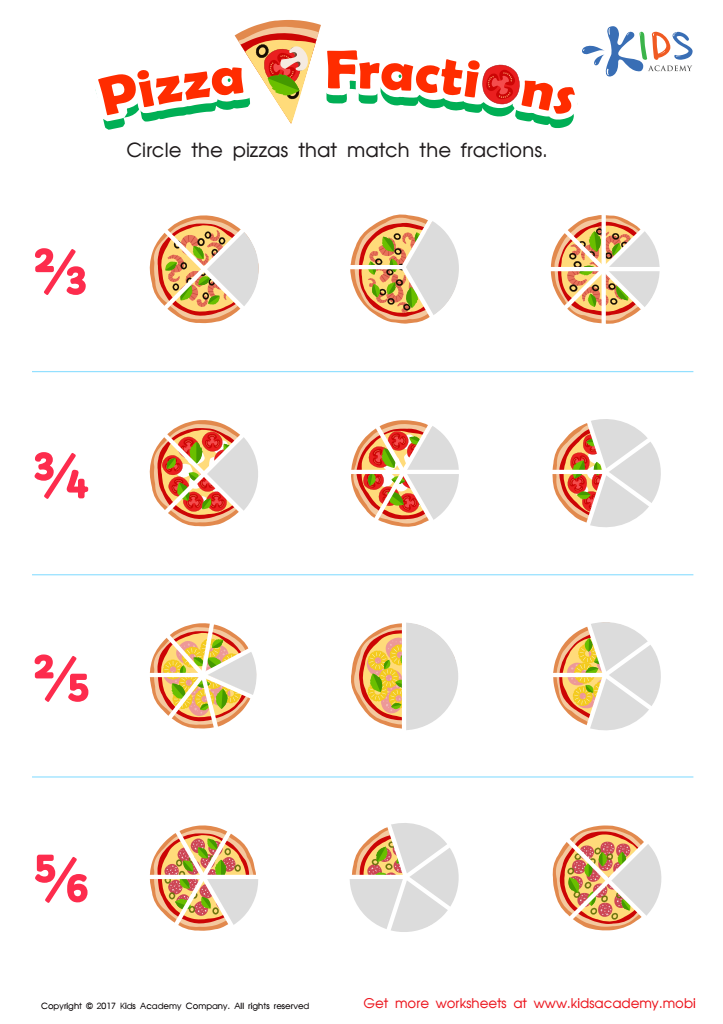
Fractions: Pizza Printable
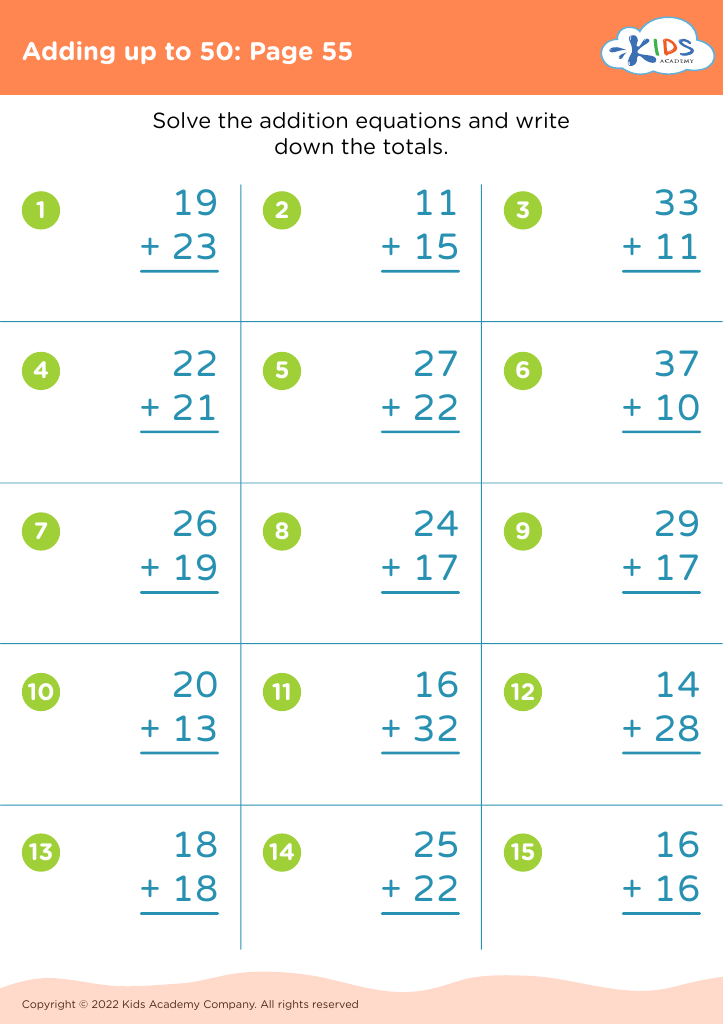
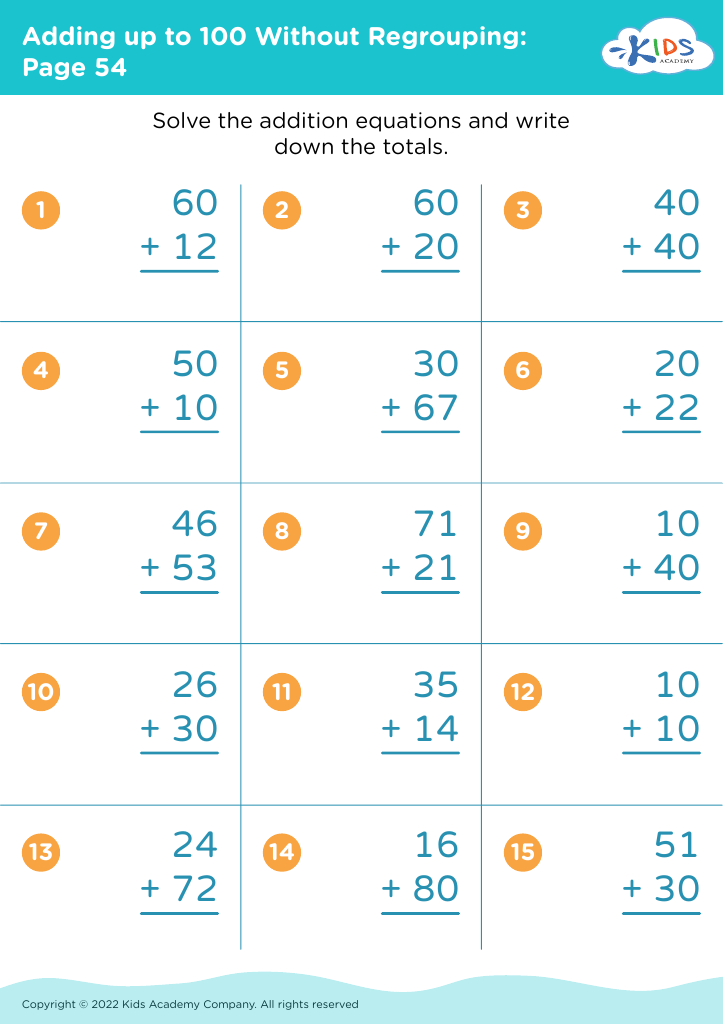
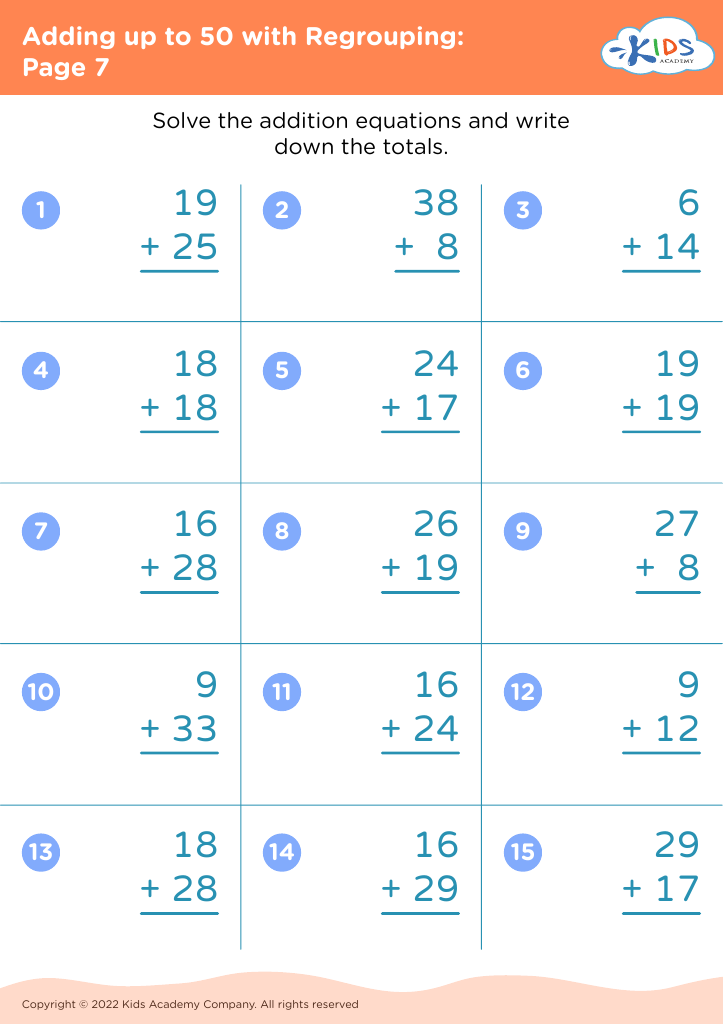






Fraction simplification is a crucial skill for children aged 5-8 as it lays the foundation for their understanding of mathematics. At this age, students begin to encounter fractions in various contexts, such as measuring, sharing, or understanding parts of a whole. Learning to simplify fractions helps them grasp the concept of equivalence—that two different fractions can represent the same quantity. This skill promotes critical thinking and enhances problem-solving abilities.
Parents and teachers should care about fraction simplification because it encourages children to engage with numbers in a meaningful way, fostering a love for math. Simplifying fractions also aids in developing stronger numeracy skills, which are essential not only in advanced math but also in everyday life scenarios such as cooking, budgeting, or shopping.
In addition, as children learn to recognize patterns and relationships among numbers, they build a solid foundation for future mathematical concepts, including addition, subtraction, and even algebra. By emphasizing fraction simplification during these formative years, educators and parents can help children develop confidence in their mathematical abilities, paving the way for academic success in the years to come. Establishing this understanding early will have lasting benefits in their overall education.








