Graph interpretation Worksheets for Ages 5-8
5 filtered results
-
From - To
Discover our engaging graph interpretation worksheets designed specifically for children aged 5-8! These resources help young learners understand basic graph concepts, enhancing their visual literacy and analytical skills. Each worksheet features colorful visuals and age-appropriate activities that make learning fun and interactive. Children will explore different types of graphs while honing their ability to read data, identify trends, and draw conclusions. Perfect for classrooms or at-home learning, these worksheets support early math skills and critical thinking. Encourage your child's curiosity and confidence in working with data while ensuring a solid foundation in graph interpretation. Explore our collection today!
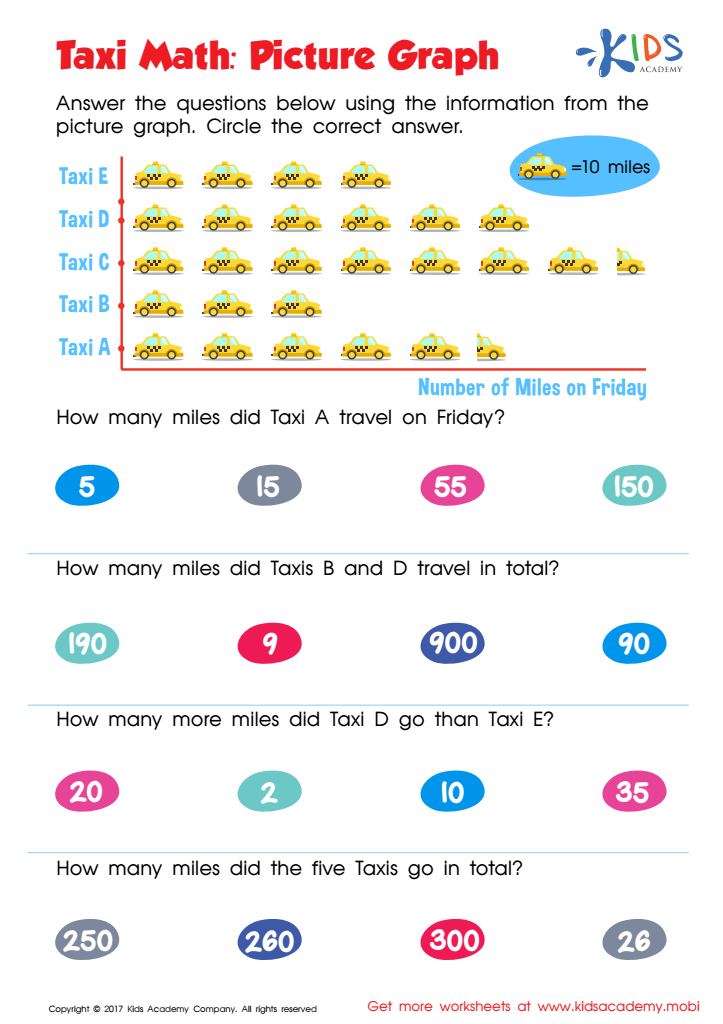
Taxi Math Worksheet
 Assign to My Students
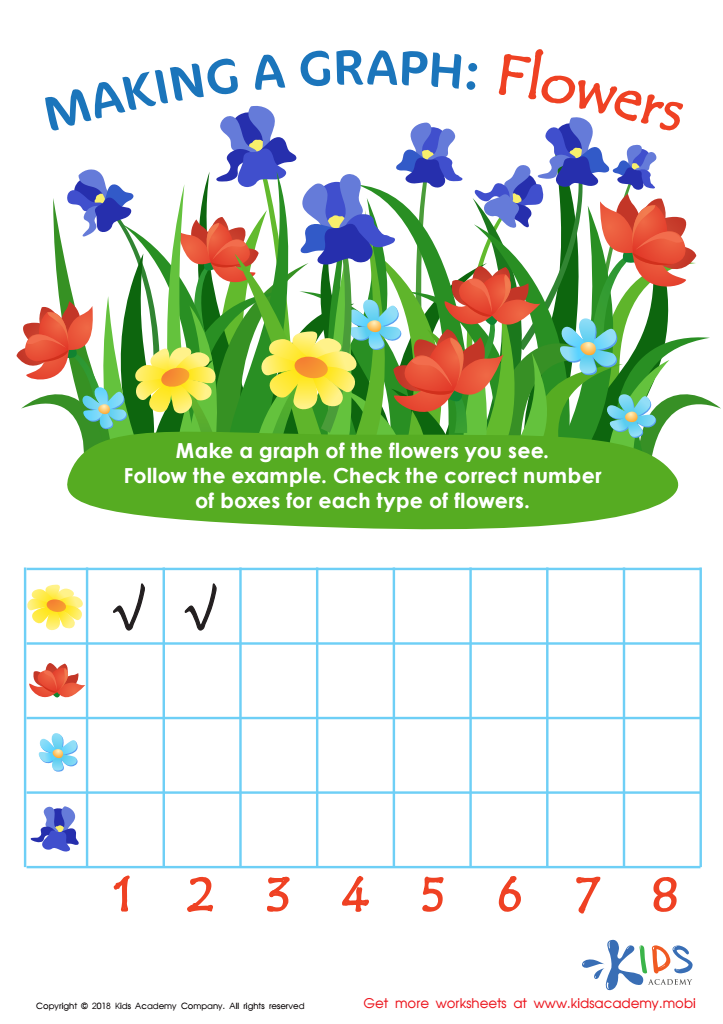
Making a Graph: Flowers Worksheet
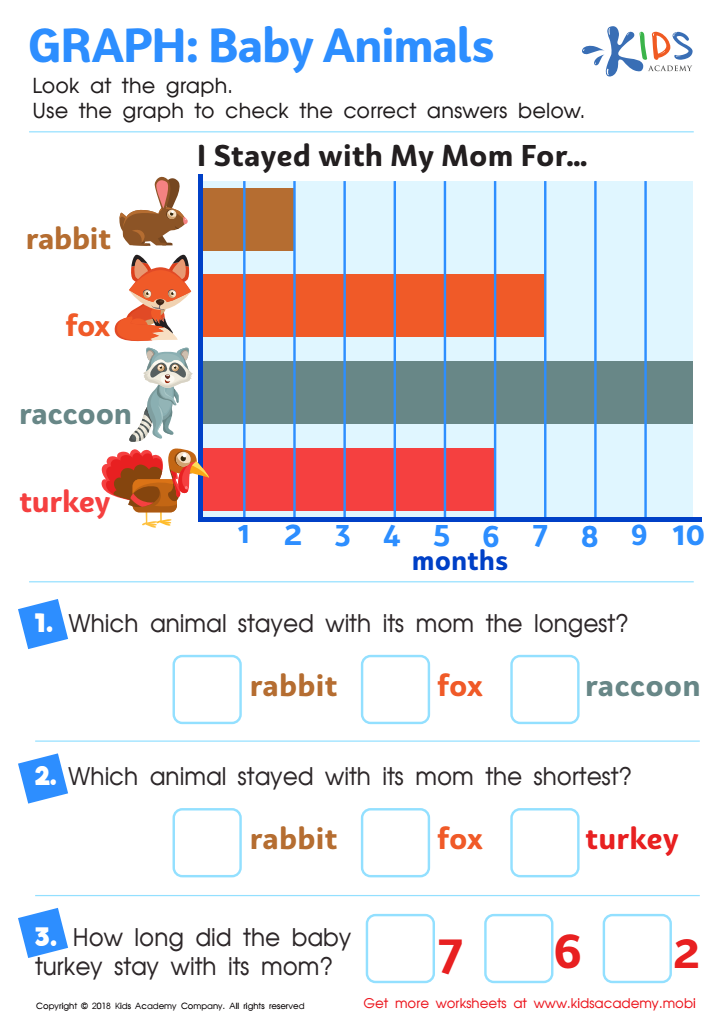
Graph: Baby Animals Worksheet
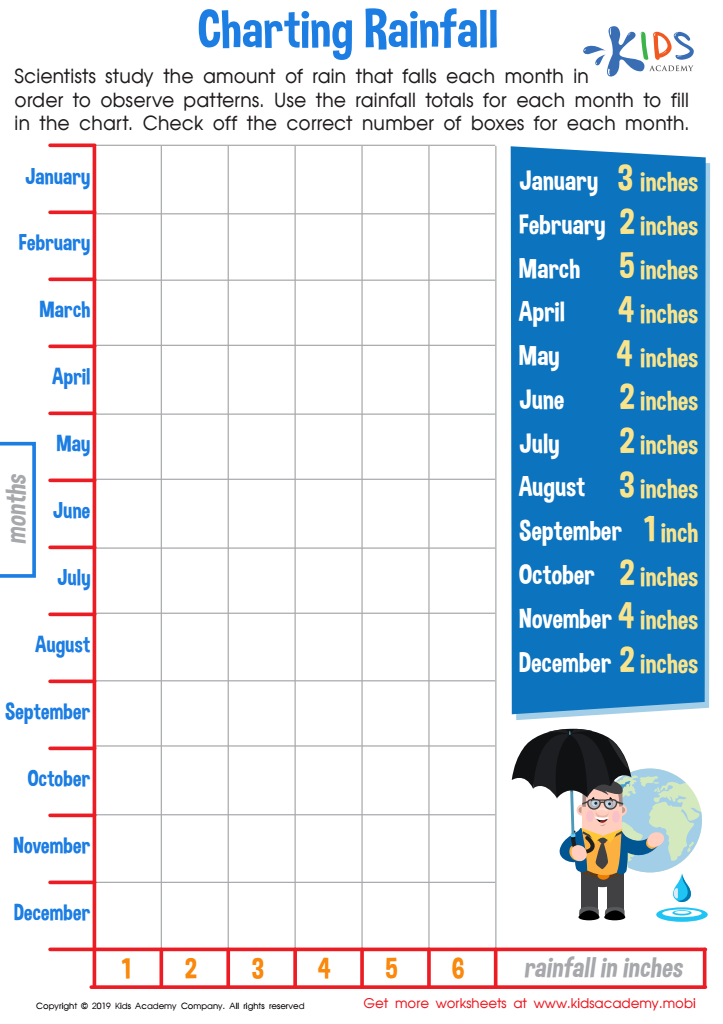
Charting Rainfall Worksheet
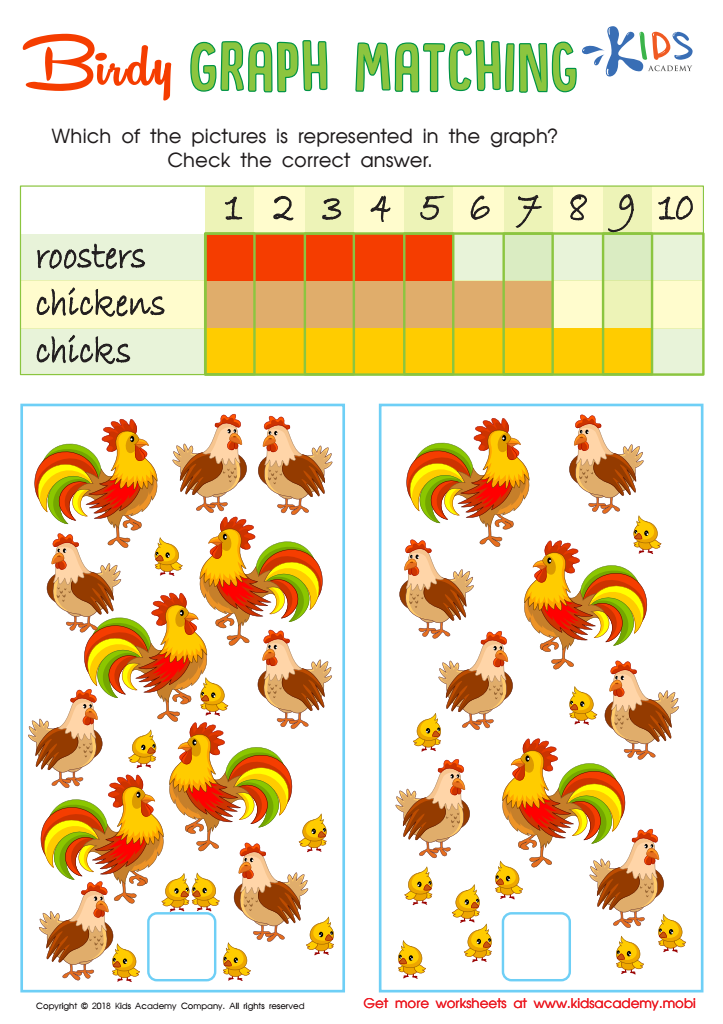
Birdy Graph Matching Worksheet






.jpg)
Graph interpretation is a fundamental skill for students aged 5-8 that lays the groundwork for critical thinking, data literacy, and problem-solving. At this developmental stage, children are naturally curious and engage actively with the world around them. Teaching them to interpret graphs empowers them to understand and analyze information visually, fostering analytical skills that are crucial for lifelong learning.
By learning to read and interpret various types of graphs—such as bar graphs, pie charts, and line graphs—children begin to grasp abstract concepts by transforming numerical data into a visual format. This reinforces their understanding of patterns, comparisons, and trends, which are essential skills in math and science. Furthermore, it provides a context for real-world applications, helping students understand statistics, survey results, or even trends in their environment.
Parents and teachers play an instrumental role in facilitating these skills. Engaging in graph interpretation not only promotes meaningful conversations but also enhances children’s communication skills as they express their findings. Ultimately, investing time in graph interpretation equips children with the tools to navigate a data-driven world, fostering informed decision-making and critical assessment of information they interact with in everyday life.








