Discover fun and engaging worksheets designed to improve counting skills for children ages 5-8! Our colorful, interactive activities help young learners master counting, number recognition, and sequencing with ease. By completing these worksheets, kids develop critical mathematical foundations through entertaining exercises like counting objects, connecting the dots, and number puzzles. Perfect for both classroom and at-home learning, these resources support educators and parents in reinforcing important concepts. Boost your child's confidence and proficiency in math with our proven, expertly crafted counting worksheets. Make learning to count an enjoyable journey with Kids Academy!

Check out this FREE "Improves counting skills" Trial Lesson for age 5-8!

Before and After Numbers

Favorites
With answer key
Interactive
  • 5-8
  • Improves counting skills
Counting: Maraca Fun Worksheet

Counting: Maraca Fun Worksheet

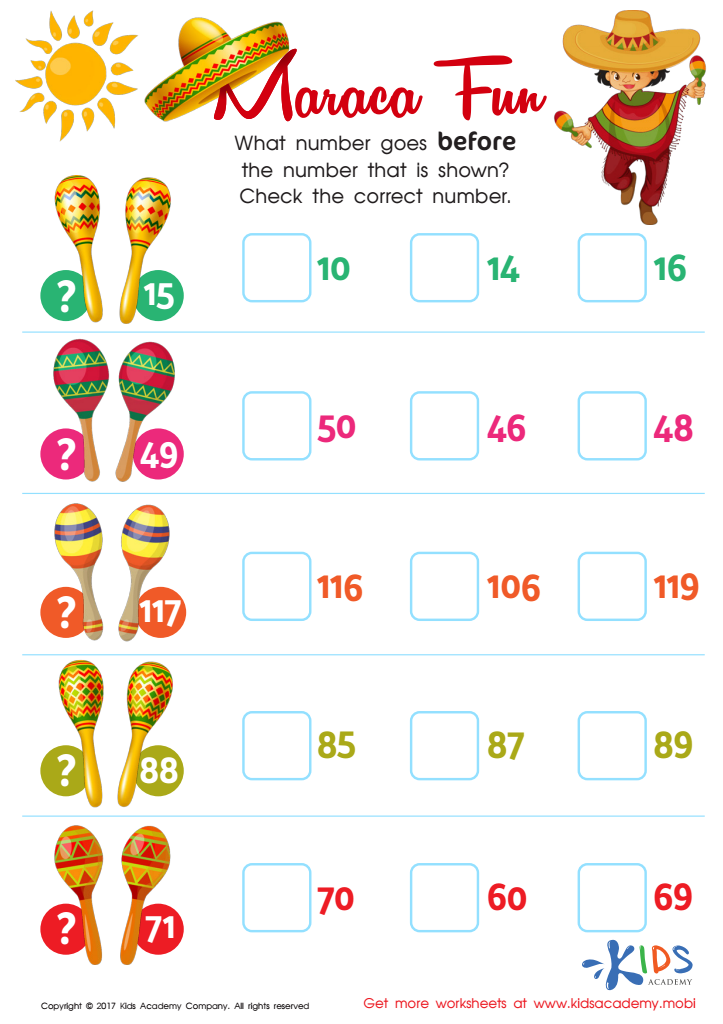
Let your child add some Maraca fun to their math lessons by using this printable worksheet! They must figure out the numbers that come before the ones shown. Answers are provided on the other side; all your child needs to do is check the boxes with the correct numbers. Help them improve their counting and have fun along the way!
Counting: Maraca Fun Worksheet
Worksheet
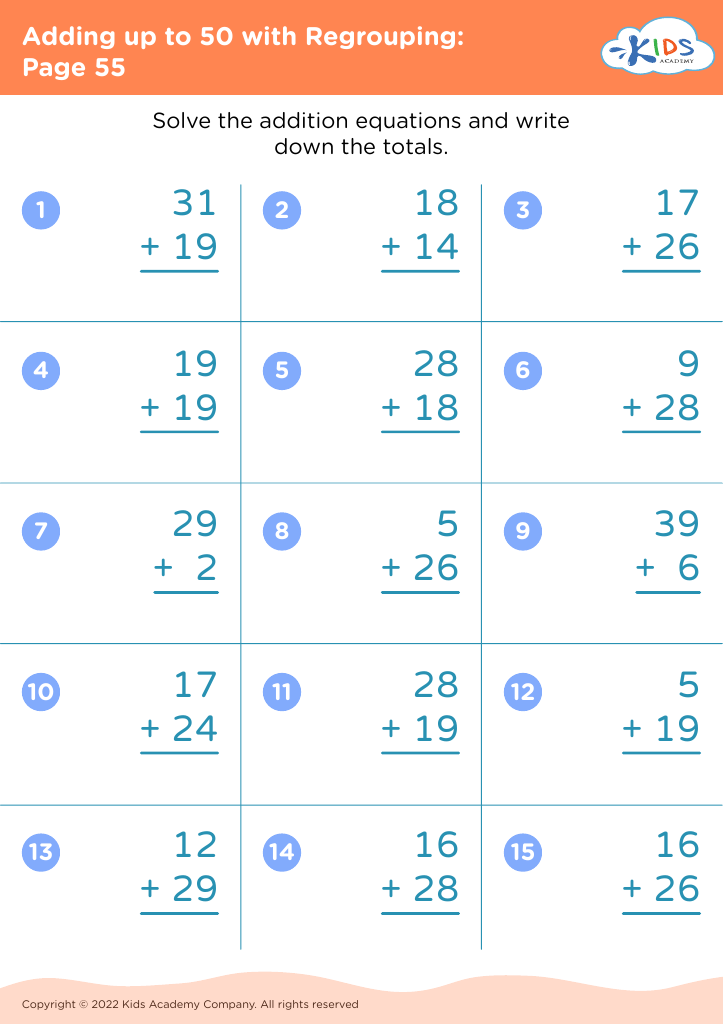
Adding up to 50 with Regrouping: Page 55
Worksheet
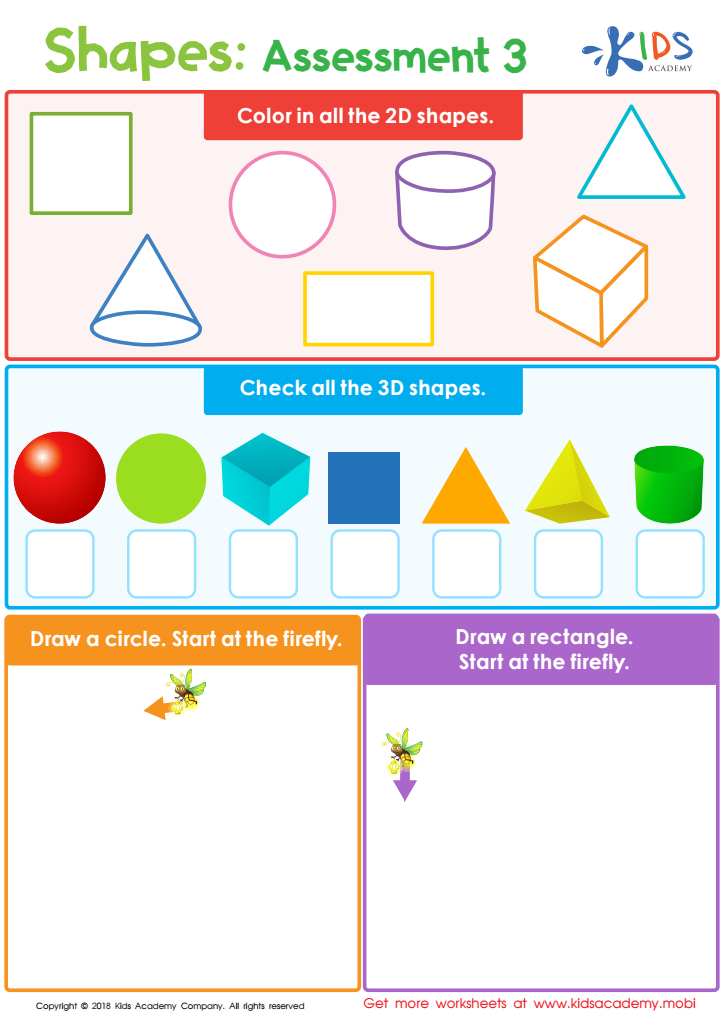
Shapes: Assessment 3 Worksheet

Shapes: Assessment 3 Worksheet

Shapes are everywhere! Help your students differentiate between 2D and 3D shapes. Ask them the difference between a triangle and pyramid, or a circle and a sphere. This worksheet tests their understanding of both types and is a useful assessment tool.
Shapes: Assessment 3 Worksheet
Worksheet
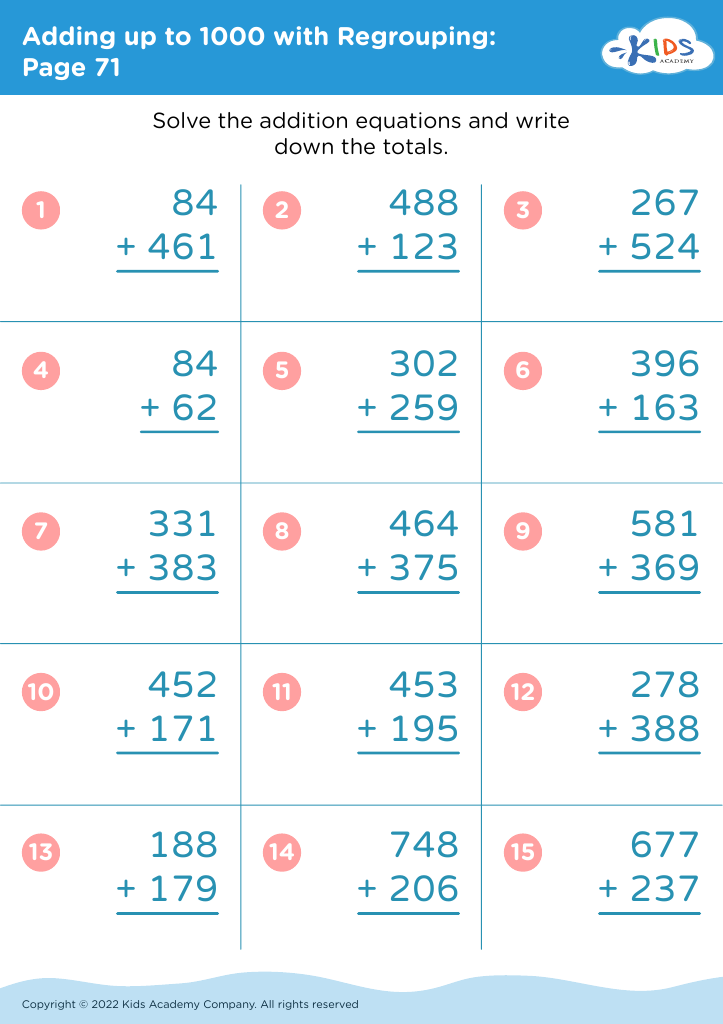
Adding up to 1000 with Regrouping: Page 71
Worksheet
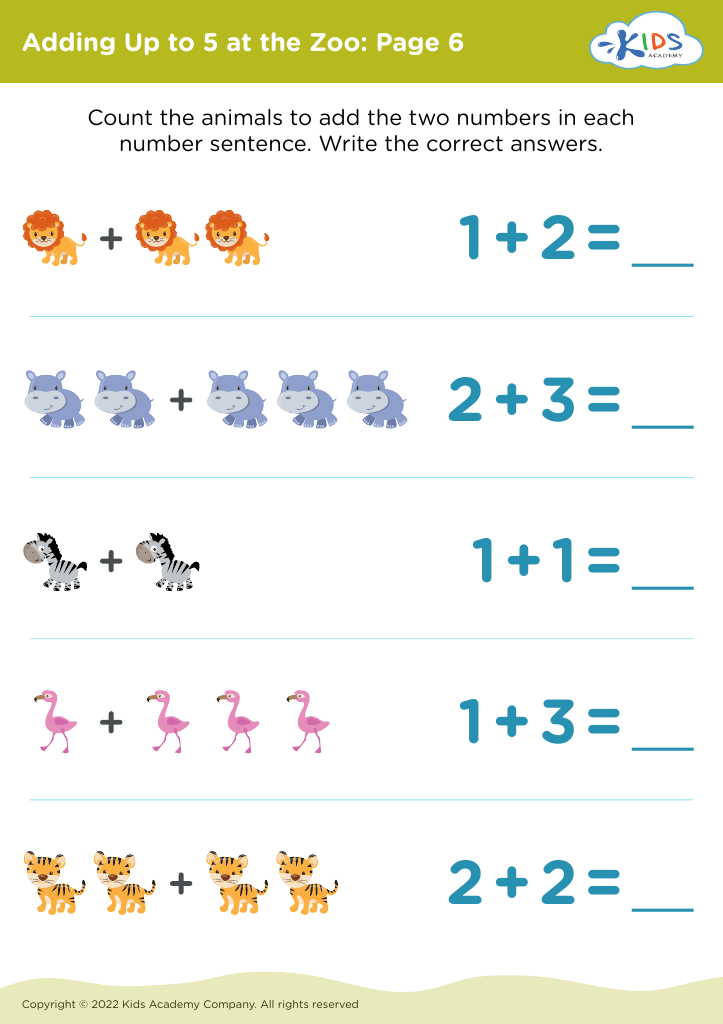
Adding Up to 5 at the Zoo: Page 6

Adding Up to 5 at the Zoo: Page 6

Adding Up to 5 at the Zoo: Page 6
Worksheet
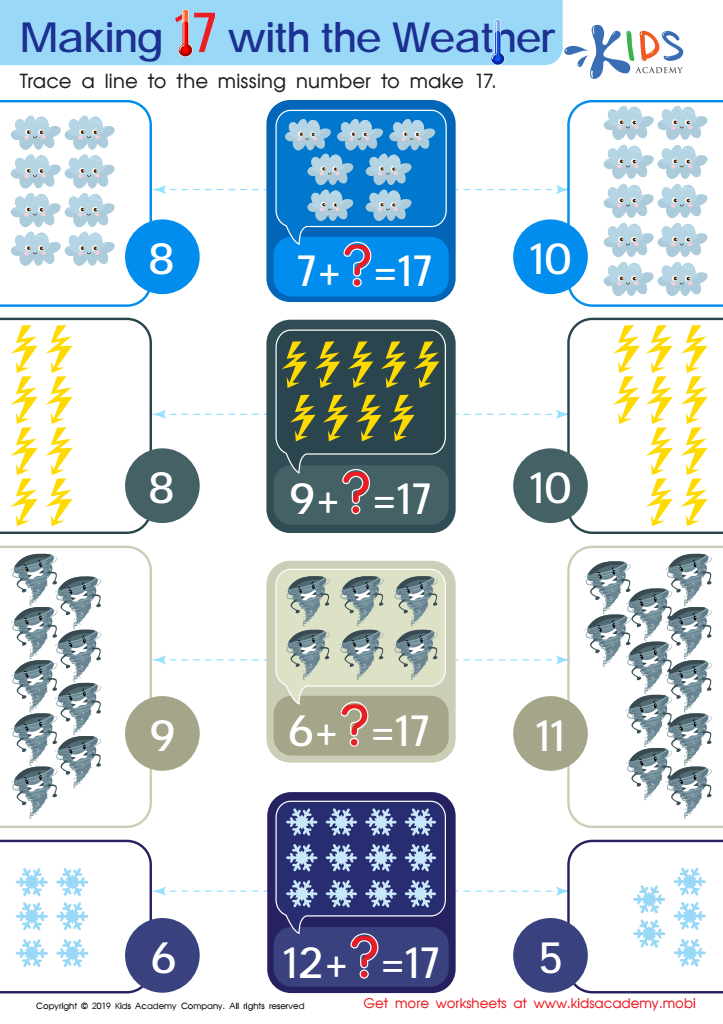
Making 17 with the Weather Worksheet
Making 17 with the Weather Worksheet

Show your kids the pictures in the worksheet and identify the weather. This exercise is to help them add simple numbers. There are 4 equations in the printout. Help them figure out the numbers to make 17, then trace a line to the missing number to complete the equation.
Making 17 with the Weather Worksheet
Worksheet
Adding up to 100 with Regrouping: Page 67
Worksheet
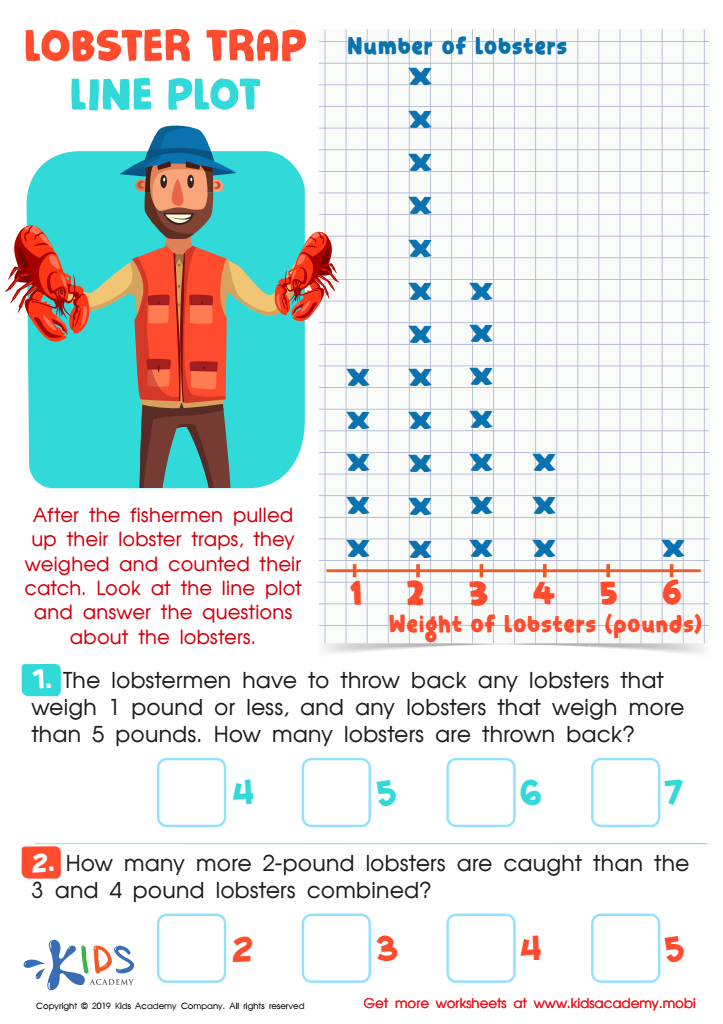
Lobster Trap Line Plot Worksheet
Lobster Trap Line Plot Worksheet
If your kids are working on line plots, this worksheet is perfect for them! Show them the picture and read the instructions. Help them look at the line plot and answer the questions at the bottom. Learning math can be fun, so make it enjoyable together!
Lobster Trap Line Plot Worksheet

Worksheet
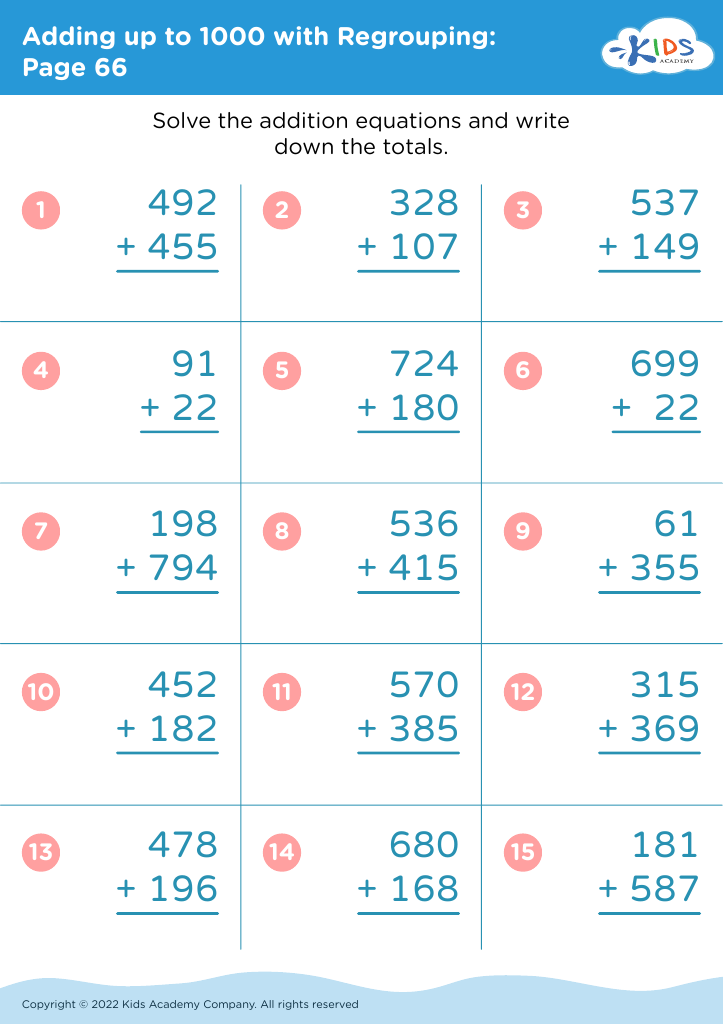
Adding up to 1000 with Regrouping: Page 66
Worksheet
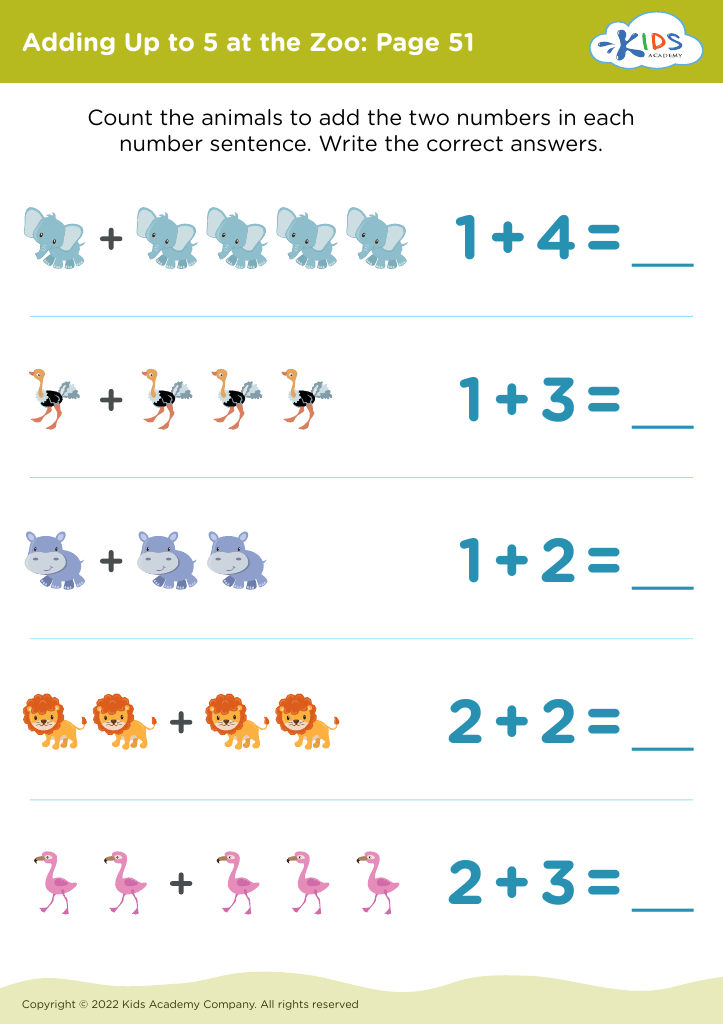
Adding Up to 5 at the Zoo: Page 51
Worksheet
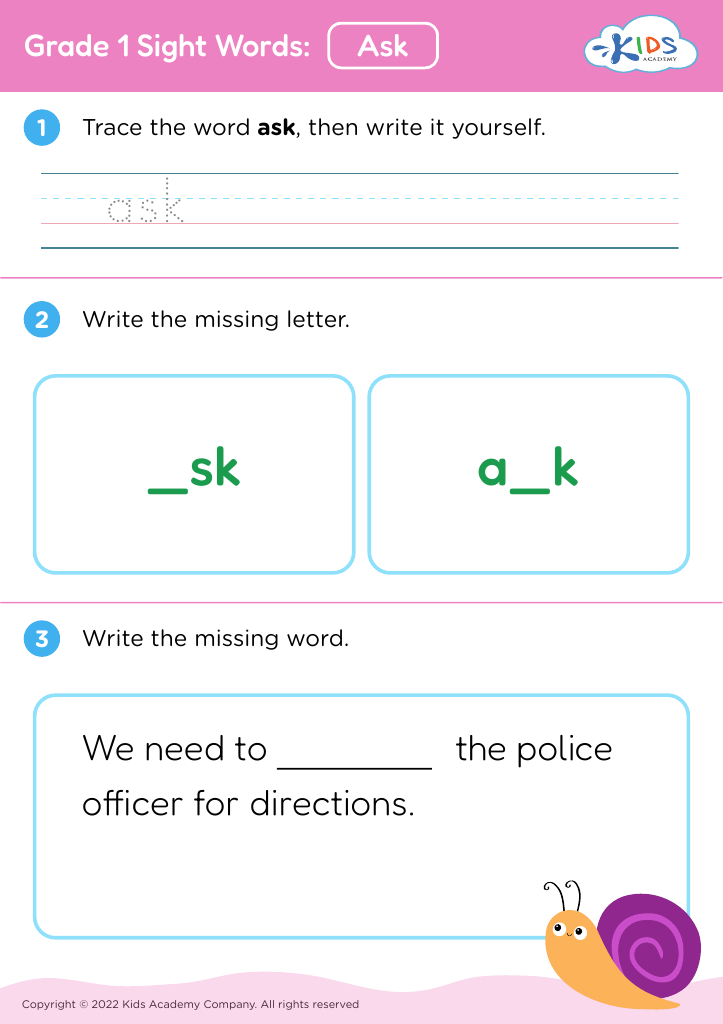
Grade 1 Sight Words: Ask

Grade 1 Sight Words: Ask

Grade 1 Sight Words: Ask
Worksheet


Improving counting skills in children aged 5-8 is crucial as it forms the foundation for their overall mathematical understanding, critical thinking, and cognitive development. During this period, children are in a prime developmental stage where their brains are highly receptive to learning new concepts. Mastering counting not only helps them perform basic arithmetic operations such as addition and subtraction but also enables them to grasp more complex mathematical concepts in later years, such as multiplication, division, and eventually, algebra.

Furthermore, strong counting skills enhance a child’s number sense, which is the ability to understand, relate, and connect numbers. This foundational skill aids in problem-solving and logical thinking, which are essential for academic success beyond just mathematics. For example, understanding sequences and patterns, a skill closely tied to counting, is important in reading and comprehending text.

Counting also has practical implications in daily life, helping children understand time, money, and measurements. Being confident with numbers can induce a sense of accomplishment and stimulate a love for learning, encouraging persistence in challenging tasks. By focusing on improving counting skills at this critical age, parents and teachers set children up for long-term educational success and a smoother transition into more advanced mathematical thinking.