
Knowledge reinforcement Worksheets for Ages 5-8
3 filtered results
Difficulty Level
Grade
Age
-
From - To
Subject
Activity
Standards
Unlock your child's potential with our Knowledge Reinforcement Worksheets designed for ages 5-8! These engaging, printable worksheets focus on essential skills like reading comprehension, math concepts, and critical thinking. Tailored to reinforce classroom learning, they provide a fun and interactive way for young learners to practice and master new concepts. Each worksheet is thoughtfully crafted to be age-appropriate, promoting cognitive development and boosting confidence. With a variety of topics and colorful designs, your child will enjoy a seamless learning experience. Support their educational journey and watch their knowledge flourish with our comprehensive collection of knowledge reinforcement activities!
Favorites
With answer key
Interactive
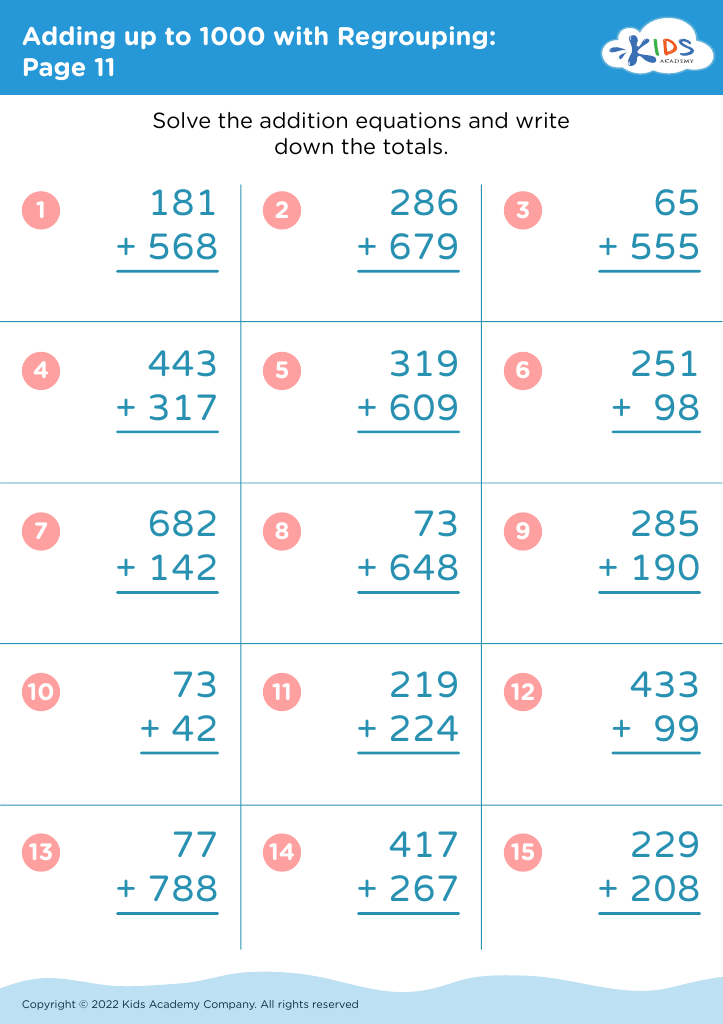
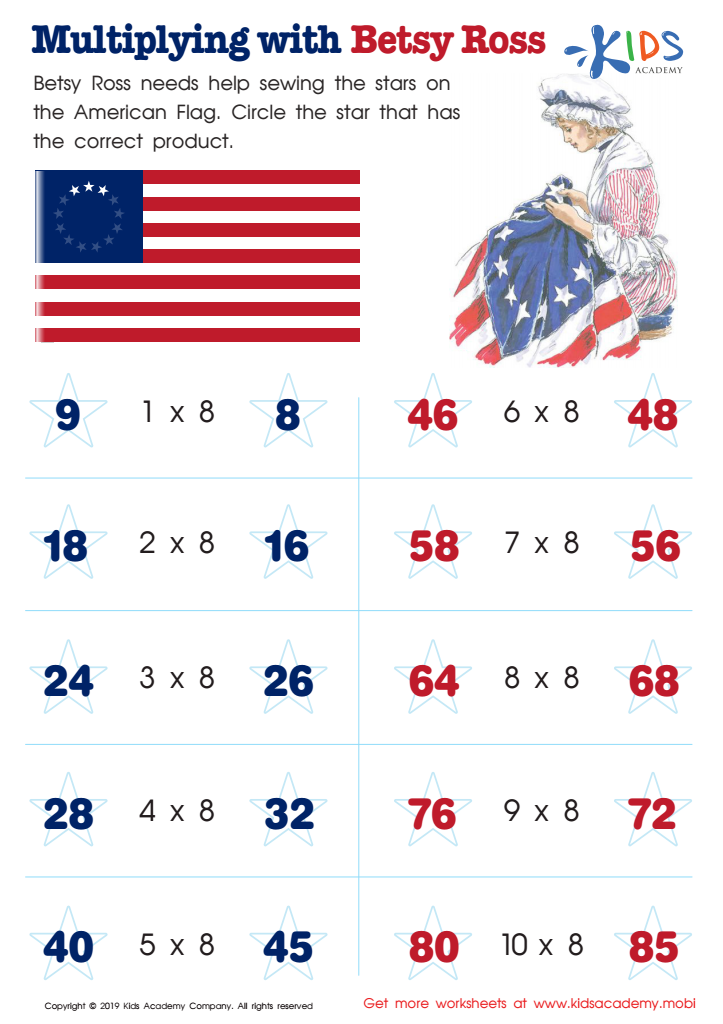
Multiplying with Betsy Ross Worksheet
Before getting into the worksheet, have your students take a quick history lesson on Betsy Ross. Ask them if they know her role in American history. On the printout, ask your kids to identify what Betsy Ross is doing - sewing the stars on the American Flag. Have them circle the star that has the correct pattern.
 Assign to My Students
Multiplying with Betsy Ross Worksheet
Worksheet
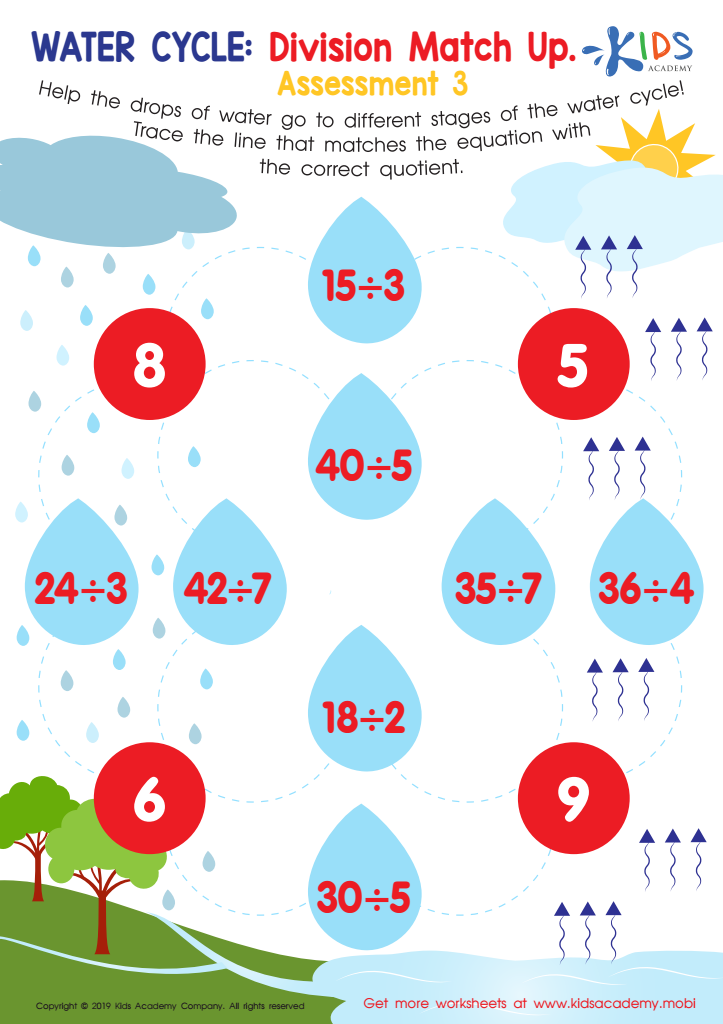
Water Cycle Division Match Up Assessment 3 Worksheet
Division is more fun than schoolwork with this assessment! Traceable lines let kids match equations to quotients, helping them build automaticity and giving you an easy way to see their progress.
Water Cycle Division Match Up Assessment 3 Worksheet
Worksheet
Join Kids Academy for Free
Who is primarily going to use this learning content?






Knowledge reinforcement for children ages 5-8 is crucial because it lays the foundation for lifelong learning and cognitive development. At this formative stage, children are incredibly curious and eager to explore the world around them. Reinforcing knowledge helps solidify newly acquired concepts, ensuring they transition from short-term to long-term memory. This solid foundation enables them to build upon previous knowledge in more complex areas, fostering critical thinking and problem-solving skills.
Moreover, consistency in reinforcement through repetition and practice can boost confidence and academic motivation. When children sense mastery over a subject, they are more likely to engage actively in their learning experiences. This increased engagement not only enhances their understanding but also fosters a love for learning that can carry into later school years and beyond.
For parents and teachers, focusing on knowledge reinforcement promotes engagement in school activities, reduces anxiety about academic expectations, and nurtures positive attitudes towards challenges. Strong, supportive reinforcement also creates opportunities for discussing successes and addressing gaps in understanding, enabling proactive intervention when necessary.
In summary, prioritizing knowledge reinforcement at this age revives enthusiasm for learning, strengthens essential cognitive skills, and builds resilience, helping children thrive both academically and personally.








