
Math problem-solving Worksheets for Ages 5-8
30 filtered results
Difficulty Level
Grade
Age
-
From - To
Subject
Activity
Standards
Unlock your child's potential with our Math Problem-Solving Worksheets for ages 5-8! Designed to enhance critical thinking, these engaging printables cover addition, subtraction, geometry, and early algebra. Perfect for developing foundational math skills, our worksheets make learning fun with colorful activities and age-appropriate challenges. Boost your child's confidence and problem-solving abilities while building a strong math foundation. Try Kids Academy today for a learning experience that combines education with excitement! Whether for school or home, our resources are an ideal tool to support your child’s mathematical journey. Explore and enjoy math mastery today!
Favorites
With answer key
Interactive
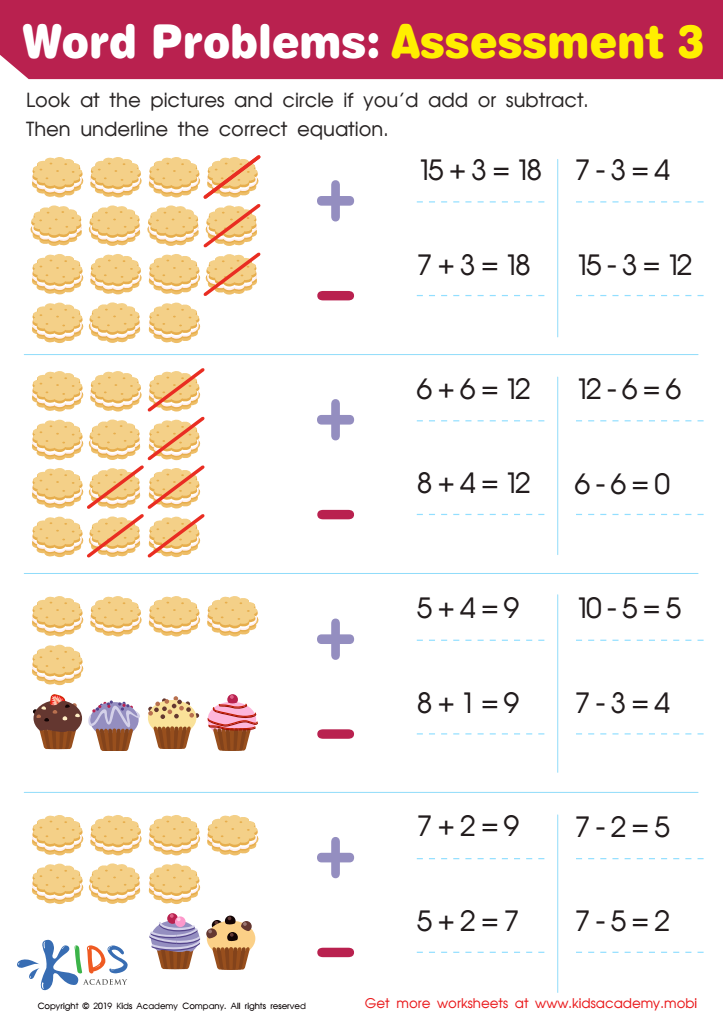
Word Problems: Assessment 3 Worksheet
This free worksheet challenges kids to use one-to-one representations and order of operations to solve basic addition and subtraction problems. They'll trace the correct equations and gain confidence with higher numbers. A great way to check their skills!
Word Problems: Assessment 3 Worksheet
Worksheet
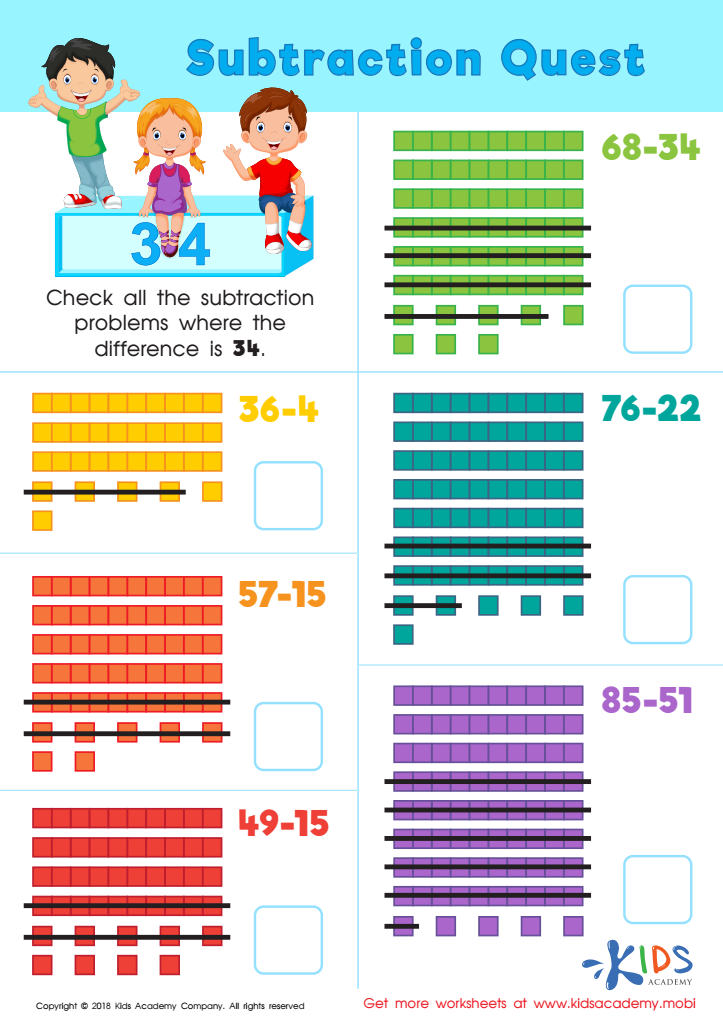
Subtraction Quest Worksheet
Send your little mathematicians on a quest full of fun! This free, downloadable PDF worksheet has them using base ten blocks to decide if the difference in each problem is 34. They'll solve each problem, marking equations where the difference is 34. It's a great way to build number sense and challenge themselves - plus, they won't even realize it's math!
Subtraction Quest Worksheet
Worksheet
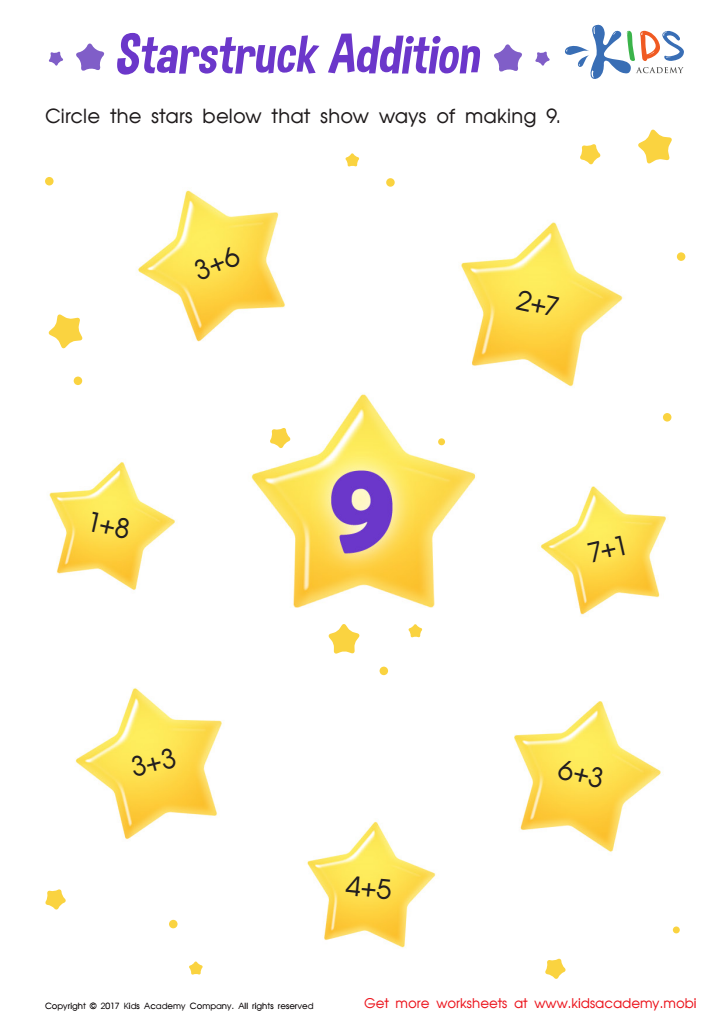
Starstruck Addition Printable
This interactive addition worksheet motivates your preschooler to practice addition and analyze number combinations. Their cognitive and analysis skills will be sharpened as they find the magic number in each problem.
Starstruck Addition Printable
Worksheet
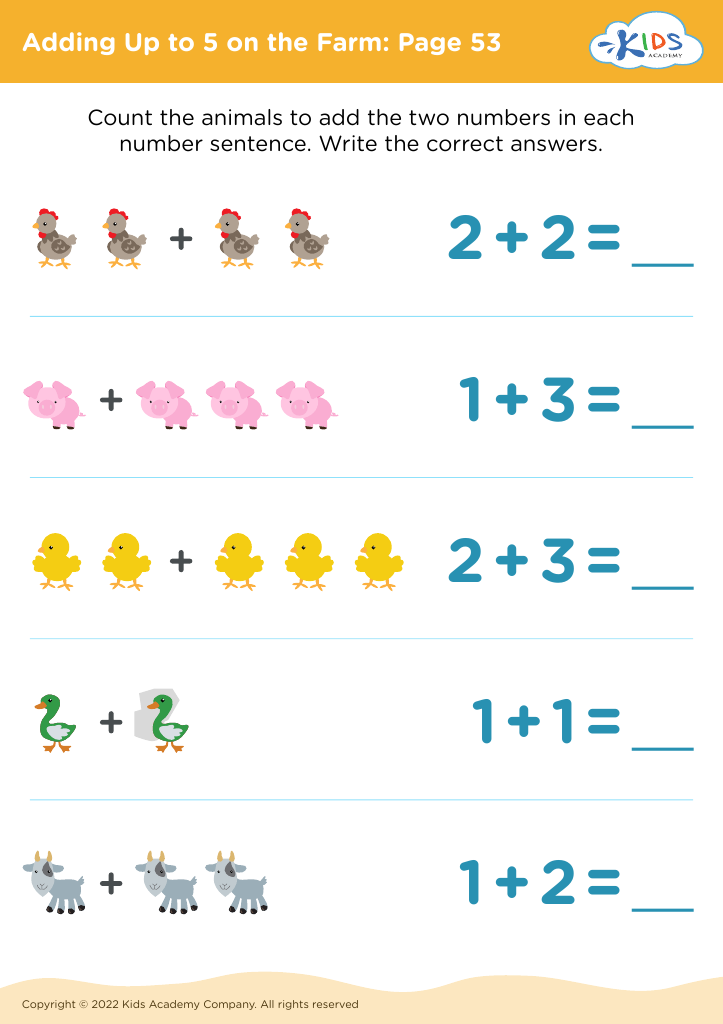
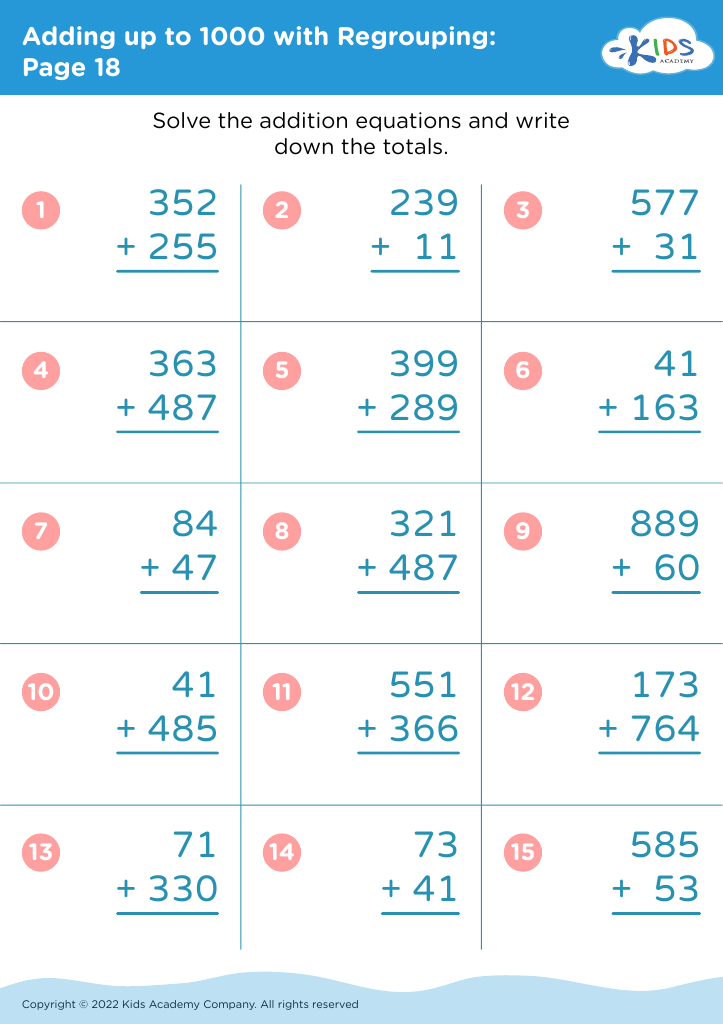
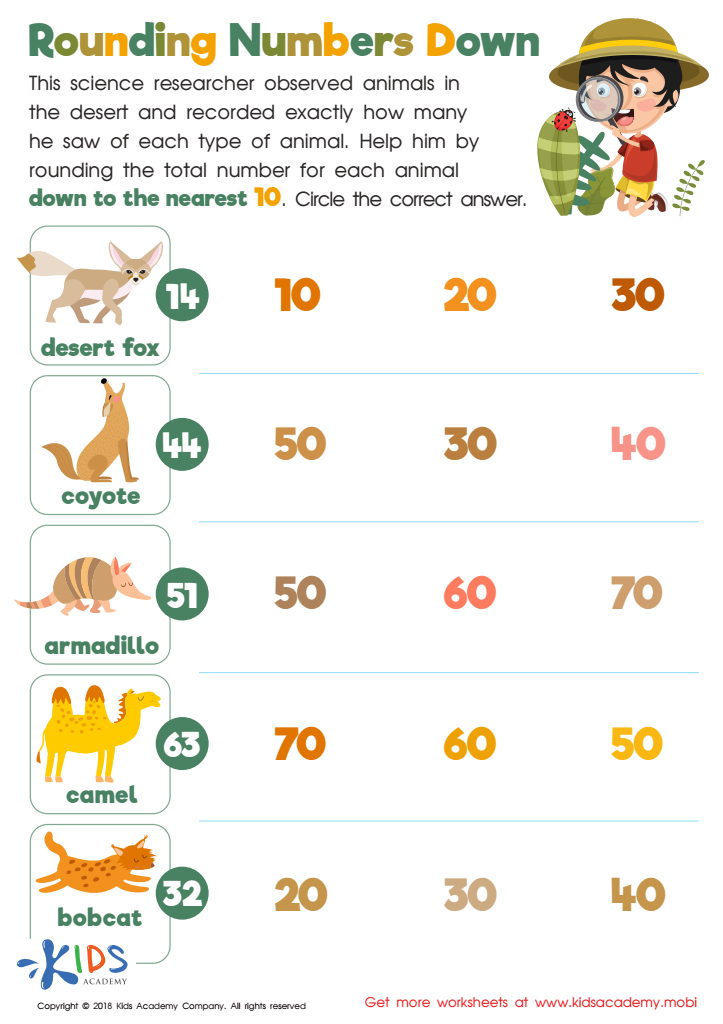
Rounding Numbers Down Worksheet
Does your child aspire to be a science researcher? This worksheet is the perfect place to start! Help your little one round the total number of animals seen in the desert to the nearest 10, then circle the correct answer for each. Fun and educational, this activity is a great way to help your kids get a taste of the science researcher lifestyle.
Rounding Numbers Down Worksheet
Worksheet
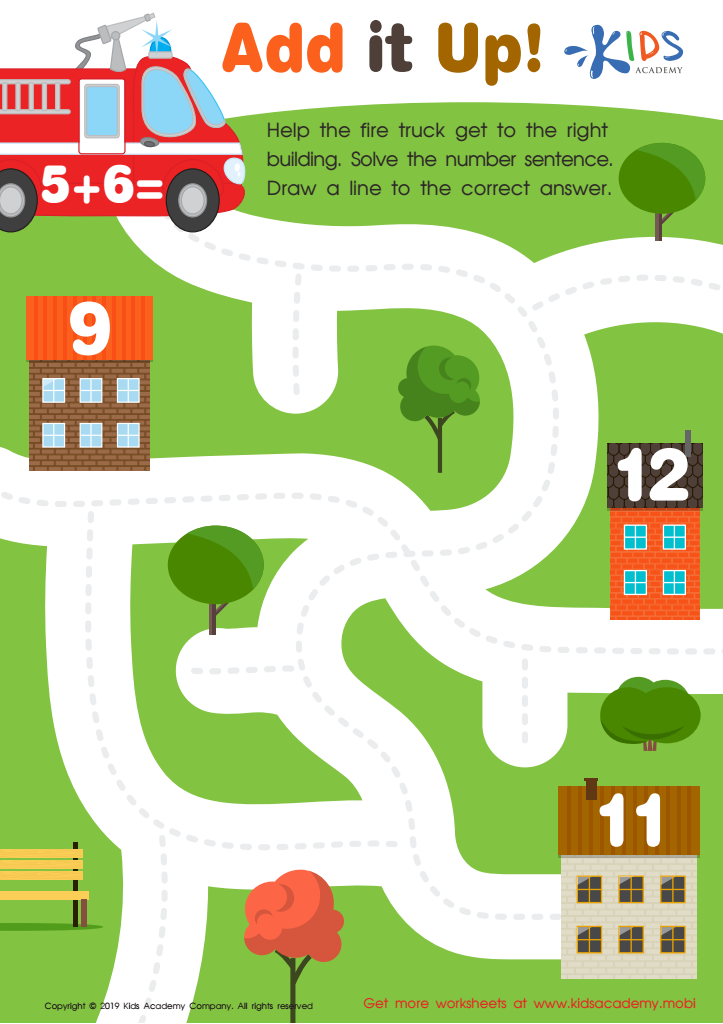
Add it Up Worksheet
The fire service is the right number to call in case of a fire. Test your children's safety knowledge by asking them other emergency numbers. Have them identify the fire truck in the worksheet and solve the number sentences. Guide them in drawing a line to the right answer.
Add it Up Worksheet
Worksheet
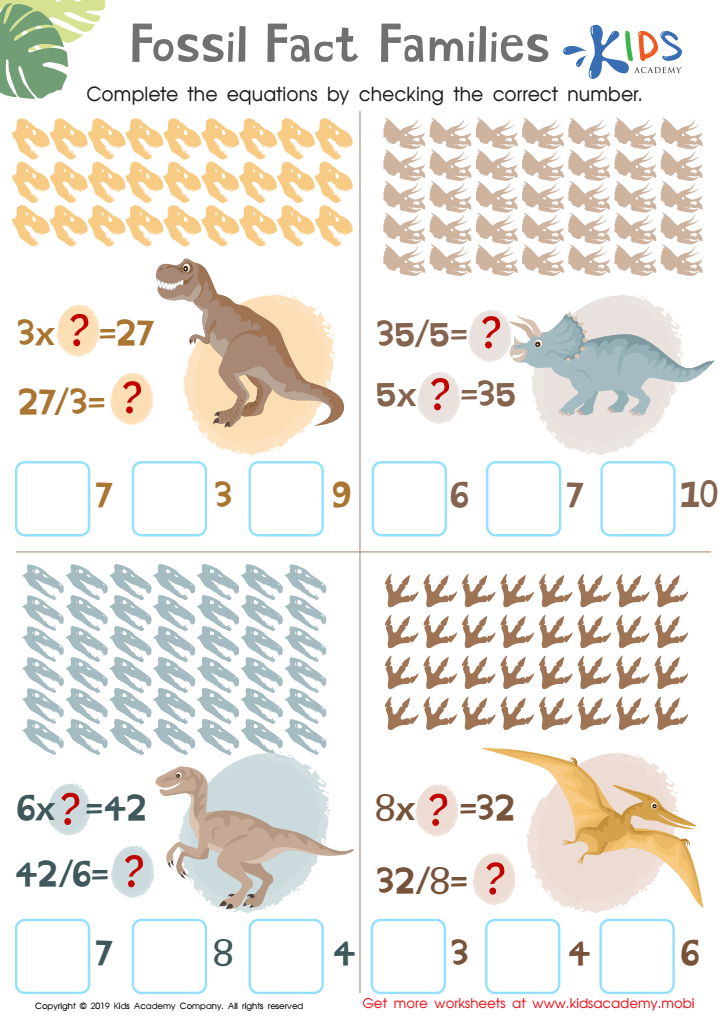
Fossil Fact Families Worksheet
Kids love dinosaurs, so why not learn about fact families with some fun prehistoric friends? This PDF worksheet uses picture arrays to help kids understand the relationships between multipliers and dividends. It helps them build automaticity with multiplication facts so they can quickly solve division problems and see the relationships between the two fact families.
Fossil Fact Families Worksheet
Worksheet
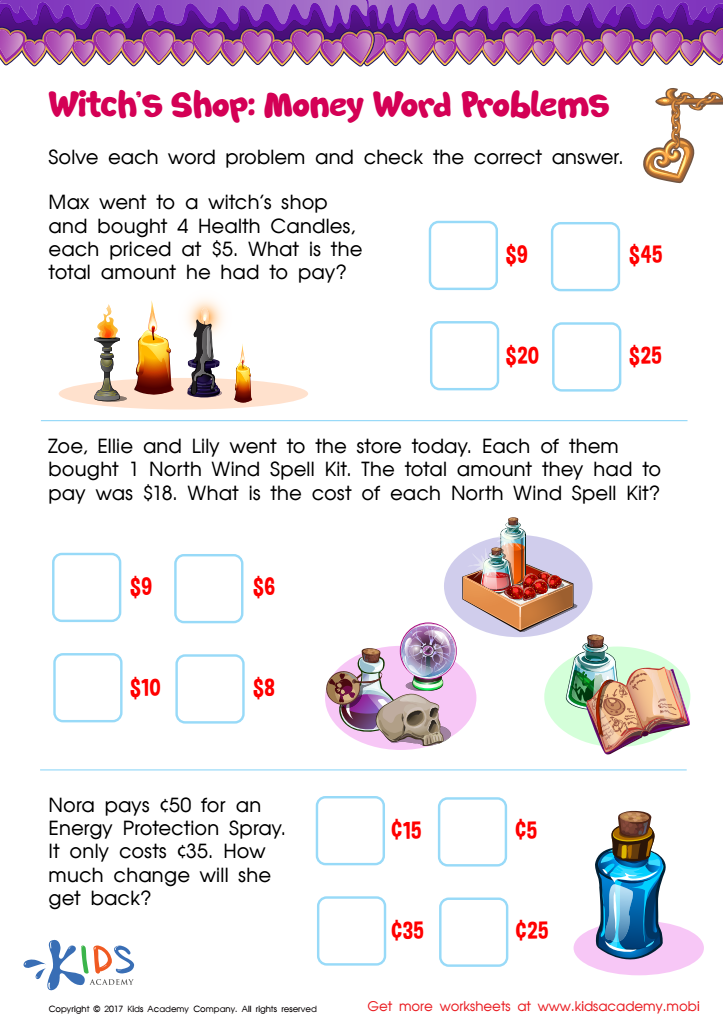
Money Word Problems Printable
Boost your 3rd grader's math skills with money word problems. This worksheet takes them to a witch's shop for a fun way to practice multiplication and division.
Money Word Problems Printable
Worksheet
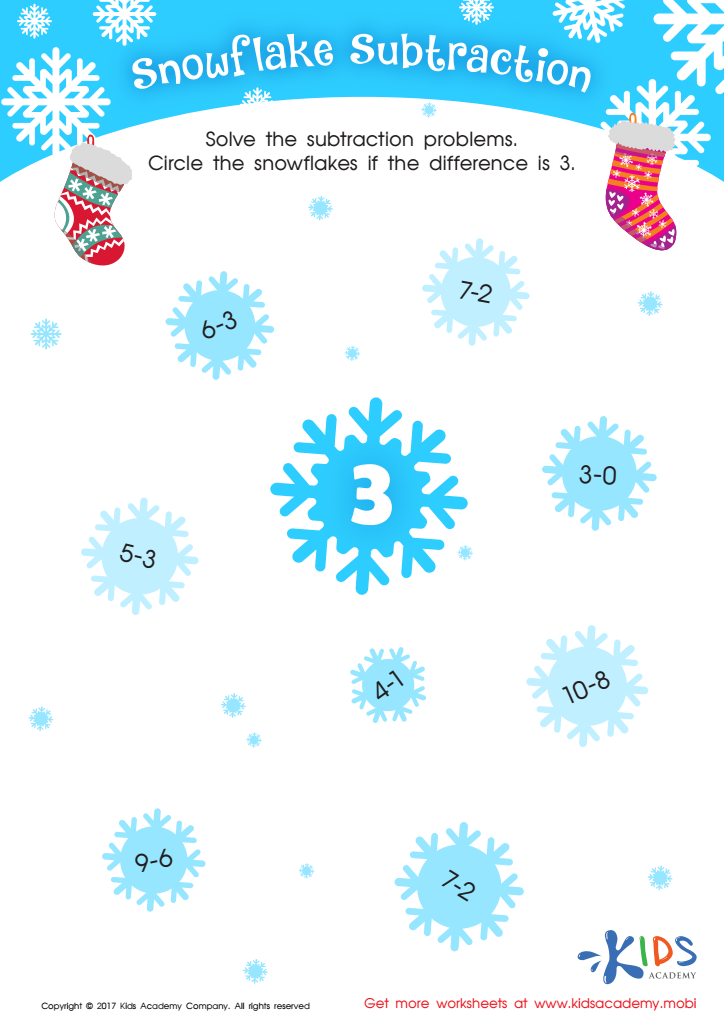
Snowflake Subtraction Worksheet
This winter-themed subtraction printable worksheet is perfect for a chilly day. The task: find the difference of 3!
Snowflake Subtraction Worksheet
Worksheet
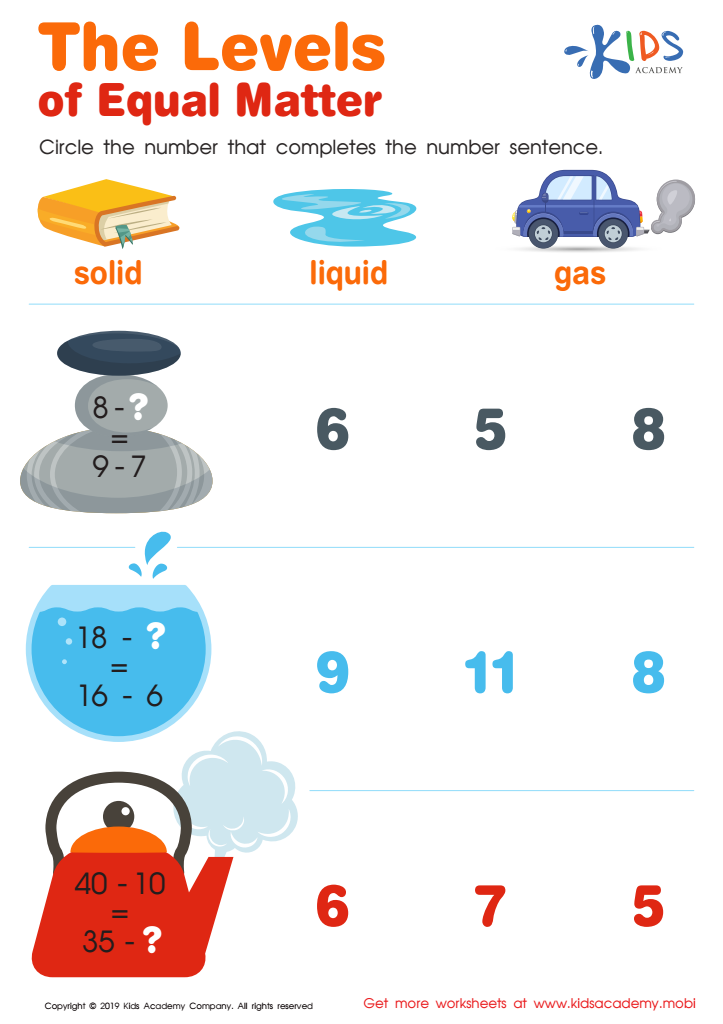
The Levels of Equal Matter Worksheet
Matter is anything that has weight and occupies space. Common examples include people, animals, objects and liquids. Have your kids understand this concept by looking at the levels of matter in this worksheet and completing the number sentence mathematical problems beneath.
The Levels of Equal Matter Worksheet
Worksheet
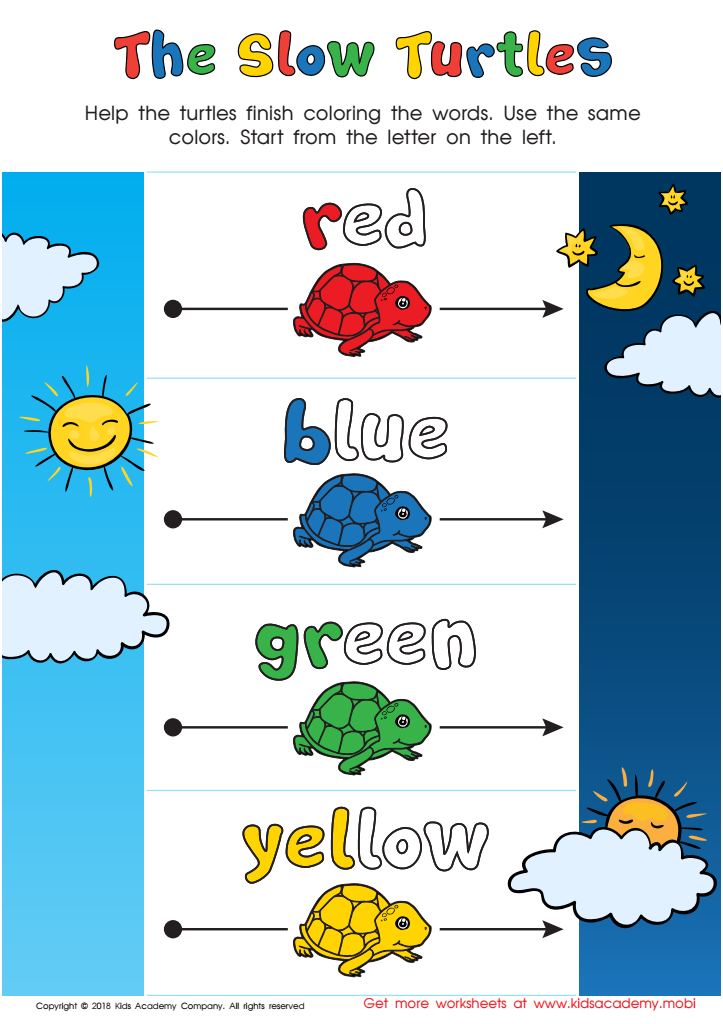
Read from Left to Right: Slow Turtles Worksheet
Can your students identify the animals in this worksheet? They're turtles! Ask if they know their characteristics – slow and living in shells. Guide them to color the words in the picture, starting from the letters on the left and using the turtles' color. Check they know turtles are slow and live in shells!
Download (PDF)
 Assign to My Students
Assign to My Students
Read from Left to Right: Slow Turtles Worksheet
Worksheet
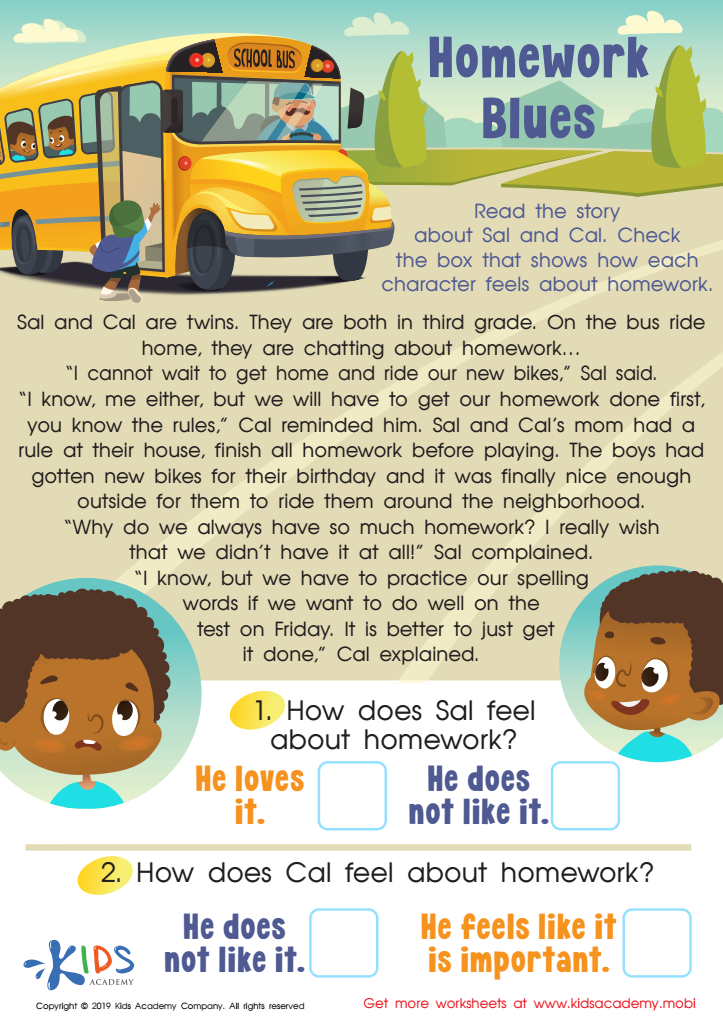
Homework Blues Worksheet
Cal and Sal don't love doing homework, just like your kids. Use this worksheet to help your children understand why homework is important. Read the passage together and then answer the questions at the bottom of the page. It's a fun way to learn together!
Homework Blues Worksheet
Worksheet
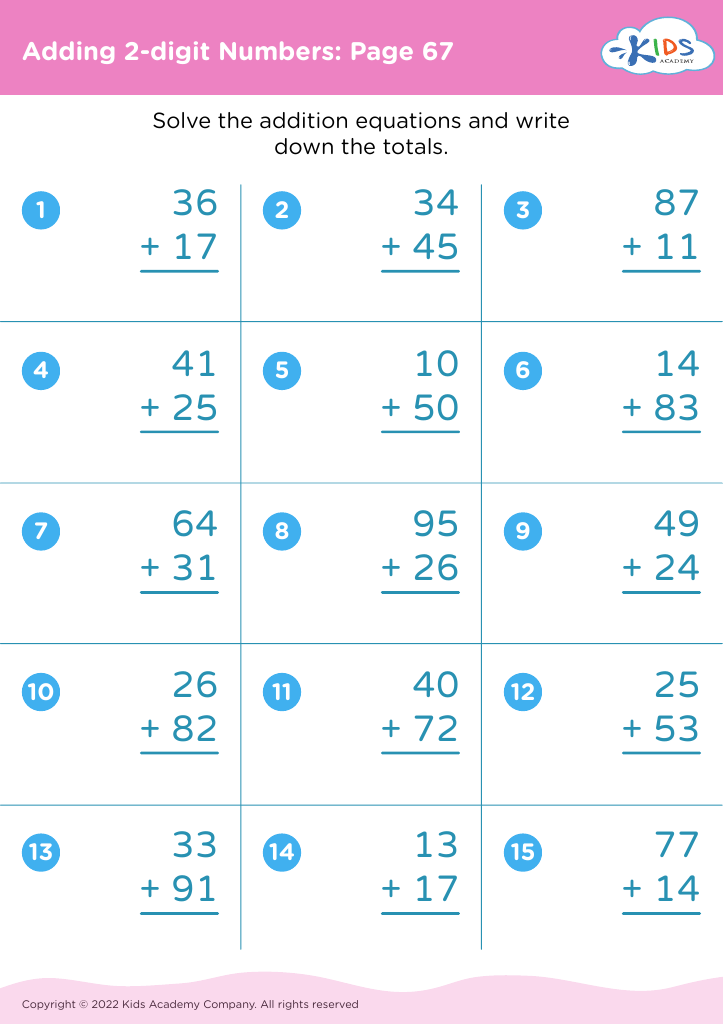
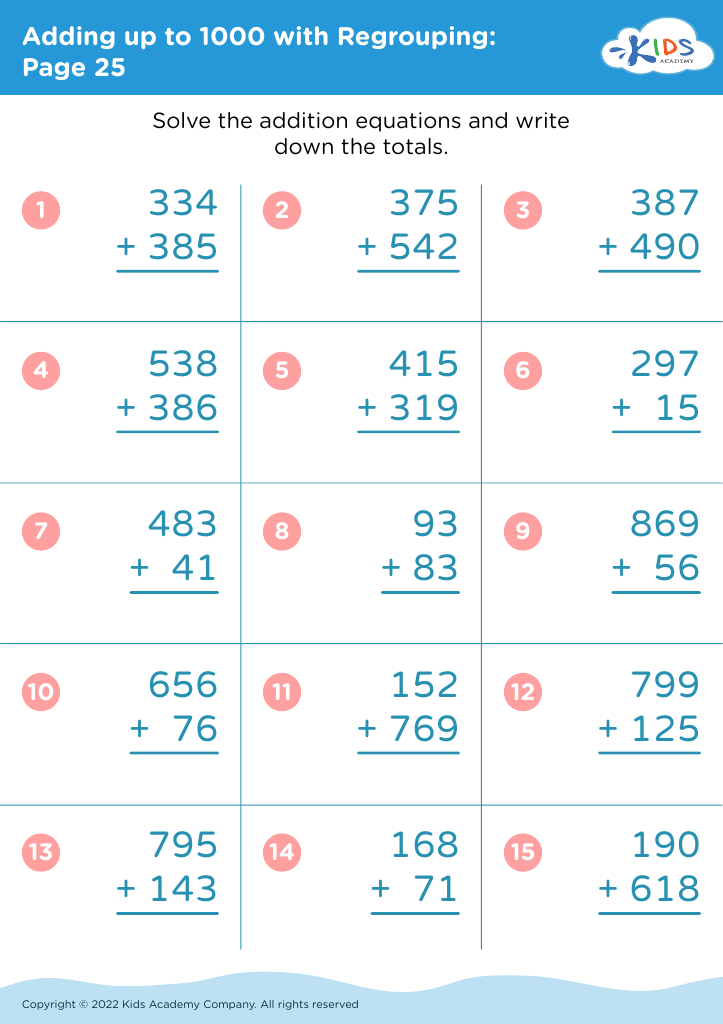
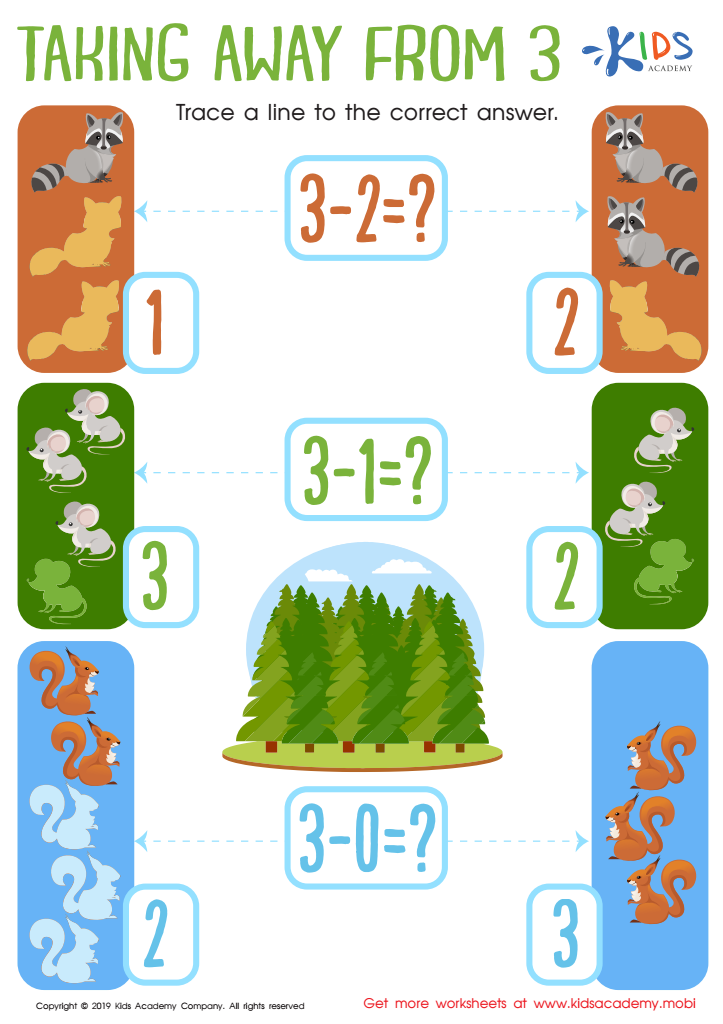
Taking Away From 3 Worksheet
Help your students learn equations and math easily by using this tracing worksheet. It has three different equations that they can count and solve, then trace a line to the correct answer. This will make the learning process fun and exciting.
Taking Away From 3 Worksheet
Worksheet
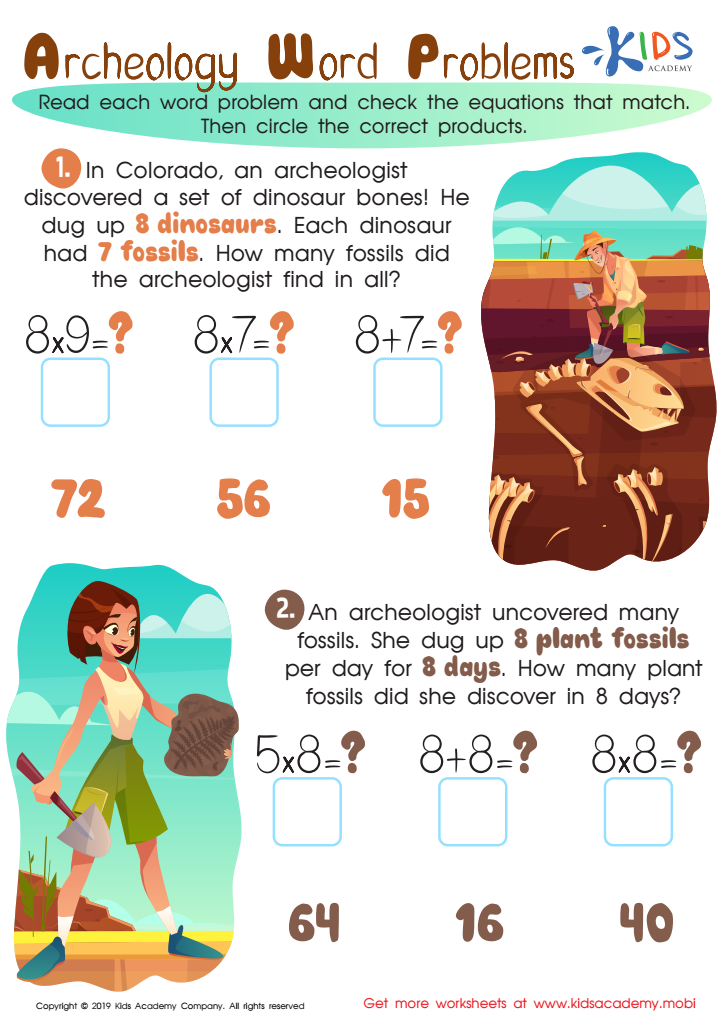
Archeology Word Problems Worksheet
Encourage your child to explore their career options! Show them an archeologist's job with this worksheet - featuring a picture of a dinosaur bone discovery. Read the accompanying text, then solve the word problems. Help your kids circle the correct answers to better understand this profession.
Archeology Word Problems Worksheet
Worksheet
Join Kids Academy for Free
Who is primarily going to use this learning content?








Parents and teachers should care about math problem-solving for ages 5-8 as this foundational stage sets the groundwork for future academic success and cognitive development. Problem-solving skills are crucial; they enhance logical reasoning, critical thinking, and creativity. By engaging in math problems, children learn to analyze situations, recognize patterns, and develop solutions, all of which are vital skills both in and outside the classroom.
Early exposure to math problem-solving helps cultivate a positive attitude toward the subject, reducing math anxiety and building confidence. It fosters perseverance and patience, teaching young children that it's okay to make mistakes and try again. Moreover, problem-solving is not confined to arithmetic; it integrates with other areas like reading comprehension and scientific inquiry, promoting overall intellectual growth.
Moreover, problem-solving in early math education aligns with real-world applications. Skills such as counting change, measuring ingredients for a recipe, or understanding time are directly applicable to daily life. Young minds equipped with strong problem-solving capabilities are better prepared for complex challenges ahead.
Collaborative problem-solving activities also nurture social skills, as children learn to communicate their thought processes and collaborate with peers. Therefore, prioritizing math problem-solving in early education yields numerous long-term benefits, encompassing academic achievement, practical life skills, and personal development.








